
A black hole may be stirring a "pot" of gas containing a neighboring galaxy in the early universe, according to a new study using NASA's Chandra X-ray Observatory, as described in our latest press release. This galaxy, officially named MQN01 J004131.9-493704, has been nicknamed the "red potato" by astronomers because of its appearance in images from NASA's James Webb Space Telescope.
The red potato galaxy is located about 11.7 billion light-years from Earth at an intersection where gigantic web-like structures of galaxies and gas meet. Astronomers targeted this area with Webb because they knew it contains one of the heaviest concentrations of galaxies and growing supermassive black holes yet identified in the early universe.
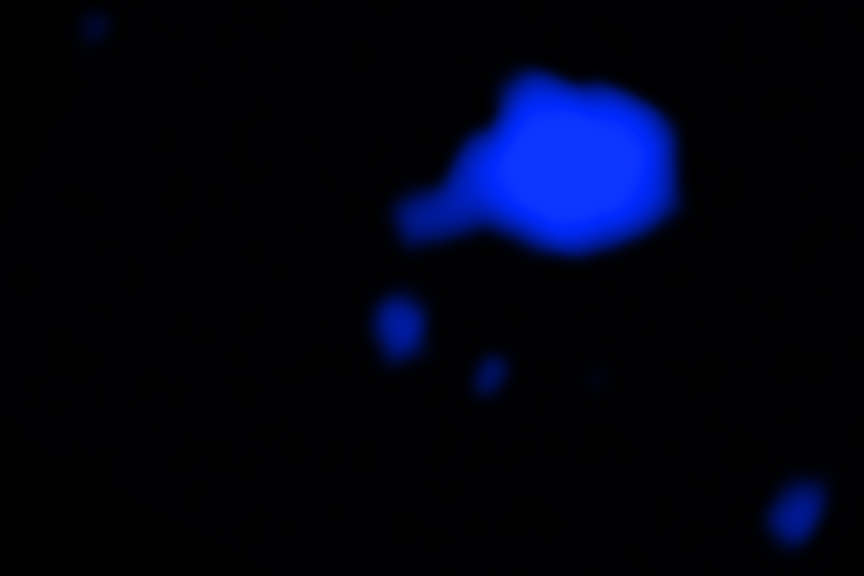
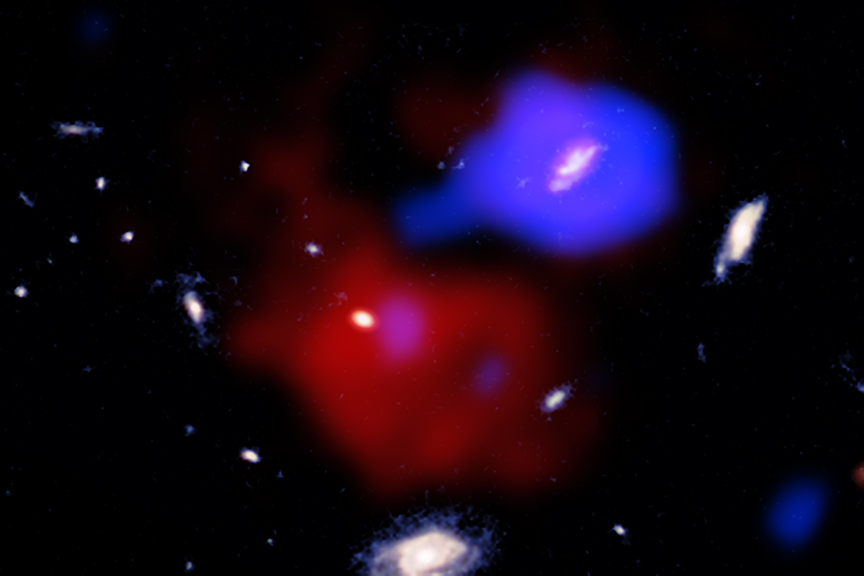
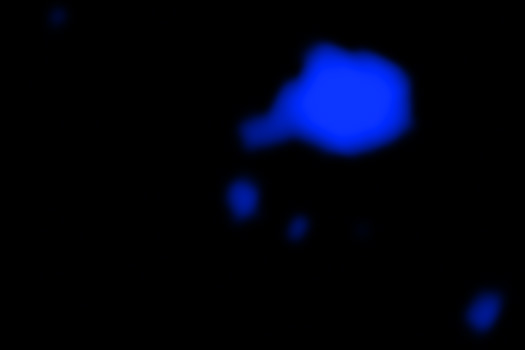
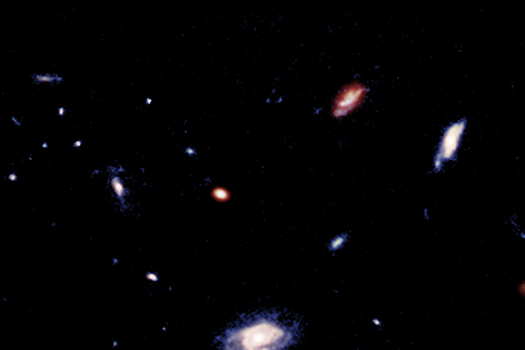
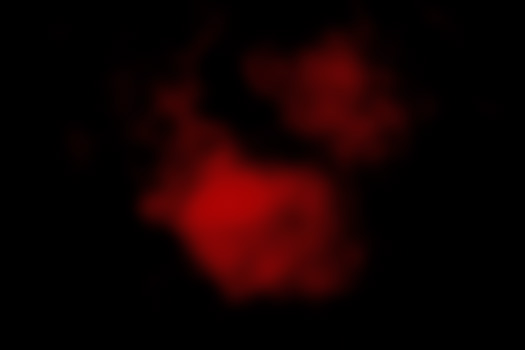
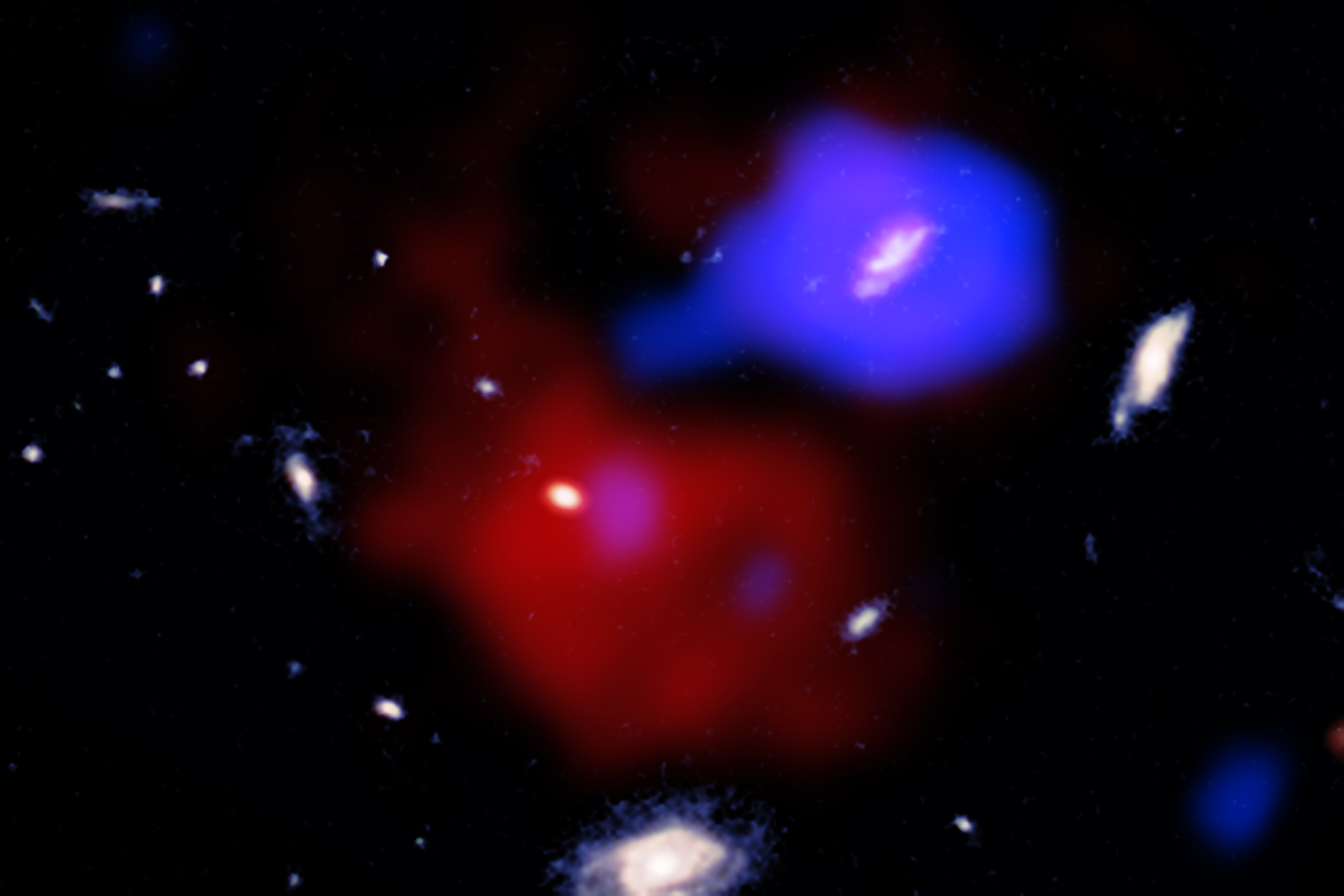
A composite image shows this galaxy in X-rays from Chandra (blue) and radio light data from ALMA, the Atacama Large Millimeter/submillimeter Array (red). The X-rays reveal a growing supermassive black hole and the jet it has produced, while the radio light shows relatively cool gas in the region. Infrared data from Webb (red, green, and blue) completes the view.
Astronomers expected that the red potato galaxy, which is surrounded by the ingredients to form new stars in the form of the cool gas, would be producing many young stars. However, the amount of star formation was relatively low, which led the researchers to look for a reason why.
One important clue is that the cloud of gas surrounding the red potato galaxy is unusually turbulent compared to large gas clouds surrounding other galaxies. Such turbulence could be preventing most of the gas from falling onto the red potato galaxy to form large numbers of new stars.
Using Chandra, the team discovered that a jet of particles from a growing black hole in a neighboring galaxy is pointed toward and may be striking the gas cloud around the red potato galaxy, possibly causing the turbulence.
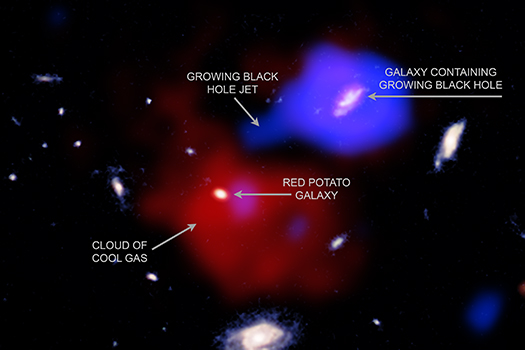
A labeled version of the image highlights the red potato galaxy, the neighboring galaxy hosting the growing supermassive black hole, the jet from this black hole and the cloud of cool gas the jet may be striking. Apart from the jet, the blue Chandra emission from the neighboring galaxy is a point source of X-rays, rather than including diffuse X-rays. The large, diffuse appearance of the X-ray source is caused by the difference in resolving power of JWST and Chandra, and the processing required to show the faint jet.
While the red potato galaxy mostly has older, cooler stars and therefore appears red in infrared data, the galaxy hosting the black hole with the jet does not. Instead, this galaxy, which is located about 200,000 light-years from the red potato, is very actively forming stars, including massive, hot stars, as are most of the other nearby galaxies.
Astronomers want to learn how galaxies and black holes interact with each other – especially at this critical epoch in the universe’s history – and how that impacts when and how stars form.
A paper describing these results, led by Weichen Wang of the University of Milan-Bicocca in Italy, has been recently published in the Astronomy & Astrophysics journal. NASA's Marshall Space Flight Center manages the Chandra program. The Smithsonian Astrophysical Observatory's Chandra X-ray Center controls science operations from Cambridge, Massachusetts, and flight operations from Burlington, Massachusetts.
This release includes a composite image featuring two galaxies in the early universe, some 11.7 billion light-years from Earth.
Near the center of the image is a small, irregular, pale yellow oval with a red outer ring, in the heart of a bright, hazy red cloud. This is a galaxy nicknamed the “red potato” by astronomers studying this region of the early universe. Those astronomers expected the red potato to be producing scores of new stars. When they instead discovered relatively low star growth, they looked to a neighboring galaxy for reasons why.
To our upper right of the red potato and its hazy red cloud of gas, is a neighboring galaxy in a pool of blue haze. This galaxy is also pale yellow in color, but has a less defined, less tuber-like shape than its counterpart. The blue pool represents X-rays from a growing supermassive black hole in the heart of the galaxy. The pool has a stubby tail, or X-ray jet, pointed toward the red cloud, and faint pockets of red and blue overlap within the composite image.
Astronomers now believe that the X-ray jet from the neighboring supermassive black hole may have struck the red gas cloud around the red potato. This may be causing turbulence within the gas cloud, preventing the gas from falling onto the red potato. Without the ingredients from that gas, new stars struggle to grow.
|
||||||||||||||||||||||||||||||