



CXC Home | Search | Help | Image Use Policy | Latest Images | Privacy | Accessibility | Glossary | Q&A
1
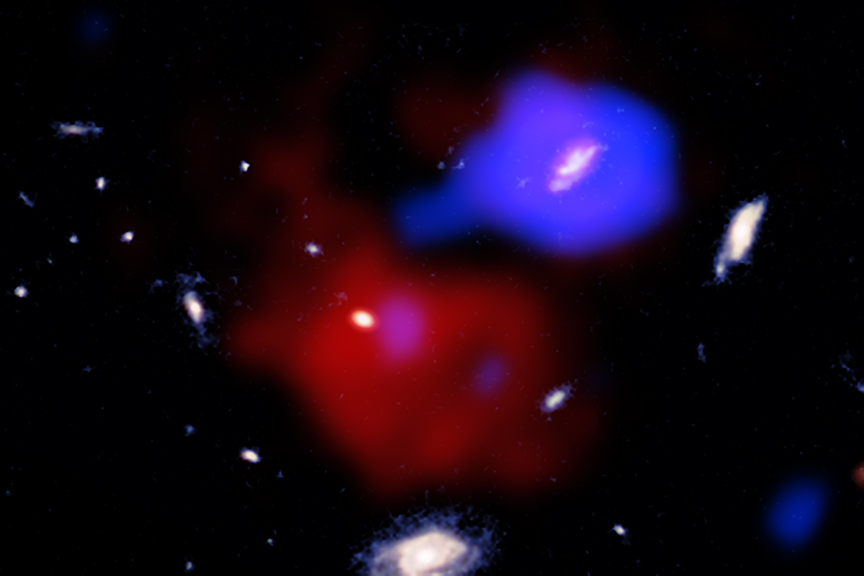
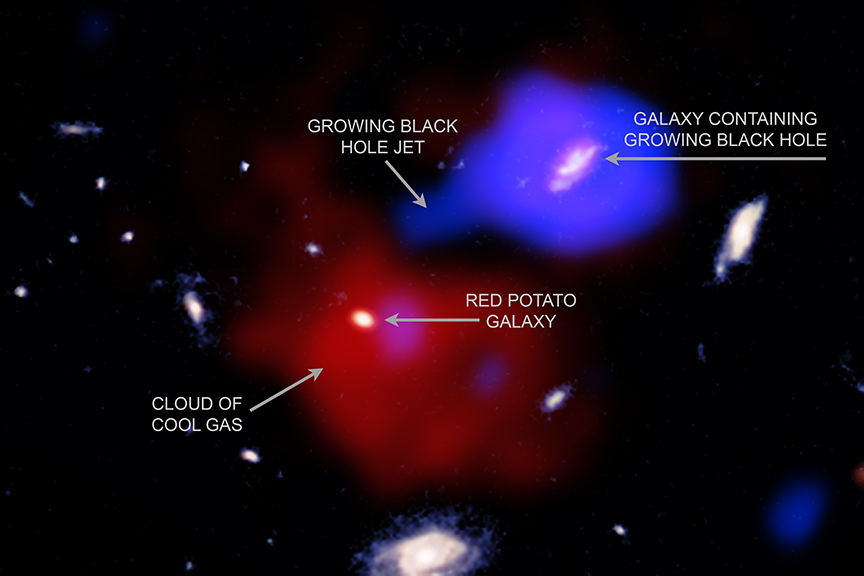
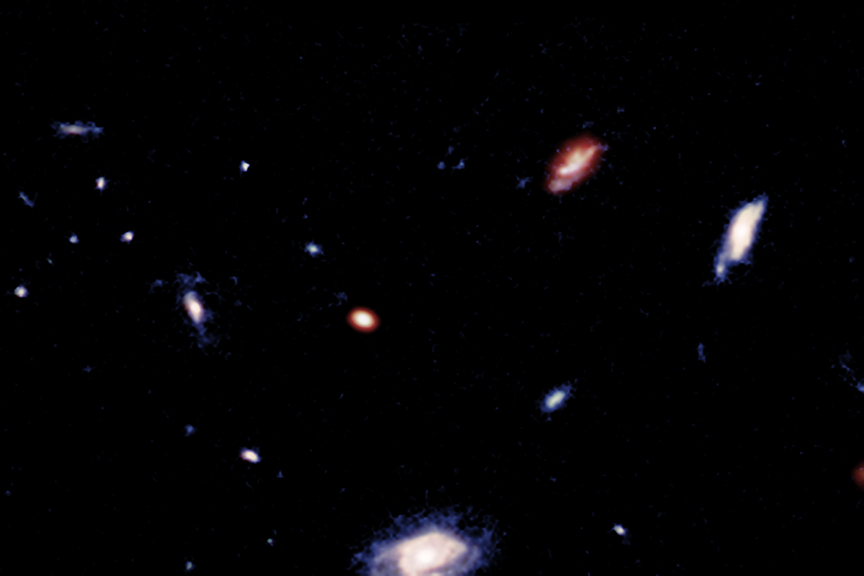
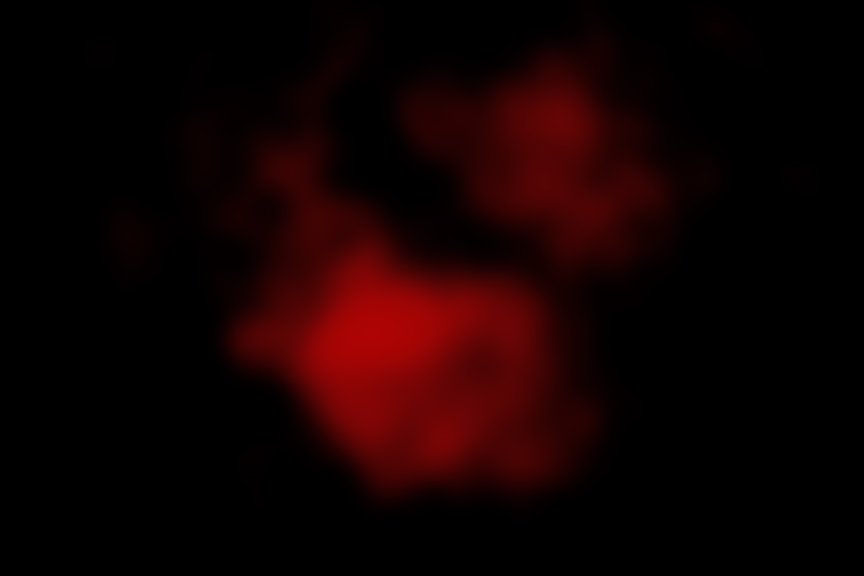
X-ray, Infrared & Radio Images of the Red Potato Galaxy, MQN01 J004131.9-493704Credit: X-ray: NASA/CXC/Univ. Milano-Bicocca/W. Wang et al.; Infrared: NASA/ESA/CSA/STScI; Radio: ESO/NRAO/NAOJ/ALMA; Image processing: NASA/CXC/SAO/N. Wolk & P. Edmonds
A black hole may be stirring a “pot” of gas containing a neighboring galaxy in the early universe. This galaxy is located at an intersection where gigantic web-like structures of galaxies and gas meet in the early universe. These images show this galaxy in X-rays from Chandra, optical light data from the VLT, and infrared data from Webb. Evidence shows that a jet from a neighboring galaxy’s black hole may be keeping the gas around the red potato turbulent, preventing it from forming large amounts of new stars as expected.
2
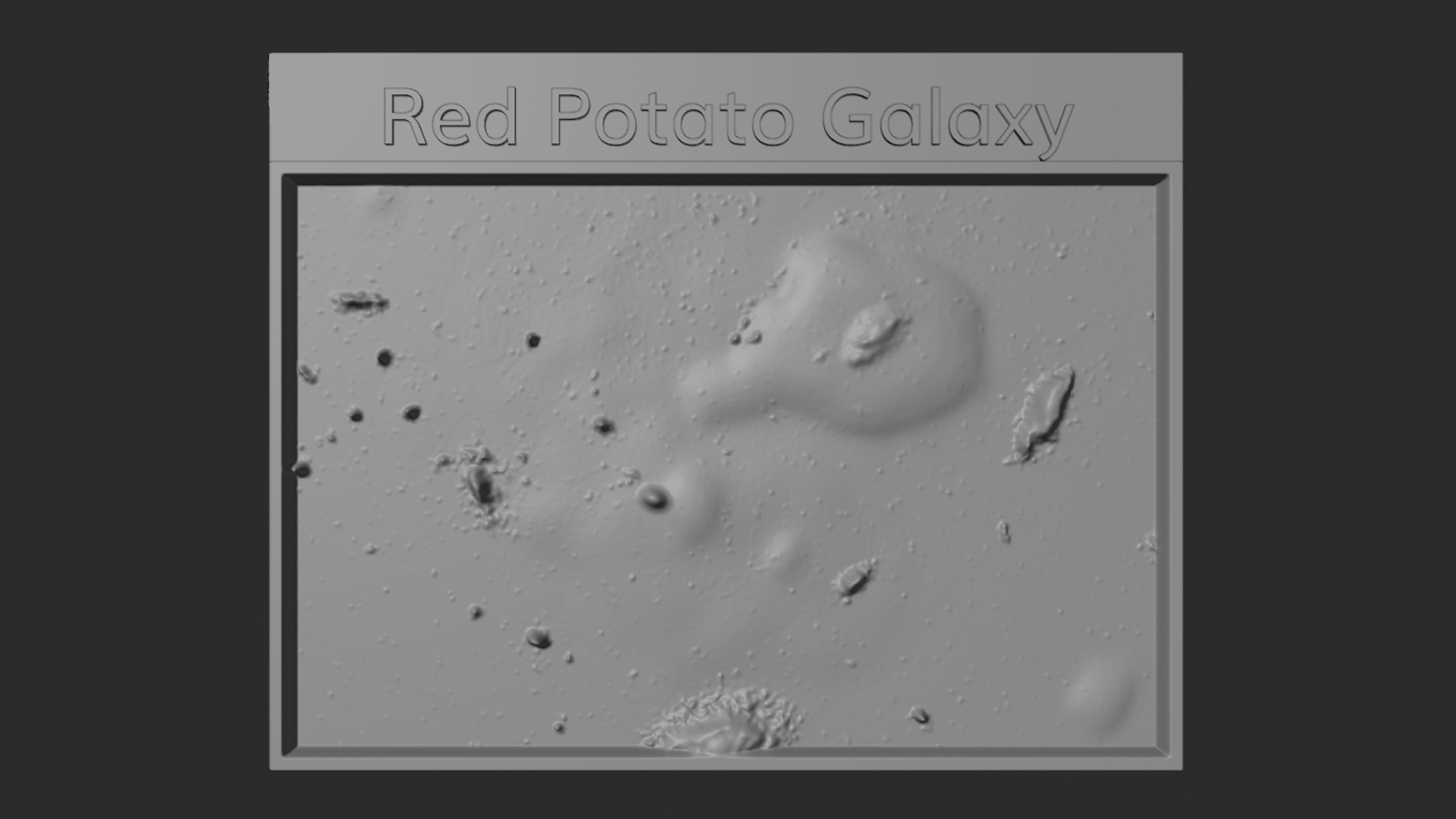
3D Printable Files: Red Potato Galaxy, MQN01 J004131.9-493704(3D Print Credit: NASA/CXC/A. Jubett, using software by Tactile Universe/N. Bonne & C. Krawczyk & Blender)
This tactile plate is a physical relief map based on the intensity of multi-wavelength data featuring two galaxies in the early universe, some 11.7 billion light-years from Earth.
Near the center of the plate is a small, irregular, oval with a thin ring, in the heart of a hazy cloud. This is a galaxy nicknamed the “red potato” by astronomers studying this region of the early universe. Those astronomers expected the red potato to be producing scores of new stars. When they instead discovered relatively low star growth, they looked to a neighboring galaxy for reasons why.
To our upper right of the red potato and its hazy cloud of gas is a neighboring galaxy in another pool of haze. This galaxy has a less defined, less tuber-like shape than its counterpart. This upper right pool represents X-rays from a growing supermassive black hole in the heart of the galaxy. The pool has a stubby tail, or X-ray jet, pointed toward the lower haze cloud, and faint pockets of haze from each cloud overlap each other.
Astronomers now believe that the X-ray jet from the neighboring supermassive black hole may have struck the gas cloud around the red potato. This may be causing turbulence within the gas cloud, preventing the gas from falling onto the red potato. Without the ingredients from that gas, new stars struggle to grow.
Near the center of the plate is a small, irregular, oval with a thin ring, in the heart of a hazy cloud. This is a galaxy nicknamed the “red potato” by astronomers studying this region of the early universe. Those astronomers expected the red potato to be producing scores of new stars. When they instead discovered relatively low star growth, they looked to a neighboring galaxy for reasons why.
To our upper right of the red potato and its hazy cloud of gas is a neighboring galaxy in another pool of haze. This galaxy has a less defined, less tuber-like shape than its counterpart. This upper right pool represents X-rays from a growing supermassive black hole in the heart of the galaxy. The pool has a stubby tail, or X-ray jet, pointed toward the lower haze cloud, and faint pockets of haze from each cloud overlap each other.
Astronomers now believe that the X-ray jet from the neighboring supermassive black hole may have struck the gas cloud around the red potato. This may be causing turbulence within the gas cloud, preventing the gas from falling onto the red potato. Without the ingredients from that gas, new stars struggle to grow.
Return to: Chandra Sees Black Hole Stirring "Pot" Containing Galactic Potato (July 21, 2026)


Revised: July 16, 2026