


CXC Home | Search | Help | Image Use Policy | Latest Images | Privacy | Accessibility | Glossary | Q&A
1
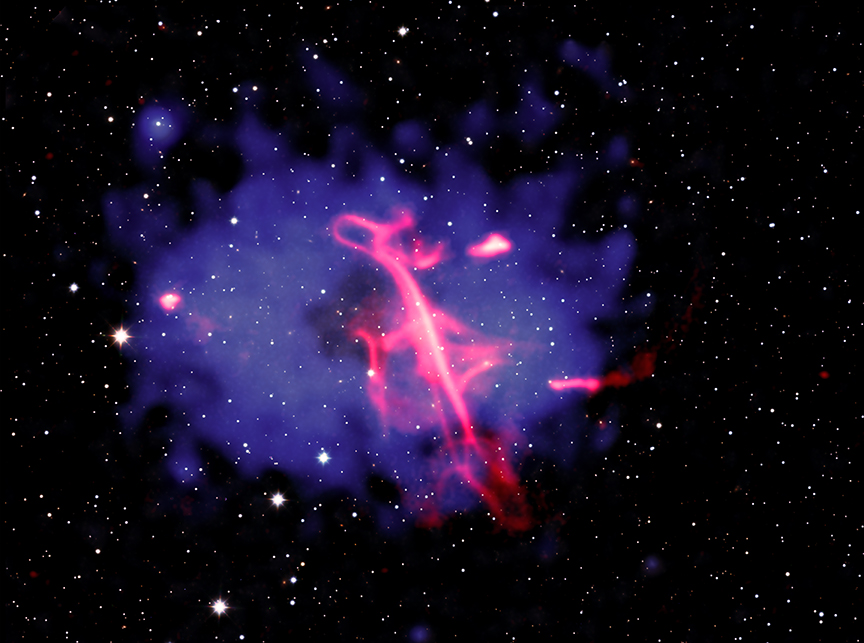
X-ray, Radio, & Infrared Images of VLSS J0318.9+5755Credit: X-ray: NASA/CXC/INAF-IRA/A. Botteon et al.; Infrared: UKIDSS-GPS ; Radio: ASTRON/LOFAR; Image processing: NASA/CXC/SAO/N. Wolk
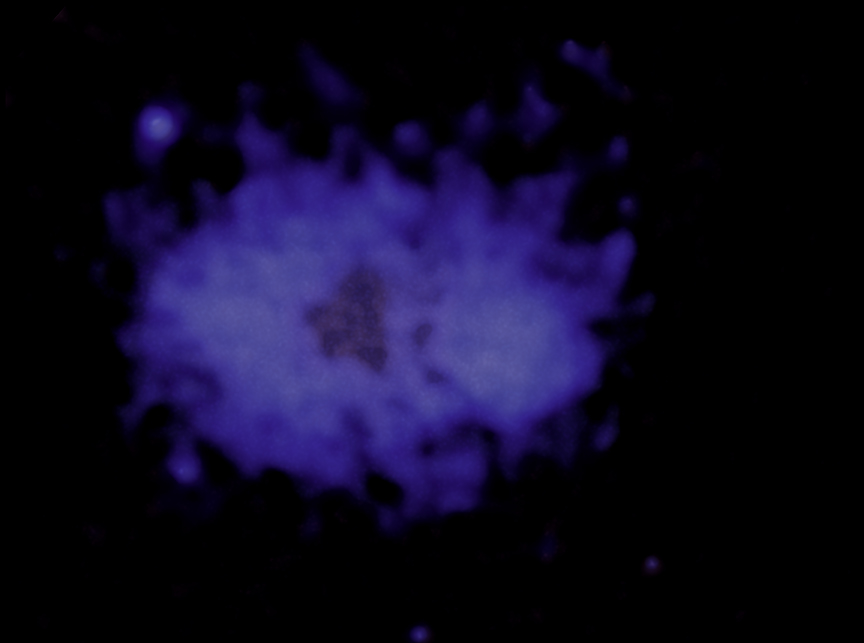
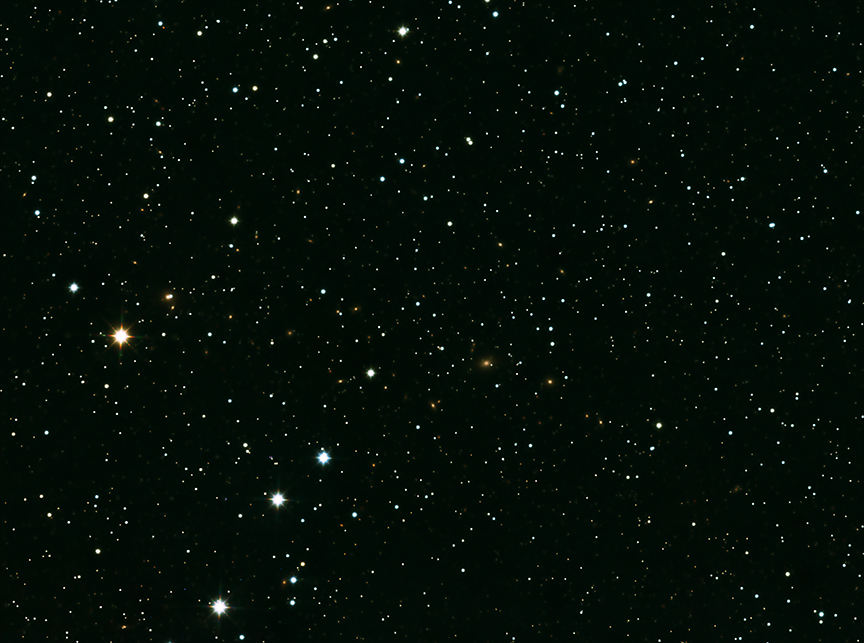
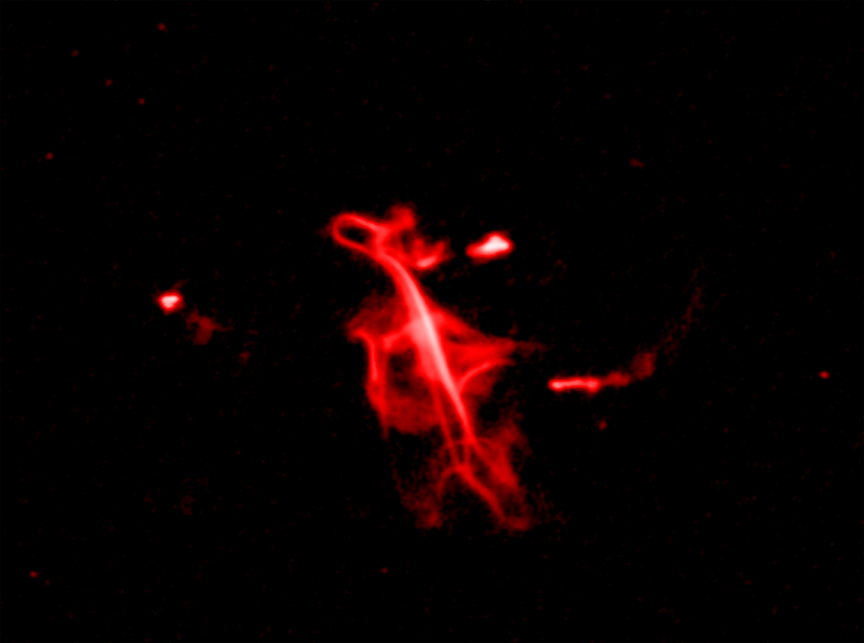
Using Chandra, astronomers have discovered that an outburst from a supermassive black hole, followed by a collision of two galaxy clusters, are the likely causes of an unusual formation in a galaxy cluster. The “Treble Clef” radio source was given its nickname because of a distinct shape in radio waves that resembles the musical symbol. This composite image of the Treble Clef and its galaxy cluster contains X-rays from Chandra and eROSITA, radio data from LOFAR, and infrared data from UKIRT.
2
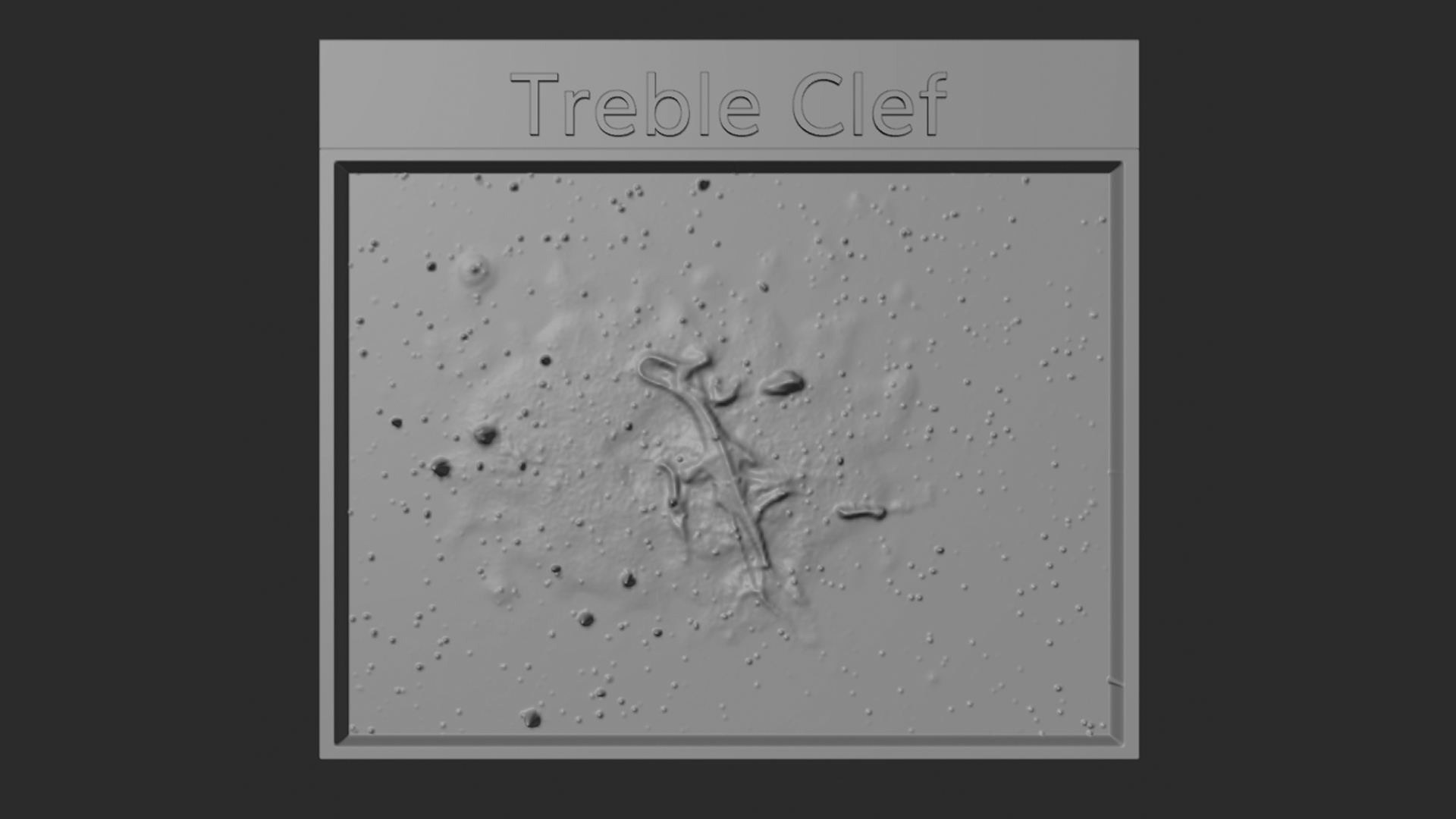
3D Printable Files: VLSS J0318.9+5755, The Treble Clef Cluster(3D Print Credit: NASA/CXC/A. Jubett, using software by Tactile Universe/N. Bonne & C. Krawczyk & Blender)
This tactile plate is a physical relief map based on the intensity of multi-wavelength data featuring a remarkable radio wave formation that strongly resembles the shape of a treble clef musical symbol, hovering in the midst of two colliding galaxy clusters.
Here, galaxies in the galaxy clusters, plus foreground and background stars and galaxies, blanket the plate with specks of light set against the vastness of space. At the center of the frame is a large, oval cloud with ragged edges. This is a multimillion-degree gas cloud in the two clusters detected in X-rays by Chandra and eROSITA, the Extended RÖntgen Survey with an Imaging Telescope Array.
In the middle of the ragged field, tilting slightly to our left, is what appears to be a giant, loosely-modeled treble clef. Like the musical notation for which it’s named, the formation has a strong vertical stroke with a continuous, fluid line swooping back and forth as it moves from top to bottom.
This radio wave formation appears to be the result of a two-stage process. First, charged particles and magnetic fields were driven from a supermassive black hole, producing bright radio waves. Those waves faded and lost energy over time, before being reenergized and compressed when the two galaxy clusters collided.
Here, galaxies in the galaxy clusters, plus foreground and background stars and galaxies, blanket the plate with specks of light set against the vastness of space. At the center of the frame is a large, oval cloud with ragged edges. This is a multimillion-degree gas cloud in the two clusters detected in X-rays by Chandra and eROSITA, the Extended RÖntgen Survey with an Imaging Telescope Array.
In the middle of the ragged field, tilting slightly to our left, is what appears to be a giant, loosely-modeled treble clef. Like the musical notation for which it’s named, the formation has a strong vertical stroke with a continuous, fluid line swooping back and forth as it moves from top to bottom.
This radio wave formation appears to be the result of a two-stage process. First, charged particles and magnetic fields were driven from a supermassive black hole, producing bright radio waves. Those waves faded and lost energy over time, before being reenergized and compressed when the two galaxy clusters collided.
Return to: NASA's Chandra Breaks Down 'Treble Clef's' Galaxy Cluster Collision (October 13, 2026)


Revised: October 09, 2026