


CXC Home | Search | Help | Image Use Policy | Latest Images | Privacy | Accessibility | Glossary | Q&A
Chandra & Swift Galaxy Images:
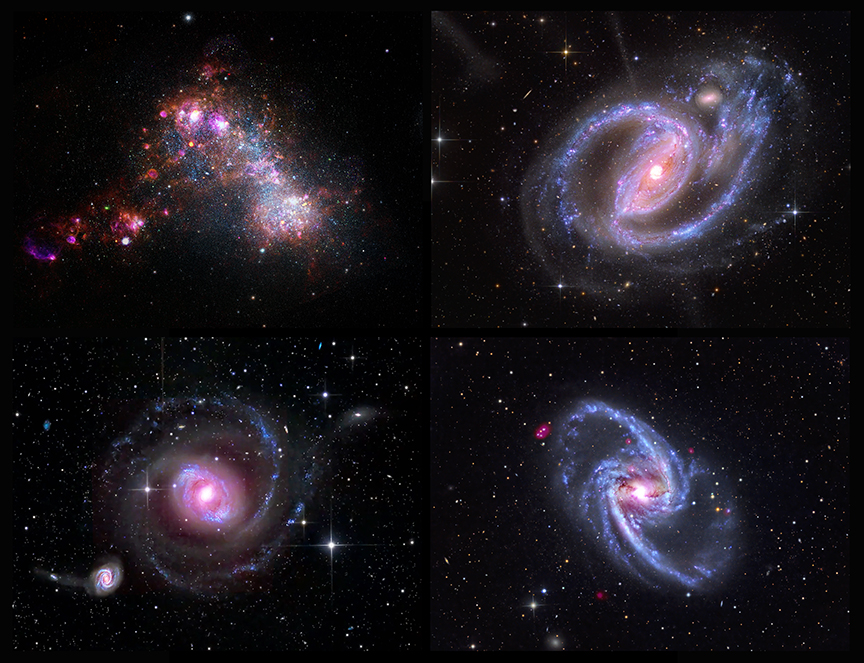
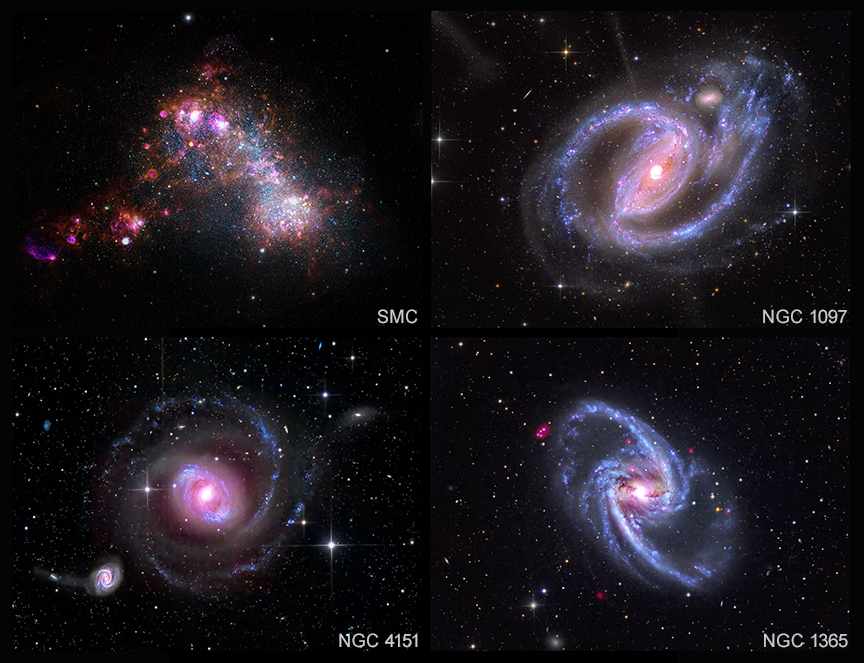
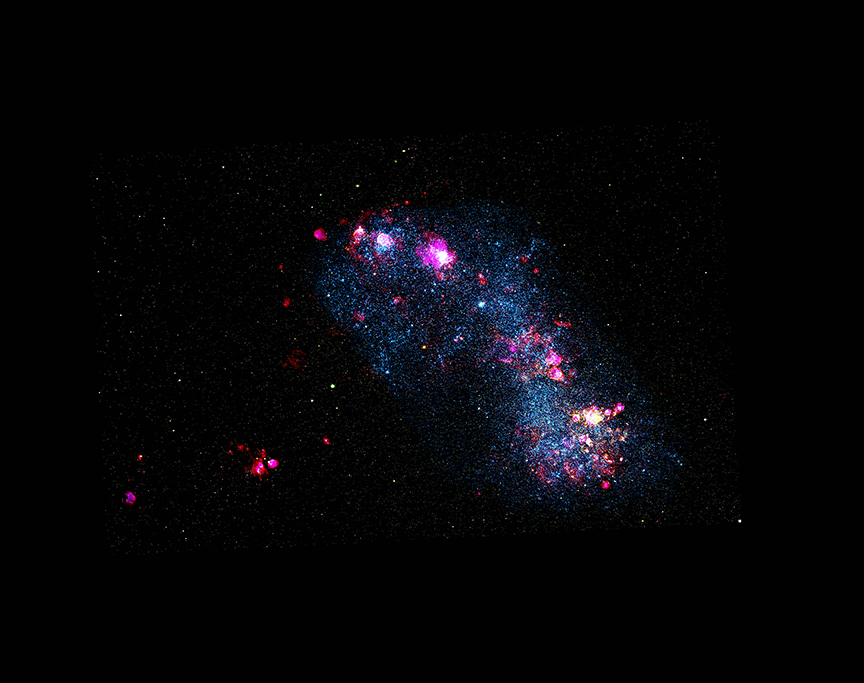
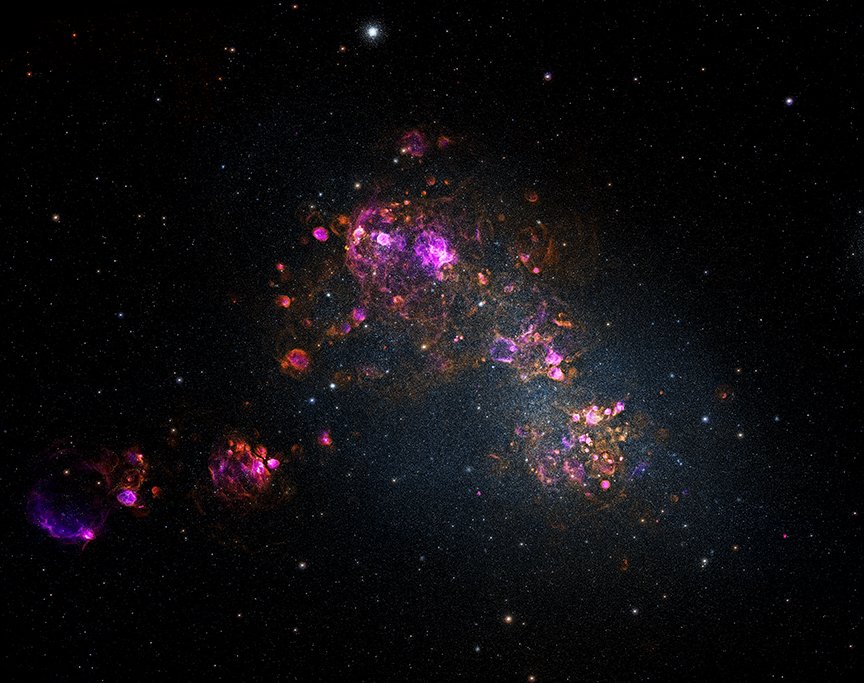
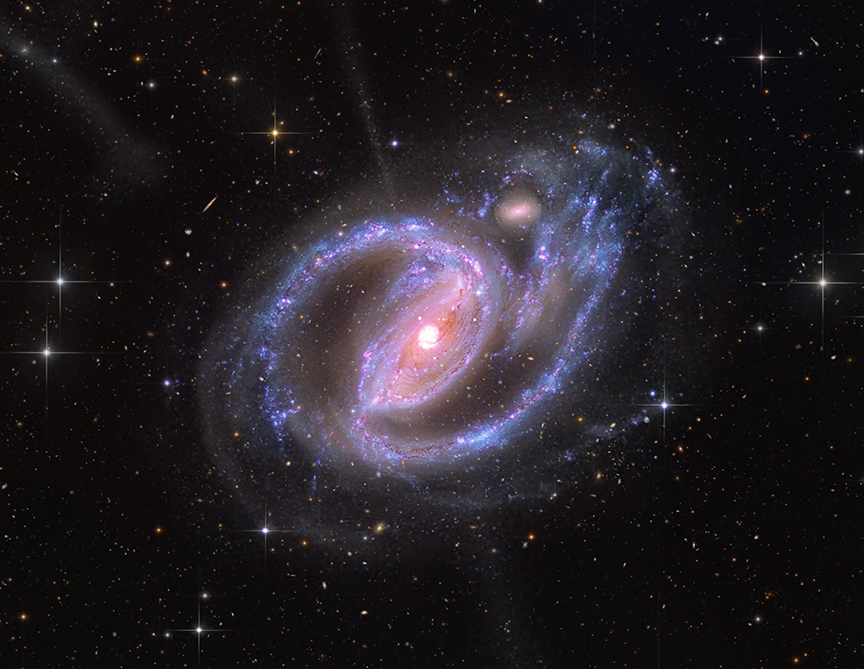
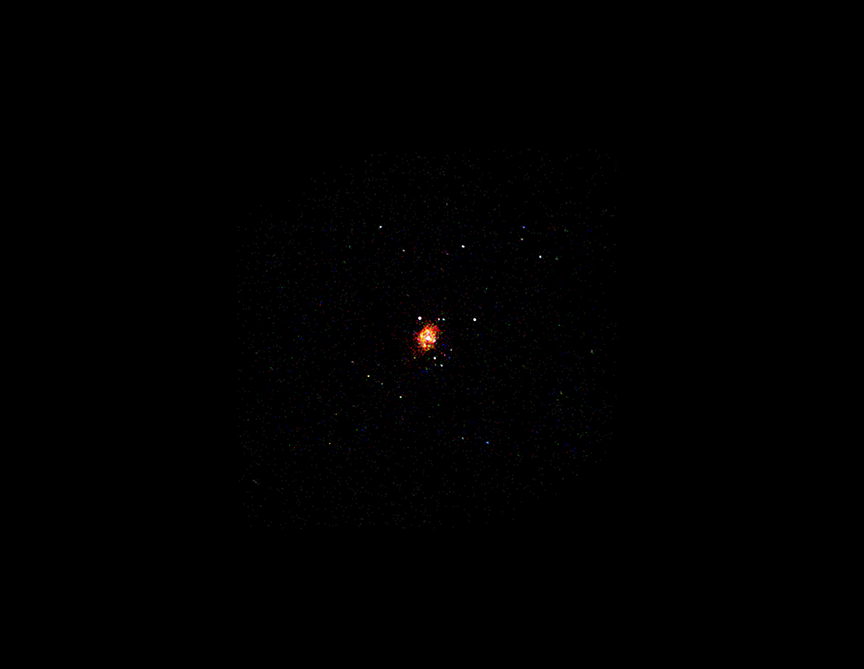
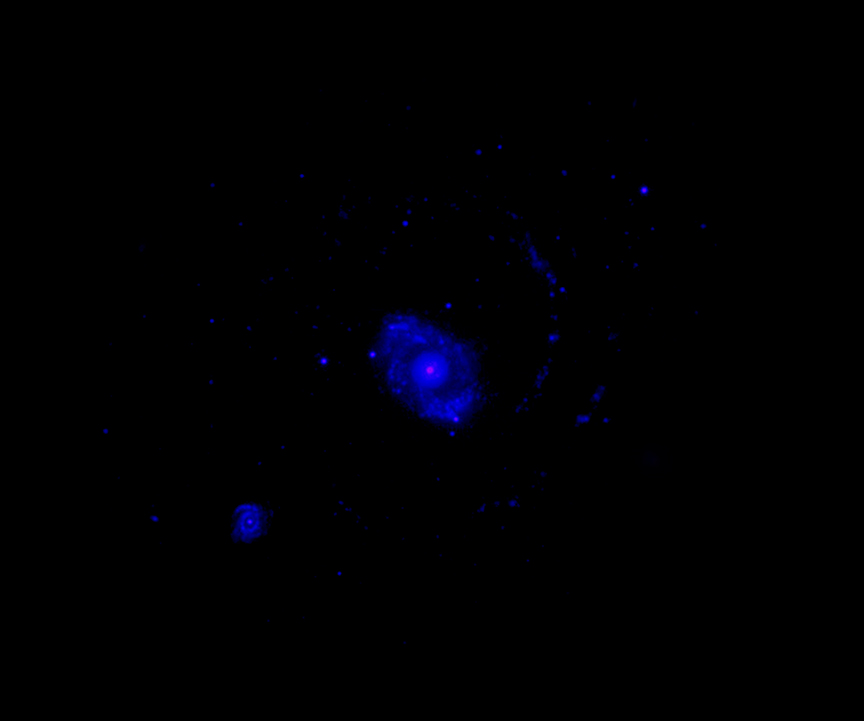
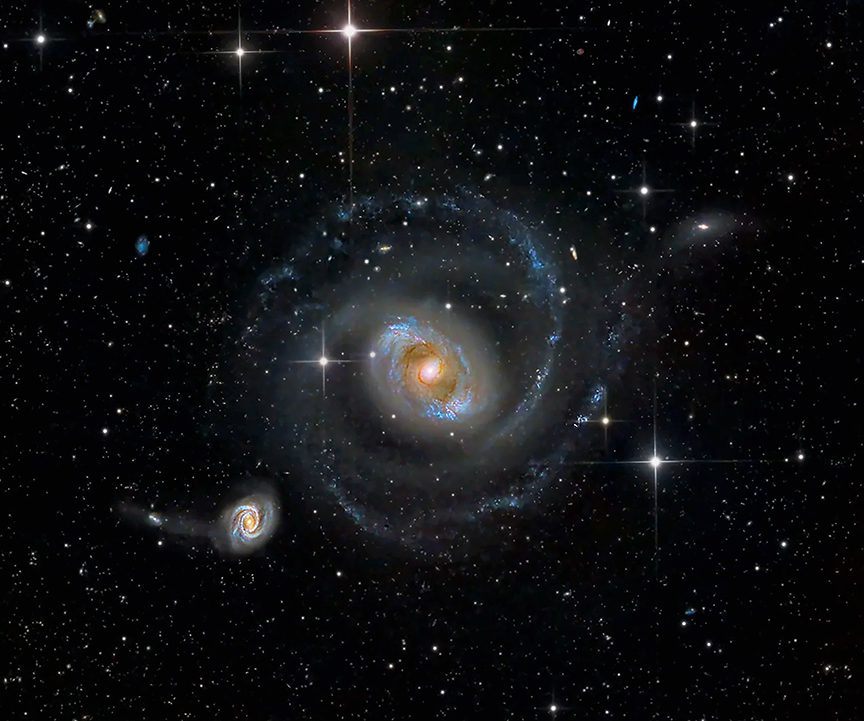
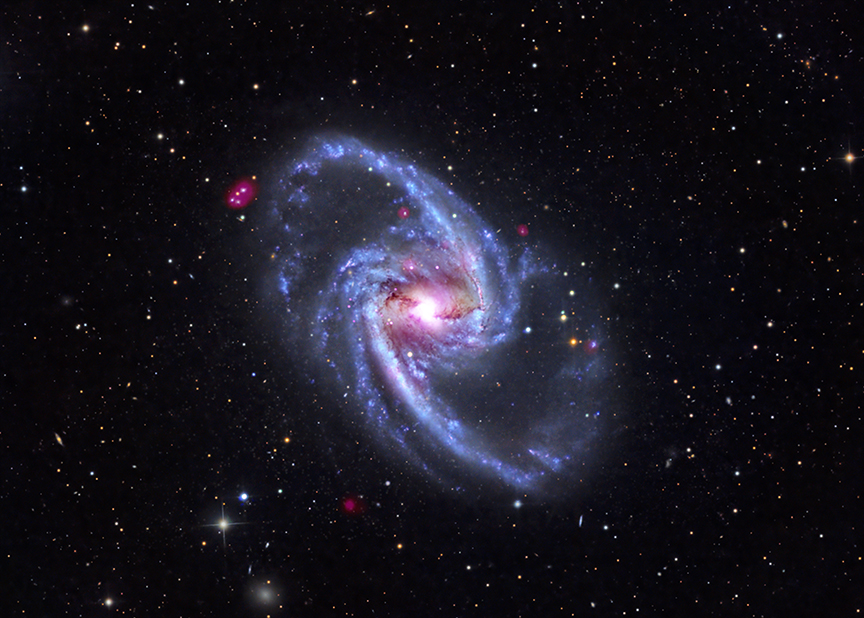
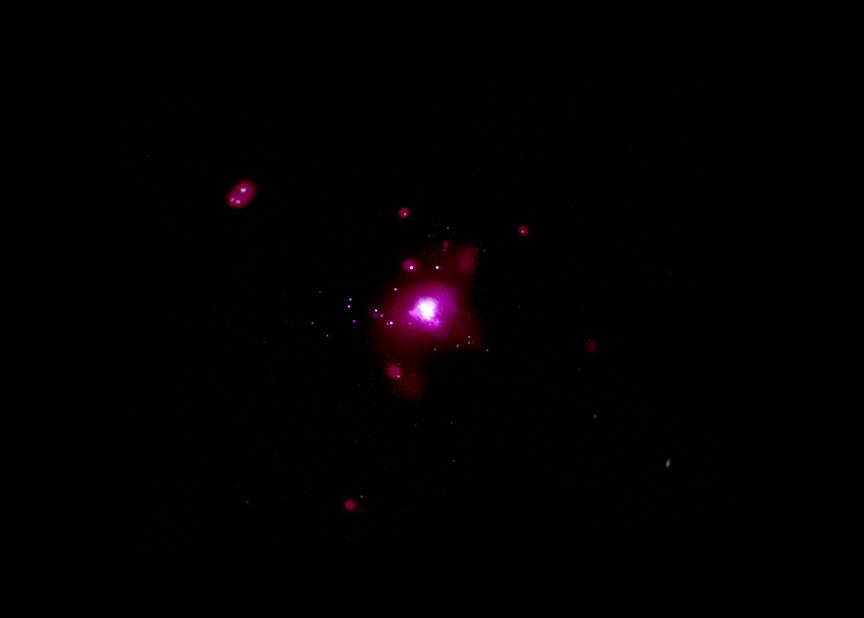
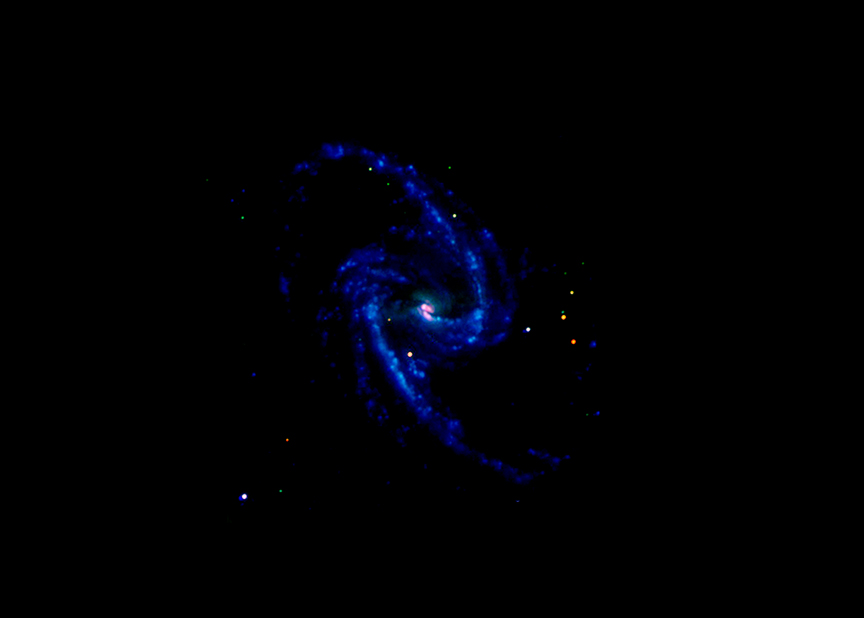
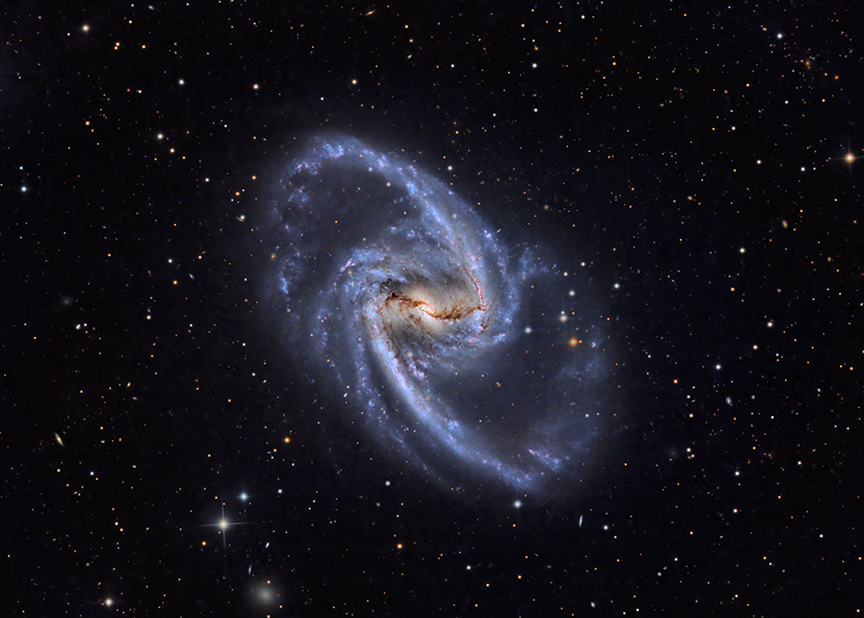
These four images sample the many objects that Chandra and Swift have both observed over the course of their missions. Chandra and Swift have complementary abilities with Swift being able to catch rapidly-changing events in space in ultraviolet, X-ray, and gamma-ray light, while Chandra is able to gather detailed data with its sharp X-ray vision. The composite images are a view of the Small Magellanic Cloud, NGC 1097, NGC 4151, and NGC 1365.
1
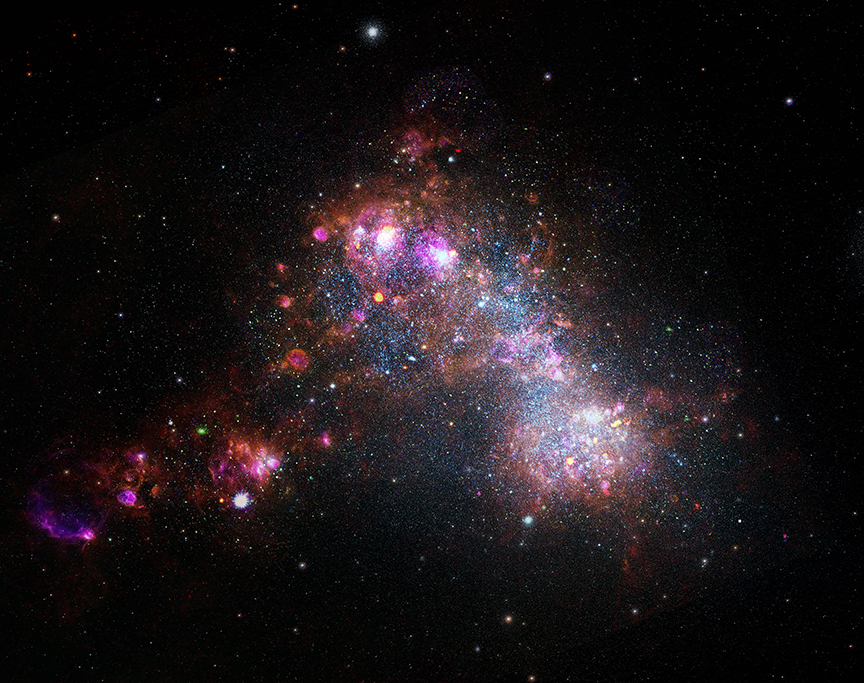
Small Magellanic Cloud (SMC)Credit: X-ray: NASA/CXC/SAO and ESA/XMM-Newton; UV: NASA/Penn State Univ/Swift and NASA/CAS/CNES/John Hoplins Univ. Applied Physics Laboratory; Optical: NOIRLab/NSF/AURA/MCELS Team/Middlebury College/F. Winkler; Infrared: ESA/NASA/JPL-CalTech/STScI; Image Processing: NASA/CXC/SAO/L. Frattare
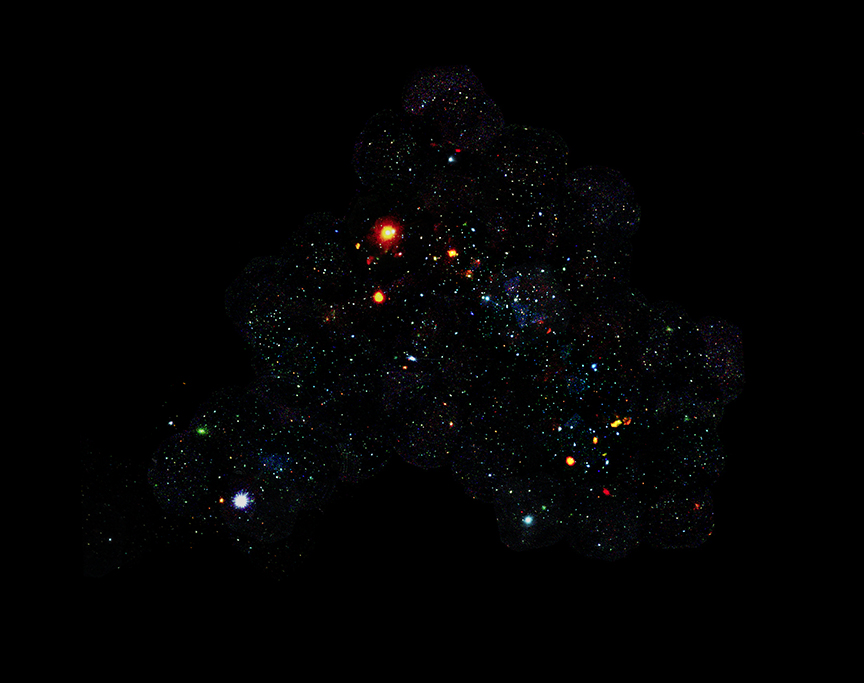
The Small Magellanic Cloud (SMC) is one of the Milky Way’s closest galactic neighbors, and orbits around our home galaxy, at a distance of about 200,000 light-years from Earth. This new view of the SMC contains a multitude of layers of light including ultraviolet data from Swift (magenta and cyan), X-rays from the Chandra X-ray Observatory and ESA’s XMM-Newton (red, green and navy), infrared data from NASA’s retired Spitzer Space Telescope and ESA’s Herschel Space Observatory (orange), and optical data the Cerro Tololo Inter-American Observatory in Chile (pink, peach and purple).
2
NGC 1097Credit: X-ray: NASA/CXC/SAO; UV: NASA/Penn State Univ./Swift; Optical: Mark Hanson; Image Processing: NASA/CXC/SAO/L. Frattare
NGC 1097 is a spiral galaxy about 48 million light-years from Earth that contains a supermassive black hole about 140 million times more massive than our Sun. The region around the black hole glows brightly in X-rays as material nearing the black hole is heated to millions of degrees. In this combined view, X-rays from Chandra (yellow and orange) have been combined with ultraviolet data from Swift (blue) along with an optical light image from Hubble and a ground-based telescope (red, green, and blue).
3
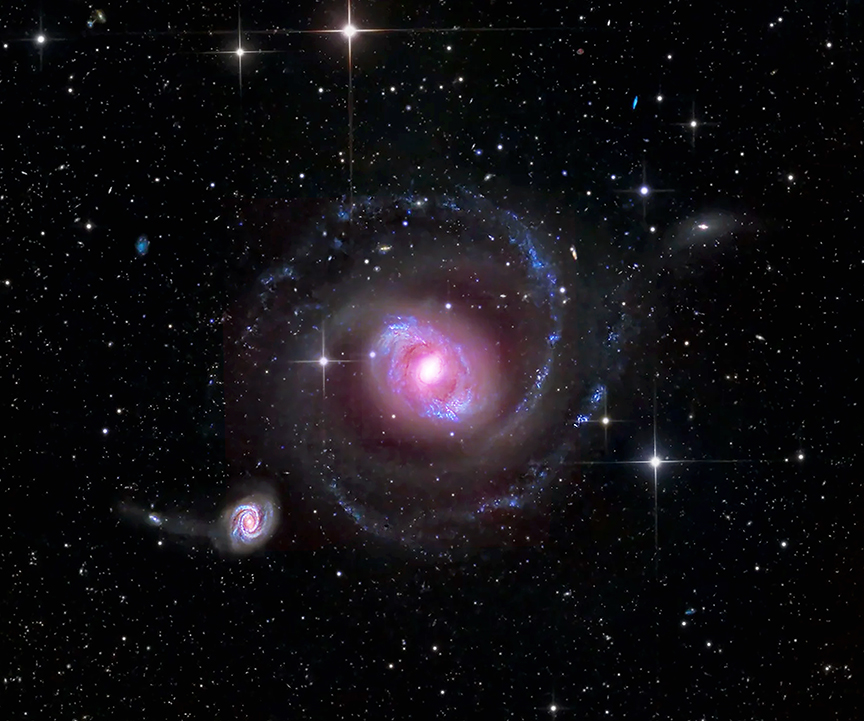
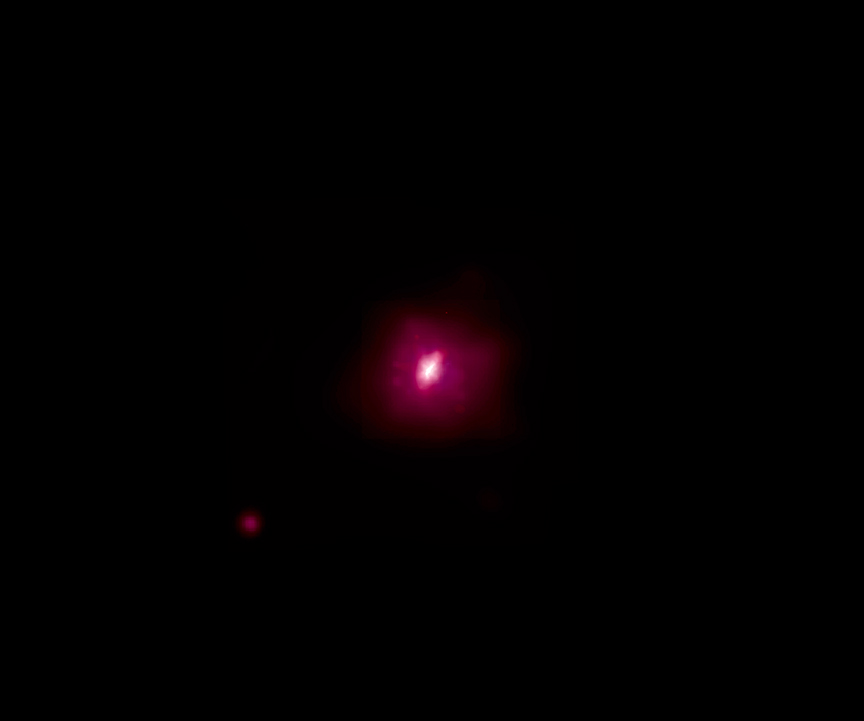
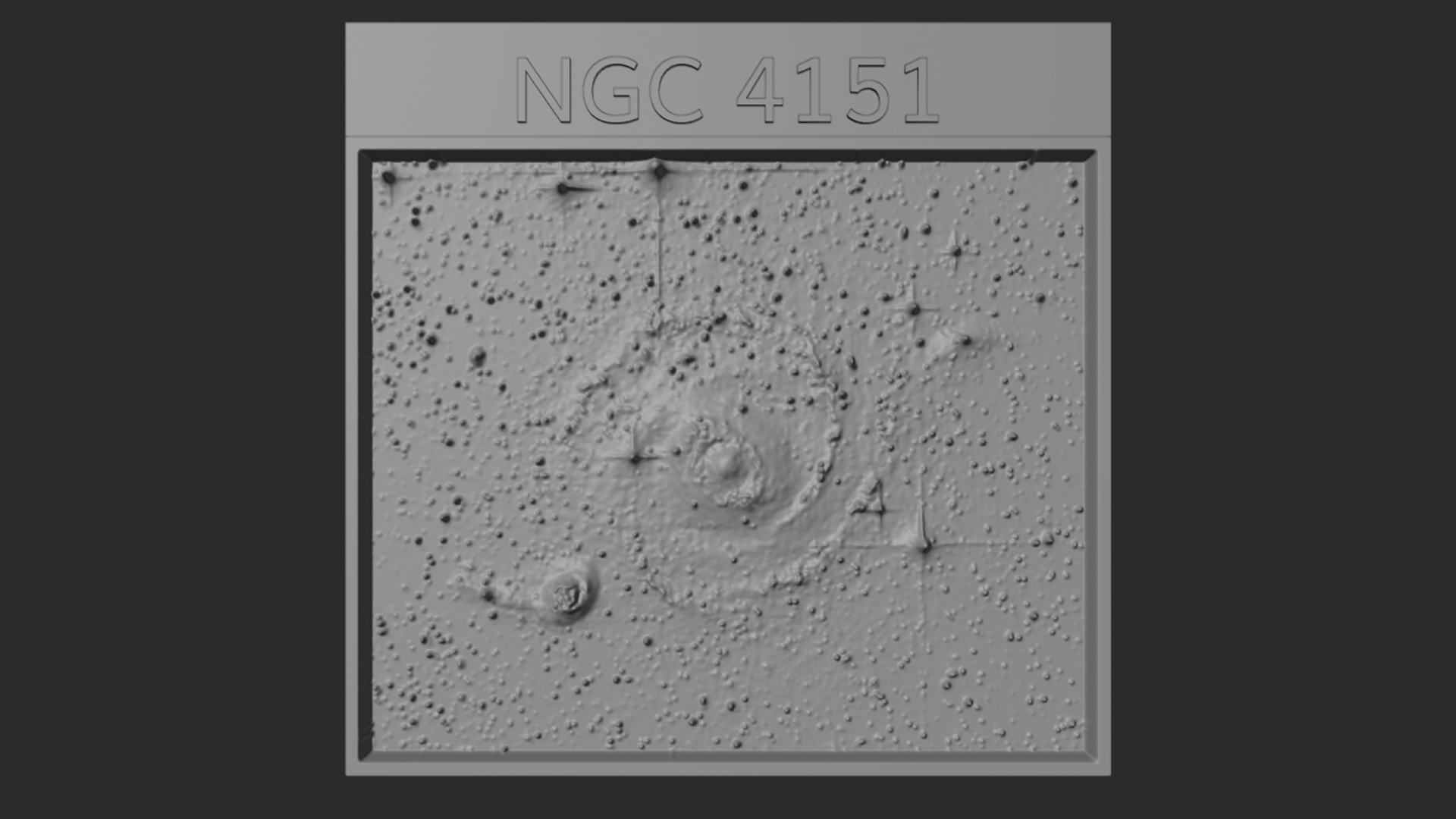
NGC 4151Credit: X-ray: NASA/CXC/SAO; UV: NASA/Penn State Univ./Swift; Optical: Mark Hanson; Image Processing: NASA/CXC/SAO/L. Frattare
NGC 4151 is also a spiral galaxy with an actively-growing supermassive black hole at its center. The X-ray emission detected by Chandra (orange) has been attributed to an outburst powered by the black hole. Ultraviolet data and X-ray light detected by Swift (magenta) has been combined with the Chandra data and added to an optical light image taken from the ground by an astrophotographer.
4
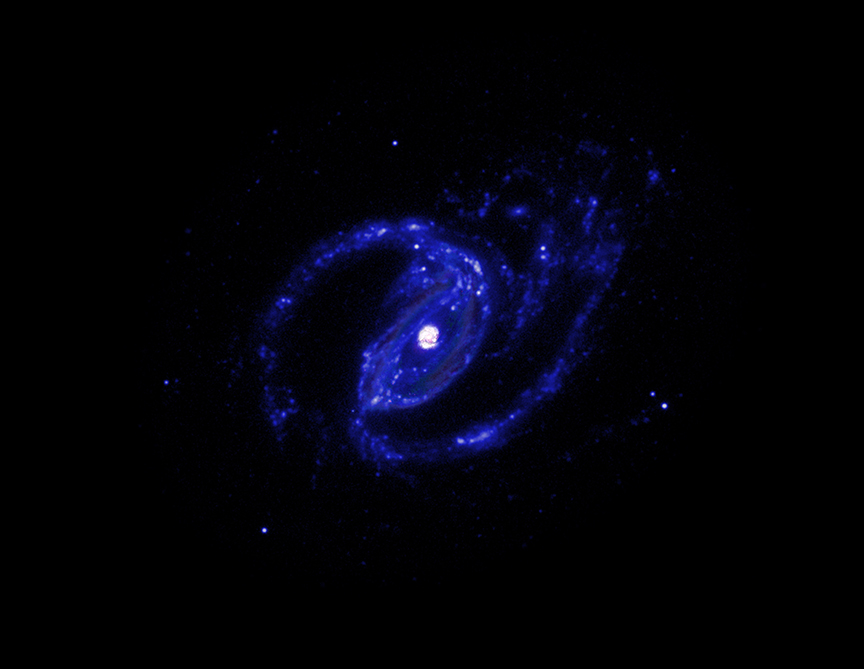
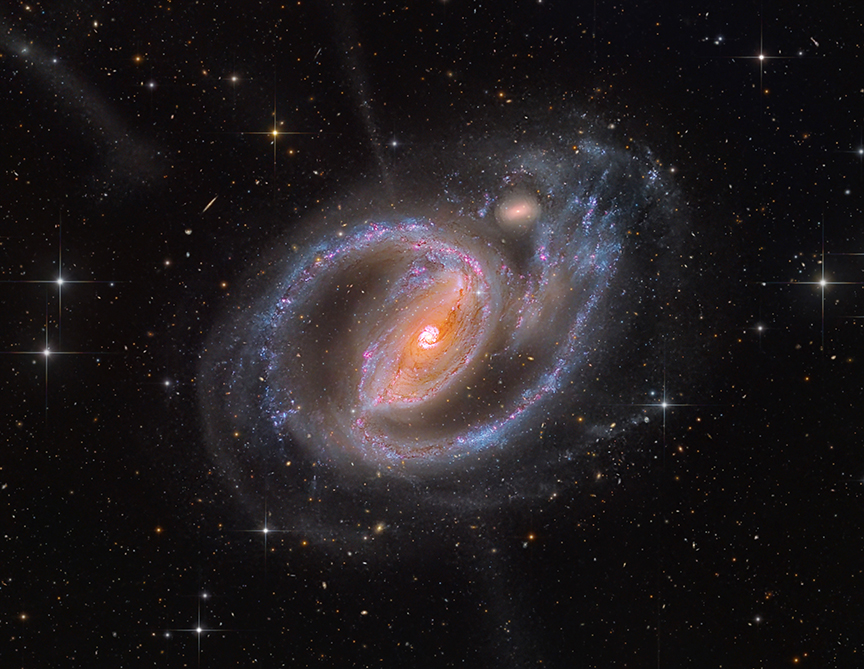
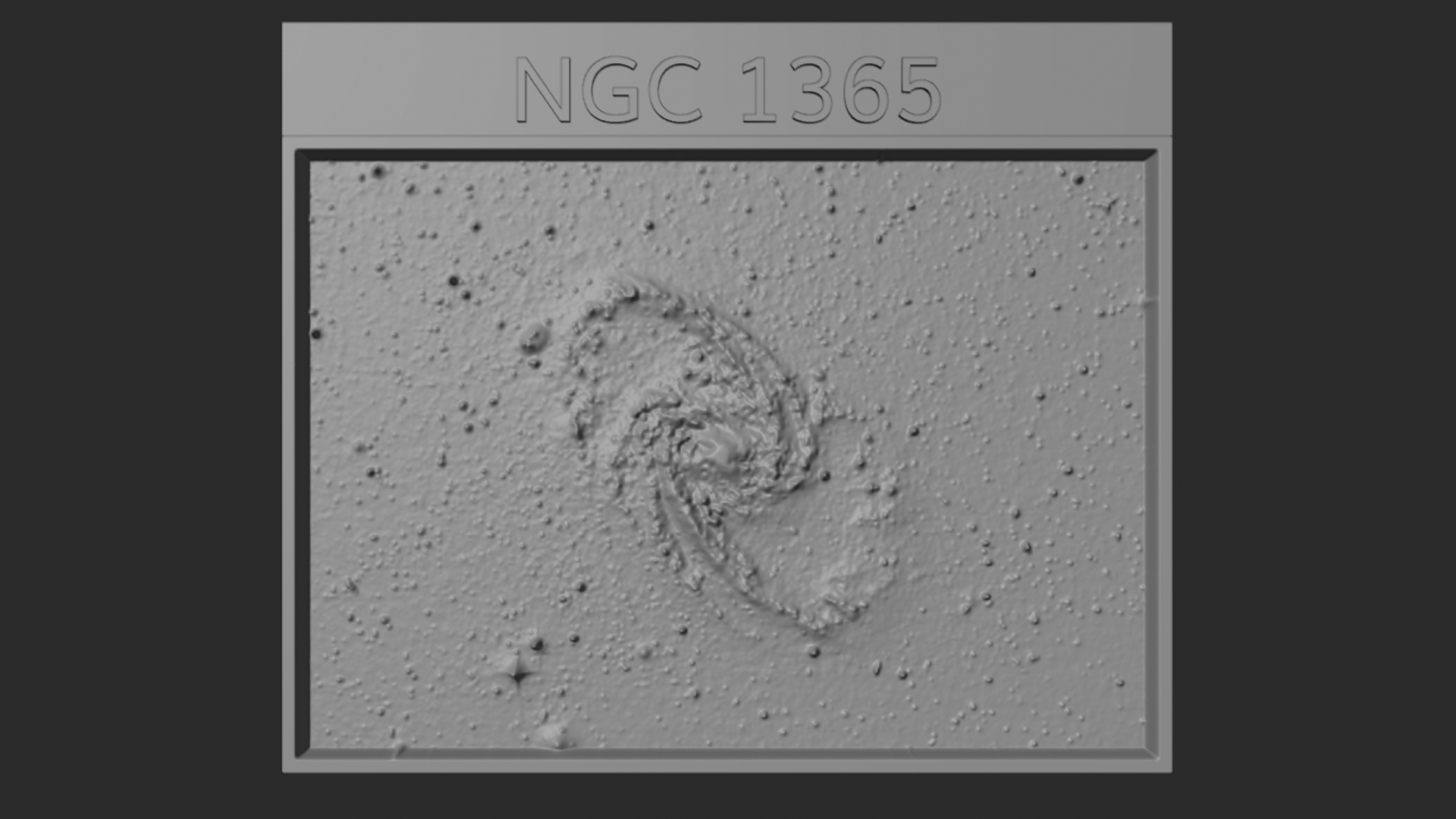
NGC 1365Credit: X-ray: NASA/CXC/SAO; UV: NASA/Penn State Univ/Swift; Optical:Armen Akopian; Image Processing: NASA/CXC/SAO/L. Frattare
There is another growing giant hole at the center of the galaxy NGC 1365. Astronomers call these very bright cores “active galactic nuclei” (or AGN), which are fueled by a steady flow of material streaming onto the black hole. In this composite, there are X-rays from Chandra (purple) and Swift (magenta), ultraviolet data from Swift (teal), and an optical light image from a ground-based telescope.
Tactile Products
1
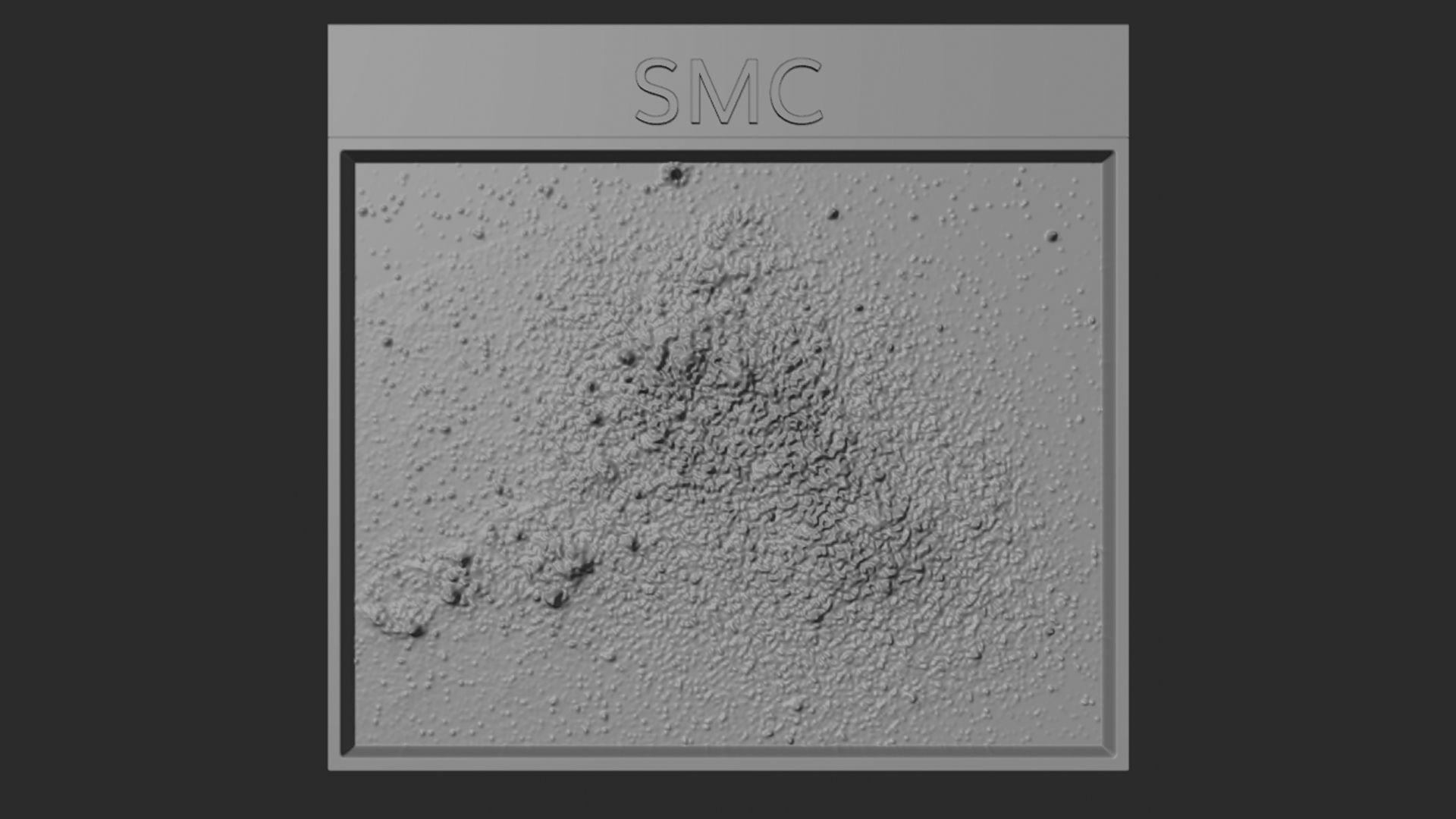
3D Printable Files: Small Magellanic Cloud (SMC) (3D Print Credit: NASA/CXC/A. Jubett, using software by Tactile Universe/N. Bonne & C. Krawczyk & Blender)
This tactile plate is a physical relief map based on the intensity of multi-wavelength data featuring multilayered, composite data of the Small Magellanic Cloud, which resembles a highly detailed splatter painting in relief. Here, splashes of raised texture resembling a very coarse sandpaper shows variations in flecks ranging from minuscule pinpricks to fat smears, and form a cloud roughly shaped like an upside-down letter V.
2
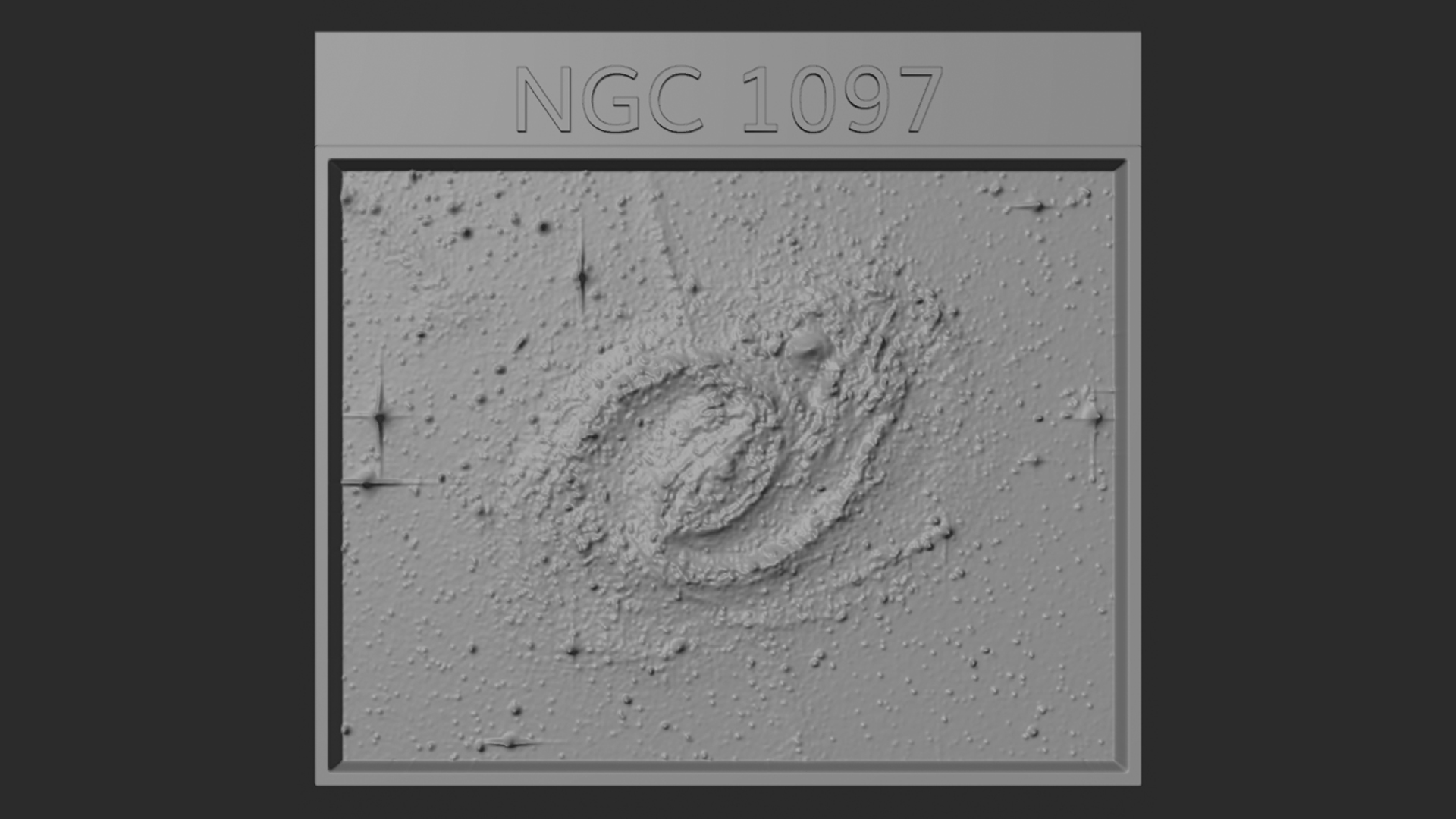
3D Printable Files: NGC 1097 (3D Print Credit: NASA/CXC/A. Jubett, using software by Tactile Universe/N. Bonne & C. Krawczyk & Blender)
This tactile plate is a physical relief map based on the intensity of multi-wavelength data featuring composite data of spiral galaxy NGC 1097, oriented face on. The galaxy features bumpy arms spiraling around a central black hole, awash in ambient X-ray light. At our upper right, the ends of the neatly corkscrewing arms are diffused, spread around a neighboring satellite galaxy.
3
3D Printable Files: NGC 4151 (3D Print Credit: NASA/CXC/A. Jubett, using software by Tactile Universe/N. Bonne & C. Krawczyk & Blender)
This tactile plate is a physical relief map based on the intensity of multi-wavelength data featuring composite data of spiral galaxy NGC 4151, oriented face on. The galaxy has a raised core with spiraling arms that are tight around the actively growing supermassive black hole at the center, but spread and grow less defined as they extend outward. At our lower left is a second spiral galaxy, NGC 4156, which appears small by comparison, and whose tightly wound arms give it the appearance of a swirly lollipop.
4
3D Printable Files: NGC 1365 (3D Print Credit: NASA/CXC/A. Jubett, using software by Tactile Universe/N. Bonne & C. Krawczyk & Blender)
This tactile plate is a physical relief map based on the intensity of multi-wavelength data featuring composite data of spiral galaxy NGC 1365, oriented face on. The galaxy has a raised plateau of core at its center, surrounded by a muddle of clouds in various heights of relief. Extending out of this dense core are cloudy arms, which spiral outwards in an oval shape, stretching toward our upper left and lower right.
Return to: Celebrating NASA's Chandra and Swift Exploring Space Together (October 8, 2026)


Revised: October 05, 2026