



CXC Home | Search | Help | Image Use Policy | Latest Images | Privacy | Accessibility | Glossary | Q&A
Spring Collection:
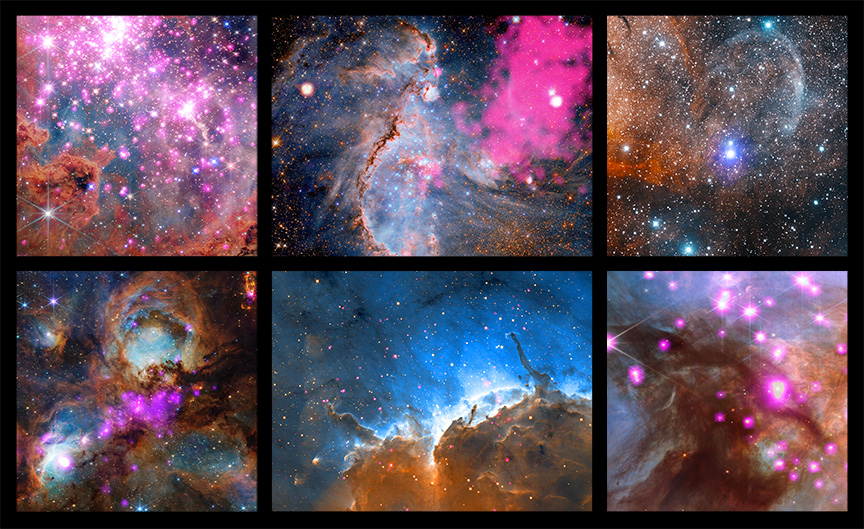
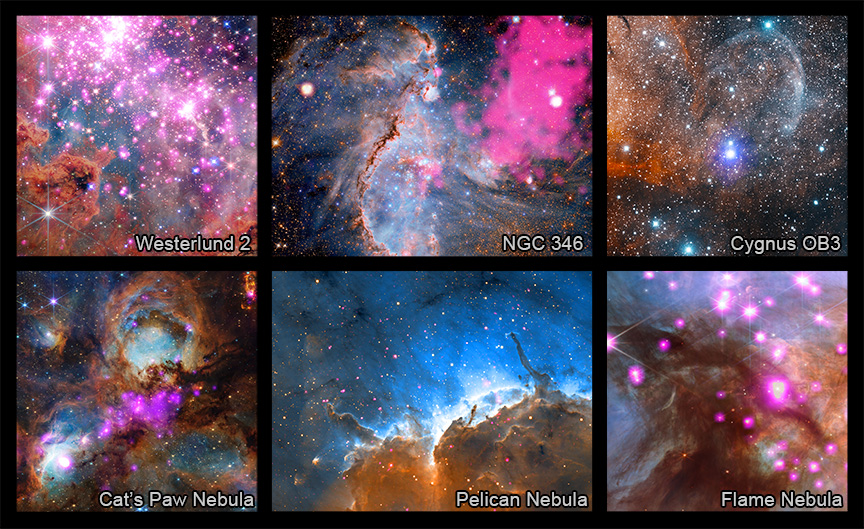
This collection of images from Chandra and other telescopes features regions where stars are forming, areas often nicknamed “stellar nurseries.” X-rays are energetic enough that they can penetrate the gas and dust of these regions, giving insight to the young stars and other high-energy phenomena that are happening within, including the effects of X-rays on any planets or planet-forming disks orbiting the stars. In this new collection, the objects are NGC 7000 (aka, the Pelican Nebula), the Cat’s Paw Nebula, NGC 346, the Flame Nebula, Westerlund 2, and Cygnus OB3.
1
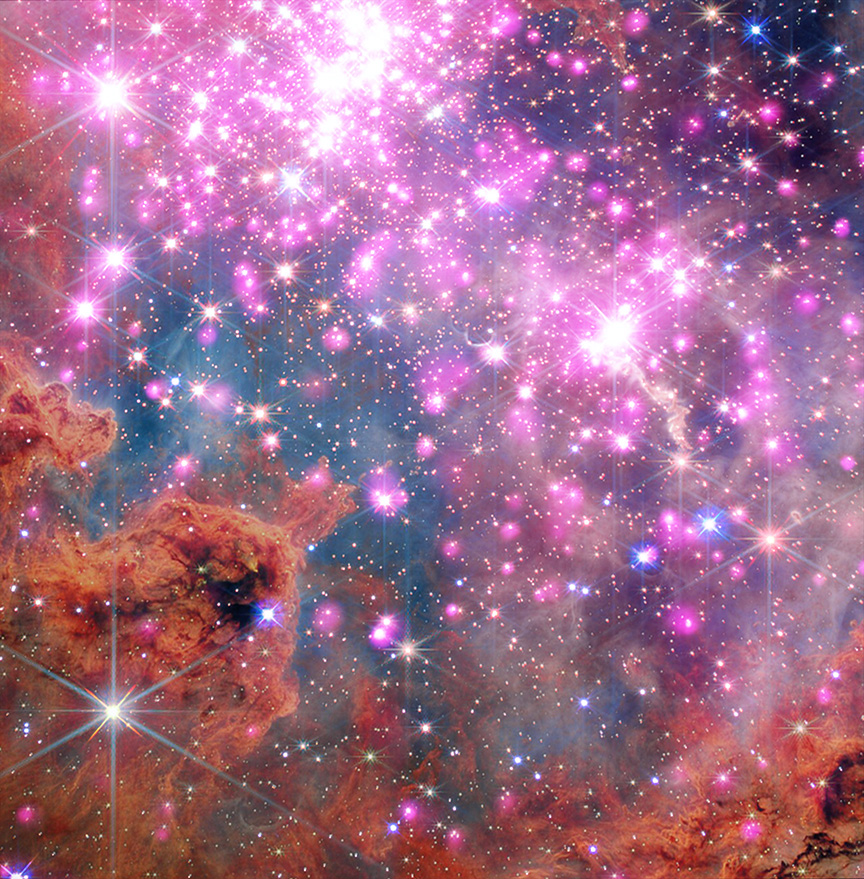
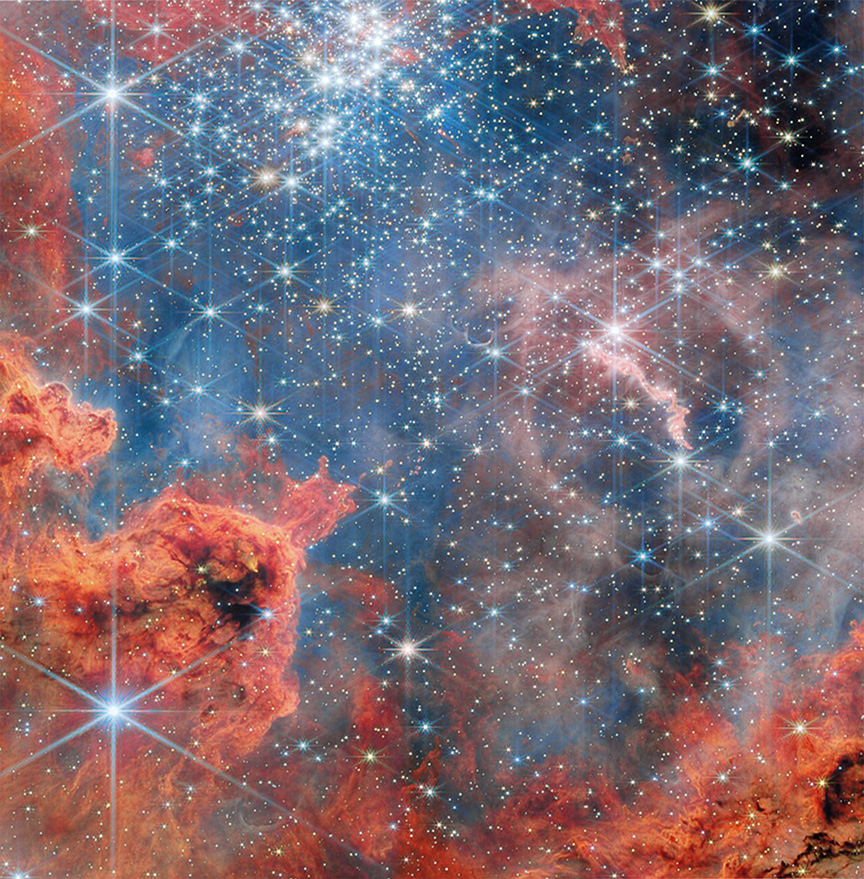
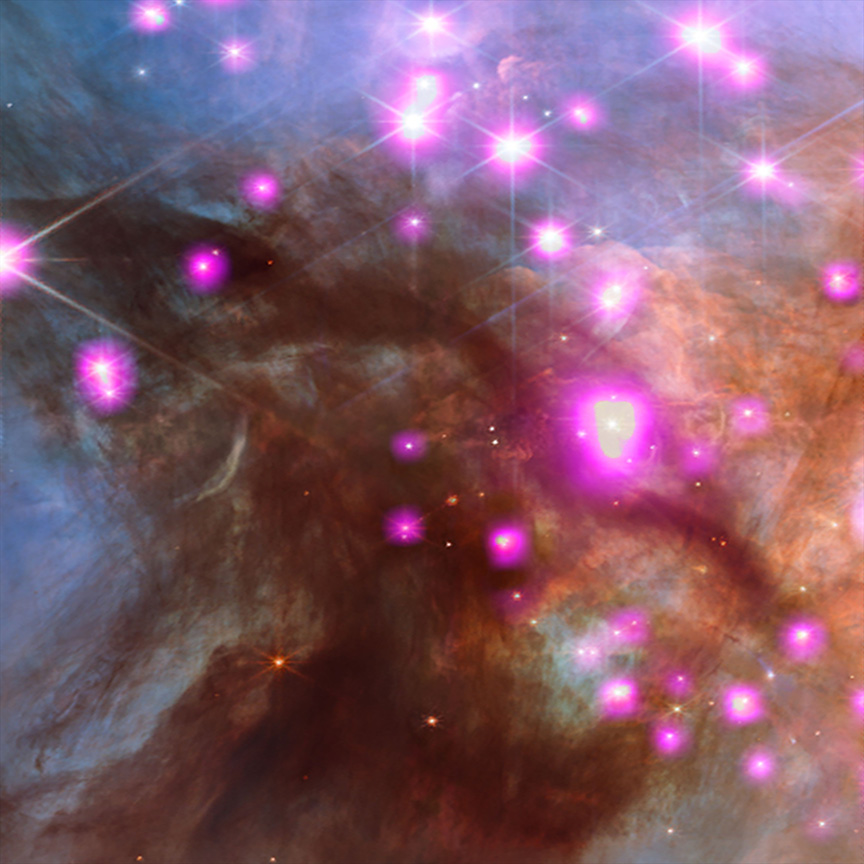
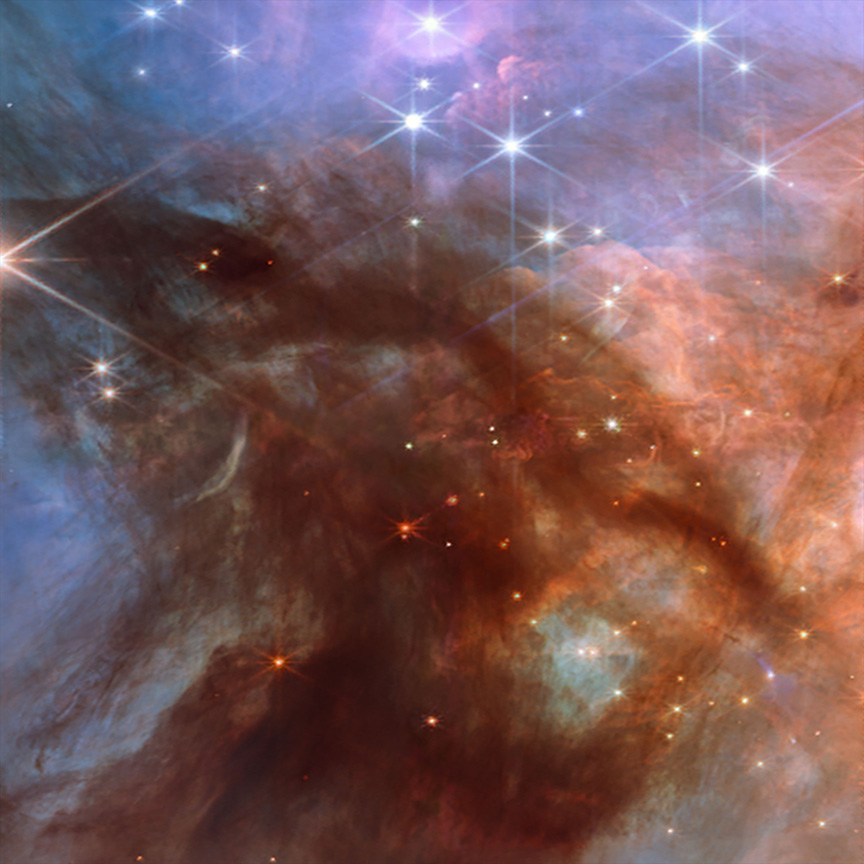
Westerlund 2Credit: X-ray: NASA/CXC/SAO/Sejong Univ./Hur et al; JWST: ESA/Webb, NASA & CSA, V. Almendros-Abad, M. Guarcello, K. Monsch, and the EWOCS team. Image Processing: NASA/CXC/SAO/L. Frattare and K. Arcand
These images of Westerlund 2 feature Chandra X-ray Observatory data (pink) and James Webb infrared data (red, orange, green, cyan, and blue). Scores of gleaming stars ringed in neon pink stretch across the frame, highlighting a cluster where stars are between one and three million years old. Brick-orange dust clouds along the bottom edge illustrate the raw materials of this active stellar nursery.
2
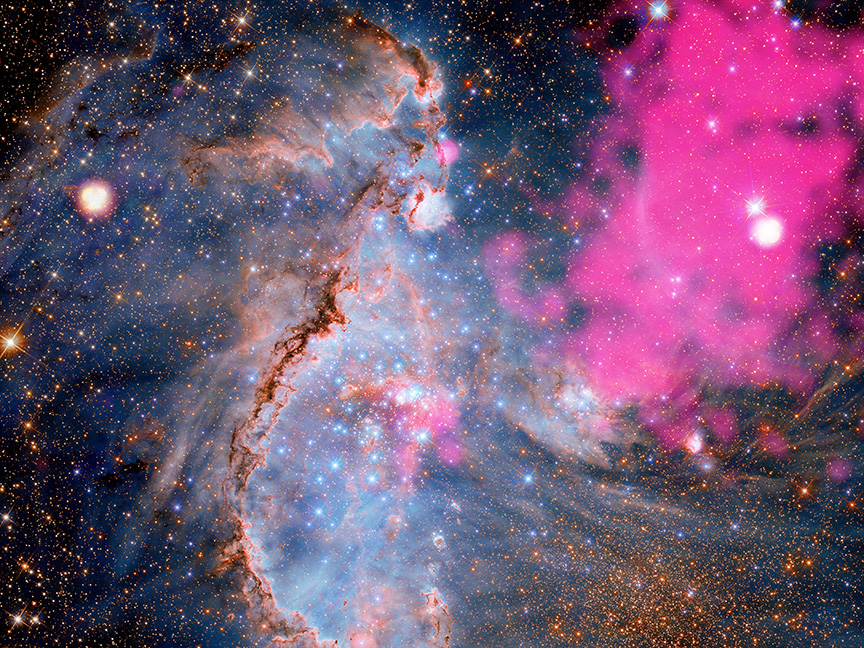
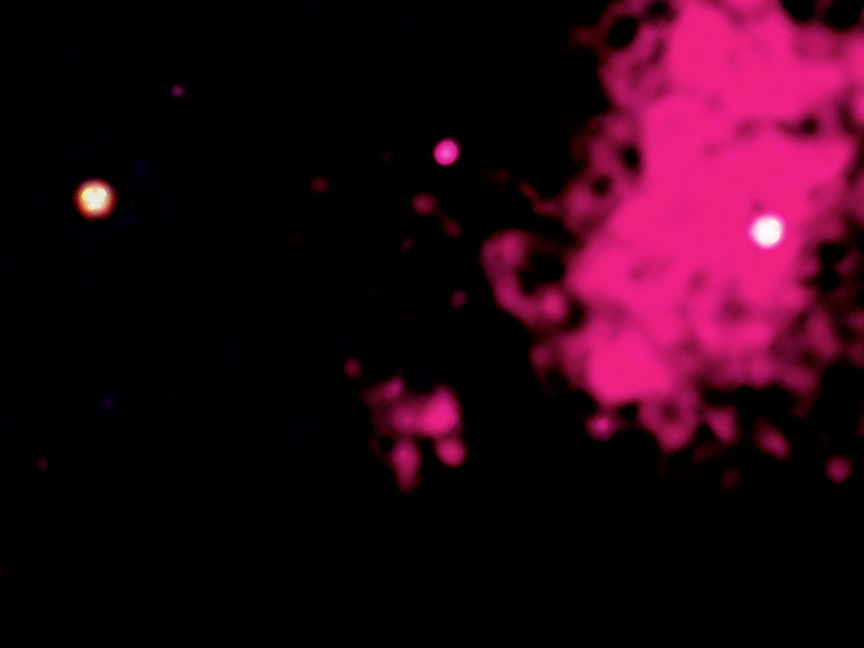
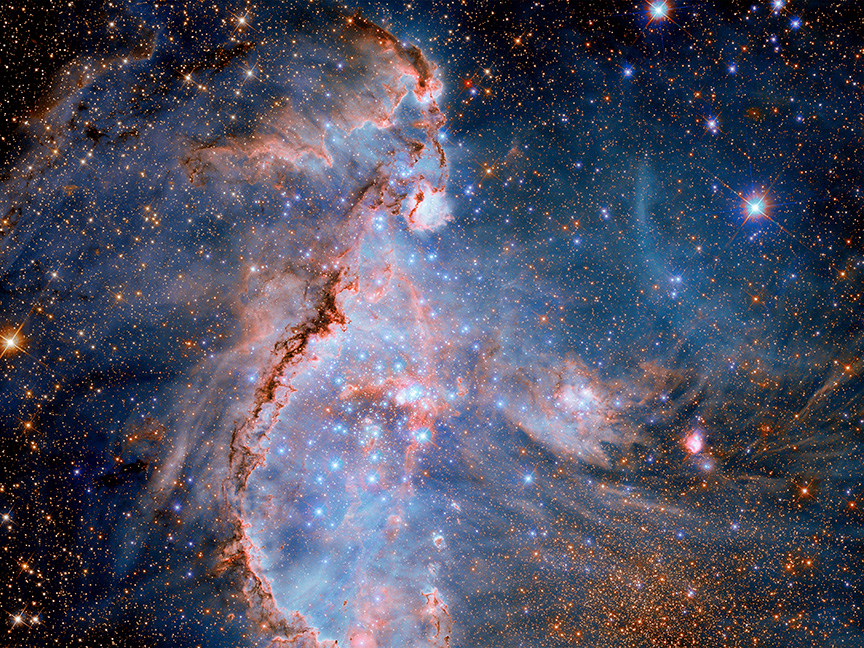
NGC 346Credit: X-ray: NASA/CXC/SAO; Optical: ESA/Hubble and NASA, A. Nota, P. Massey, E. Sabbi, C. Murray, M. Zamani (ESA/Hubble); Image Processing: NASA/CXC/SAO/L. Frattare
Located in the Small Magellanic Cloud, NGC 346 is a region of star formation seen here in Chandra X-rays (purple) and Hubble optical data (red, green, and blue). A large, neon-pink X-ray cloud hangs in the upper right, representing the high-energy environment of stars roughly one to three million years old. The dark blue sky is scattered with orange and white stellar specks and hazy streaks of coalescing gas.
3
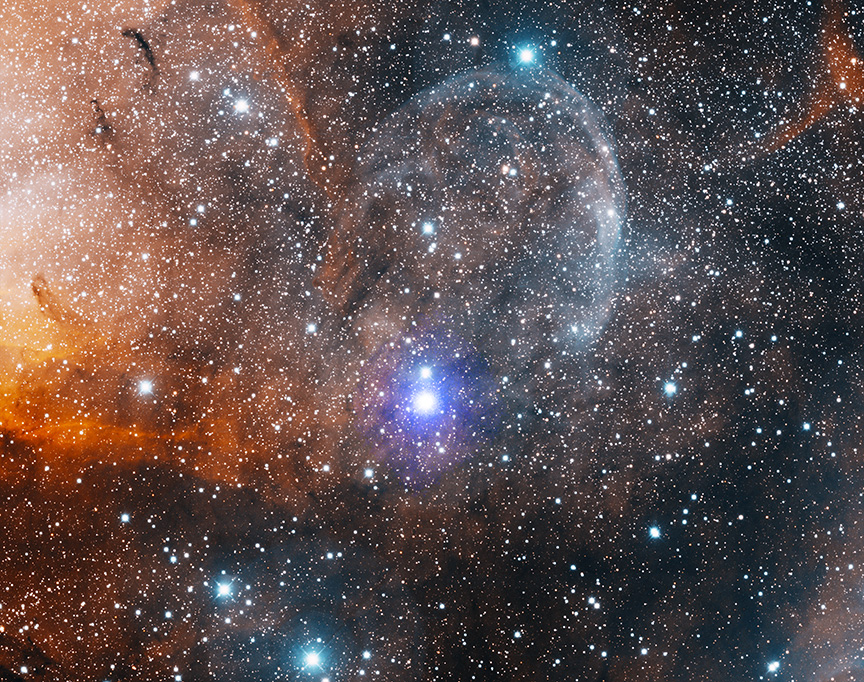
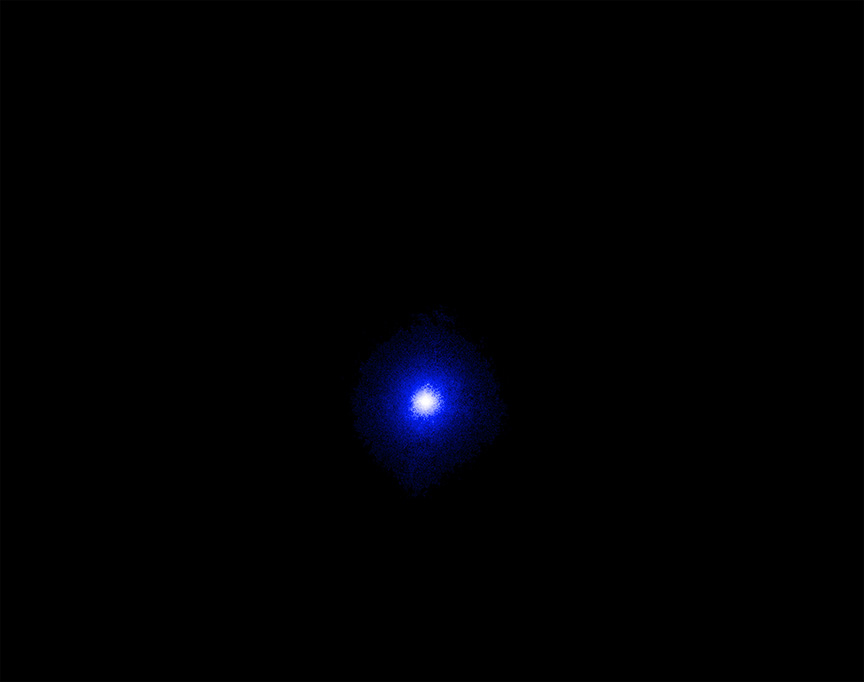
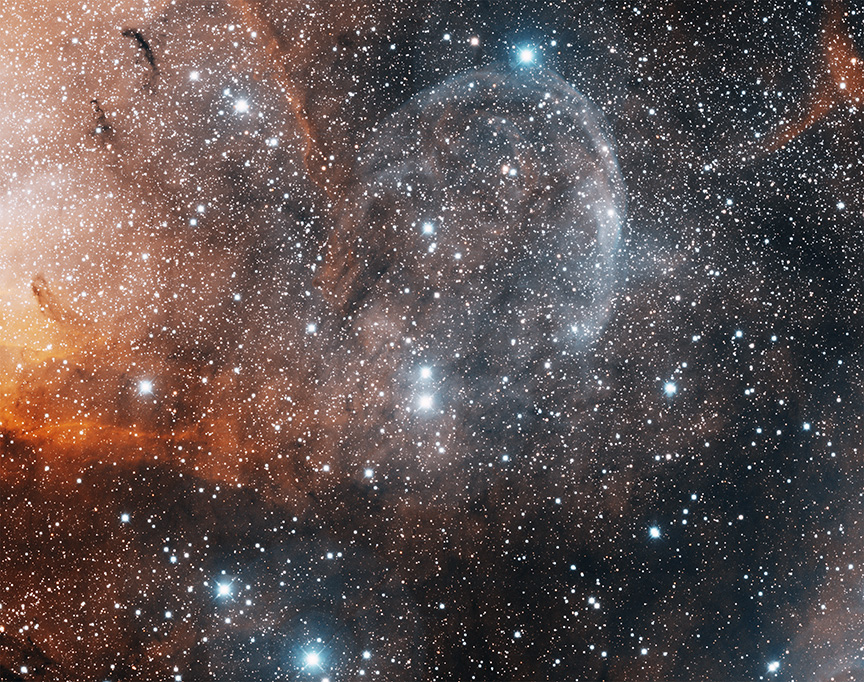
Cygnus OB3Credit: X-ray: NASA/CXC/SAO; Optical: T.A. Rector (University of Alaska Anchorage) and H. Schweiker (WIYN and NOIRLab/NSF/AURA). Image Processing: NASA/CXC/SAO/L. Frattare
Cygnus OB3 represents the most mature region in this collection of images, featuring X-rays from Chandra (blue) and optical data from Kitt Peak (red and blue). The images focus on a binary system, known as Cygnus X-1, containing a black hole and a massive companion star more than 20 times the Sun's mass. The massive star in Cygnus X-1 is a future supernova candidate, destined to seed the cosmos with new elements.
4
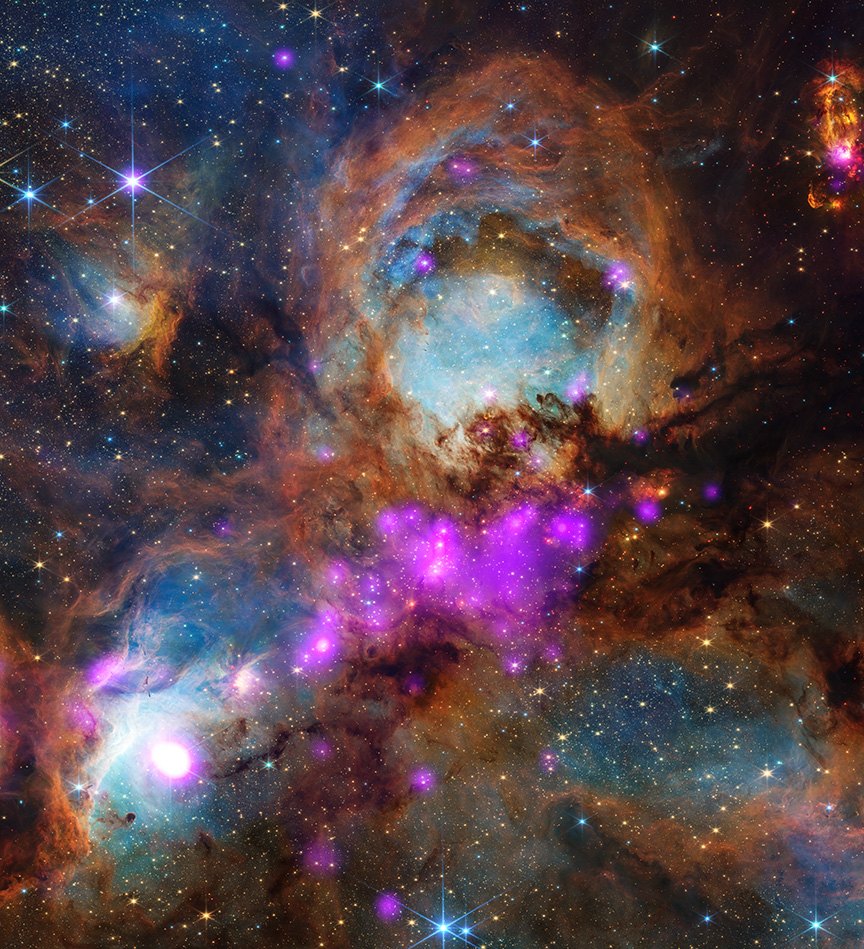
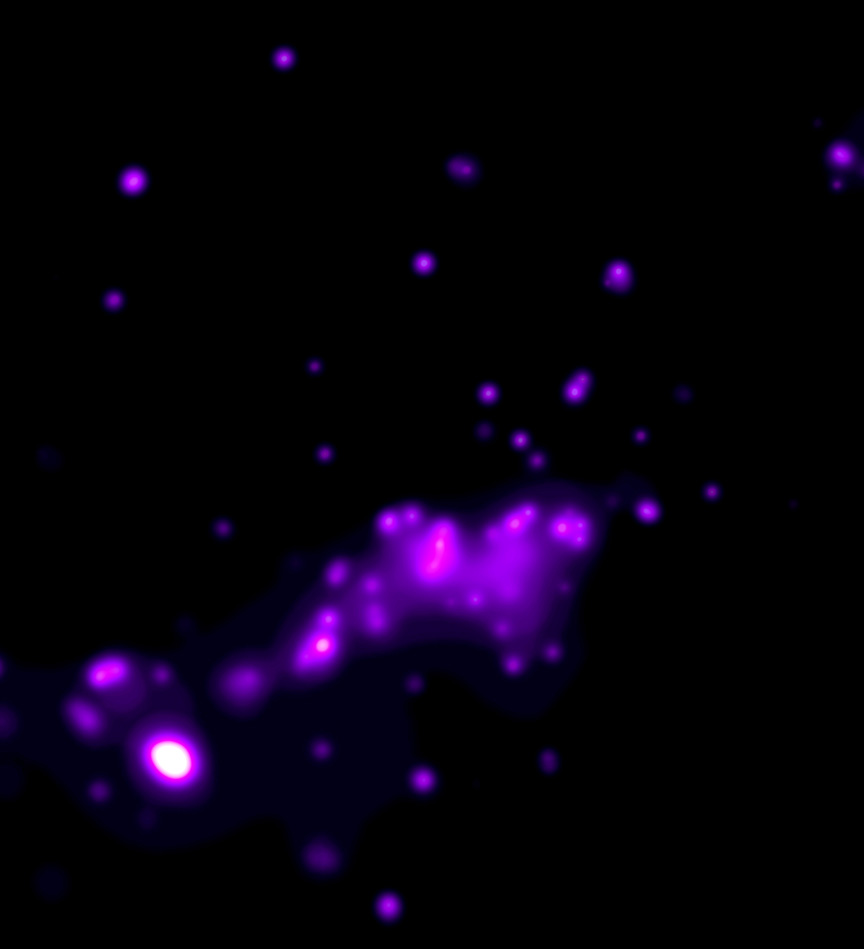
Cat's Paw Nebula (NGC 6334)Credit: X-ray: NASA/SAO/CXC; Infrared: NASA/ESA/CSA/STScI; Image Processing: NASA/CXC/SAO/J. Major
These views of the Cat’s Paw Nebula include X-rays from Chandra (pink) and infrared data from James Webb. A mottled patch of purple at the center reveals young, million-year-old stars tucked behind thick, overlapping rings of dark orange cosmic dust. The pockets of blue sky appearing through the clouds highlight the complex structure of this stellar nursery.
5
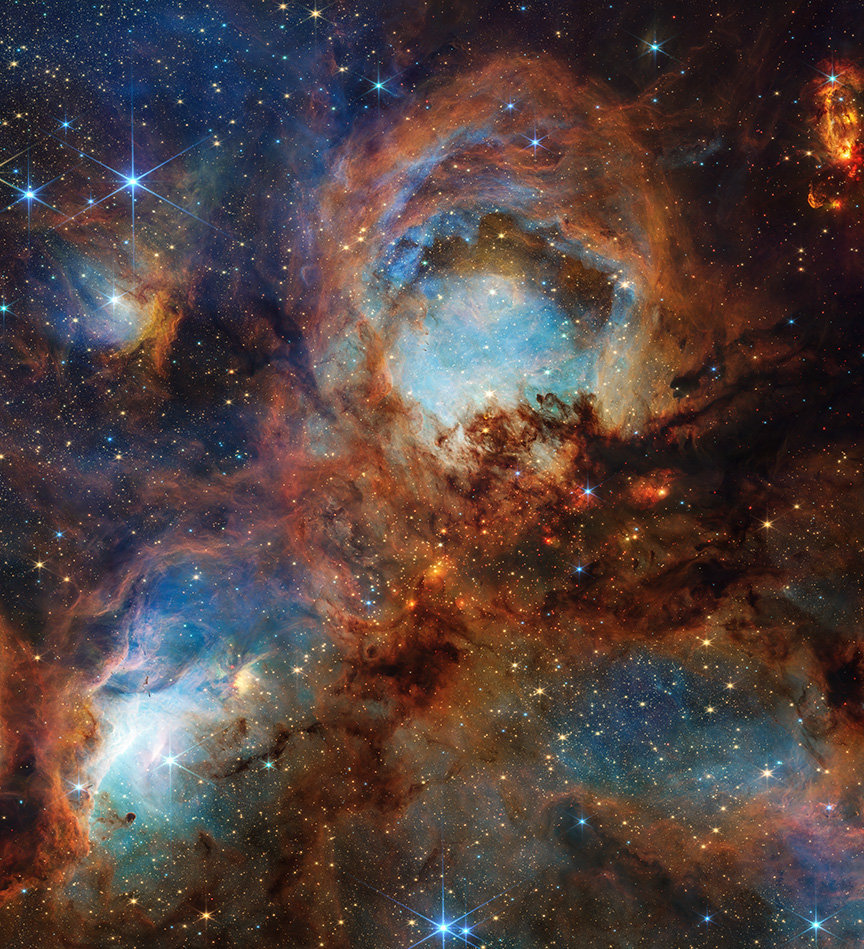
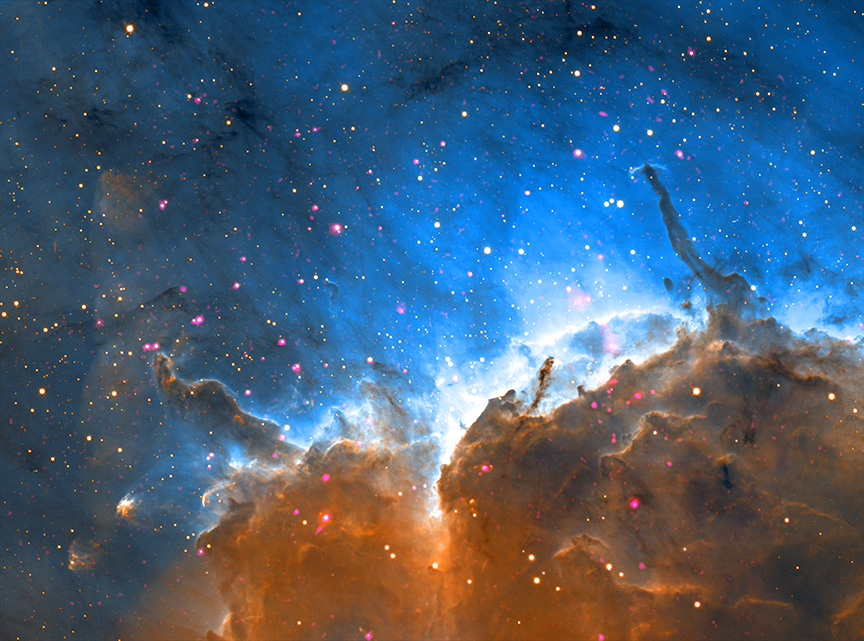
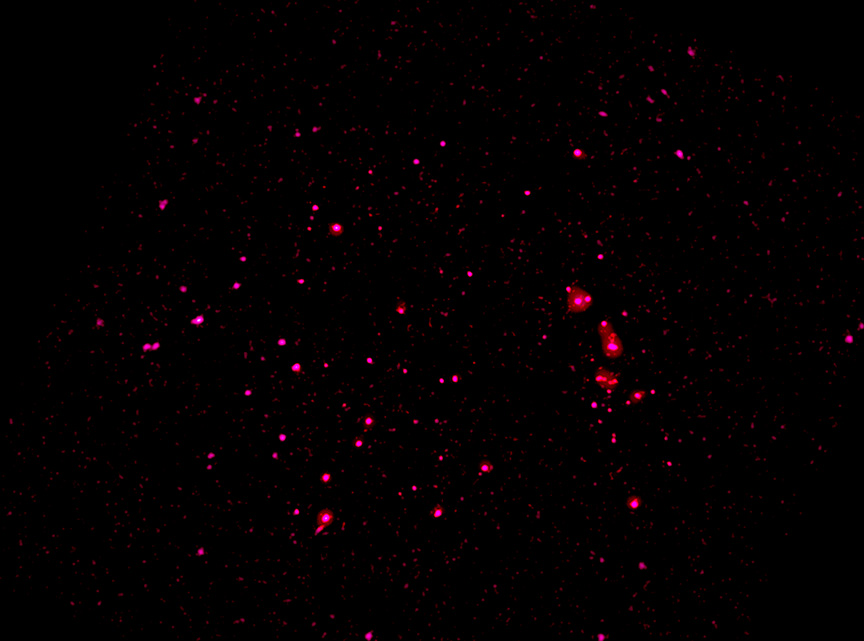
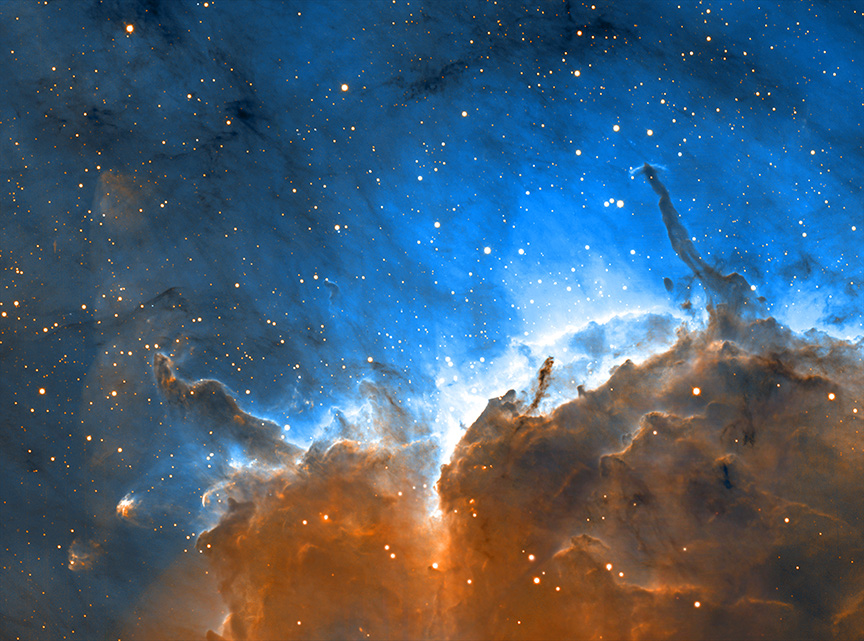
Pelican Nebula (NGC 7000)Credit: X-ray: NASA/CXC/SAO/F. Damiani; Optical: J. Bally/University of Colorado, B. Reipurth/University of Hawaii and NOIRLab/NSF/AURA; Image Processing: NASA/CXC/SAO/L. Frattare
The Pelican Nebula, also known as NGC 7000, is shown here through a combination of Chandra’s X-rays (pink) and Hubble optical data (red, green, and blue). Finger-like tendrils of dark orange cloud reach into a hazy blue sky filled with baby stars that are 4,000 times younger than our Sun. Such X-ray detections help astronomers distinguish the high-energy young stars from the dense surrounding gas.
6
Flame Nebula (NGC 2024)Credit: X-ray: NASA/CXC/PSU/K. Getman, E. Feigelson, M. Kuhn & the MYStIX team; JWST Image: NASA, ESA, CSA, STScI, M. Meyer (University of Michigan), M. De Furio (UT Austin), M. Robberto (STScI), A. Pagan (STScI); Image Processing: NASA/CXC/SAO/L. Frattare
The Flame Nebula images feature Chandra’s X-rays (purple) embedded within a dusty-grey landscape seen in infrared by James Webb. Several dozen young stars illuminate the gas cloud, appearing as white cores surrounded by thick, neon purple-pink X-ray halos. This image captures the "stellar soil" of a region where stars are currently forming and beginning their life cycles.
7
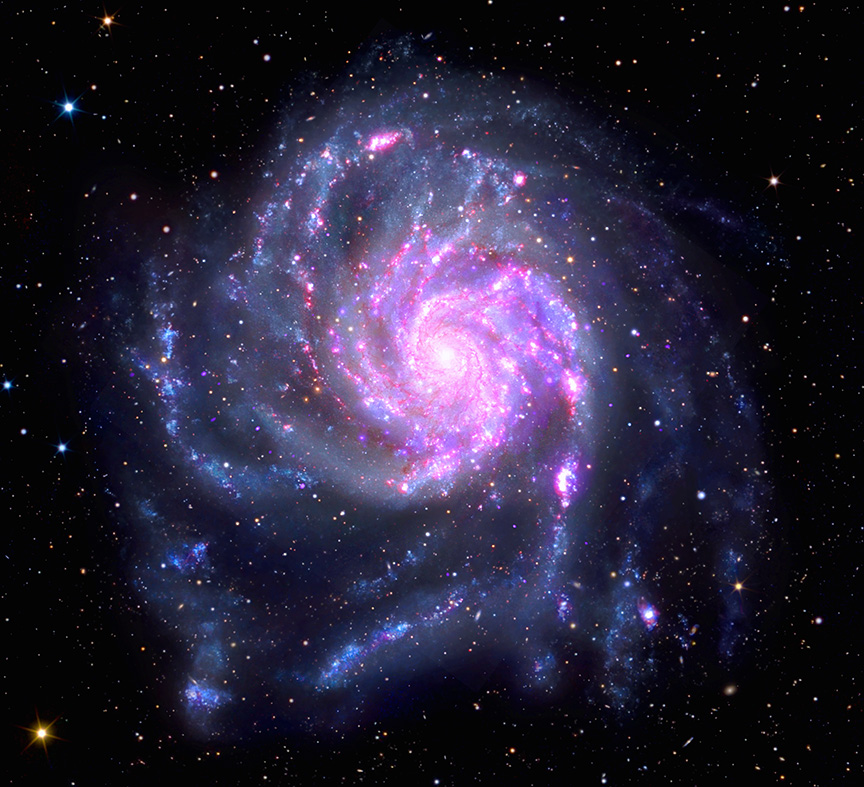
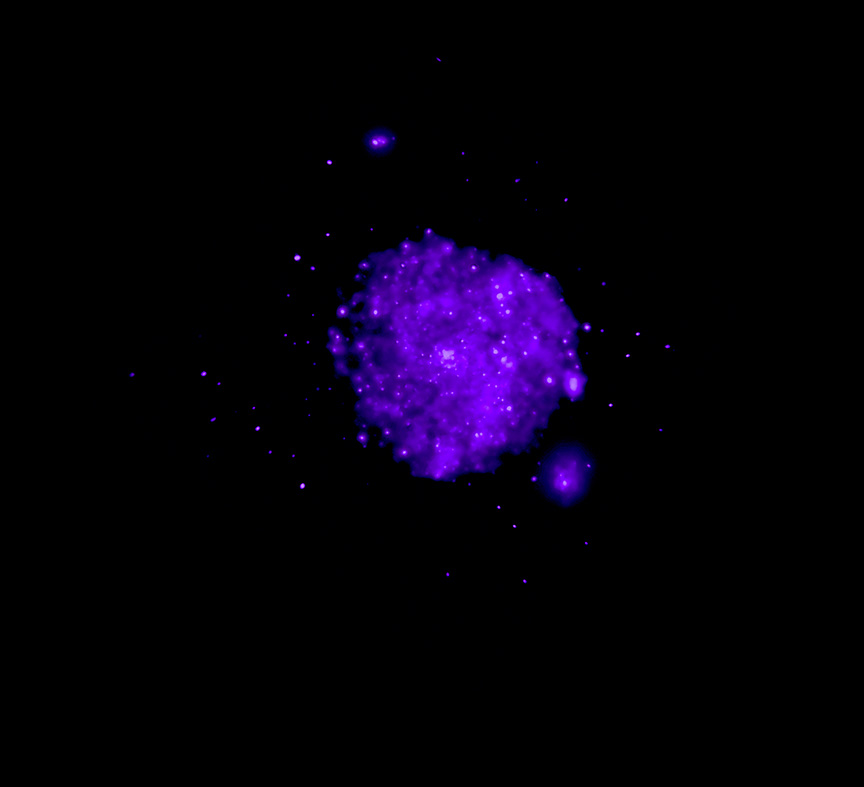
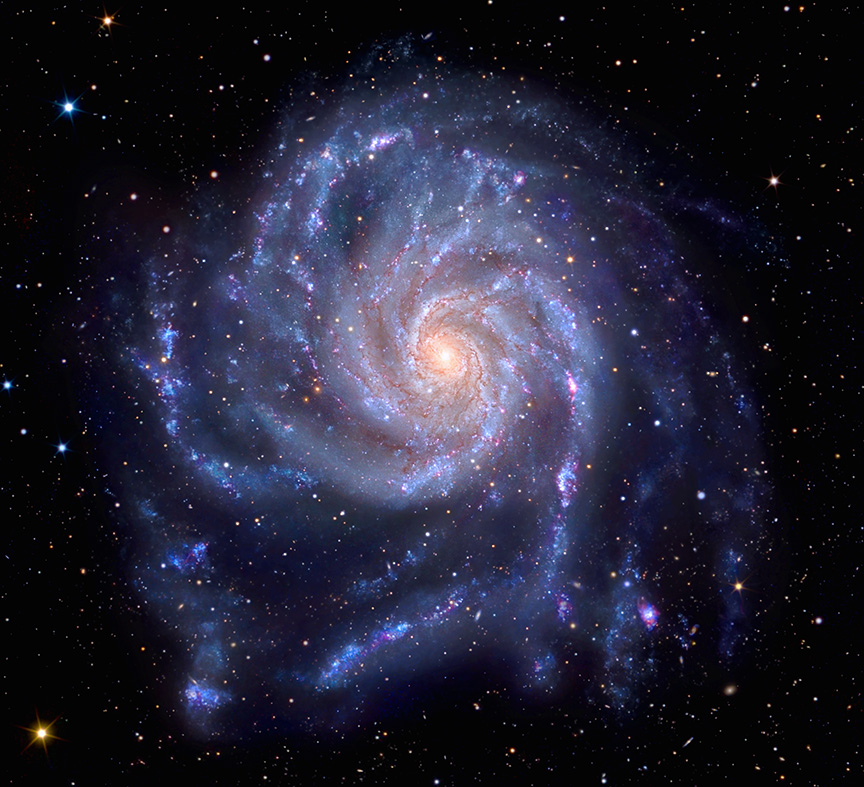
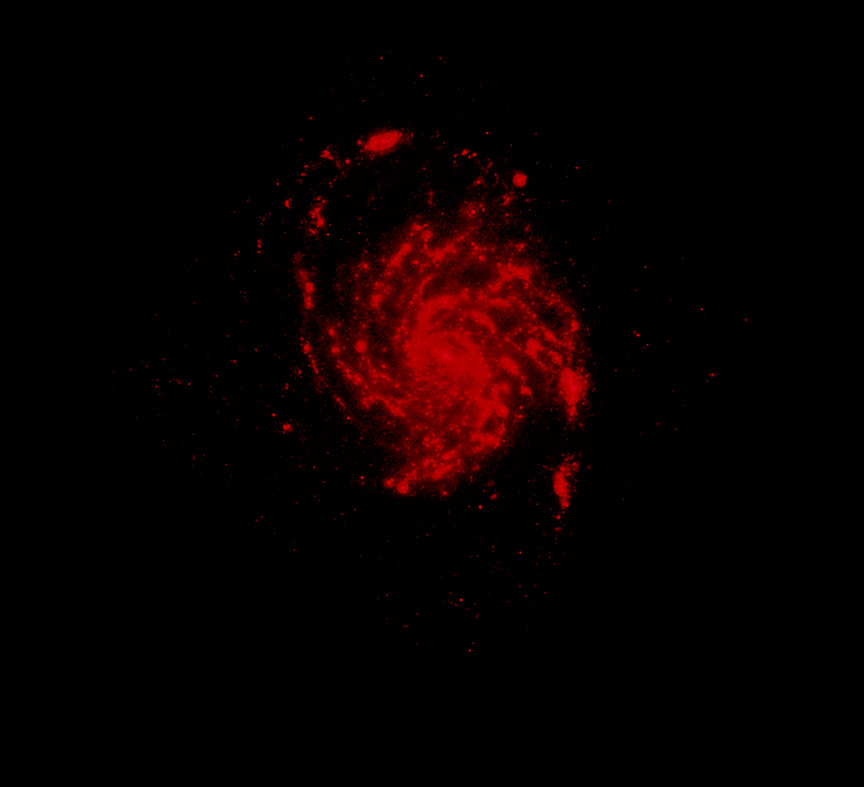
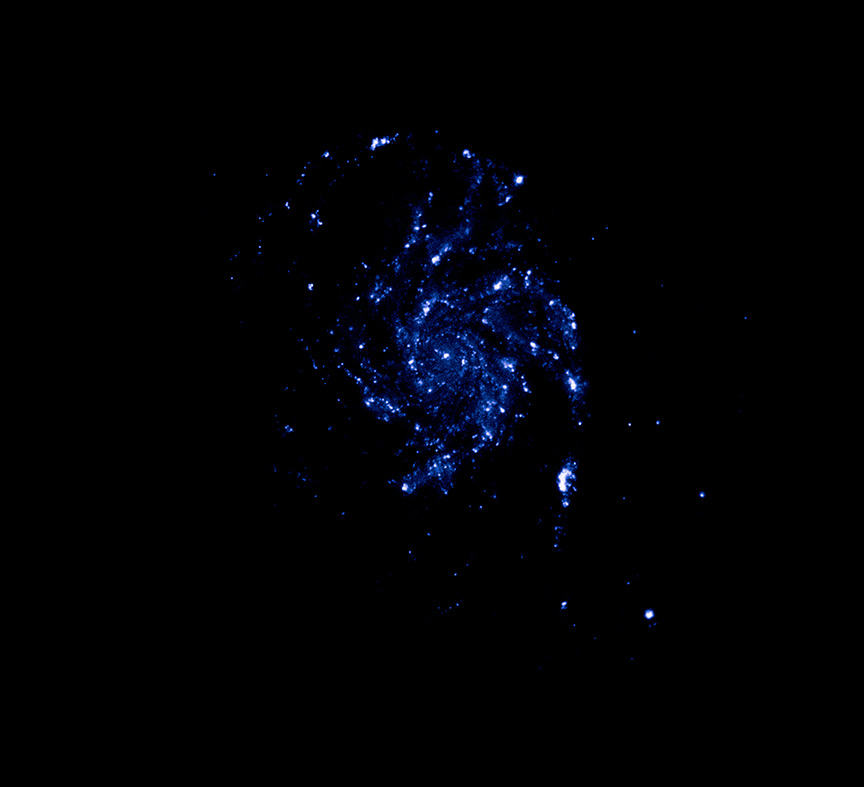
The Pinwheel Galaxy (M101)Credit: X-ray: Chandra: ASA/CXC/JHU/K. Kuntz et al.; UV/Optical: XMM-Newton: ESA/XMM/R. Willatt; Optical: Hubble: NASA/ESA/STScI/JHU/K. Kuntz et al.; Ground-based: R. J. GaBany; IR: Spitzer: NASA/JPL-Caltech/STScI/K. Gordon; Image Processing: NASA/CXC/SAO/L. Frattare, K.Arcand
A galaxy seen in many kinds of light. This view of the Pinwheel Galaxy (M101) layers optical, ultraviolet, infrared, and X-ray data from multiple observatories—including Hubble Space Telescope, Chandra X-ray Observatory, Spitzer Space Telescope, XMM-Newton— along with ground-based observations, revealing stars, hot gas, and energetic remnants across a galaxy 21 million light-years away in Ursa Major.
Return to: Spring Has Sprung in Space (As Always) (March 19, 2026)


Revised: April 16, 2026