


CXC Home | Search | Help | Image Use Policy | Latest Images | Privacy | Accessibility | Glossary | Q&A
1
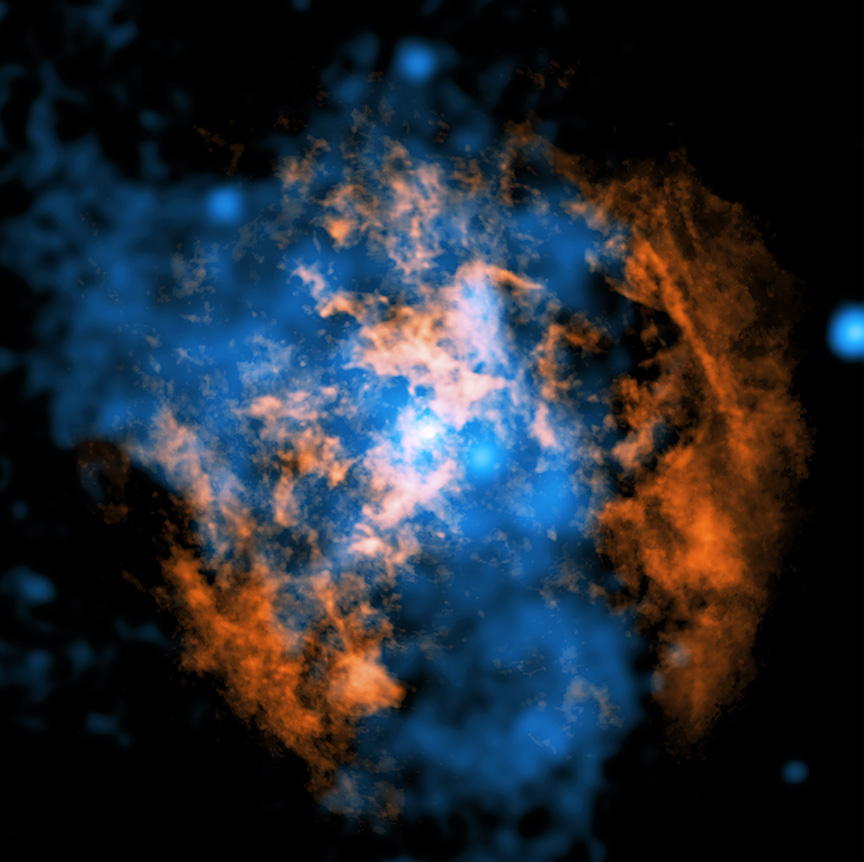
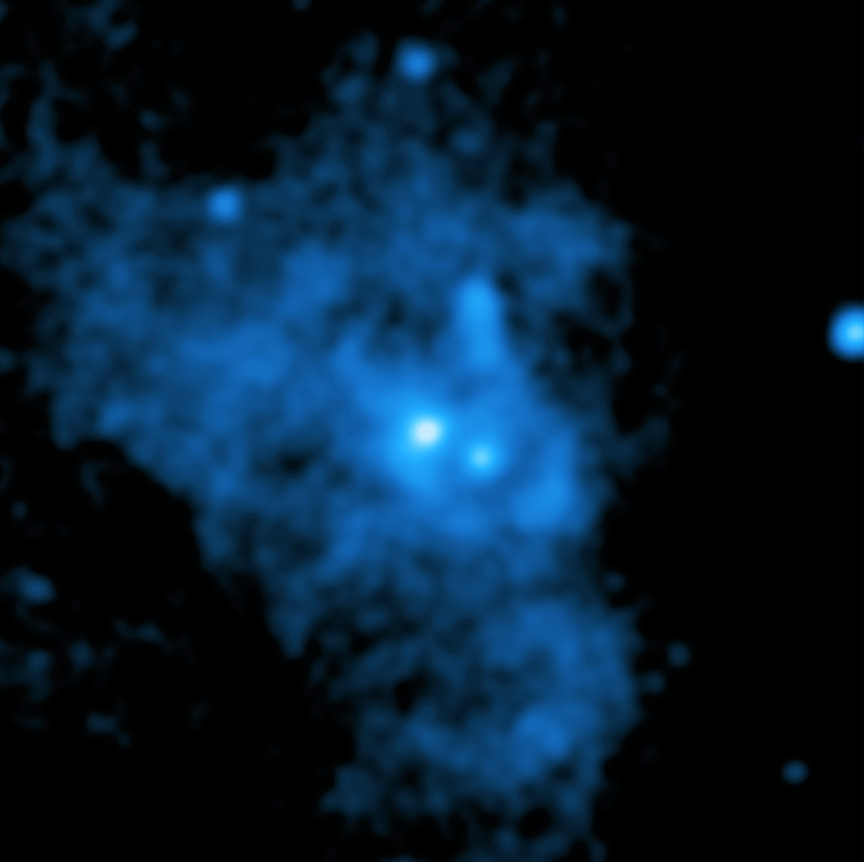
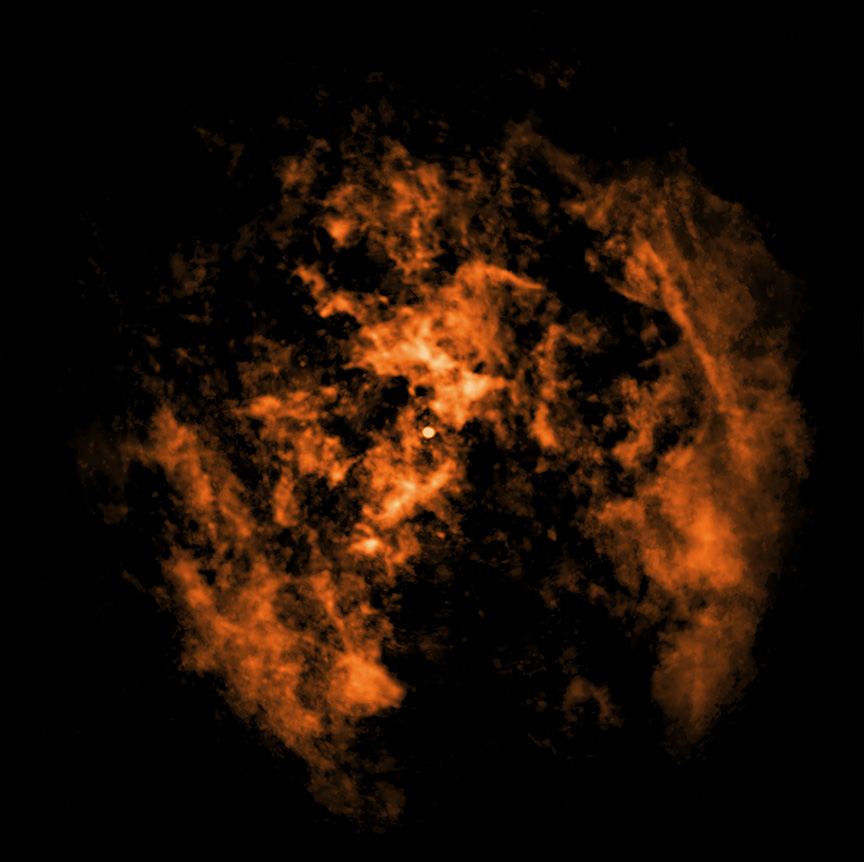
X-ray & Radio Images of Sagittarius A*Credit: X-ray: NASA/CXC/Northwestern Univ./M. Gorski; Radio:ESO/NAOJ/NRAO/ALMA; Image processing: NASA/CXC/SAO: K. Arcand, P. Edmonds
These images show evidence for the wind blowing away from Sgr A*. The white dot in the center of the image shows Sgr A*. In orange is data from the Atacama Large Millimeter/Submillimeter Array (ALMA) radio telescopes in Chile, mapping the location of cold gas composed of carbon monoxide in the image. In blue is X-ray data from NASA’s Chandra X-ray Observatory. A large cone-shaped cavity, visible as an absence of cold gas in the ALMA data, is filled by hot X-ray-emitting gas in the Chandra data. Researchers think a hot, energetic wind blowing from Sgr A* created this structure by sweeping the cold gas away or heating it up.
2
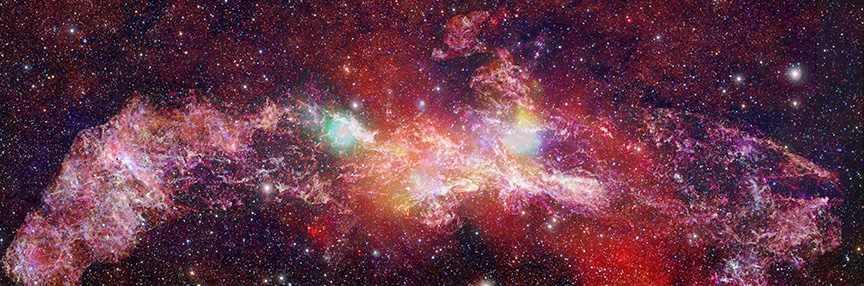
Wide Field Images of our Milky Way's Galactic CenterCredit: X-ray: NASA/CXC/UMass/D. Wang et al.; Radio: ALMA (ESO/NAOJ/NRAO)/S. Longmore et al.; Background: ESO/D. Minniti et al.
A large composite image of the central region of the Milky Way, with X-ray data from NASA’s Chandra X-ray Observatory (red, green, and blue) and radio data from the Atacama Large Millimeter/submillimeter Array (appearing pink, orange, light green, and purple). The X-ray data mainly shows hot gas and the radio data shows cold gas.
Return to: Chandra Helps Find Missing Wind from Milky Way's Black Hole (June 4, 2026)


Revised: June 04, 2026