


CXC Home | Search | Help | Image Use Policy | Latest Images | Privacy | Accessibility | Glossary | Q&A
1
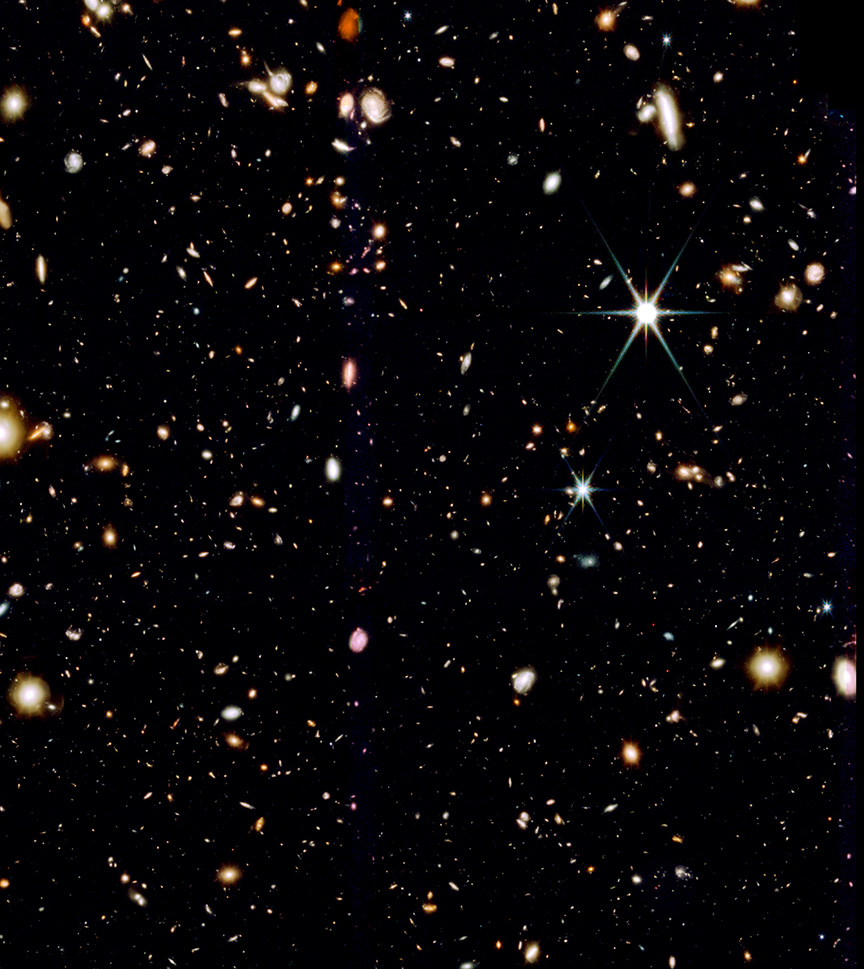
X-ray and Infrared Images of JADES-ID1Credit: X-ray: NASA/CXC/CfA/Á Bogdán; Infrared: NASA/ESA/CSA/STScI; Image Processing: NASA/CXC/SAO/P. Edmonds and L. Frattare
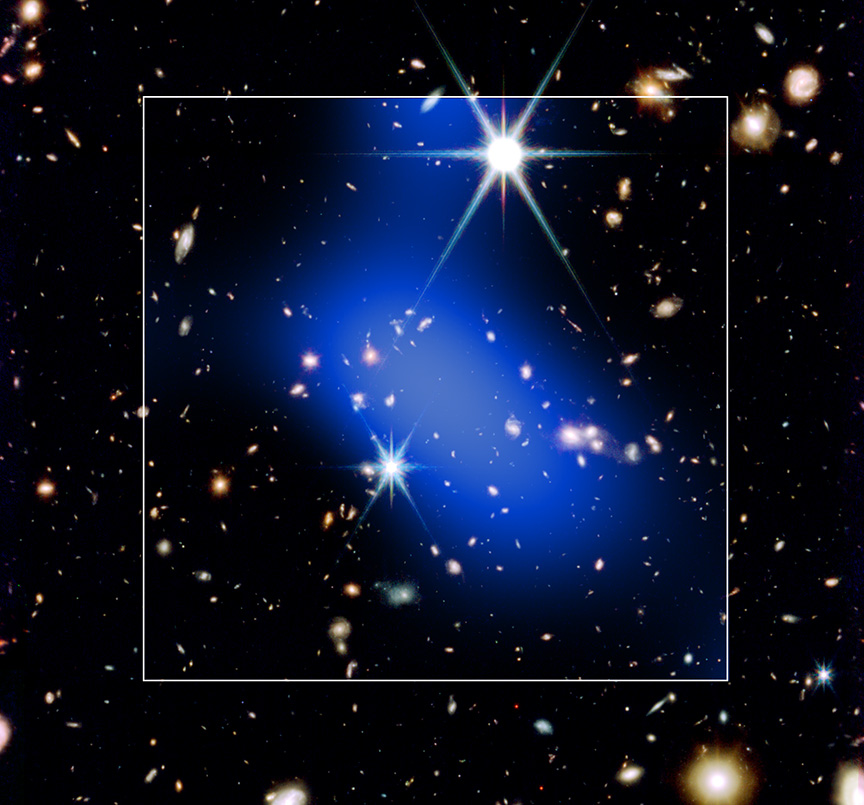
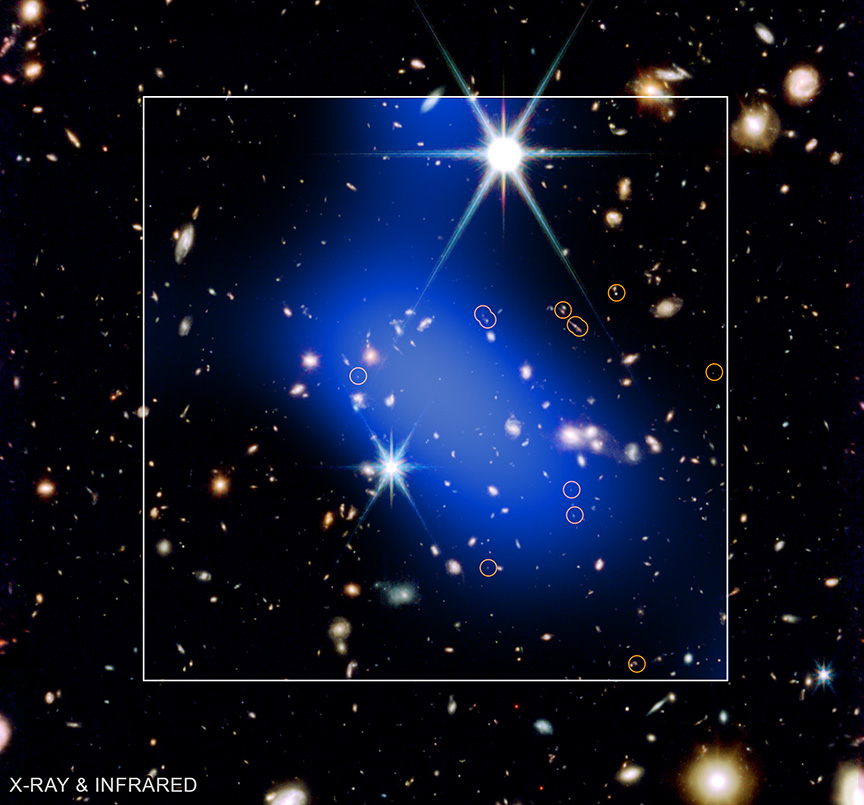
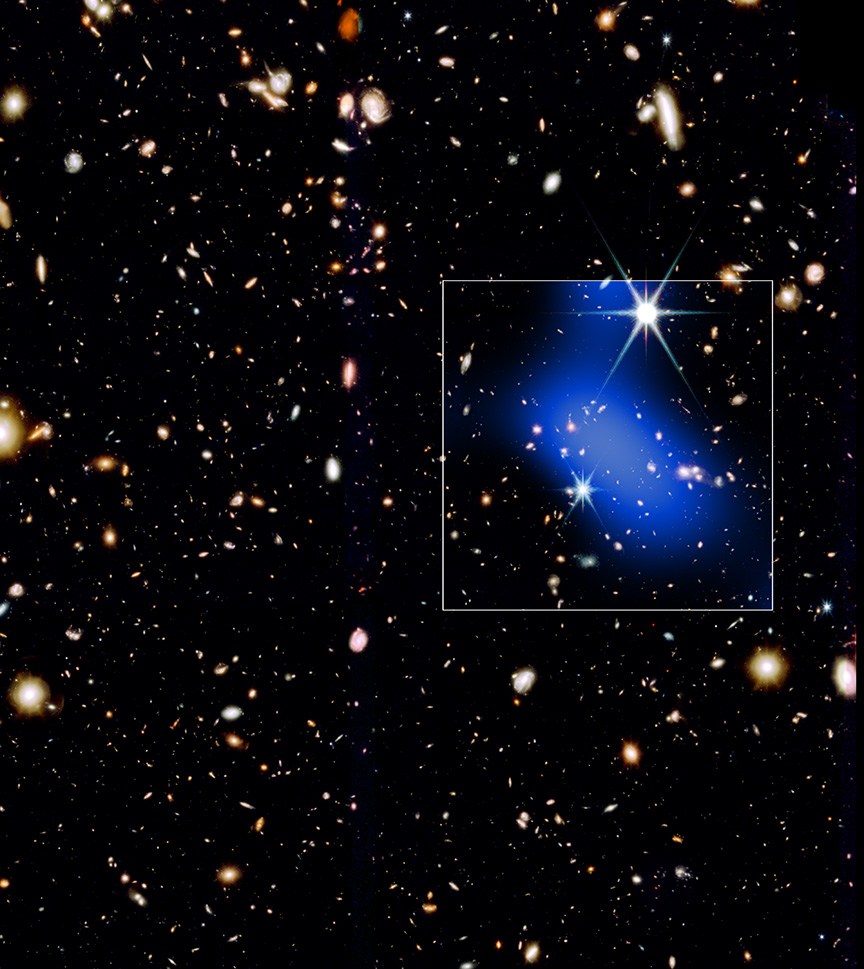
This image represents the discovery of what may be the most distant protocluster, or developing galaxy cluster, ever found. The white box in the main version marks the field of view of Chandra X-ray Observatory data (blue) that are overlaid on an infrared image from the James Webb Space Telescope. Together, these data reveal the presence of a forming cluster, called JADES-1, just one to two billion years after the big bang. Up until now, most ideas about how the formation of galaxy clusters — the largest structures known to be held together by gravity — predict that they could not reach this stage until about two to three billion years after the universe started.
2
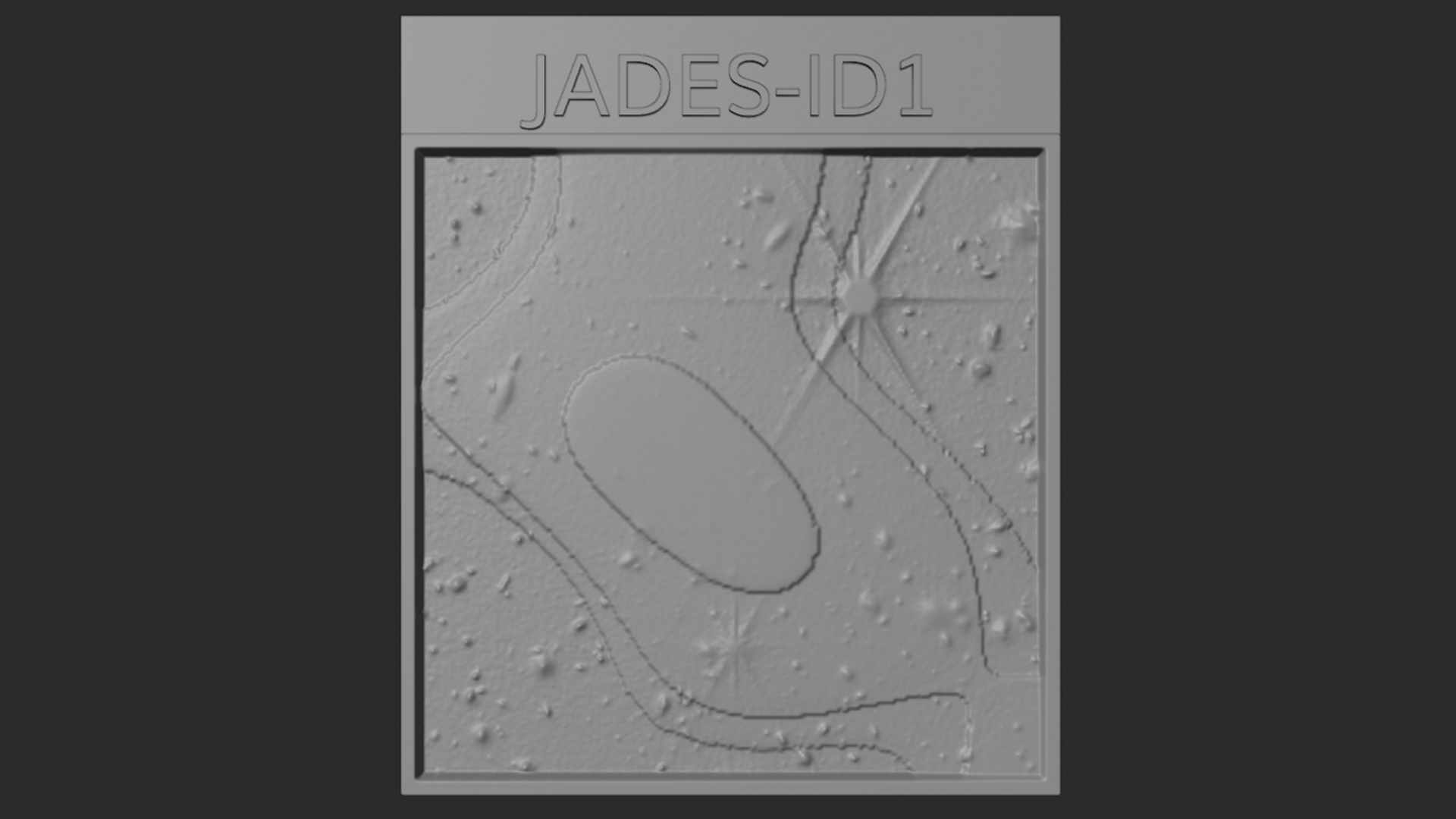
3D Printable Files: JADES-ID1(3D Print Credit: NASA/CXC/A. Jubett, using software by Tactile Universe/N. Bonne & C. Krawczyk & Blender)
This tactile plate is a physical relief map based on the intensity of Chandra X-ray data and JWST infrared data featuring the most distant protocluster ever found; a region of space where a large number of young galaxies are being held together by gravity and hot gas. The plate includes scores of dots and specks of light, set against the vastness of space. This data is from a deep infrared imaging project undertaken by the James Webb Space Telescope. The specks range from relatively large oval galaxies with discernible spiral arms, and balls with diffraction spikes, to minuscule pinpoints of distant light.
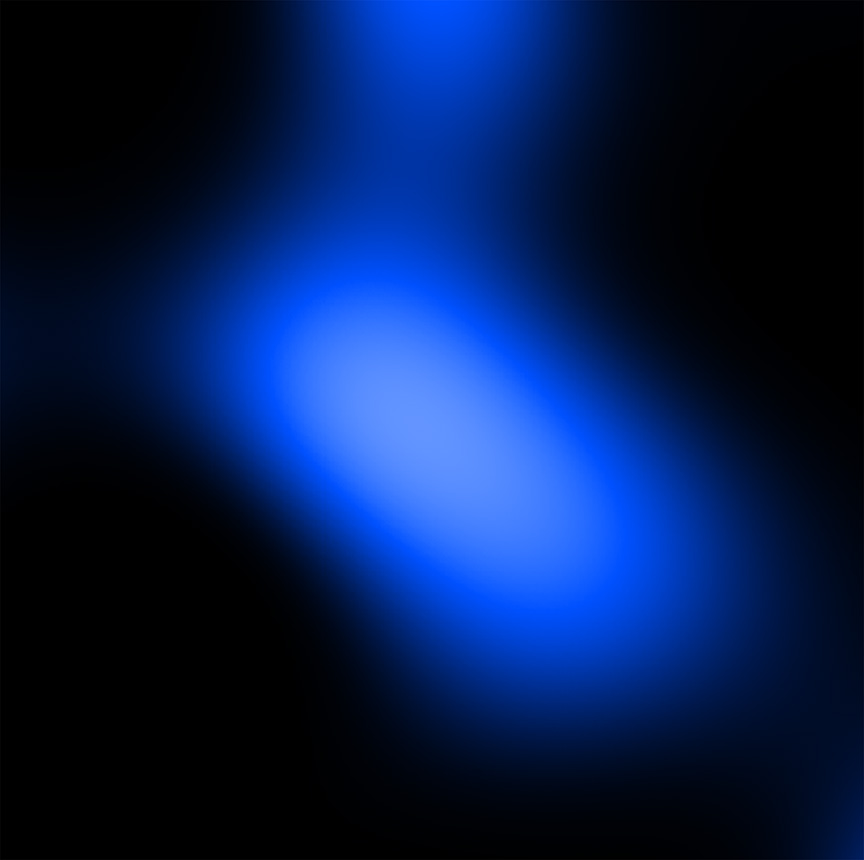
At the center of the plate is a raised, cloud-like shape surrounded by gentle ridges. These circular ridges show areas of stronger or weaker X-ray energy, spreading outward like ripples. The rings do not mark an important edge, but instead show how the intensity changes across the cloud. This shape represents extremely hot gas that was revealed by NASA’s Chandra X-ray Observatory during its deepest X-ray observation taken.
The protocluster, dubbed JADES-1, has a mass of about 20 trillion suns. It is located some 12.7 billion light-years from Earth, or just a billion years after the big bang. The discovery of a protocluster of this size, at this epoch in the early universe, will force scientists to re-examine their ideas for how galaxy clusters first appeared in the universe.
At the center of the plate is a raised, cloud-like shape surrounded by gentle ridges. These circular ridges show areas of stronger or weaker X-ray energy, spreading outward like ripples. The rings do not mark an important edge, but instead show how the intensity changes across the cloud. This shape represents extremely hot gas that was revealed by NASA’s Chandra X-ray Observatory during its deepest X-ray observation taken.
The protocluster, dubbed JADES-1, has a mass of about 20 trillion suns. It is located some 12.7 billion light-years from Earth, or just a billion years after the big bang. The discovery of a protocluster of this size, at this epoch in the early universe, will force scientists to re-examine their ideas for how galaxy clusters first appeared in the universe.
Return to: NASA Telescopes Spot Surprisingly Mature Cluster in Early Universe (January 28, 2026)


Revised: January 27, 2026