


CXC Home | Search | Help | Image Use Policy | Latest Images | Privacy | Accessibility | Glossary | Q&A
1
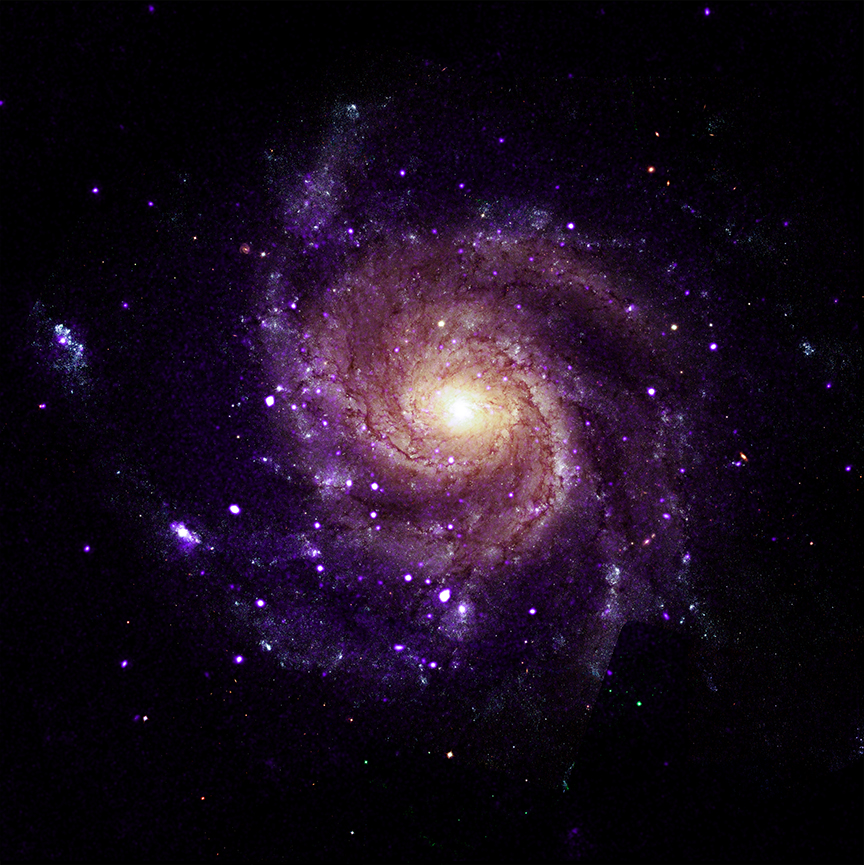
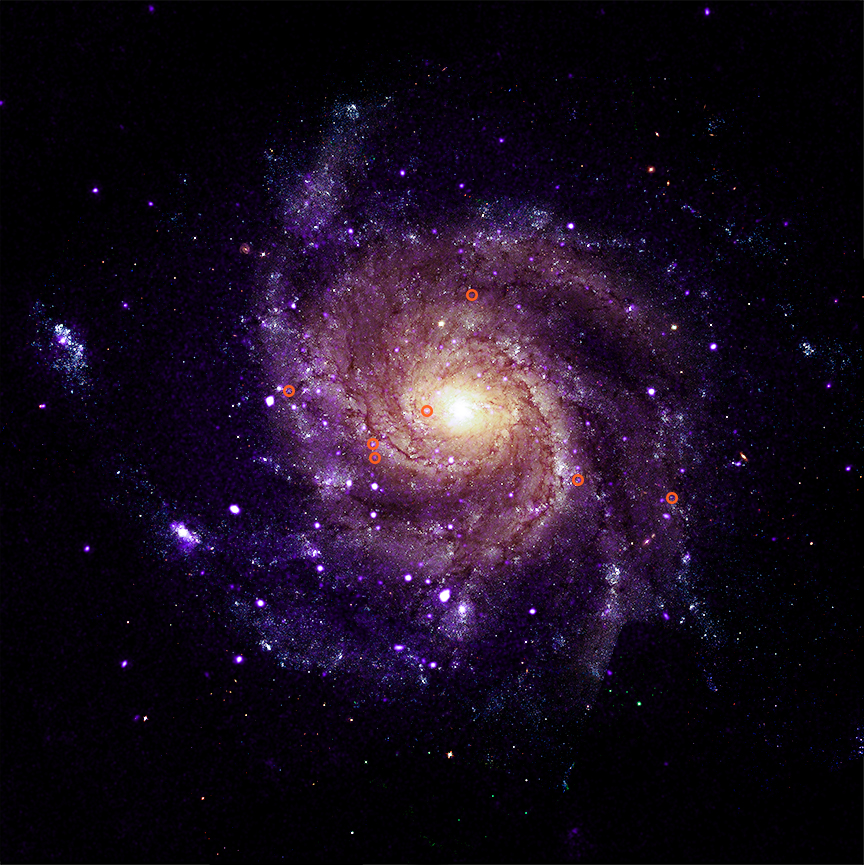
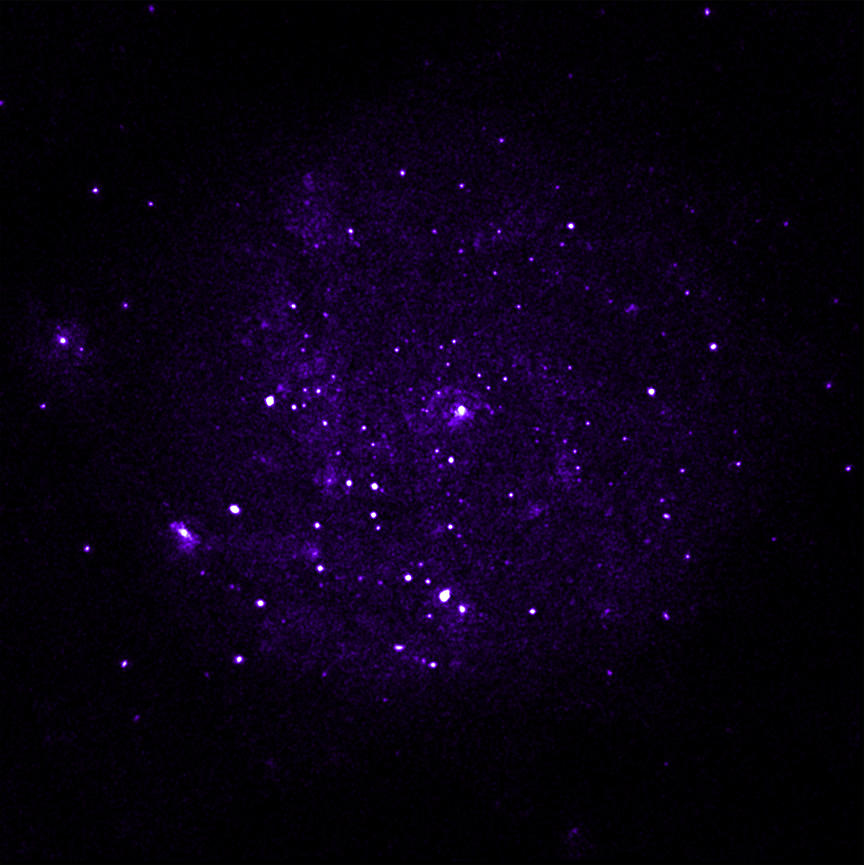
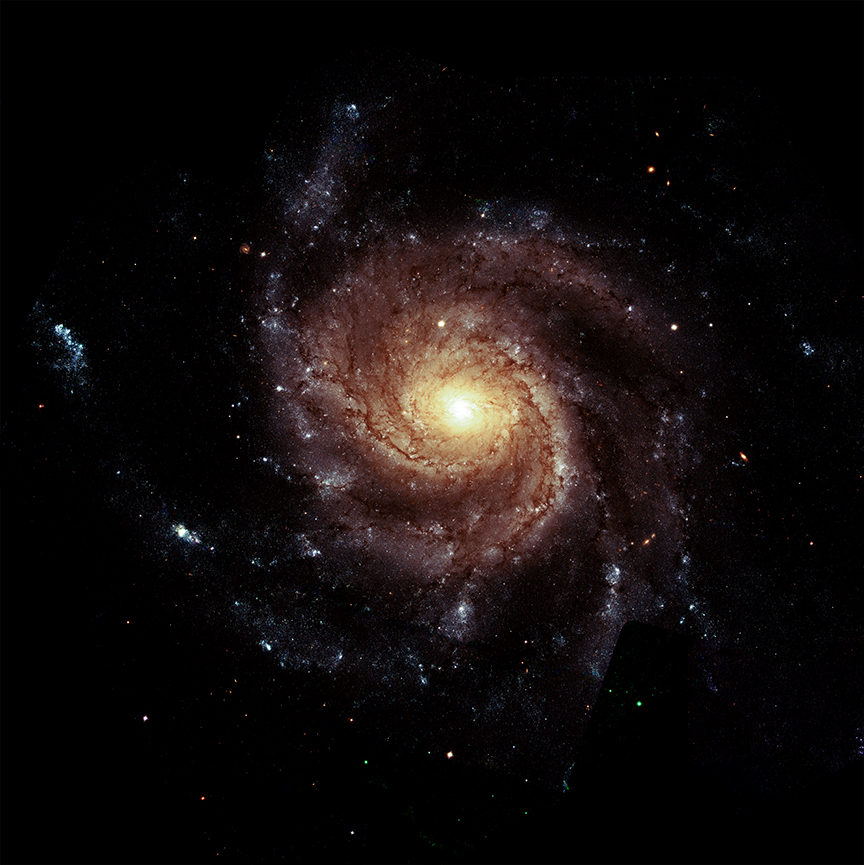
X-ray& Optical Images of M101Credit: X-ray: NASA/CXC/Univ. of Alabama/M. Muhibullah et al.; Optical: NASA/ESA/STScI; Image Processing: NASA/CXC/SAO/N. Wolk
Researchers found 84 so-called hypersoft X-ray sources in M101, Messier 31, and four elliptical galaxies. This newly-discovered class of objects give off very low-energy X-rays and likely high levels of ultraviolet light. Their existence may help explain questions around Type Ia supernova explosions and the intergalactic medium. These images of the face-on spiral galaxy M101 show X-ray data from Chandra and an optical image from the Hubble Space Telescope.
2
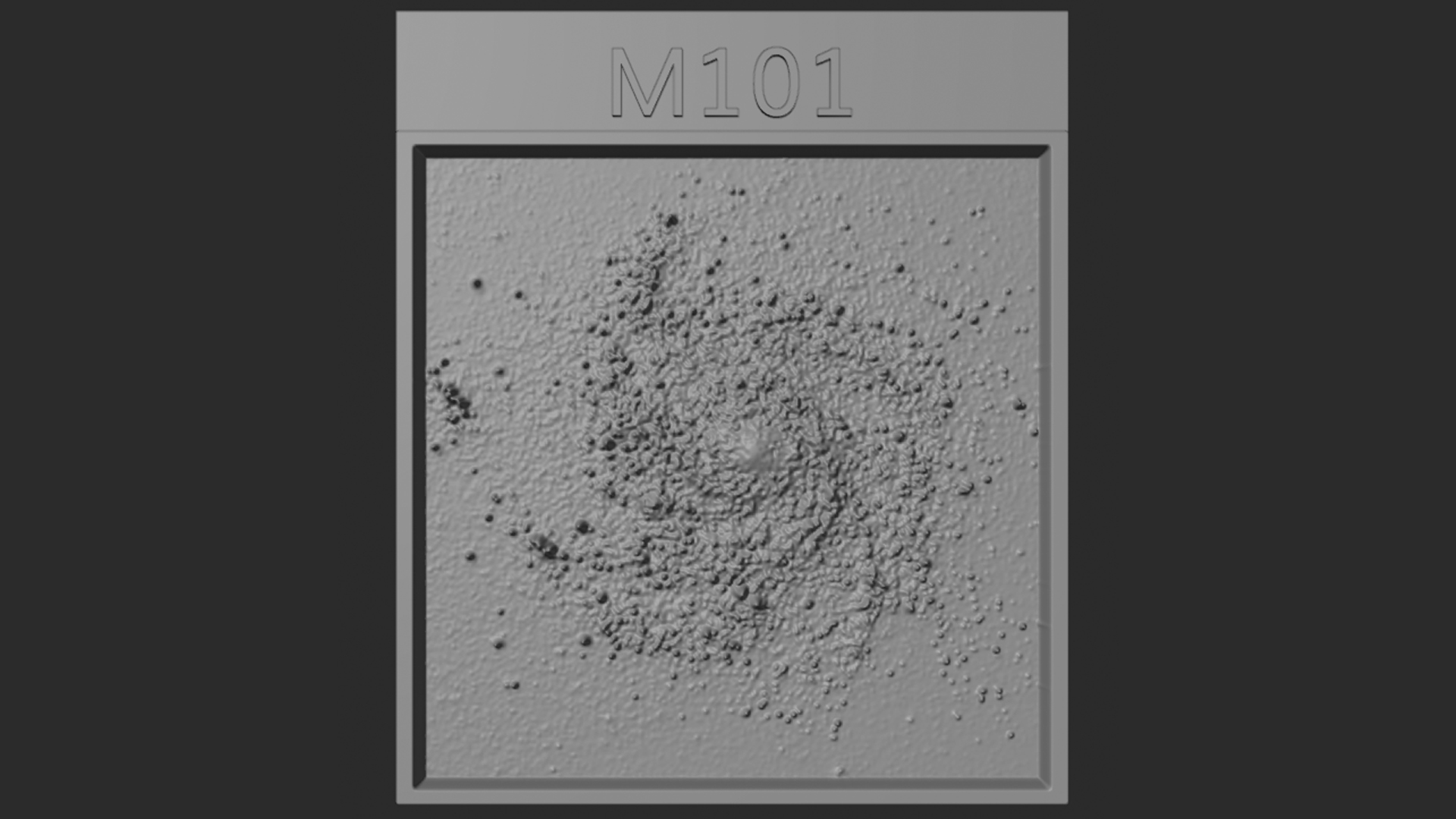
3D Printable Files: M101(3D Print Credit: NASA/CXC/A. Jubett, using software by Tactile Universe/N. Bonne & C. Krawczyk & Blender)
This tactile plate is a physical relief map based on the intensity of multi-wavelength data featuring a spiral galaxy, M101; one of six identified galaxies housing a new class of mysterious objects that give off unusually low-energy X-rays.
In this composite plate of X-ray data from Chandra and optical data from Hubble, M101 faces us directly. It has multiple arms spiraling clockwise around a raised core. Scattered along and between the arms are scores of tiny specks. Most of those specks are pairs of stars, but seven of them are a mystery. To casual observers, the unusual objects are tactilely indistinguishable from the other specks of light in the galaxy.
These mystery specks behave like no other class of object discovered before. The curious objects give off X-rays of such low energy, they in fact produce large amounts of ultraviolet radiation, as UV radiation borders X-rays on the electromagnetic spectrum. Searching images of galaxies with low-energy X-rays in the Chandra Observatory archive, scientists have found a total of 84 such objects spread across M101 and five other galaxies. They have dubbed these mysterious objects “hypersoft X-ray sources.”
In this composite plate of X-ray data from Chandra and optical data from Hubble, M101 faces us directly. It has multiple arms spiraling clockwise around a raised core. Scattered along and between the arms are scores of tiny specks. Most of those specks are pairs of stars, but seven of them are a mystery. To casual observers, the unusual objects are tactilely indistinguishable from the other specks of light in the galaxy.
These mystery specks behave like no other class of object discovered before. The curious objects give off X-rays of such low energy, they in fact produce large amounts of ultraviolet radiation, as UV radiation borders X-rays on the electromagnetic spectrum. Searching images of galaxies with low-energy X-rays in the Chandra Observatory archive, scientists have found a total of 84 such objects spread across M101 and five other galaxies. They have dubbed these mysterious objects “hypersoft X-ray sources.”
Return to: NASA's Chandra Unveils Mysterious X-ray Objects (September 9, 2026)


Revised: September 09, 2026