


CXC Home | Search | Help | Image Use Policy | Latest Images | Privacy | Accessibility | Glossary | Q&A
1
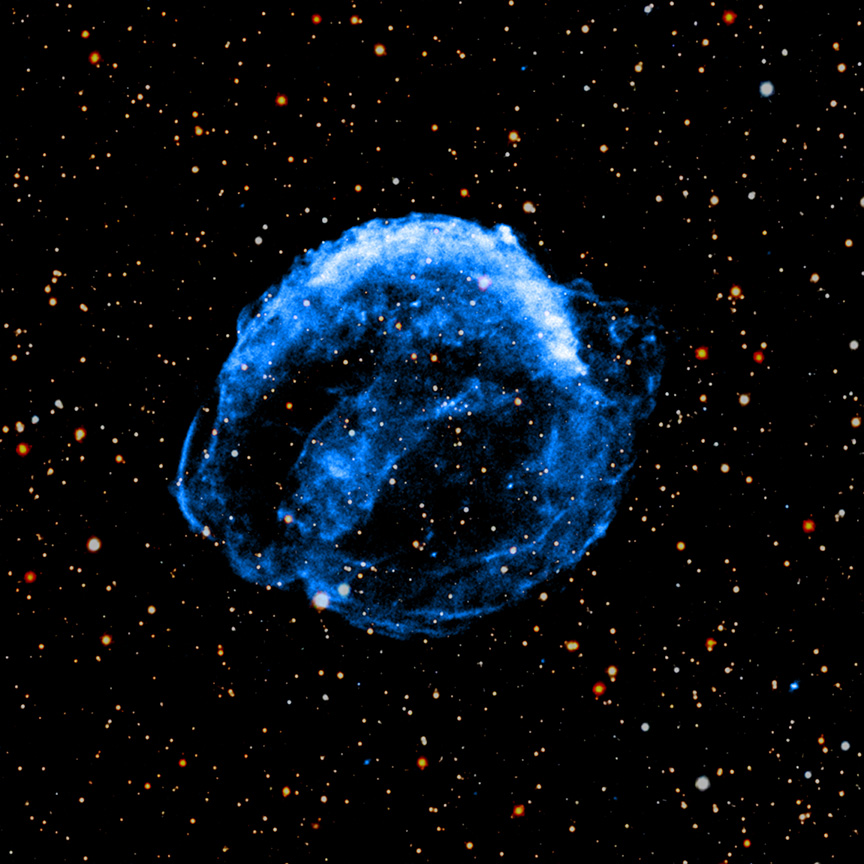
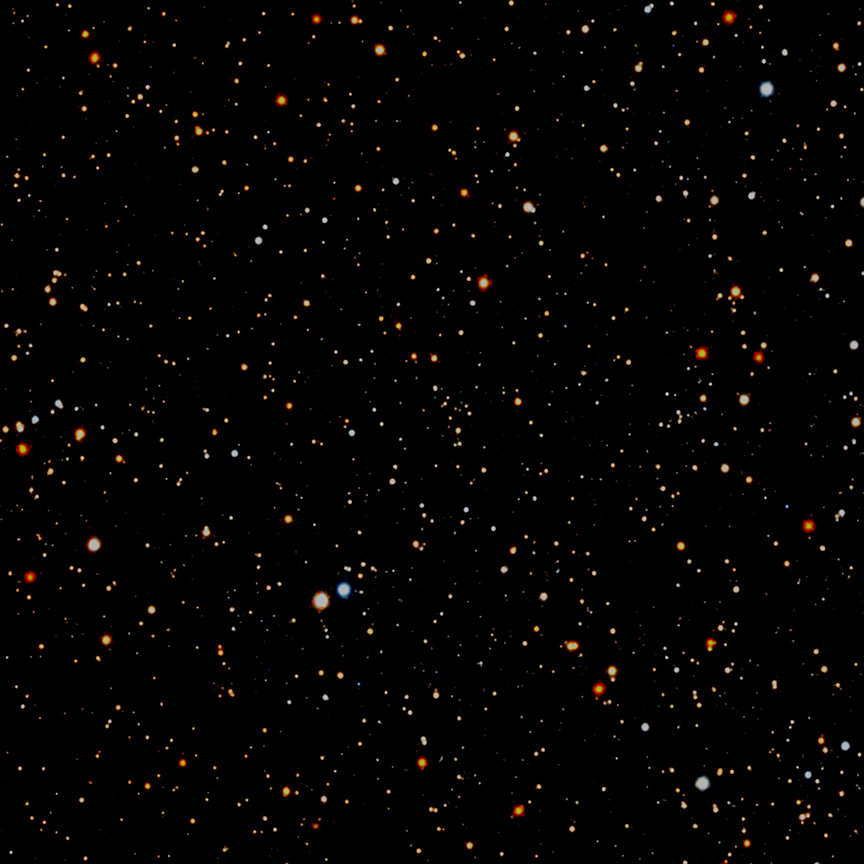
X-ray & Optical Images of Kepler's Supernova RemnantCredit: X-ray: NASA/CXC/SAO; Optical: Pan-STARRS
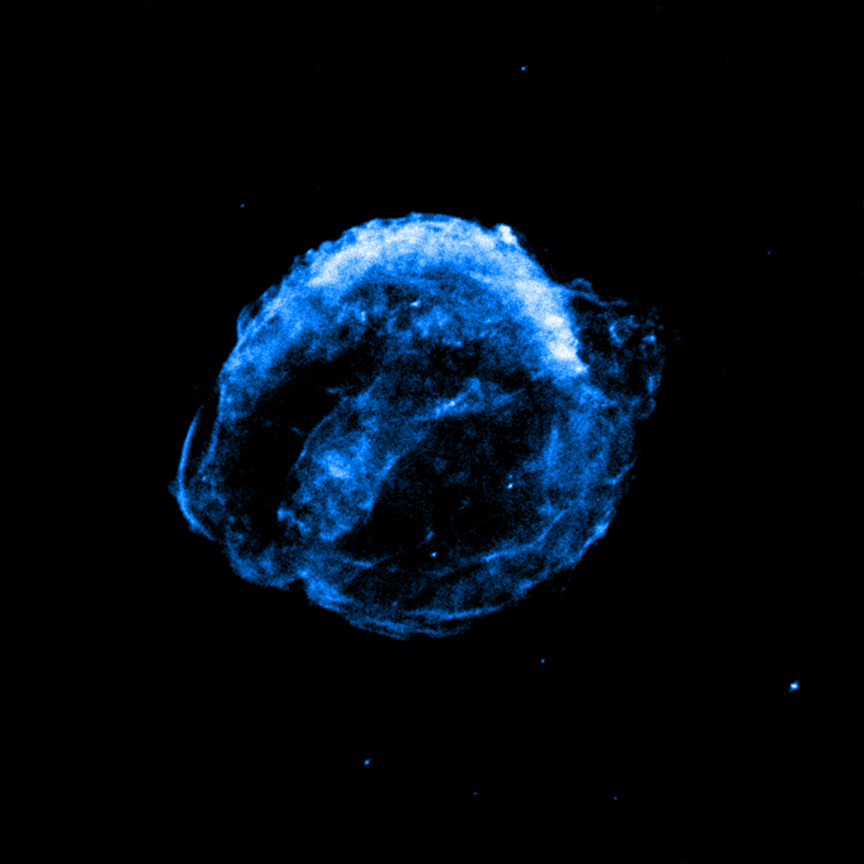
A single still from a video of the Kepler Supernova Remnant is shown here using Chandra data taken in 2000, 2004, 2006, 2014, and 2025. When the data collected over the years is viewed as a timelapse, it makes it the longest-spanning video that Chandra has ever released. It also gives astronomers a remarkable view into the aftermath of a Type Ia supernova, a class of stellar explosion created from the thermonuclear detonation of a white dwarf star that scientists use to measure the expansion of the universe. The supernova was witnessed by German astronomer Johannes Kepler in 1604 A.D.
2
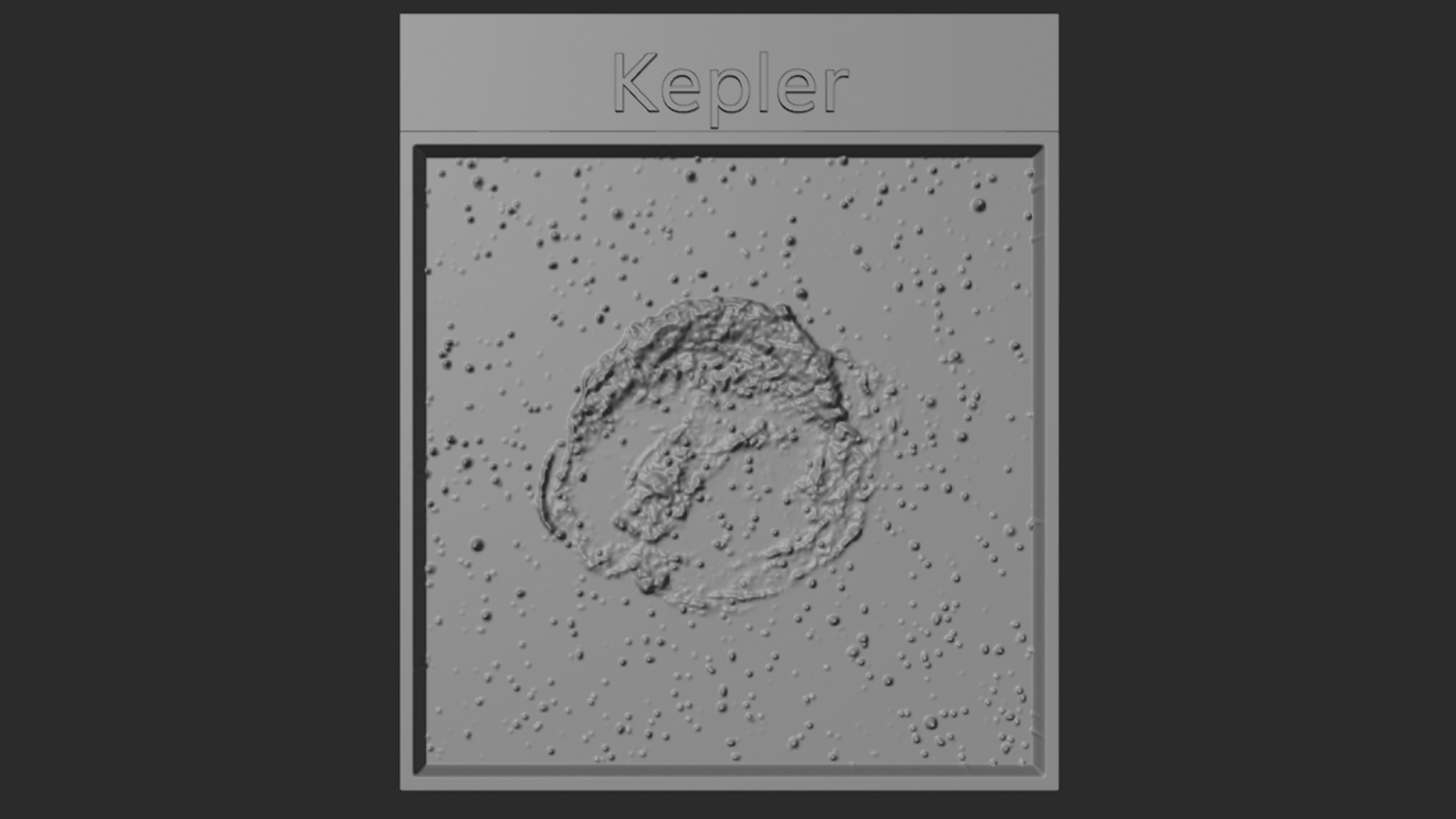
3D Printable Files: Kepler's Supernova Remnant(3D Print Credit: NASA/CXC/A. Jubett, using software by Tactile Universe/N. Bonne & C. Krawczyk & Blender)
This tactile plate is a physical relief map based on the intensity of Chandra X-ray data along with optical data, of Kepler’s Supernova Remnant, located in our own galaxy, about 17,000 light-years from Earth. The plate was created from a single still image taken from a timelapse of X-ray data gathered over the years 2000, 2004, 2006, 2014, and 2025. Those snapshots were turned into highly detailed visuals, creating a 25-year timelapse-style video of the growing remnant. This plate is a snapshot in time of the latest data taken of the expanding remnant.
Kepler's Supernova Remnant was once a white dwarf star that exploded when it exceeded its critical mass. Here, in X-ray light, the remnant resembles a cloudy ring with a diagonal cross line stretching from our upper right down to our lower left. The ring appears thinner and wispier at the bottom, with a band of more defined light arching across the top.
In the video version of the plate, the ring subtly, but clearly, expands, like a slowly inflating balloon. Upon close inspection, researchers have determined that the bottom of the remnant is expanding fastest; about 13.8 million miles per hour, or 2% of the speed of light. The top of the ring appears to be expanding the slowest; about 4 million miles per hour, or 0.5% of the speed of light. The large difference in speed is because the gas that the remnant is plowing into towards the top of the image is denser than the gas towards the bottom.
Collecting and interpreting this data over decades has provided information about the environment into which the white dwarf star exploded and has helped scientists understand how remnants change with time.
Kepler's Supernova Remnant was once a white dwarf star that exploded when it exceeded its critical mass. Here, in X-ray light, the remnant resembles a cloudy ring with a diagonal cross line stretching from our upper right down to our lower left. The ring appears thinner and wispier at the bottom, with a band of more defined light arching across the top.
In the video version of the plate, the ring subtly, but clearly, expands, like a slowly inflating balloon. Upon close inspection, researchers have determined that the bottom of the remnant is expanding fastest; about 13.8 million miles per hour, or 2% of the speed of light. The top of the ring appears to be expanding the slowest; about 4 million miles per hour, or 0.5% of the speed of light. The large difference in speed is because the gas that the remnant is plowing into towards the top of the image is denser than the gas towards the bottom.
Collecting and interpreting this data over decades has provided information about the environment into which the white dwarf star exploded and has helped scientists understand how remnants change with time.
Return to: Supernova Remnant Video From NASA's Chandra Is Decades in Making (January 6, 2025)


Revised: January 06, 2026