


CXC Home | Search | Help | Image Use Policy | Latest Images | Privacy | Accessibility | Glossary | Q&A
1
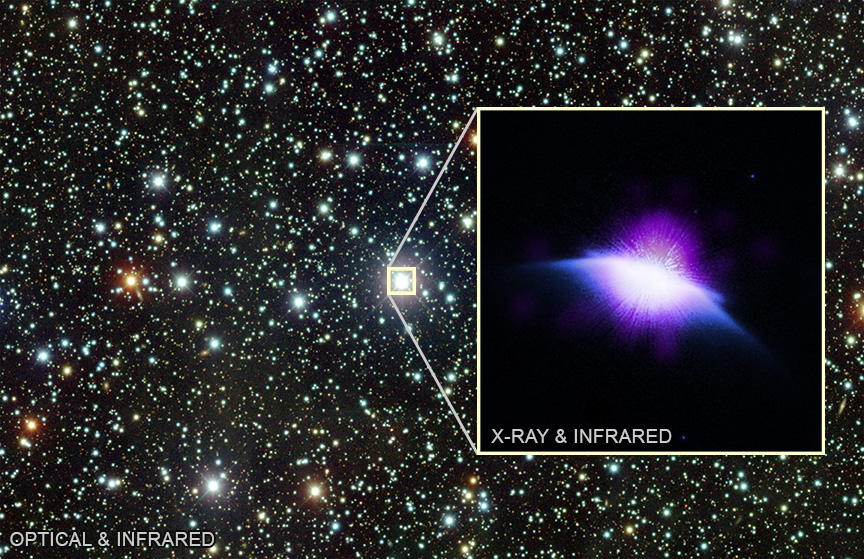
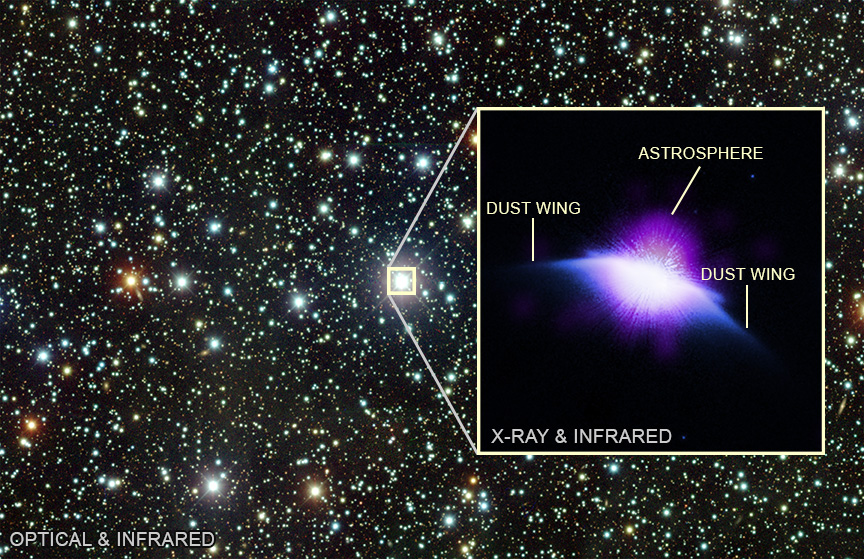
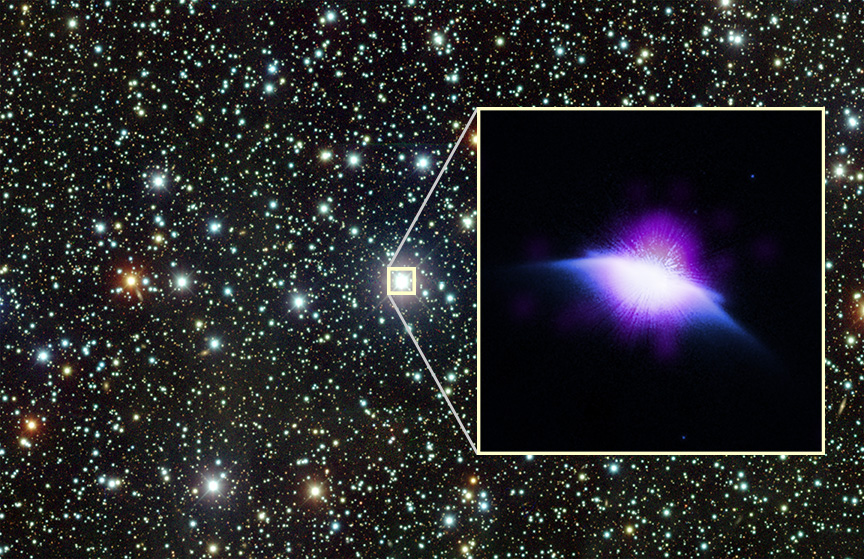
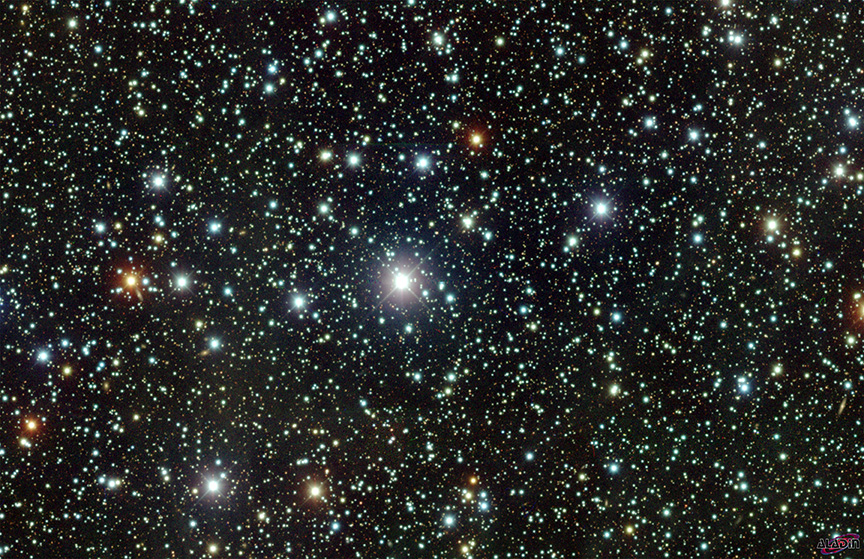
X-ray, Infrared, and Optical images of HD 61005Credit: X-ray: NASA/CXC/Johns Hopkins Univ./C.M. Lisse et al.; Infrared: NASA/ESA/STIS; Optical: NSF/NoirLab/CTIO/DECaPS2; Image Processing: NASA/CXC/SAO/N. Wolk
These images show the star HD 61005 with X-rays from the Chandra X-ray Observatory as well as infrared data from Hubble Space Telescope. A view in optical light from a telescope in Chile shows the larger field that HD 61005 is located in. Astronomers recently used Chandra to discover an astrosphere, a wind-blown bubble, around HD 61005, the first seen around a star like the Sun.
2
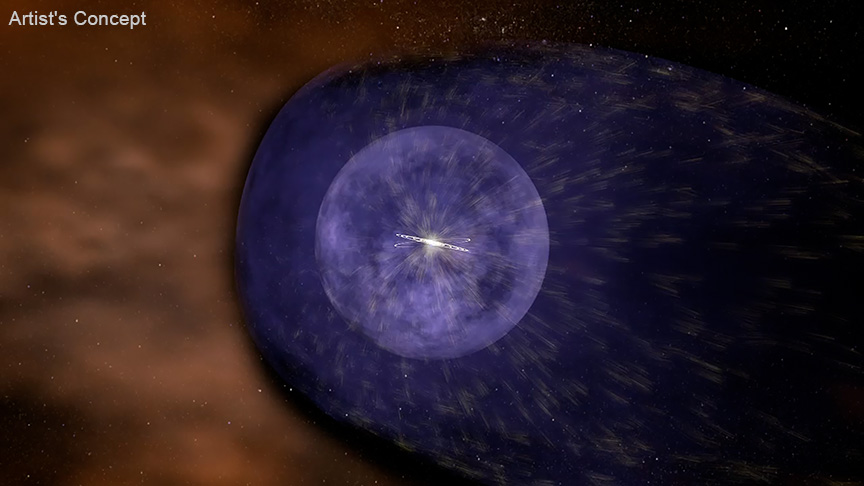
Astrosphere IllustrationIllustration Credit: NASA/Goddard Space Flight Center, Conceptual Image Lab
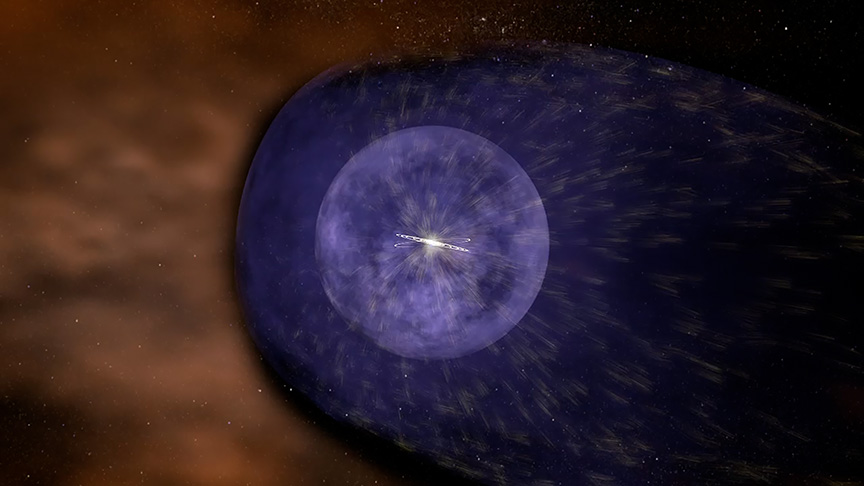
An artist’s illustration depicts the astrosphere in more detail, including a bow shock in blue — akin to a sonic boom in front of a supersonic plane — that is caused by the motion of the star and its astrosphere as it pushes against and flies through gas in interstellar space.
3
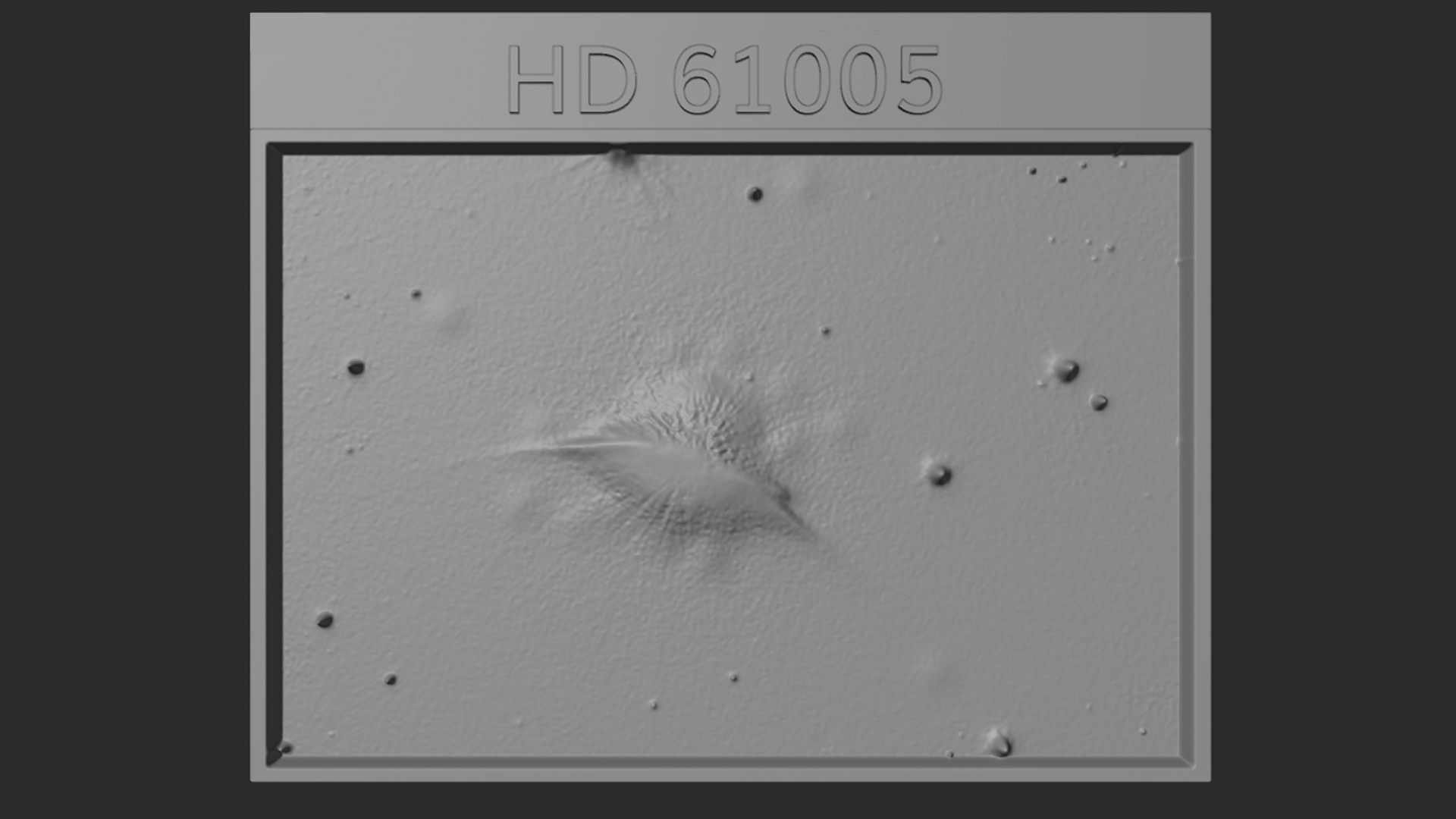
3D Printable Files: HD 61005(3D Print Credit: NASA/CXC/A. Jubett, using software by Tactile Universe/N. Bonne & C. Krawczyk & Blender)
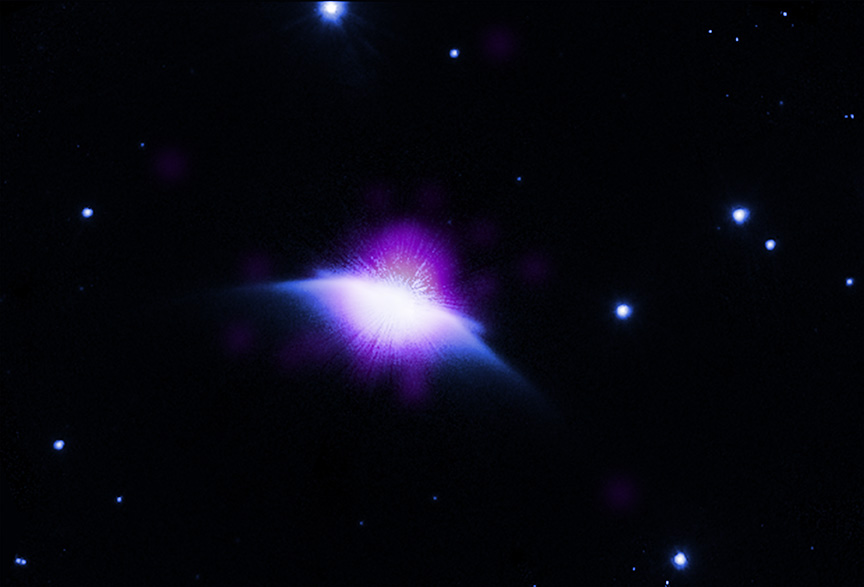
This tactile plate is a physical relief map based on the intensity of Chandra X-ray data and Hubble infrared data featuring the astrosphere surrounding a young star called HD 61005. An astrosphere is a wind-blown bubble full of gas and dust particles that encases a star as it pushes through interstellar space.
In this plate, the composite close-up of HD 61005 shows the spherical star as a plateaued core bursting with X-ray light. Ringing the core is a spherical glow; the astrosphere surrounding the star. A distinguishing feature of HD 61005 is a wedge-shaped tail with pointed tips, which trails the fast-moving star. This tail is dusty material left behind after the star’s formation. The wedge, or wing shape of the tail has earned the star the nickname ‘Moth’ by astronomers spying it through infrared telescopes.
In this plate, the composite close-up of HD 61005 shows the spherical star as a plateaued core bursting with X-ray light. Ringing the core is a spherical glow; the astrosphere surrounding the star. A distinguishing feature of HD 61005 is a wedge-shaped tail with pointed tips, which trails the fast-moving star. This tail is dusty material left behind after the star’s formation. The wedge, or wing shape of the tail has earned the star the nickname ‘Moth’ by astronomers spying it through infrared telescopes.
Return to: Young "Sun" Caught Blowing Bubbles by NASA's Chandra (February 23, 2026)


Revised: February 25, 2026