

CXC Home | Search | Help | Image Use Policy | Latest Images | Privacy | Accessibility | Glossary | Q&A
1
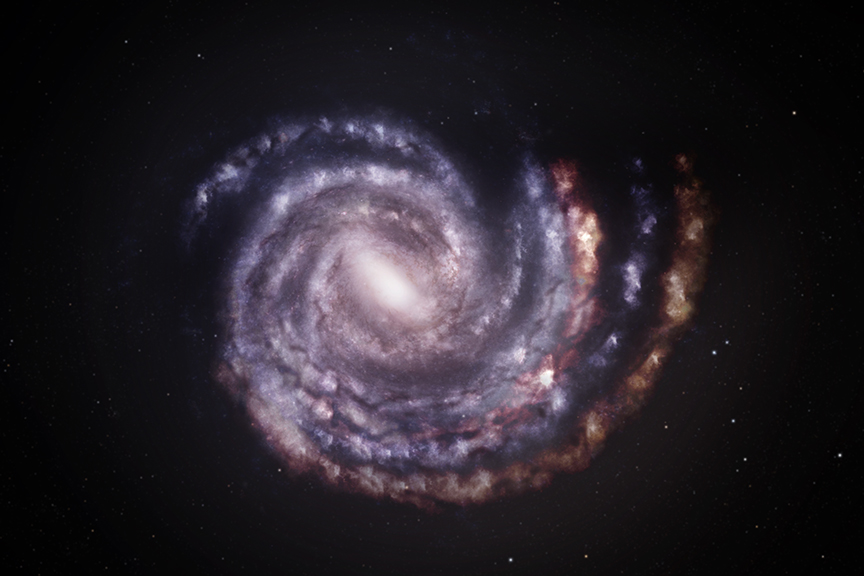
Milky Way Galaxy IllustrationsIllustration Credit: NASA/CXC/SAO/M.Weiss
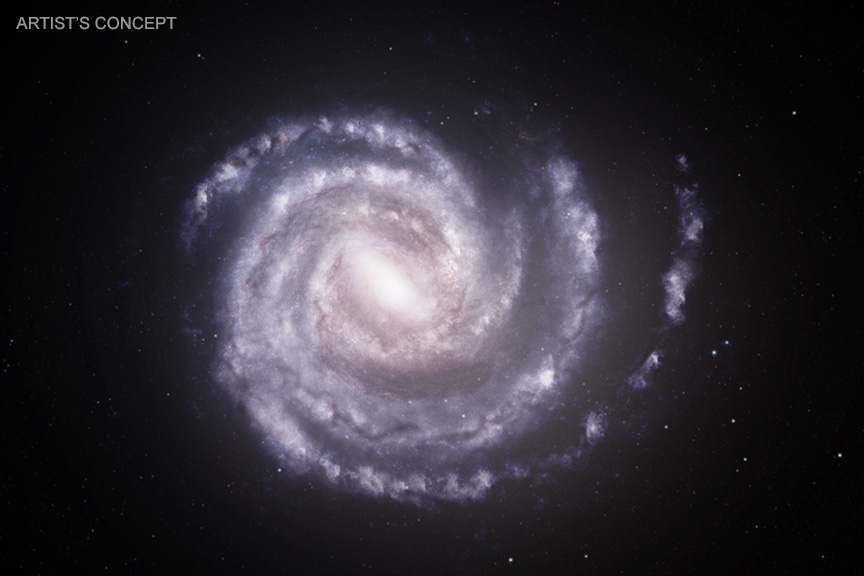
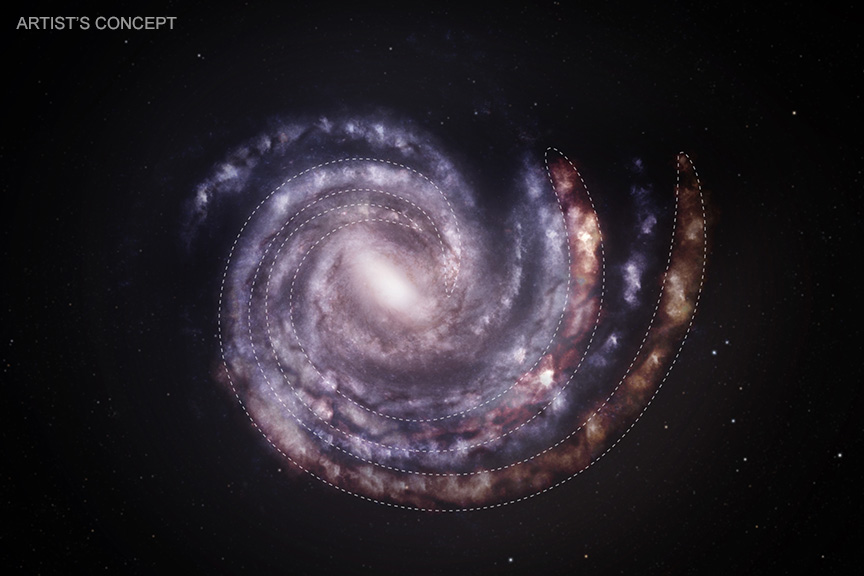
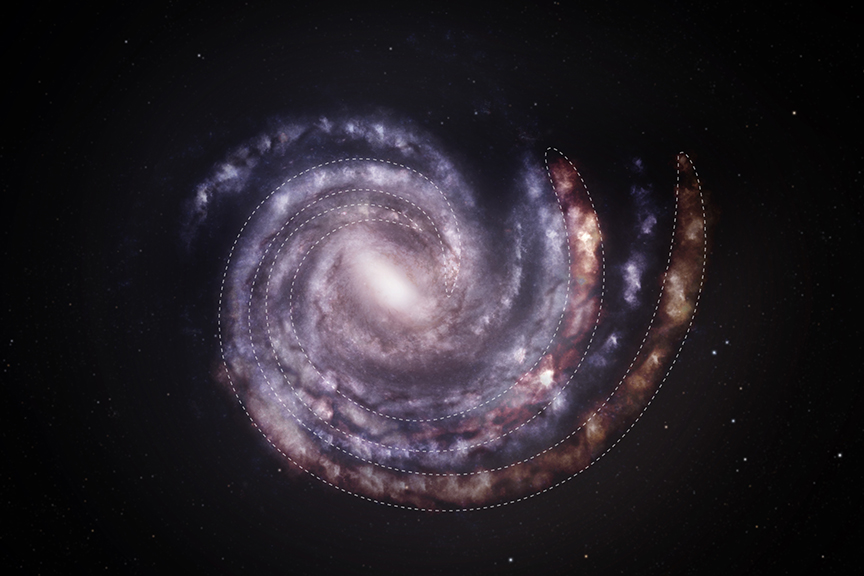
An artist’s concept showing the Milky Way galaxy as seen from above, with the estimated positions of spiral arms based on previous data, in blue. Overlaid on this is an updated view of the Milky Way showing different positions for the two outermost spiral arms, shown in red and bordered by dashed lines. Both arms may be more distant than previously thought, based on newly-processed X-ray data from Chandra and XMM.
2
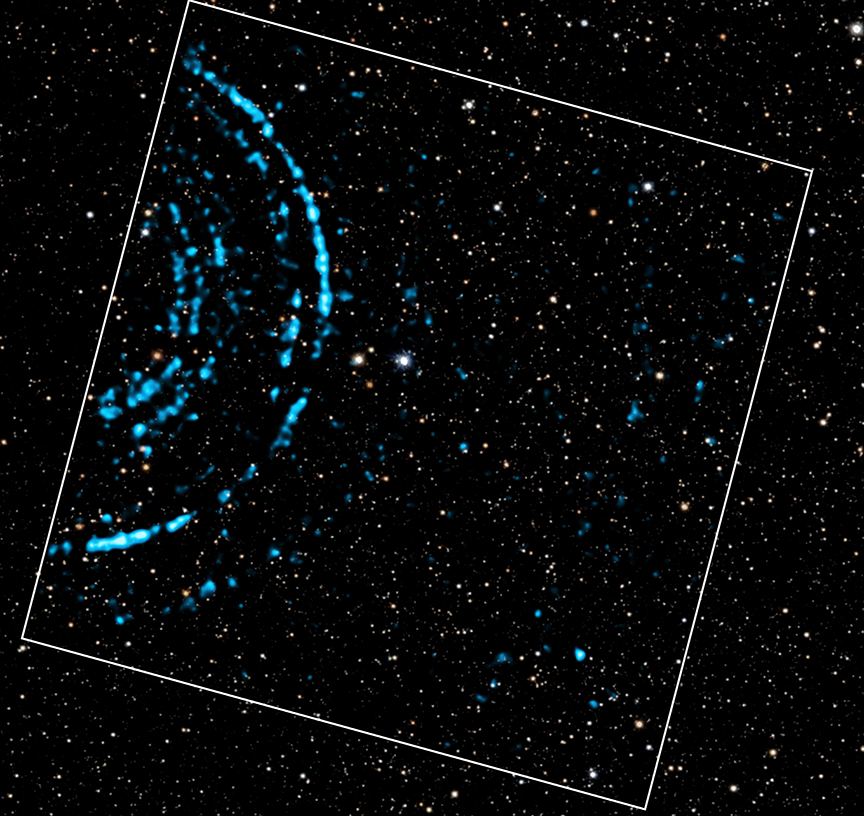
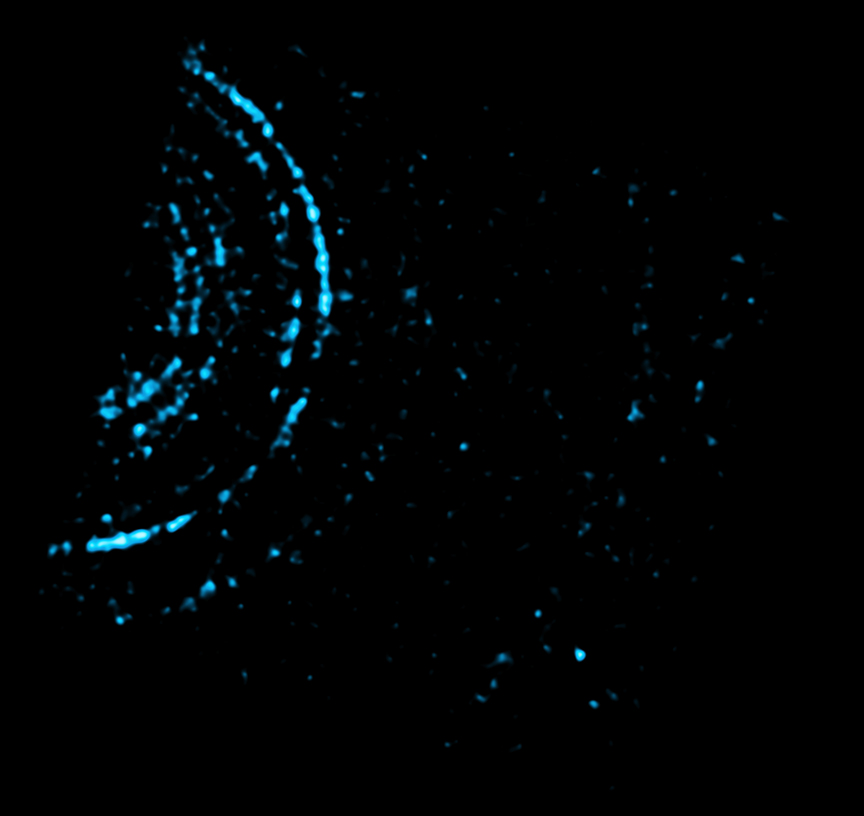
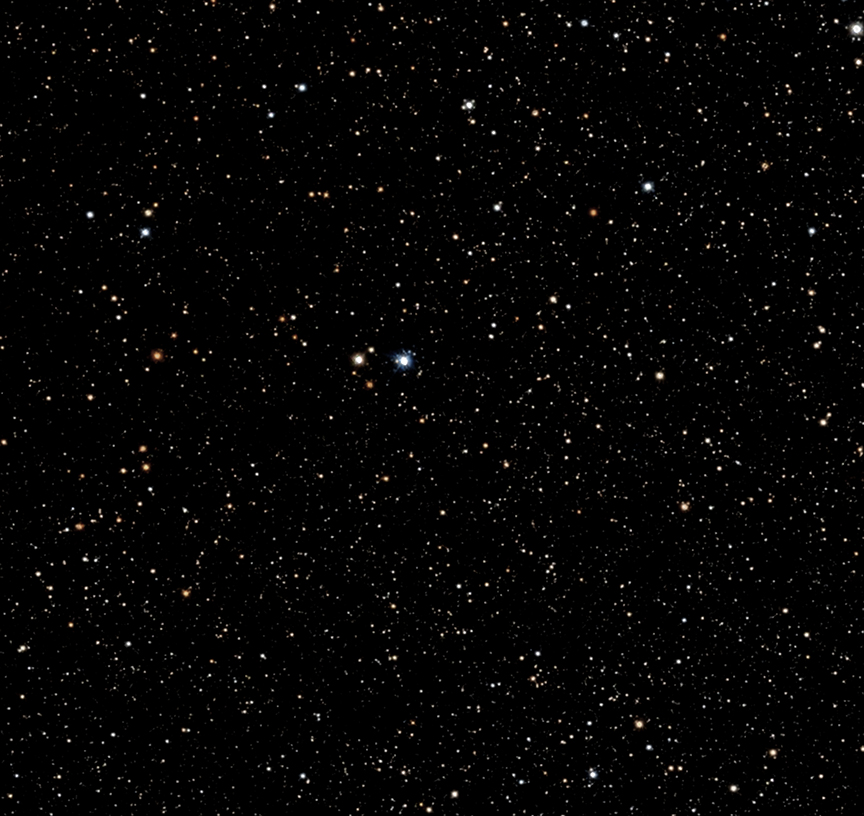
X-ray & Optical Images Showing Rings from Dust CloudsCredit: X-ray: NASA/CXC/INAF/B. Vaia et al.; Optical: Pan-STARRS; Image processing: NASA/CXC/SAO/N.Wolk & P.Edmonds
The images include X-ray data from Chandra and optical data from Pan-STARRS. The composite image shows X-ray rings generated by a gamma-ray burst (GRB), a bright X-ray source located outside our galaxy. In a phenomenon called light echoes, the X-rays from the GRB bounced off dust clouds in the spiral arms of our galaxy. The diameters of the rings in the Chandra data give the distances of the dust clouds to Earth, with larger rings being generated by dust clouds closer to us. The GRB is located at the center of the circles defining the rings, to the left of the X-ray data outlined by the white square.
Return to: NASA's Chandra Examines Milky Way at Arms' Length (July 1, 2026)


Revised: August 12, 2026