
General
Updated Chandra Web Site
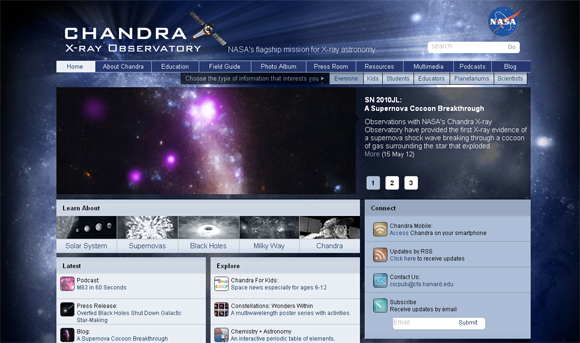
We have refreshed the Chandra web site to a content "portal" format. Let us know what you think about the changes https://chandra.si.edu
Welcome Home, Shuttle Discovery
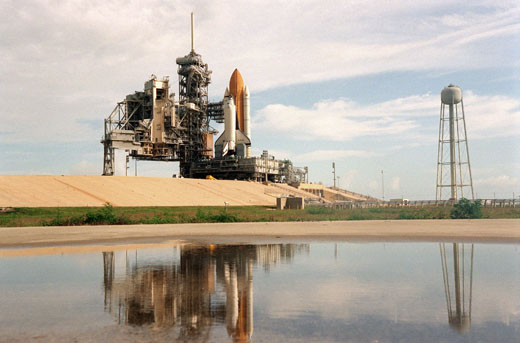
This morning, the Space Shuttle Discovery touched down from its final flight – a journey from the Kennedy Space Center in Florida to Washington, DC. Discovery will eventually be on display at the Smithsonian's Udvar-Hazy Center near the Dulles airport.
Chandra's own Roger Brissenden was on hand in Washington, DC, for today's event. Chandra has connections to this event on both the NASA and the Smithsonian sides.
Chandra in the 2012 Senior Review
Every two years or so, NASA's Astrophysics Division (part of NASA's Science Mission Directorate) conducts what is called its Senior Review. During this process, an outside panel of experts looks at a variety of things about operating missions in astrophysics that are in their "extended phase." This includes Chandra.
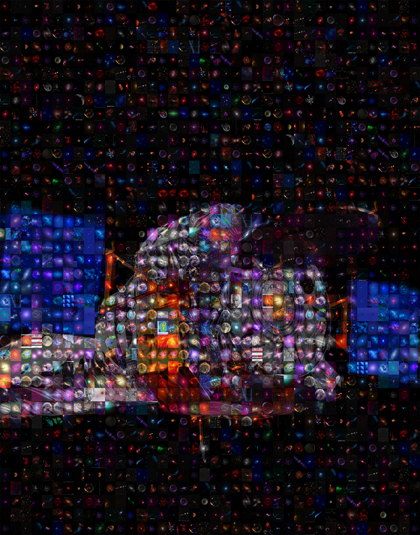
Looking Up From Afghanistan
Most of us appreciate a bit of a break in our day. Even a brief moment away can help us stay focused on the usual tasks of work, home life, or whatever occupies our time.
Sometimes, astronomy can supply that step away from the every day. It can provide an opportunity to consider big picture questions about our place in the Universe, think about exotic and fascinating phenomena, or even just relax and enjoy beautiful imagery.
We can only imagine how much more important it is to have that chance for a momentary escape if you have a dangerous and important job such as being a soldier.
Remembering Columbia
Nine years ago today, we experienced a terrible tragedy. On February 1, 2003, the seven-member crew of STS-107 was lost when the Space Shuttle Columbia disintegrated over Texas and Louisiana on its re-entry into Earth's atmosphere.
Astronomy Show Down in Texas

This 219th meeting of the American Astronomical Society meeting is under way this week in Austin, TX. There will be lots of scientific talks, posters, and in-the-hallway discussions between the 2,700 astronomers who have come to Texas for the meeting. (That's quite a bit when you consider there are probably only several thousand professional astronomers in the whole US!)
Of course, there are lots of Chandra results being shared. Tomorrow, there will be a press conference to announce some exciting new findings involving Chandra and some of the largest objects in the Universe. We'll have the news posted on our website at 10am Central so check back for the latest in the X-ray Universe.
-Megan Watzke, CXC
Changing of the Guard at NASA Science
Today, a new leader reports to NASA HQ to take over what is known as the Science Mission Directorate, or SMD. SMD is the branch of the agency that is responsible for all things science at NASA - from heliophysics to Earth science to planetary science and astrophysics. Chandra, as well as the other "Great Observatories" missions of Hubble and Spitzer, and many, many missions belong to the astrophysics realm of SMD.
STOP at the NSTA
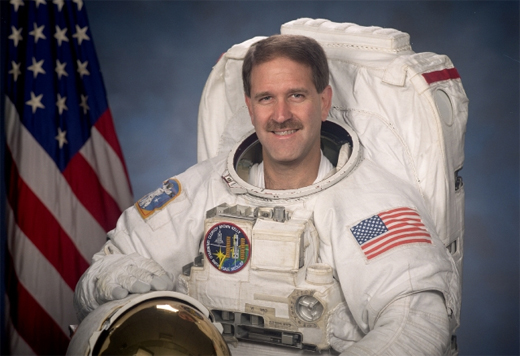
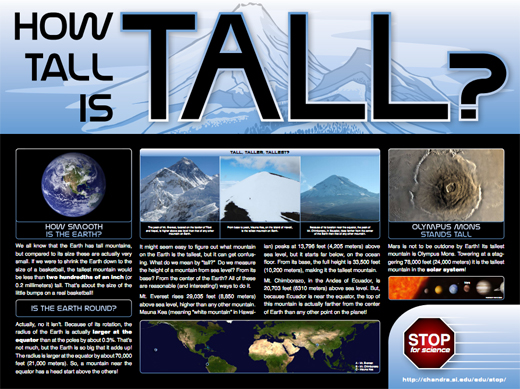
One of the projects that we're very excited around here is something called "Stop for Science!" (aka, STOP). This is a program aimed at engaging kids outside of classroom time in thinking about science. STOP is meant to be fun, but also informative. The centerpiece of the program is a series of five posters covering different areas. The topics range from "how tall is tall" to "when stars go boom." Each poster has accompanying material including background information, questions for different ages of kids, and teacher resource guides.
Happy Trails, MSL
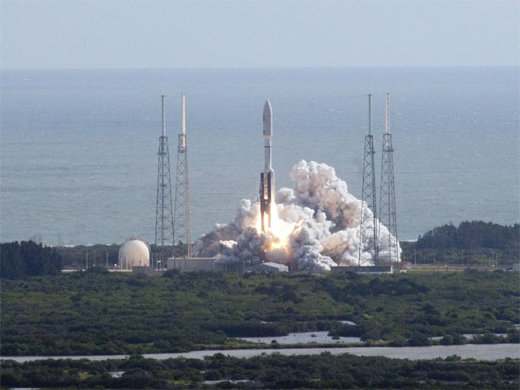
While most of us in the US were still digesting from the Thanksgiving holiday this past weekend, many folks at NASA were incredibly busy. That's because on Saturday, November 26th, NASA launched the Mars Science Laboratory (MSL) into space aboard an Atlas V rocket.
Changing the way we view the world
An era of space exploration ended on July 21, 2011 when Space Shuttle Atlantis touched down before dawn at Kennedy Space Center. The shuttle flights excited our imaginations and tragically revealed the dangers of space travel as mankind dipped its toes into the cosmic ocean. One of the most enduring legacies of the shuttle was established in the 1990's, when the shuttle delivered three of NASA's Great Observatories – Hubble Space Telescope, Compton Gamma Ray Observatory, and the Chandra X-ray Observatory – into space.