

CXC Home | Search | Help | Image Use Policy | Latest Images | Privacy | Accessibility | Glossary | Q&A


1. Black Holes & the Formation of Massive Galaxies
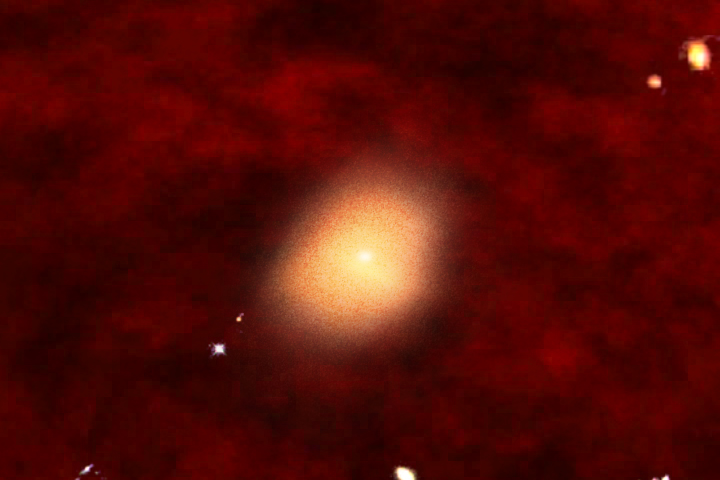
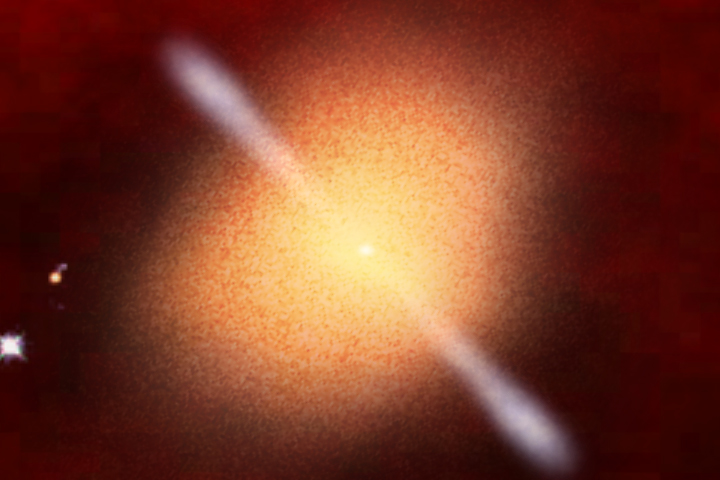
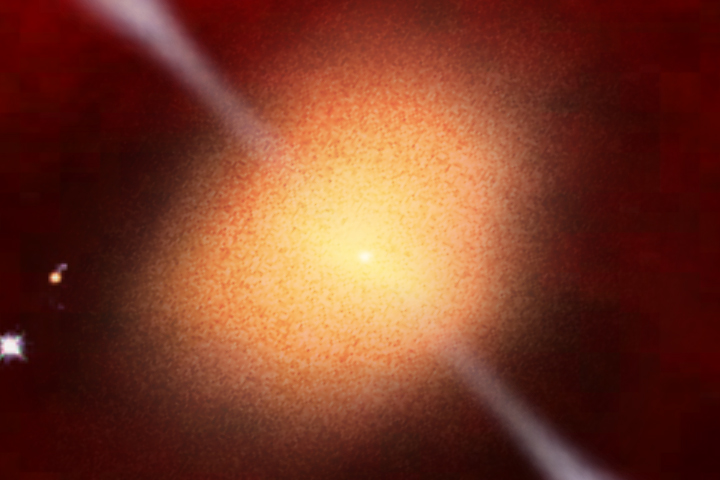
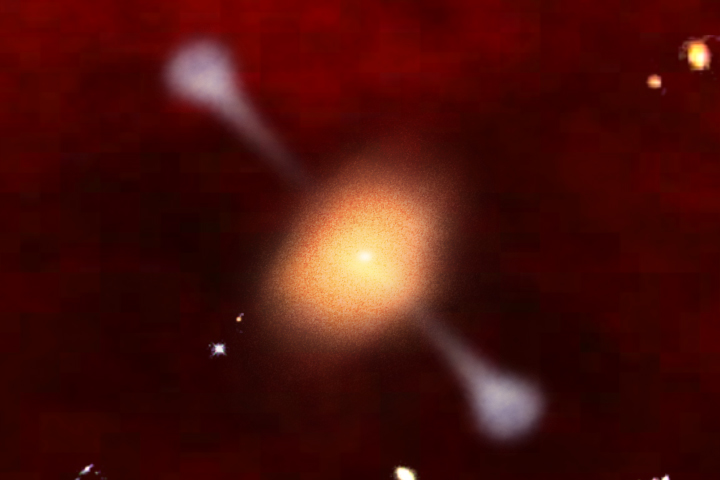
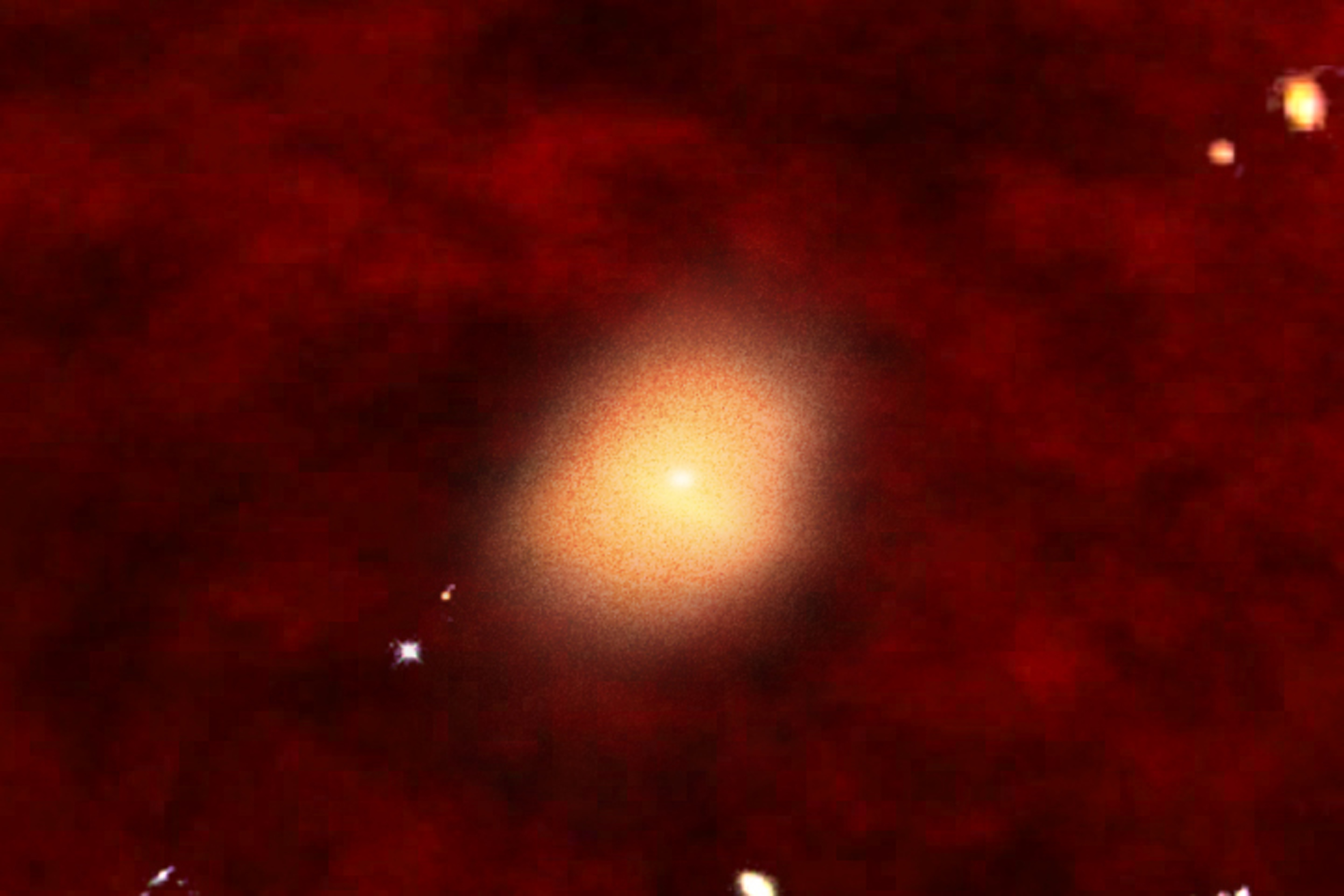
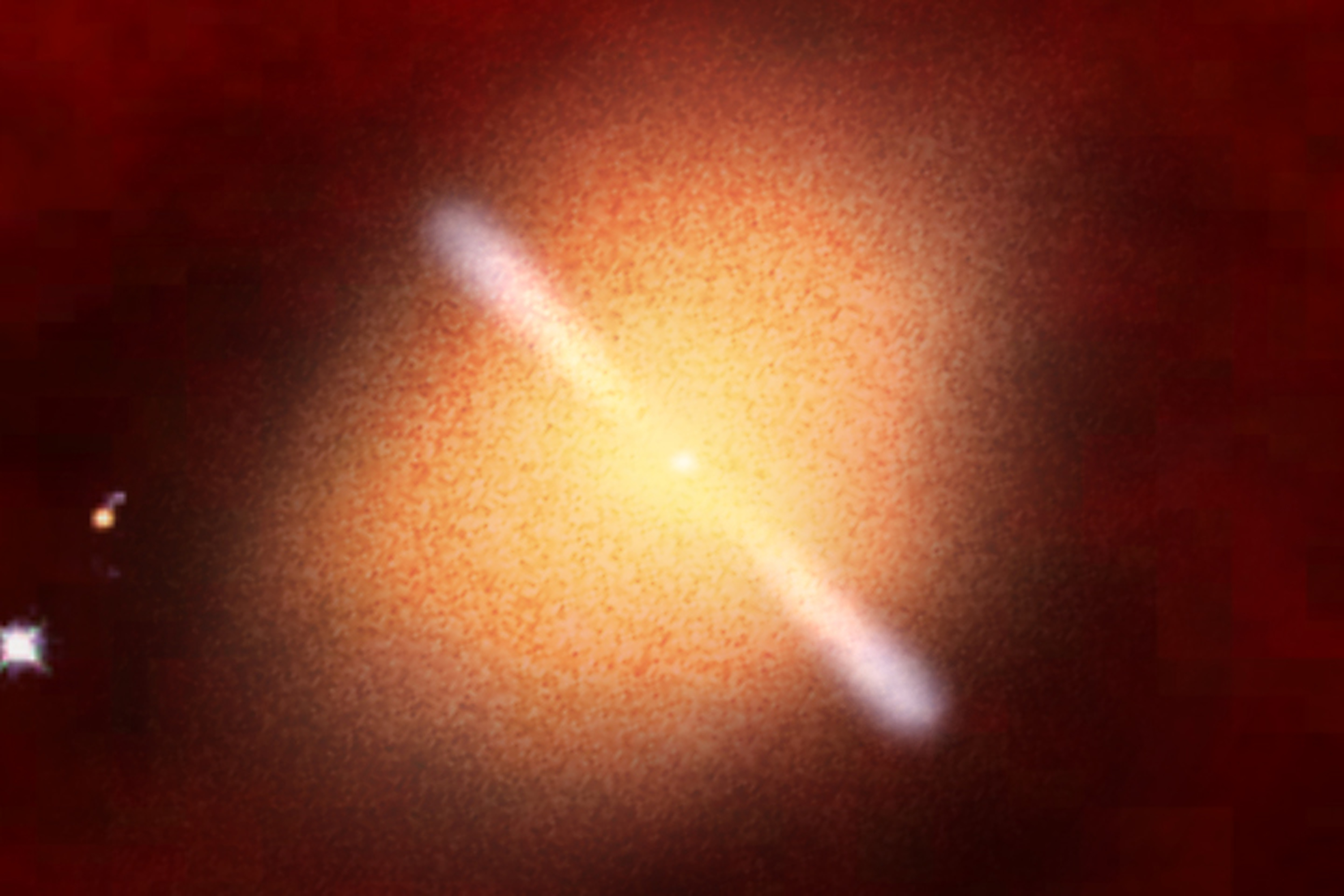
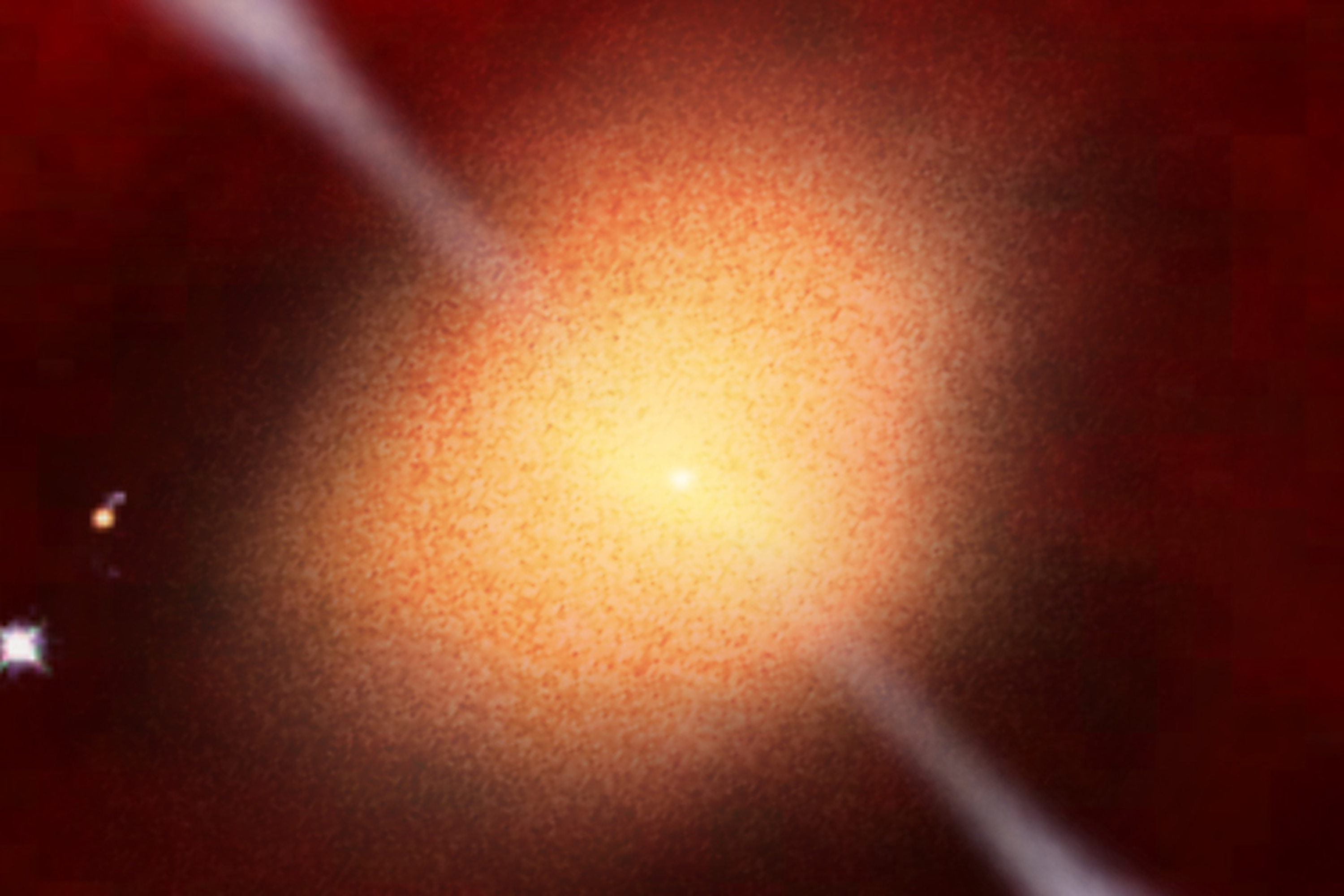
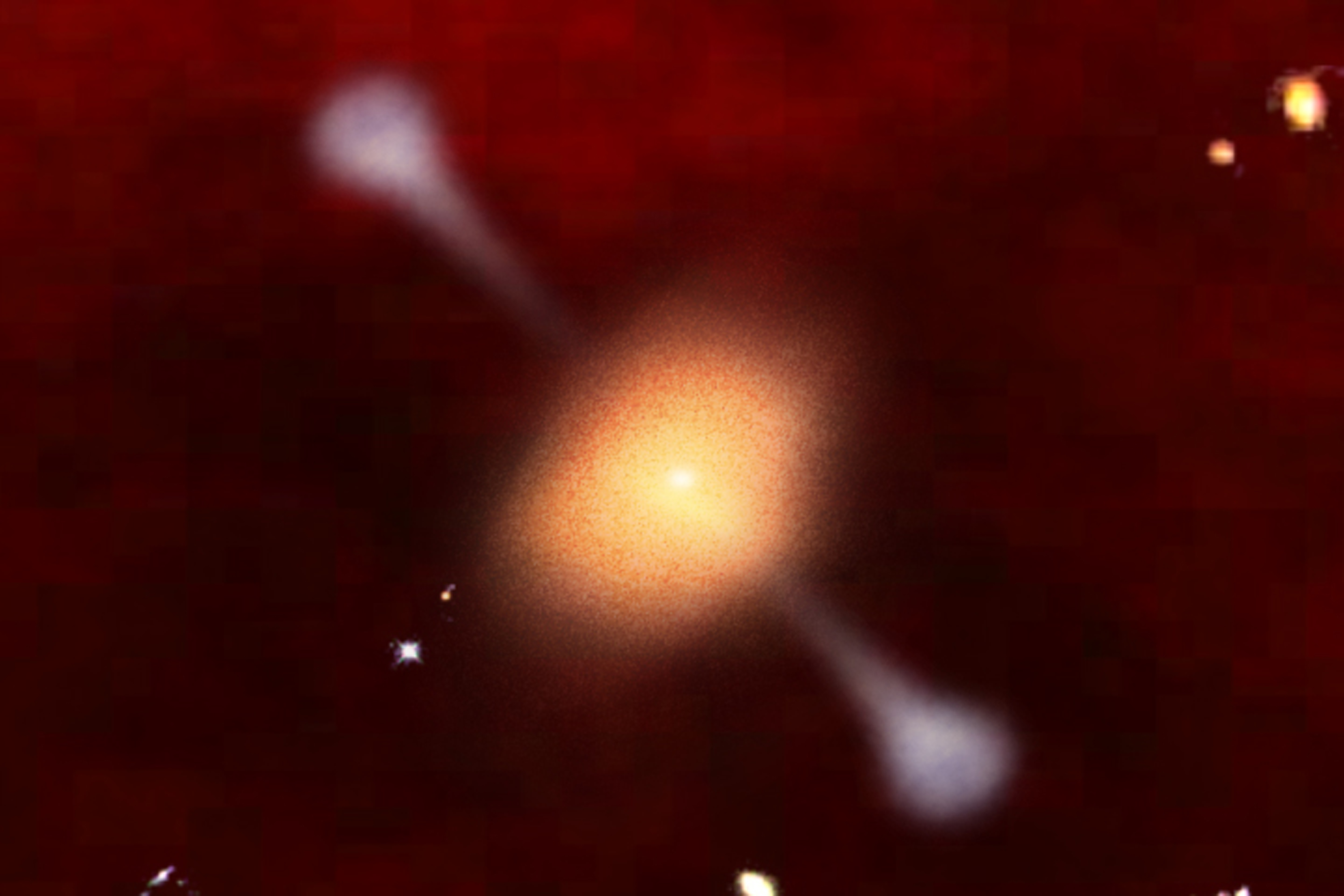
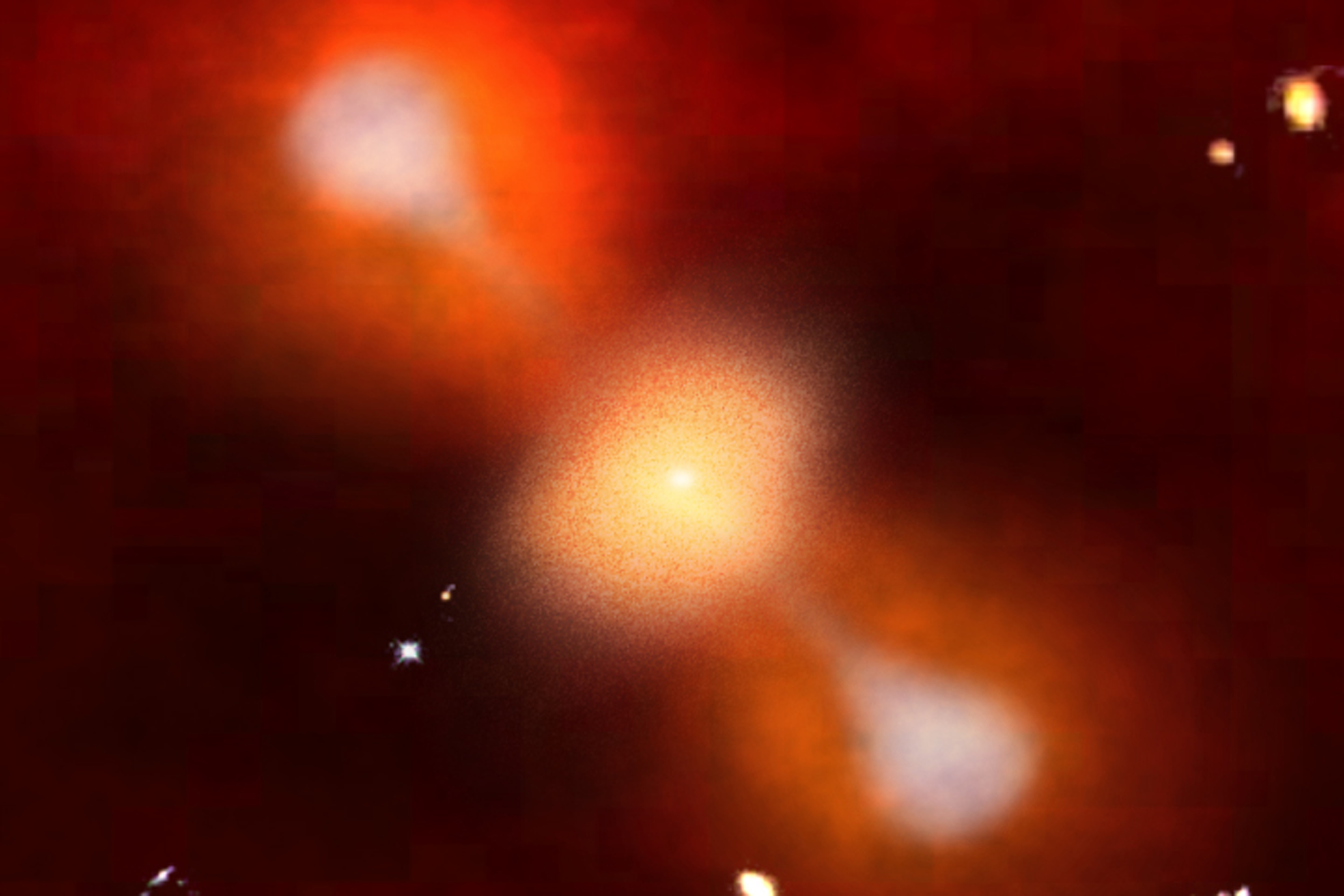
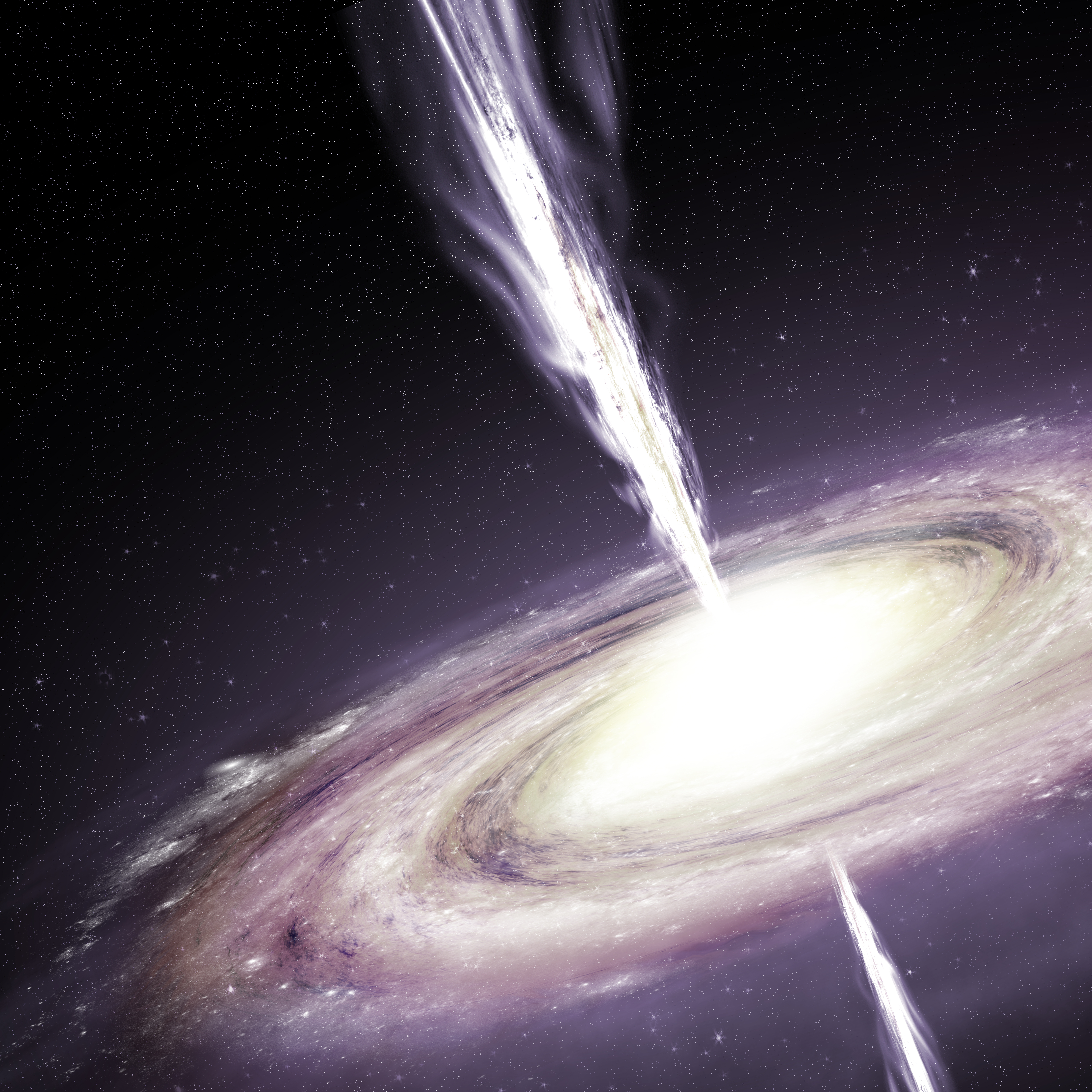
This series of still images is taken from an animation which begins by looking at the exterior of an elliptical galaxy. It then zooms into the region near the galaxy's massive central black hole. The sequence shows how powerful jets of high-energy particles emanate from the vicinity of the black hole. These jets heat gas around the galaxy and stop the infall of matter into the galaxy, thereby limiting the galaxy's growth. This is what astronomers believe is happening in the cases of 4C41.17 and 3C294. (Illustration: NASA/CXC/A.Hobart)
Related Photo Album
This series of still images is taken from an animation which begins by looking at the exterior of an elliptical galaxy. It then zooms into the region near the galaxy's massive central black hole. The sequence shows how powerful jets of high-energy particles emanate from the vicinity of the black hole. These jets heat gas around the galaxy and stop the infall of matter into the galaxy, thereby limiting the galaxy's growth. This is what astronomers believe is happening in the cases of 4C41.17 and 3C294. (Illustration: NASA/CXC/A.Hobart)
Related Photo Album
2. Wind from Accretion Disk around a Black Hole
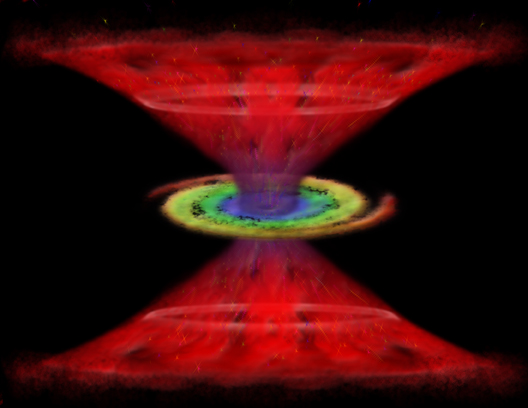
This illustration depicts a massive black hole at the center of a galaxy. Around it is a swirling disk of gas, which gradually pours down into the black hole. As the gas falls inward, it heats up and glows brightly, getting hotter and hotter the closer it is to the event horizon. Some of the gas is blown away from the disk like steam from a kettle. As this gas streams off the disk, the intense radiation generated by the very hot gas near the event horizon forces the escaping gas into a cone and accelerates it to speeds as high as a tenth the speed of light. (Illustration: NASA/CXC/M.Weiss)
Related Photo Album
This illustration depicts a massive black hole at the center of a galaxy. Around it is a swirling disk of gas, which gradually pours down into the black hole. As the gas falls inward, it heats up and glows brightly, getting hotter and hotter the closer it is to the event horizon. Some of the gas is blown away from the disk like steam from a kettle. As this gas streams off the disk, the intense radiation generated by the very hot gas near the event horizon forces the escaping gas into a cone and accelerates it to speeds as high as a tenth the speed of light. (Illustration: NASA/CXC/M.Weiss)
Related Photo Album
Download:

3. Illustration of Wind from Accretion Disk Around a Black Hole
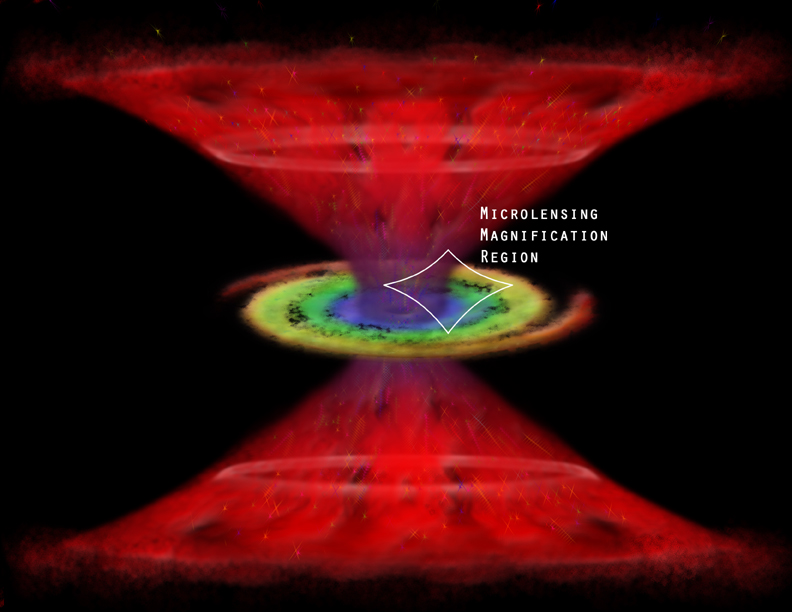
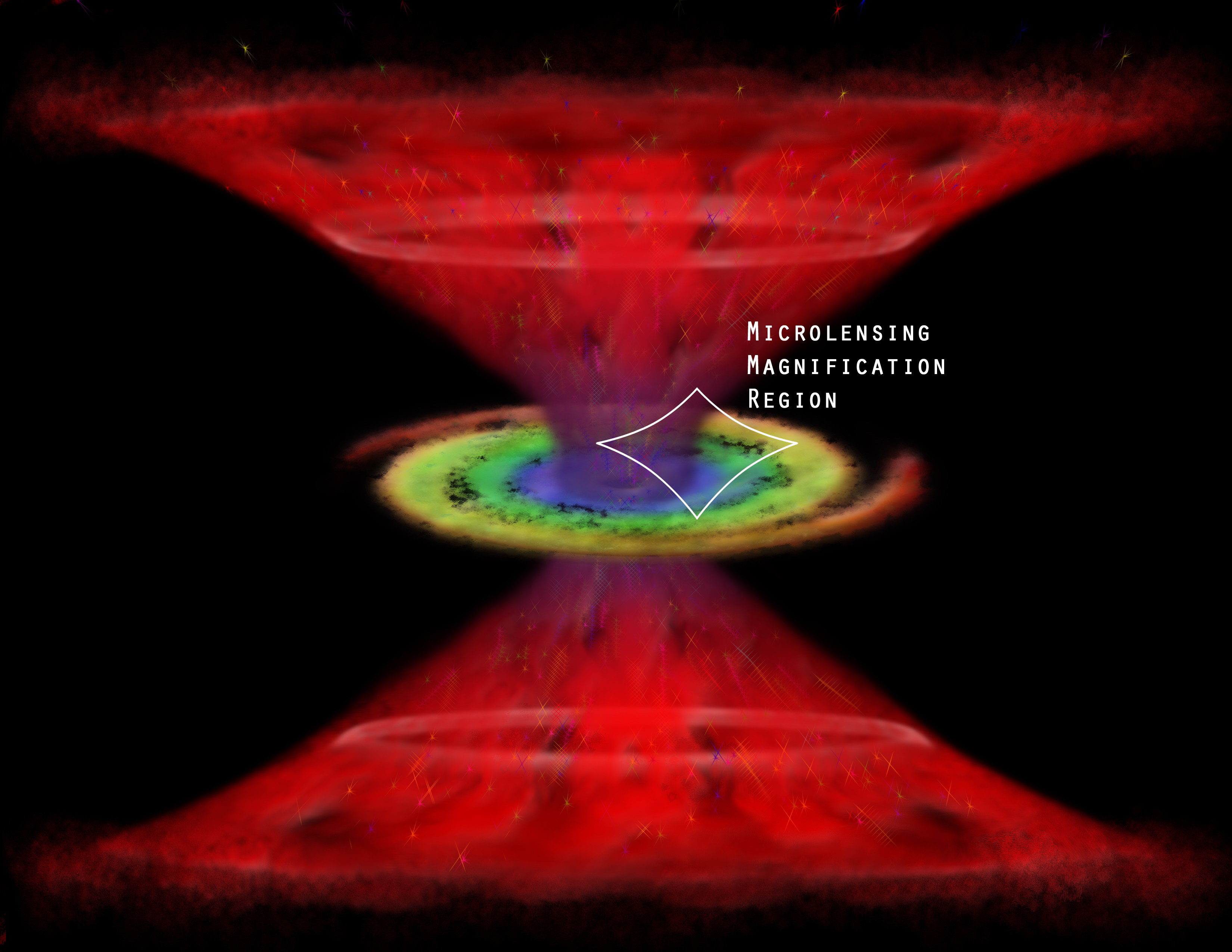
This illustration depicts a massive black hole like the one at the center of the Cloverleaf quasar. Around it is a swirling disk of gas, which gradually pours down into the black hole. As the gas falls inward, it heats up and glows brightly, getting hotter and hotter the closer it is to the event horizon. Some of the gas is blown away from the disk like steam from a kettle. As this gas streams off the disk, the intense radiation generated by the very hot gas near the event horizon forces the escaping gas into a cone and accelerates it to speeds as high as a tenth the speed of light. The effect of X-ray microlensing, as detected by the latest Chandra results, gives astronomers a new and extremely precise probe of the gas flow around the supermassive black hole. The area around the black hole that astronomers believed is magnified is marked by the diamond region. (Illustration: NASA/CXC/M.Weiss)
Related Photo Albums:
NGC 6240 (2002)
Cloverleaf Quasar (2004)
This illustration depicts a massive black hole like the one at the center of the Cloverleaf quasar. Around it is a swirling disk of gas, which gradually pours down into the black hole. As the gas falls inward, it heats up and glows brightly, getting hotter and hotter the closer it is to the event horizon. Some of the gas is blown away from the disk like steam from a kettle. As this gas streams off the disk, the intense radiation generated by the very hot gas near the event horizon forces the escaping gas into a cone and accelerates it to speeds as high as a tenth the speed of light. The effect of X-ray microlensing, as detected by the latest Chandra results, gives astronomers a new and extremely precise probe of the gas flow around the supermassive black hole. The area around the black hole that astronomers believed is magnified is marked by the diamond region. (Illustration: NASA/CXC/M.Weiss)
Related Photo Albums:
NGC 6240 (2002)
Cloverleaf Quasar (2004)
4. Comparison of a normal galaxy, active galaxy and quasar
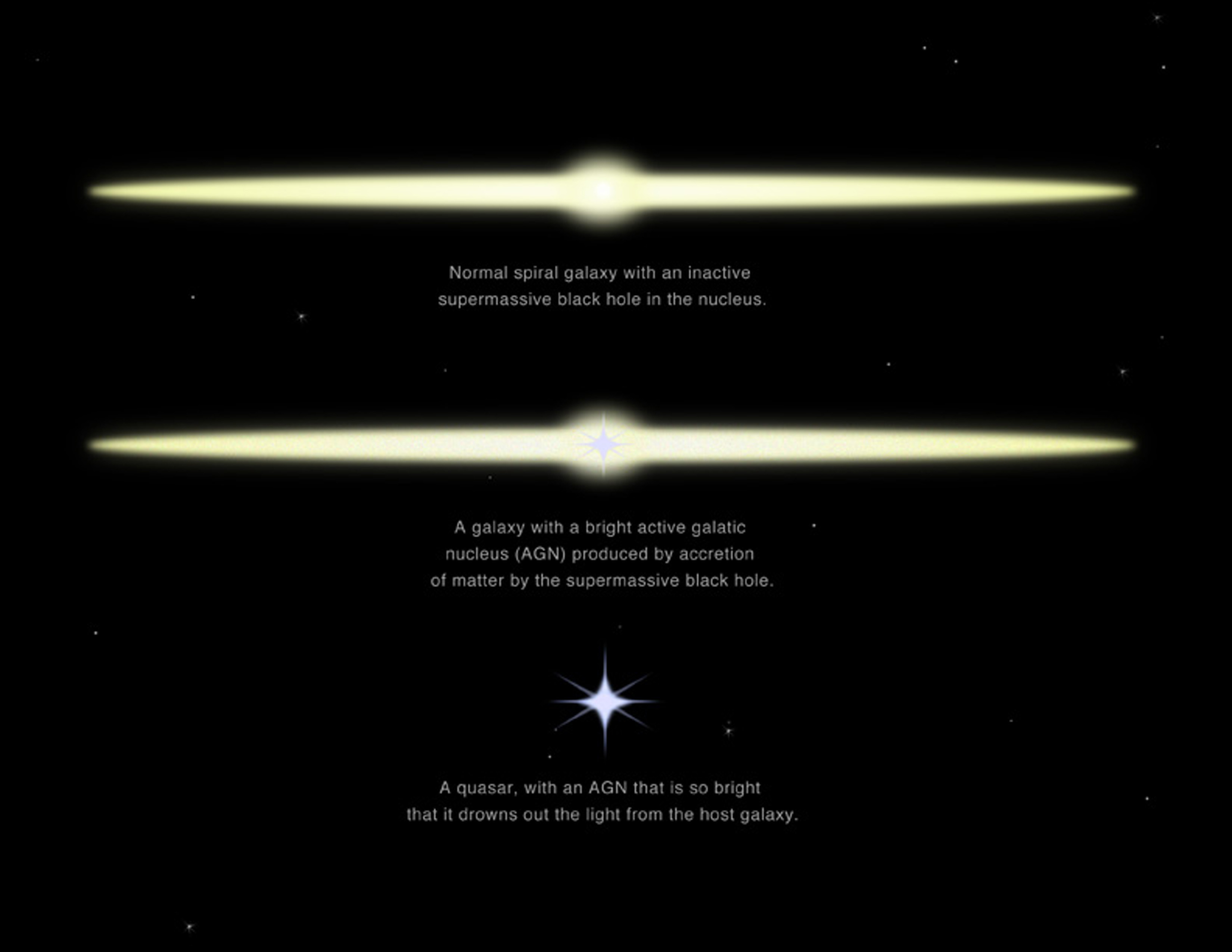
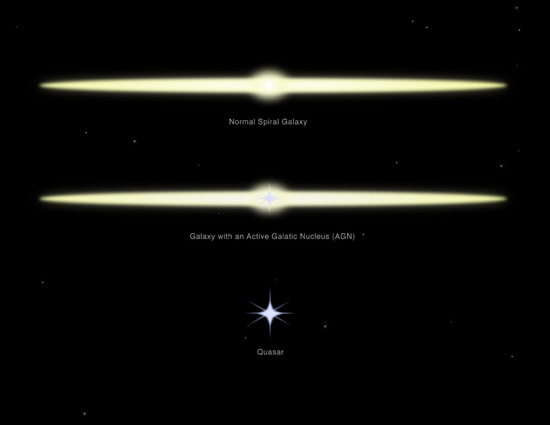
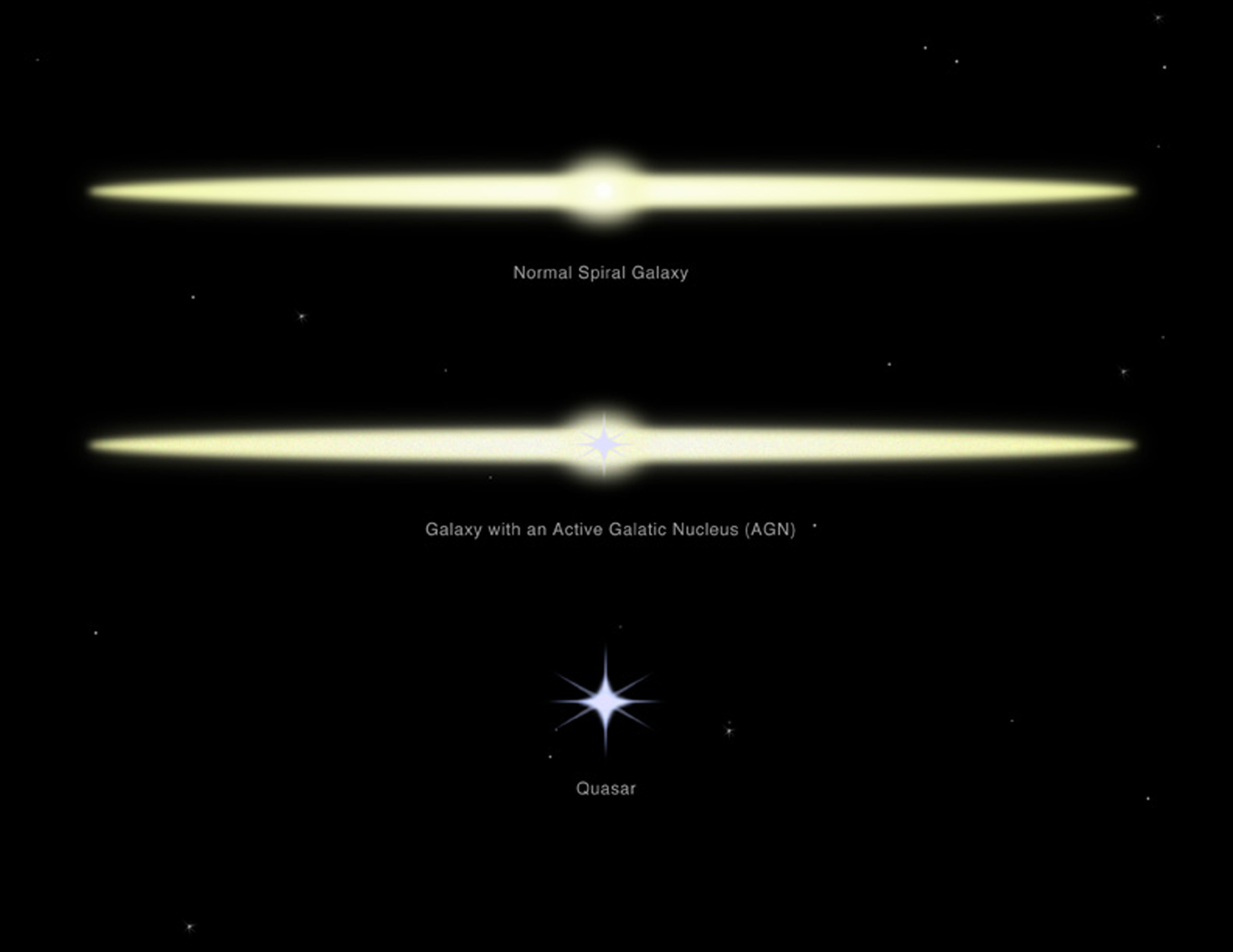
This illustration shows the increasing importance of radiation from the nuclear regions of a normal galaxy, an active galaxy and a quasar. For the quasar, the brightness of the nucleus is a hundred or more times greater than the brightness of the entire galaxy, so it is usually very difficult to see the host galaxy.(Illustration: NASA/CXC/M.Weiss)
Related Field Guide
This illustration shows the increasing importance of radiation from the nuclear regions of a normal galaxy, an active galaxy and a quasar. For the quasar, the brightness of the nucleus is a hundred or more times greater than the brightness of the entire galaxy, so it is usually very difficult to see the host galaxy.(Illustration: NASA/CXC/M.Weiss)
Related Field Guide

5. Gravitational Lensing
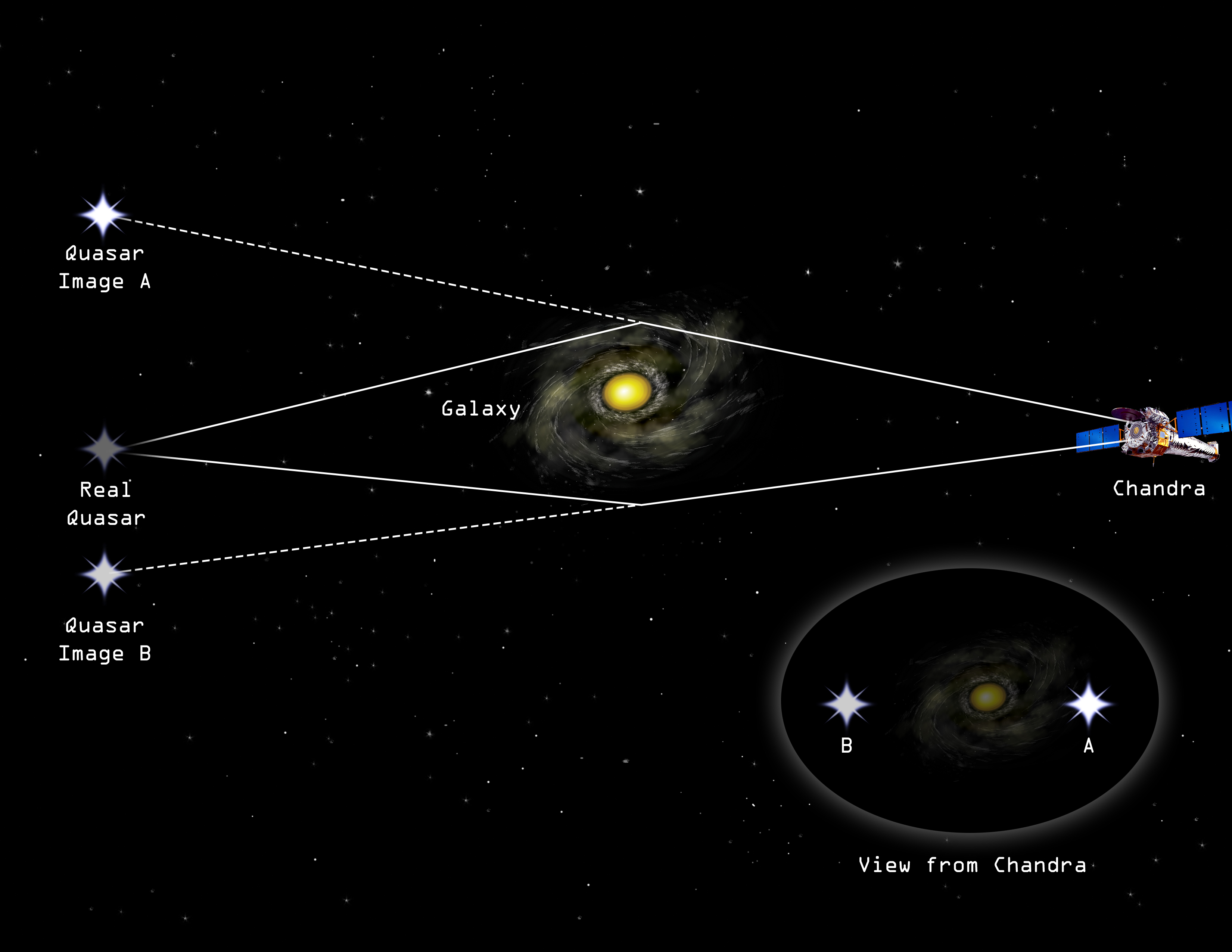
X-rays and other forms of light from a distant quasar can be bent by the gravitational field of an intervening galaxy. This bending can produce multiple images of the same quasar. These images will in general be magnified by different amounts, so will in general appear to have different brightness. Note that the lensing galaxy is often very dim or invisible. (Credit: NASA/CXC/M.Weiss)
Related Photo Album
X-rays and other forms of light from a distant quasar can be bent by the gravitational field of an intervening galaxy. This bending can produce multiple images of the same quasar. These images will in general be magnified by different amounts, so will in general appear to have different brightness. Note that the lensing galaxy is often very dim or invisible. (Credit: NASA/CXC/M.Weiss)
Related Photo Album
Download:
6. PKS 1127-145 Absorber Illustration
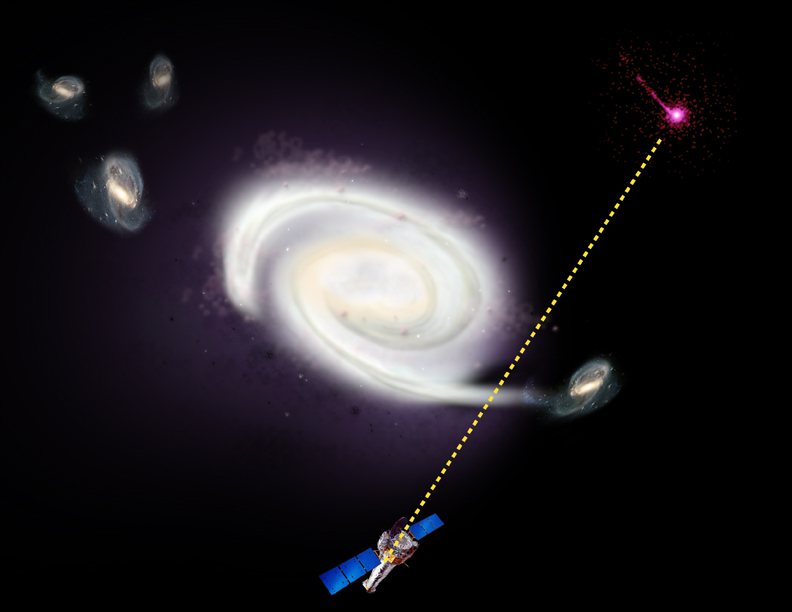
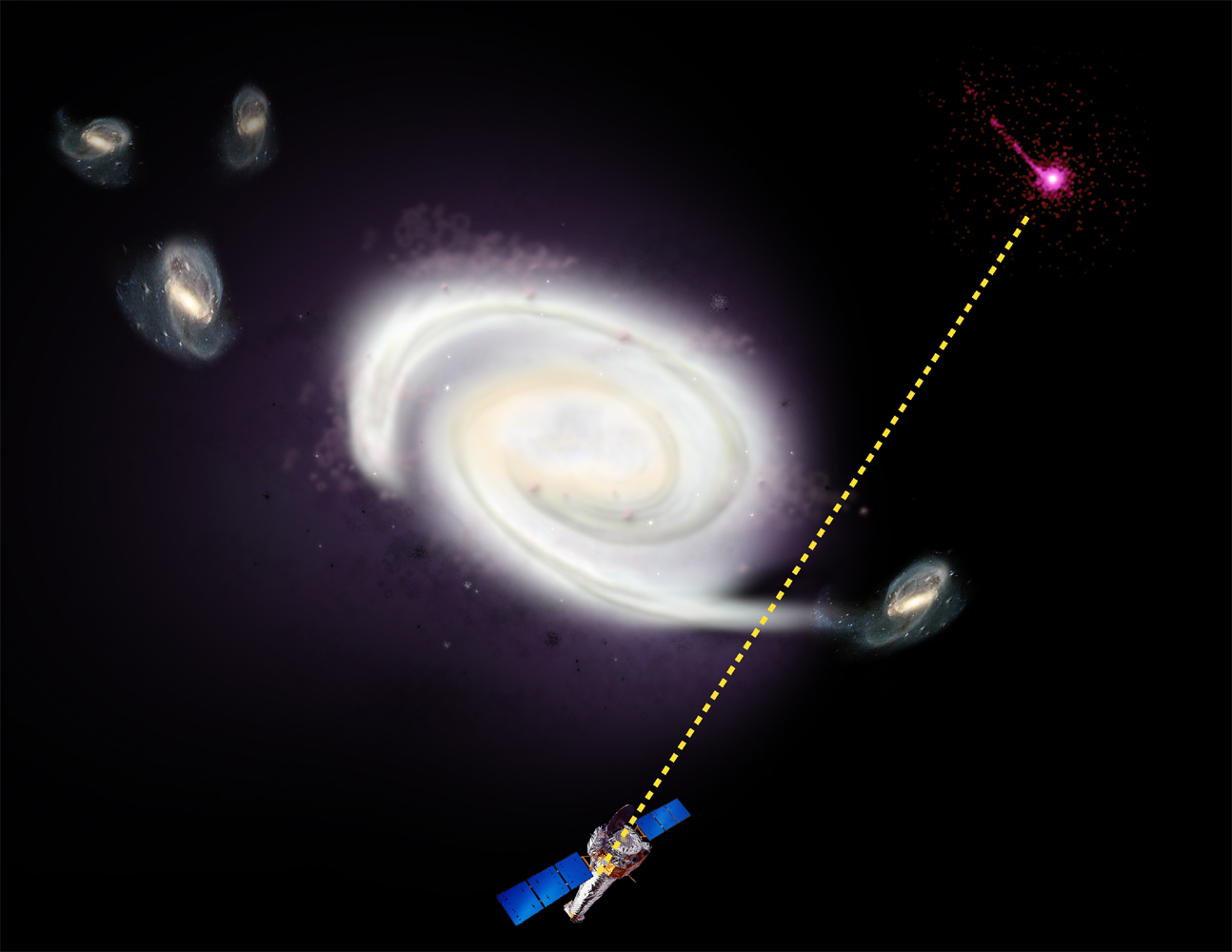
On their way to Earth, the X-rays from PKS 1127-145 pass through a galaxy located about 4 billion light years from Earth. Atoms of various elements in this galaxy absorb some of the X-rays. By measuring the amount of absorption, astronomers were able to estimate that the intervening galaxy contained only about 20 percent as much oxygen as our Milky Way Galaxy has now. (Credit: NASA/CXC/M.Weiss)
Related Photo Album
On their way to Earth, the X-rays from PKS 1127-145 pass through a galaxy located about 4 billion light years from Earth. Atoms of various elements in this galaxy absorb some of the X-rays. By measuring the amount of absorption, astronomers were able to estimate that the intervening galaxy contained only about 20 percent as much oxygen as our Milky Way Galaxy has now. (Credit: NASA/CXC/M.Weiss)
Related Photo Album
Download:
7. Illustration of BALQSO
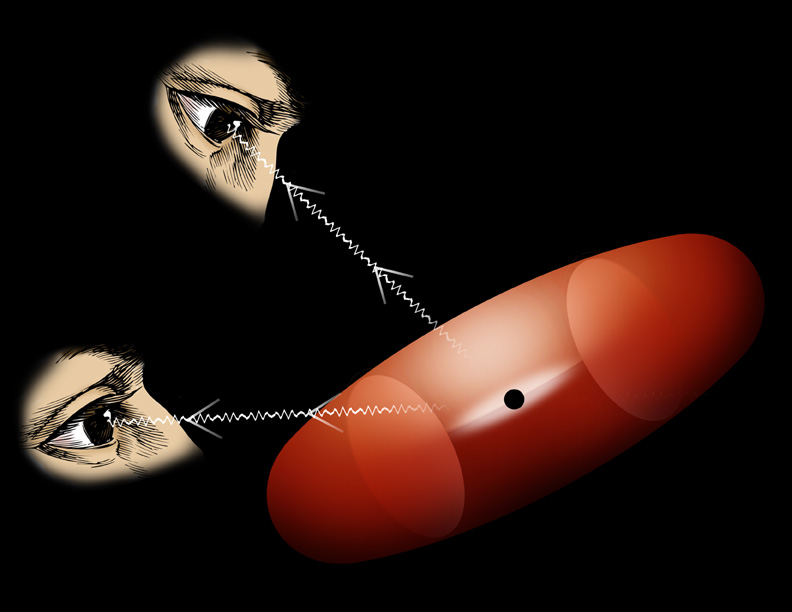
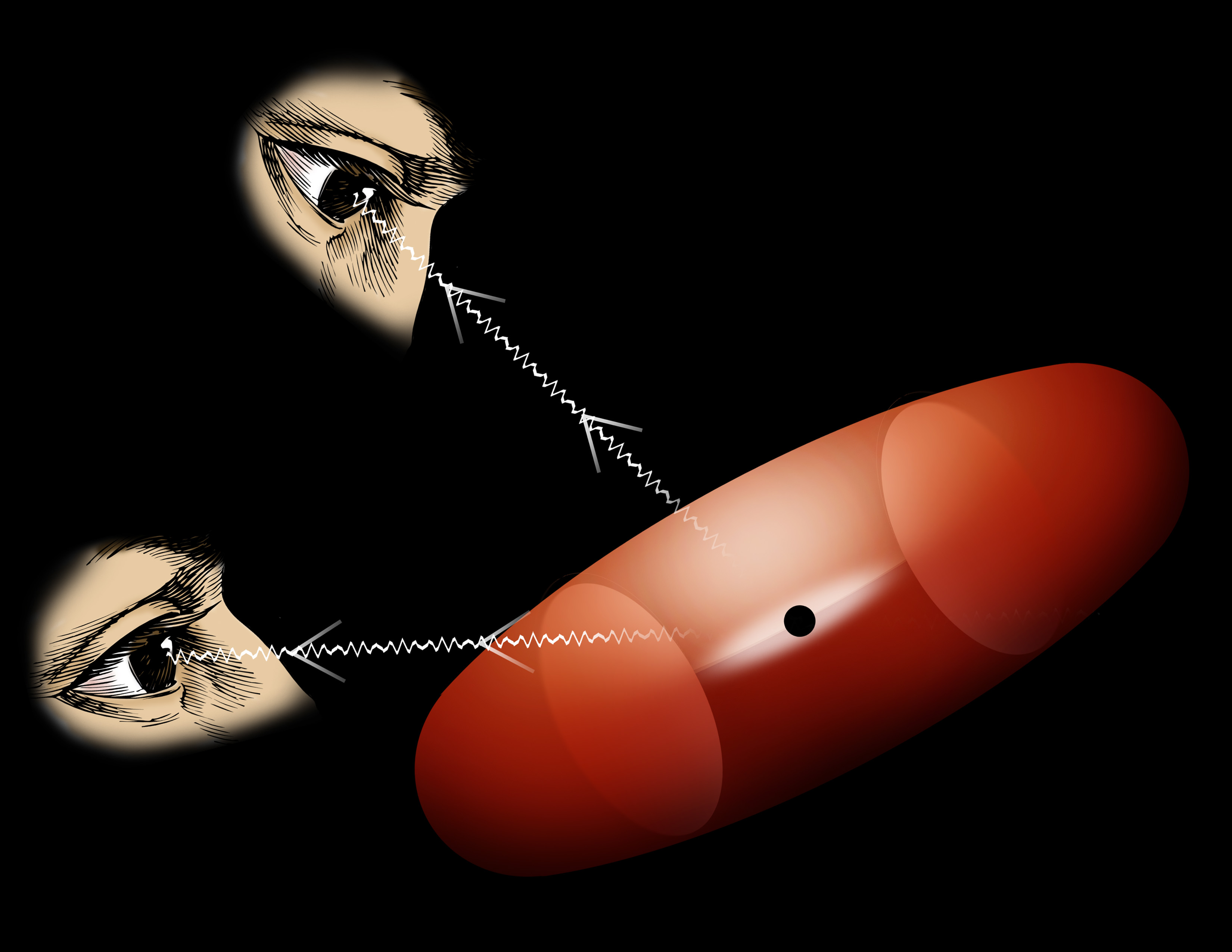
This illustration demonstrates the possible different points-of-view from which astronomers observe quasars with X-ray satellites.(Illustration: NASA/CXC/M.Weiss)
Related Photo Album
This illustration demonstrates the possible different points-of-view from which astronomers observe quasars with X-ray satellites.(Illustration: NASA/CXC/M.Weiss)
Related Photo Album
Download:
8. Illustration of Cygnus A
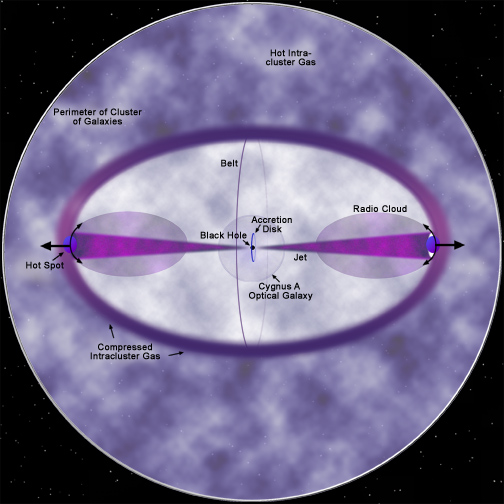
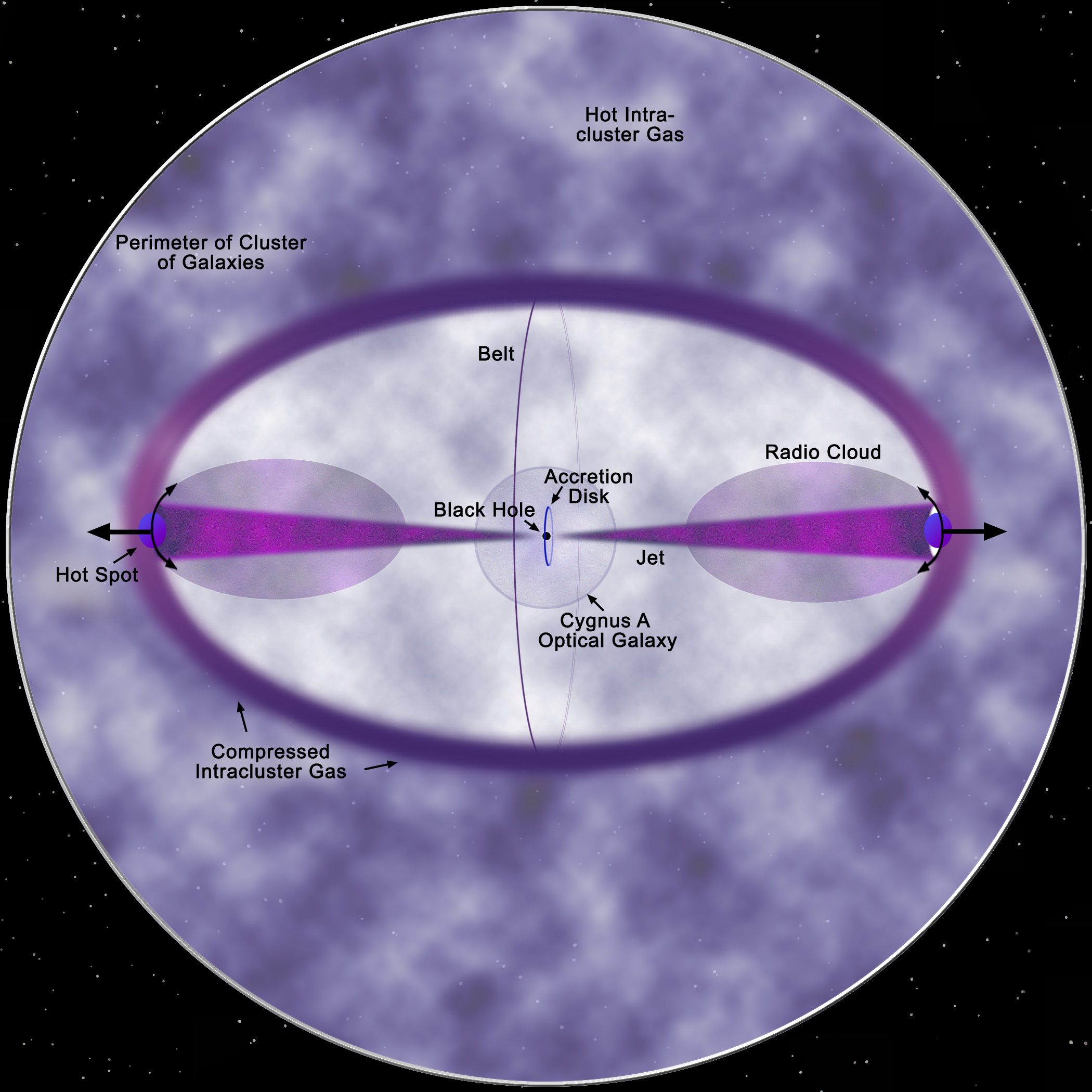
This illustration outlines the physical processes that created the image of Cygnus A observed by the Chandra X-ray Observatory.(Illustration: CXC/K.Kowal)
Related Photo Album
This illustration outlines the physical processes that created the image of Cygnus A observed by the Chandra X-ray Observatory.(Illustration: CXC/K.Kowal)
Related Photo Album
Download:
9. General Illustration of Quasar
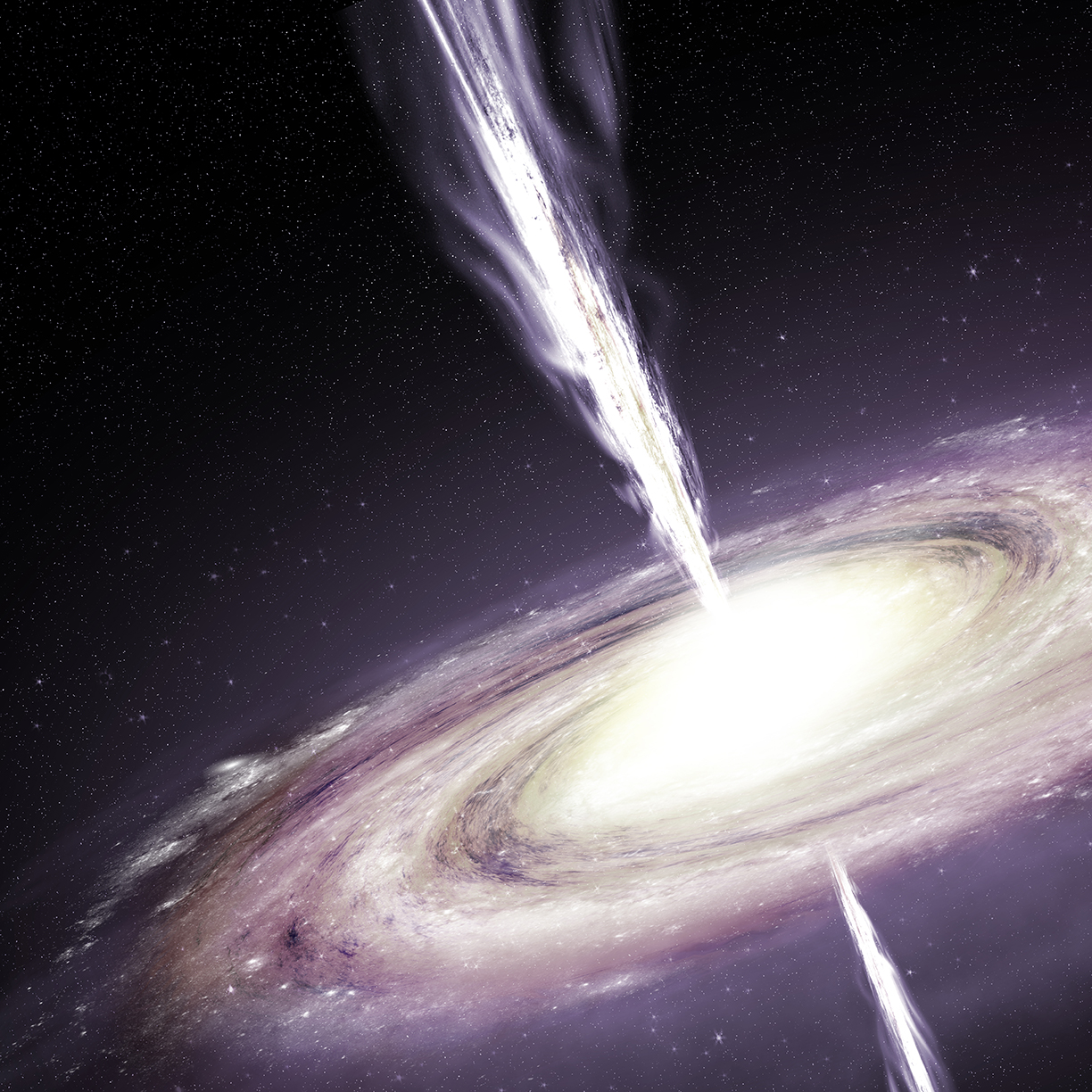
A quasar is produced by gas falling into a supermassive black hole in the center of a galaxy.(Illustration: NASA/CXC/M.Weiss)
A quasar is produced by gas falling into a supermassive black hole in the center of a galaxy.(Illustration: NASA/CXC/M.Weiss)
Download:





Revised: February 17, 2015