

CXC Home | Search | Help | Image Use Policy | Latest Images | Privacy | Accessibility | Glossary | Q&A
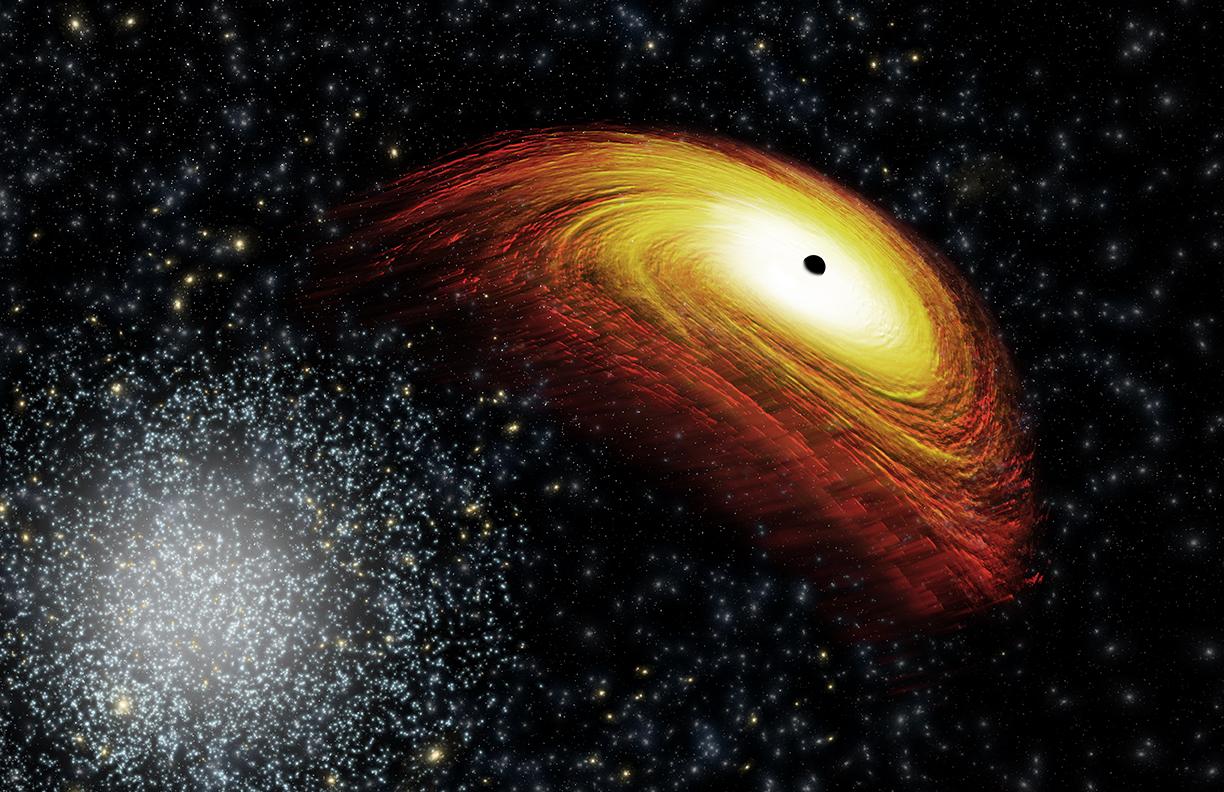
1. Illustration of Recoiling Black Hole
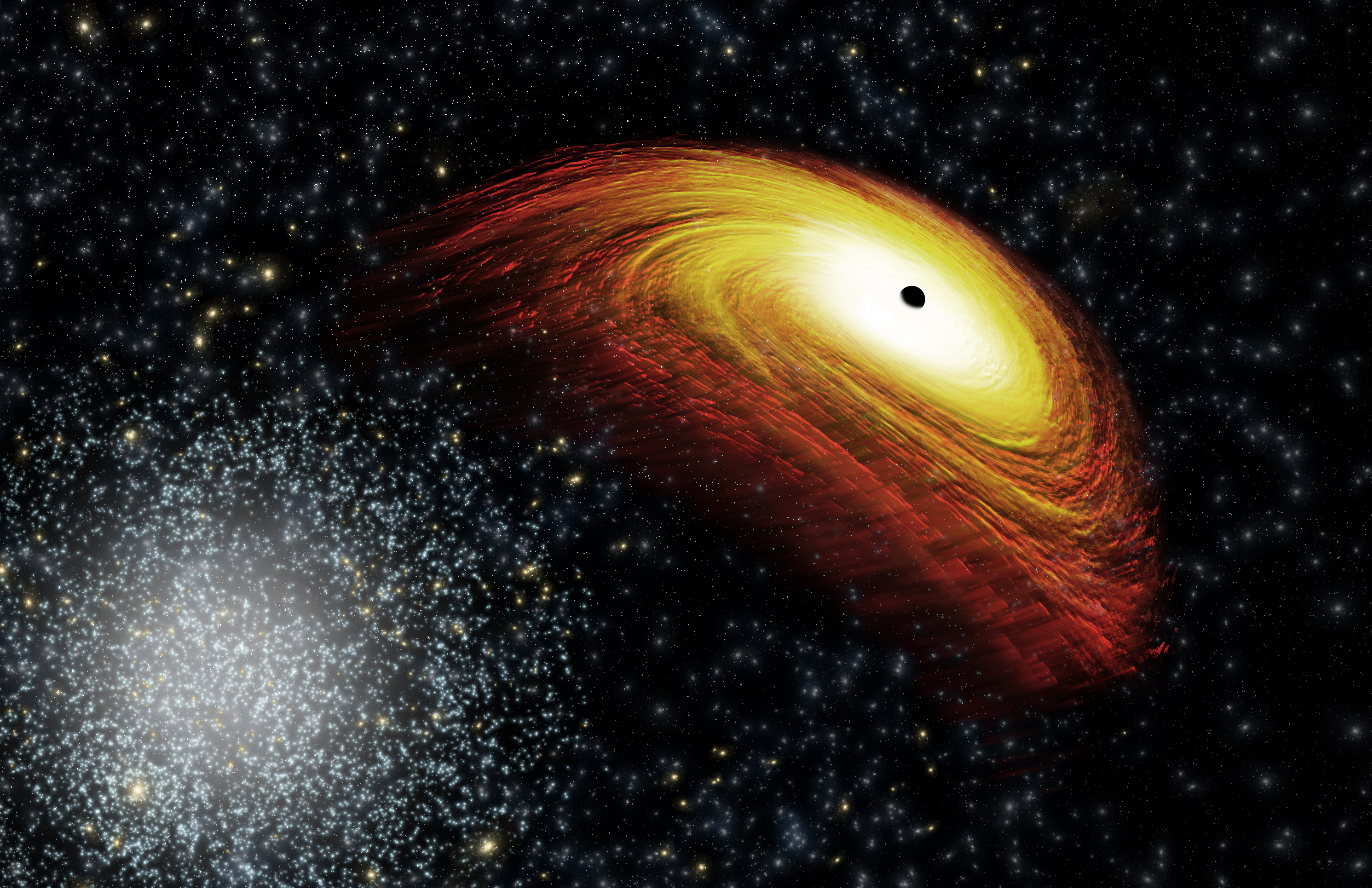
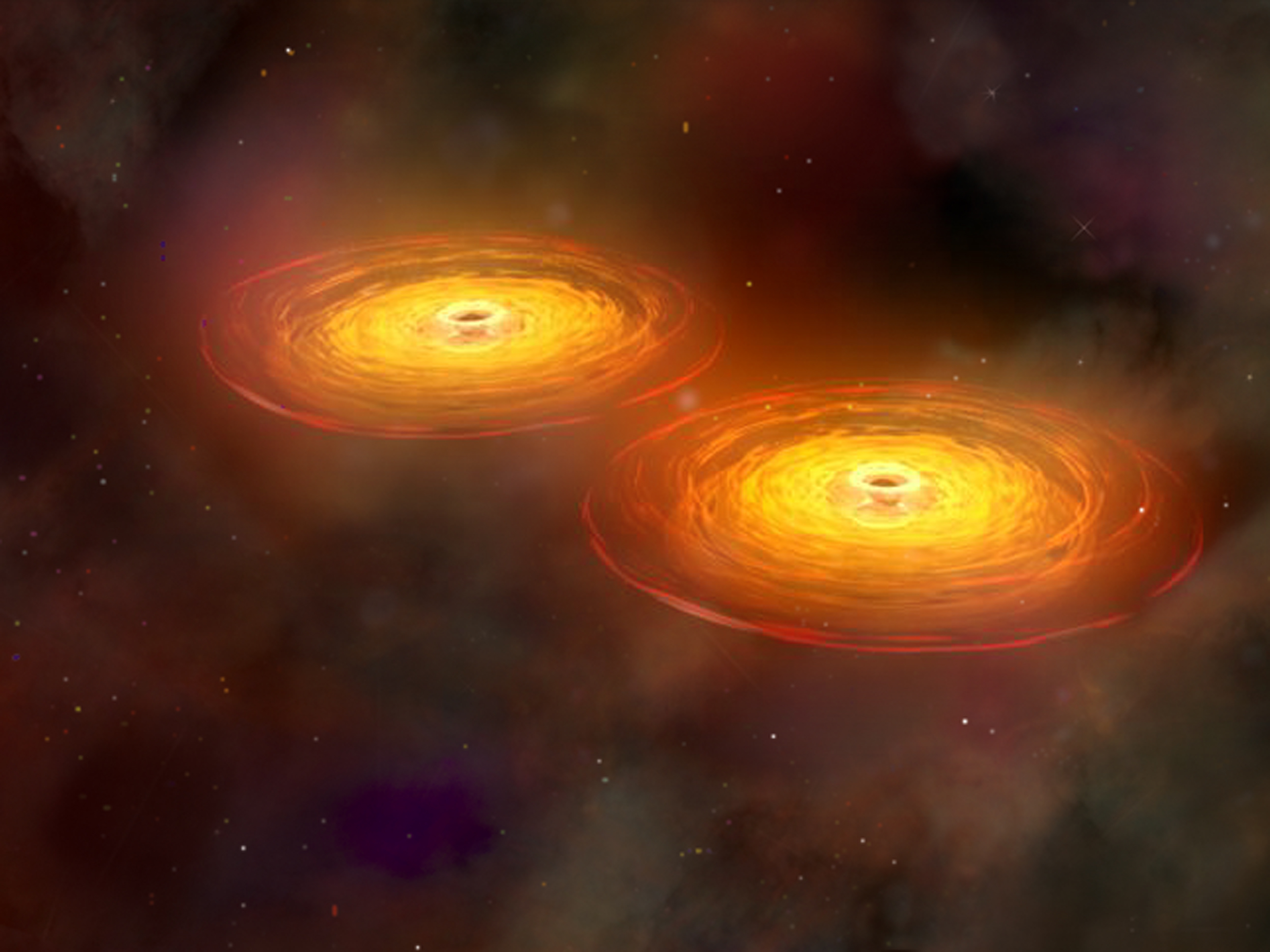
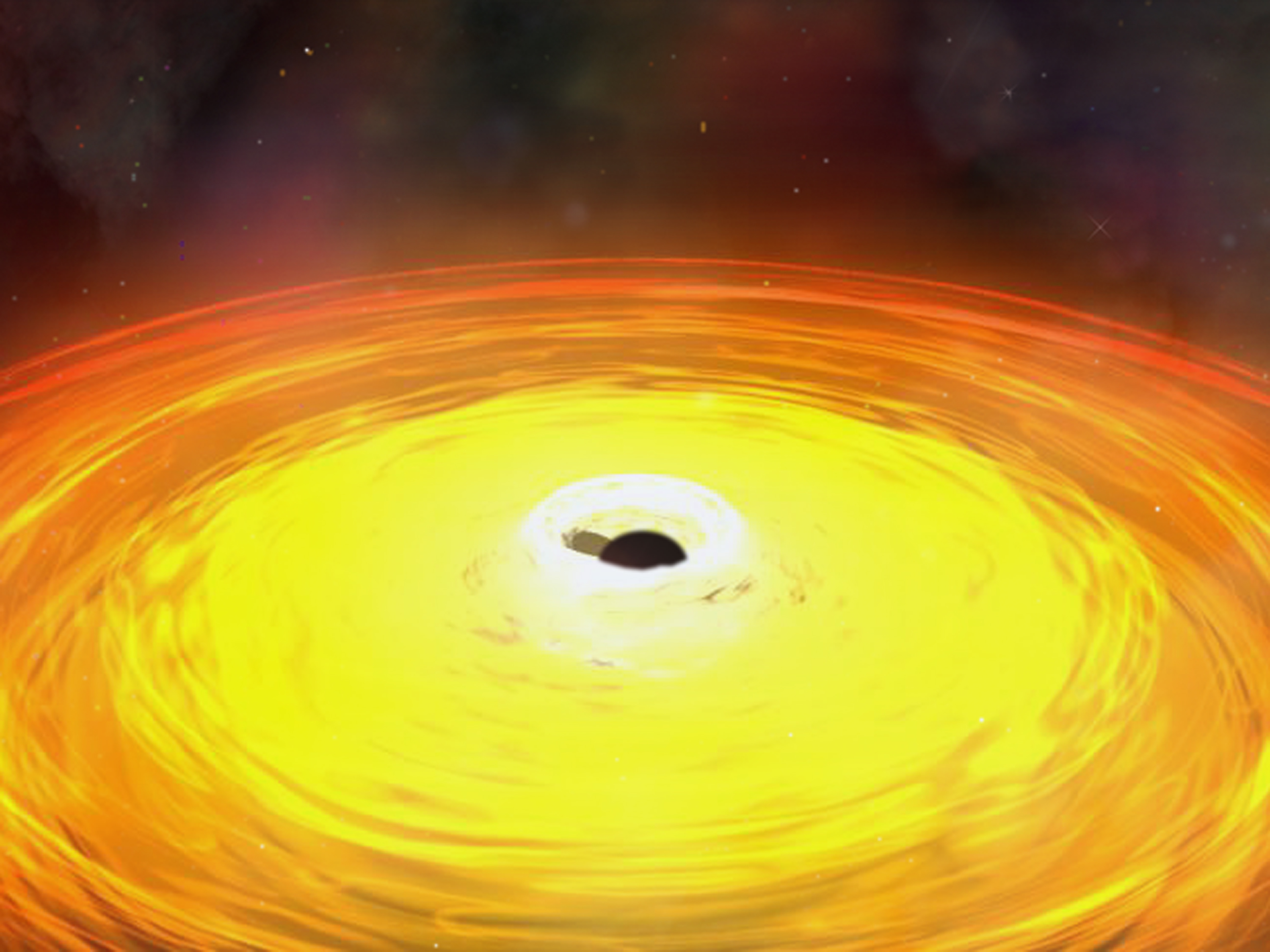
Using data from Chandra and other telescopes, astronomers have found a possible "recoiling" black hole. This black hole, which contains about 160 million solar masses, may have formed and then been set in motion by the collision of two smaller black holes (depicted in the artist's illustration). Astronomers found this candidate recoiling black hole after sifting through data of thousands of galaxies. Such moving supermassive black holes are interesting because they may reveal more about the rate and direction of spin for these enigmatic objects before they merge.
(Credit: NASA/CXC/M.Weiss)
Related Photo Album: CXO J101527.2+625911
Using data from Chandra and other telescopes, astronomers have found a possible "recoiling" black hole. This black hole, which contains about 160 million solar masses, may have formed and then been set in motion by the collision of two smaller black holes (depicted in the artist's illustration). Astronomers found this candidate recoiling black hole after sifting through data of thousands of galaxies. Such moving supermassive black holes are interesting because they may reveal more about the rate and direction of spin for these enigmatic objects before they merge.
(Credit: NASA/CXC/M.Weiss)
Related Photo Album: CXO J101527.2+625911
Download:
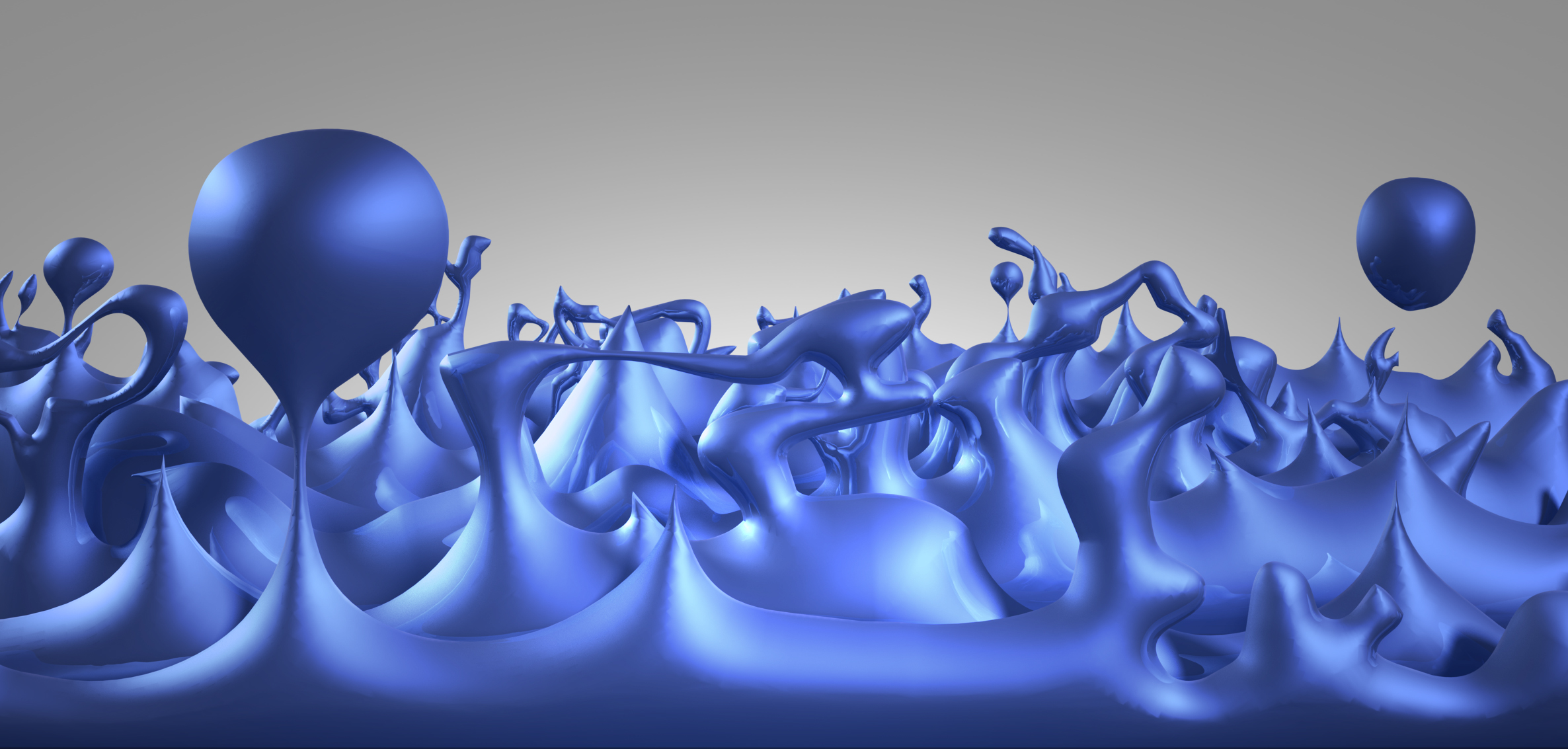
2. Illustration of Quantum Foam
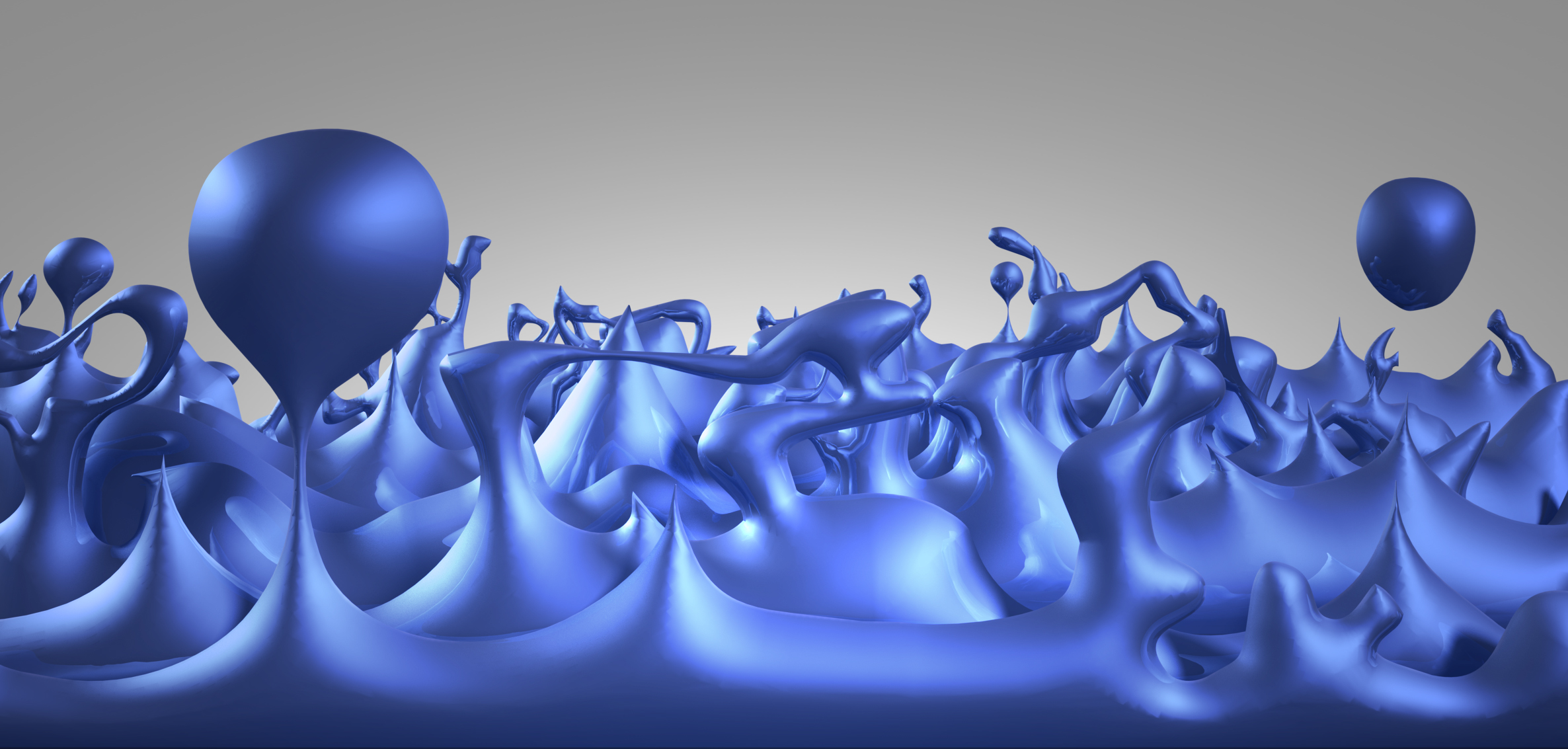
This artist's illustration depicts how the foamy structure of space-time may appear, showing tiny bubbles quadrillions of times smaller than the nucleus of an atom that are constantly fluctuating and last for only infinitesimal fractions of a second.
(Credit: NASA/CXC/M.Weiss)
Related Photo Album: Space-time Foam
This artist's illustration depicts how the foamy structure of space-time may appear, showing tiny bubbles quadrillions of times smaller than the nucleus of an atom that are constantly fluctuating and last for only infinitesimal fractions of a second.
(Credit: NASA/CXC/M.Weiss)
Related Photo Album: Space-time Foam
Download:
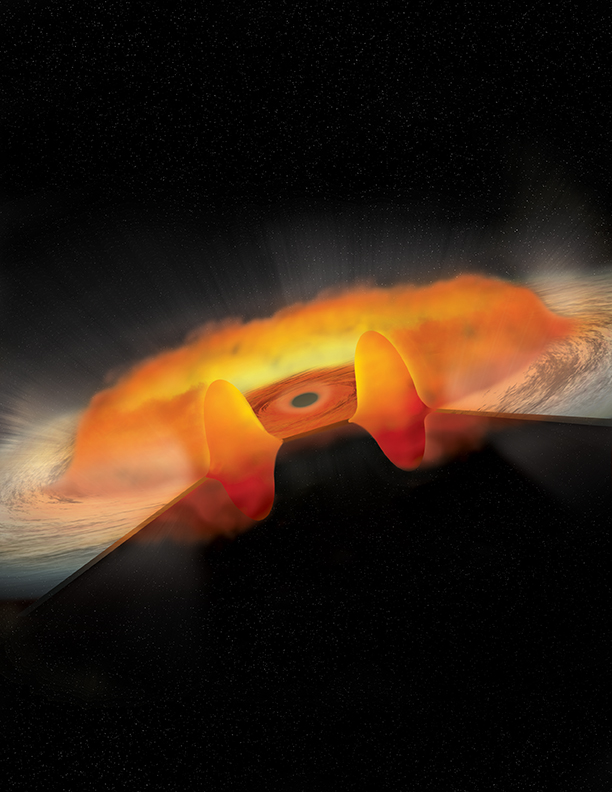
3. Illustration of Quasar
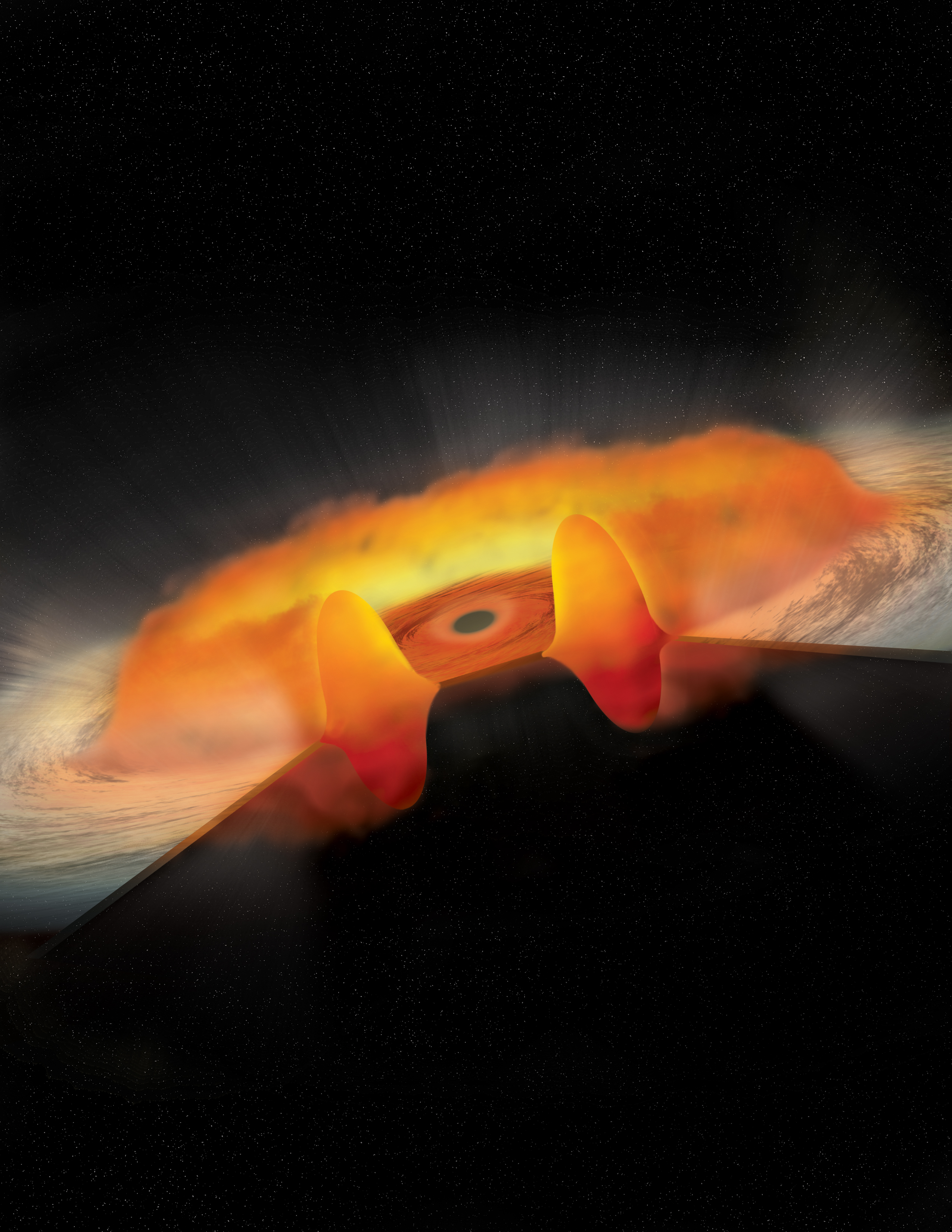
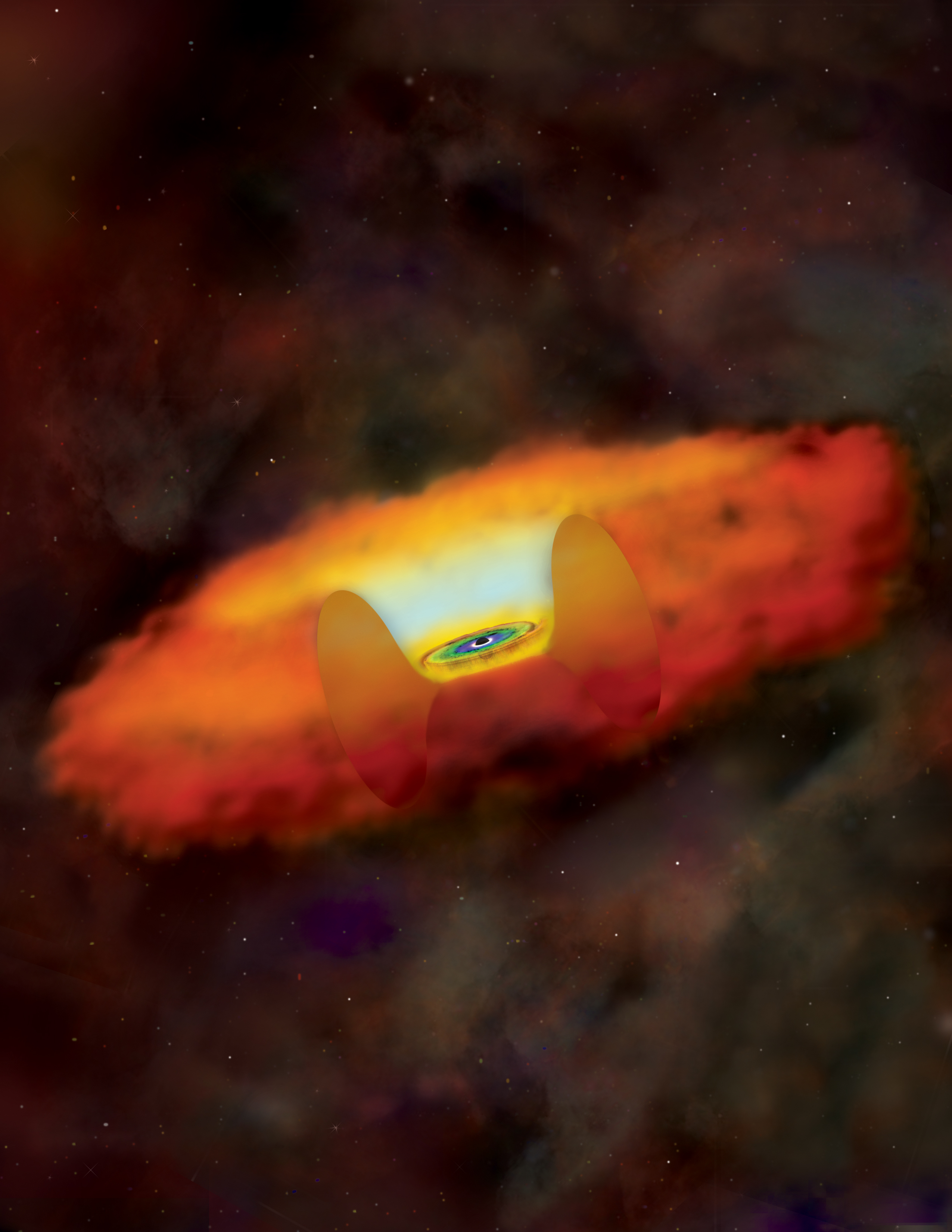
A new study of 51 distant quasars using Chandra reveals a population of black holes that consume excessive amounts of matter. The artist's illustration shows how a thick, donut-shaped disk around the black hole blocks a substantial amount of the X-rays that would otherwise escape the system.
(Credit: NASA/CXC/M.Weiss)
Related Photo Album: 3 Quasars
A new study of 51 distant quasars using Chandra reveals a population of black holes that consume excessive amounts of matter. The artist's illustration shows how a thick, donut-shaped disk around the black hole blocks a substantial amount of the X-rays that would otherwise escape the system.
(Credit: NASA/CXC/M.Weiss)
Related Photo Album: 3 Quasars
Download:
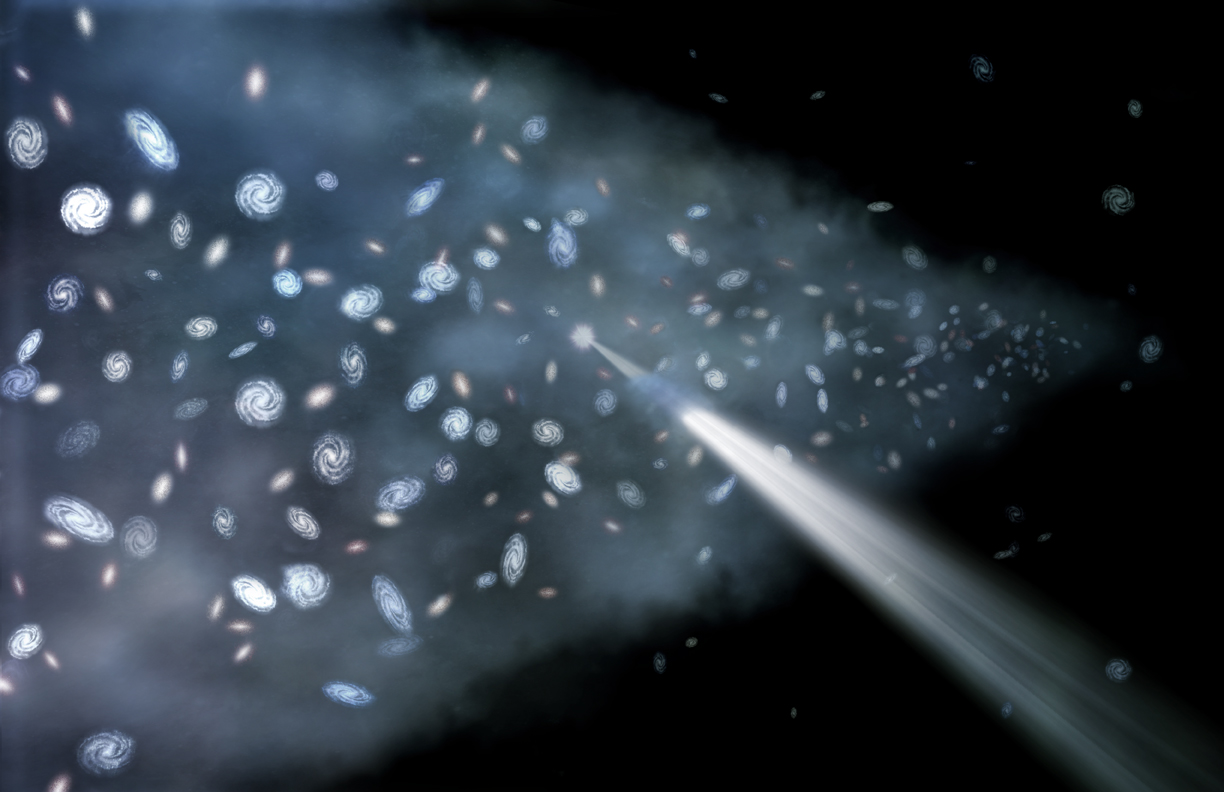
4. Illustration of Sculptor Wall
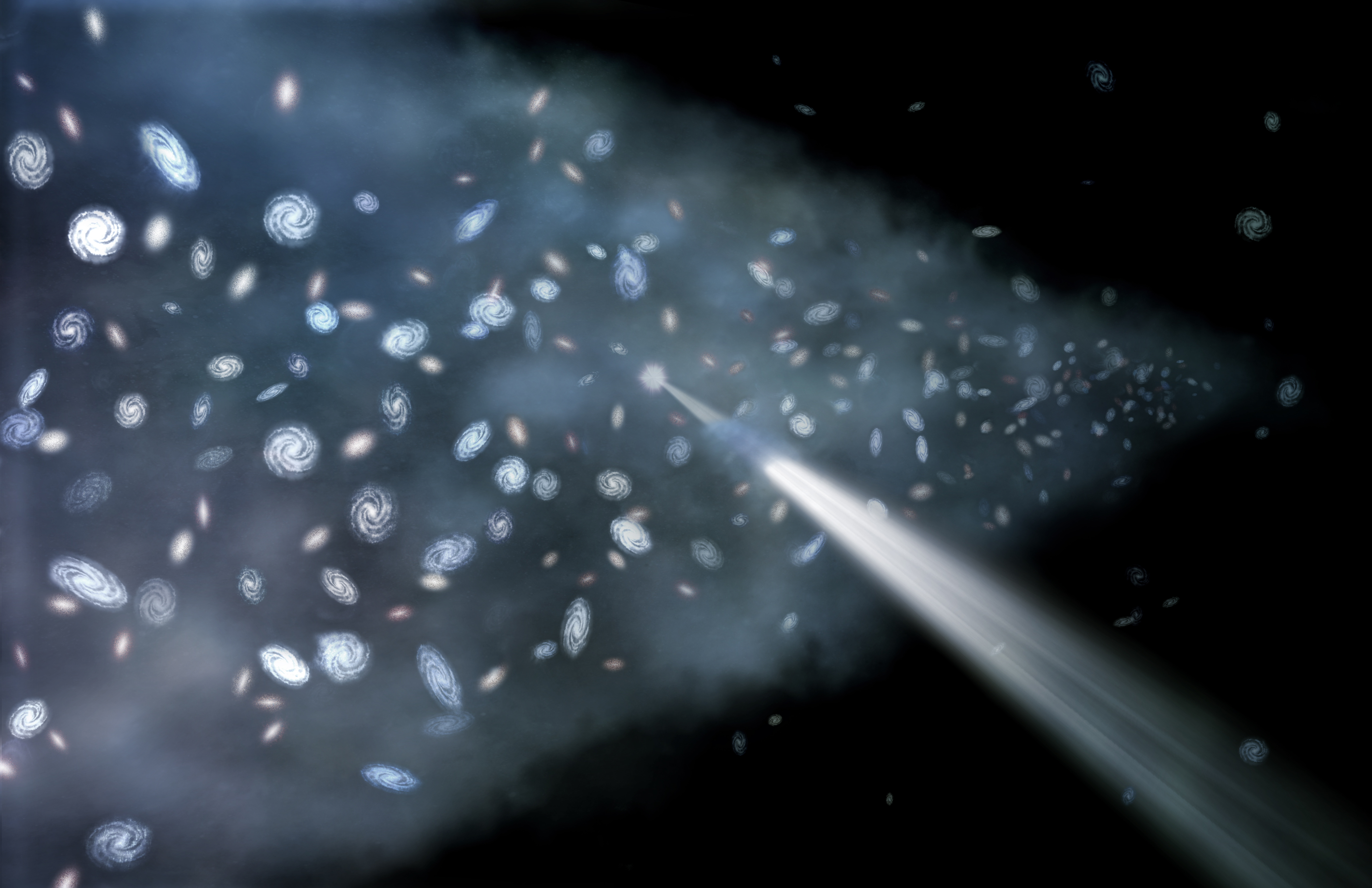
This artist's illustration (left) shows a close-up view of the Sculptor Wall, which is comprised of galaxies along with the warm-hot intergalactic medium (WHIM).
(Credit: NASA/CXC/M.Weiss)
Related Photo Album: H2356-309
This artist's illustration (left) shows a close-up view of the Sculptor Wall, which is comprised of galaxies along with the warm-hot intergalactic medium (WHIM).
(Credit: NASA/CXC/M.Weiss)
Related Photo Album: H2356-309
Download:
5. Illustrations of Black Hole Eclipse
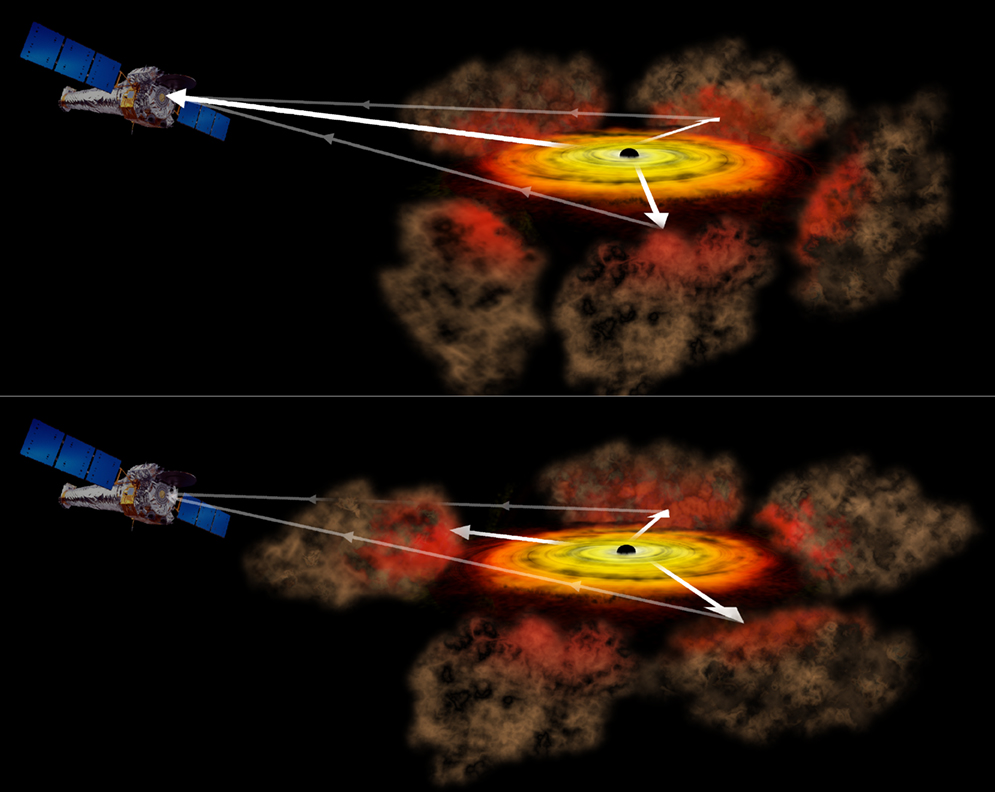
These artist's representations, which are not to scale, explain how a supermassive black hole and the hot gas disk around it are eclipsed. The first illustration shows how light from the bright disk surrounding the black hole can directly reach Chandra. The second illustration demonstrates how this light can be blocked by a dense cloud of gas, which causes only reflected light from the disk to reach Chandra.
(Credit: NASA/CXC/M.Weiss)
Related Photo Album: NGC 1365
These artist's representations, which are not to scale, explain how a supermassive black hole and the hot gas disk around it are eclipsed. The first illustration shows how light from the bright disk surrounding the black hole can directly reach Chandra. The second illustration demonstrates how this light can be blocked by a dense cloud of gas, which causes only reflected light from the disk to reach Chandra.
(Credit: NASA/CXC/M.Weiss)
Related Photo Album: NGC 1365
Download:

6. Illustration of Cosmic Web & Mkn 421
This illustration shows the absorption of X-rays from the quasar Mkn 421 by two intergalactic clouds of diffuse hot gas. These distant clouds (located 150 million and 370 million light years from Earth), are likely part of a predicted diffuse web-like system of hot gas clouds - the cosmic web - from which galaxies and clusters of galaxies are thought to have formed. This discovery is strong evidence that atoms and ions known to be present shortly after the Big Bang, but missing in inventories of matter in the present era, are hiding in the hard-to-see cosmic web. (Illustration: NASA/CXC/M.Weiss)
Related Photo Album: Mkn 421
This illustration shows the absorption of X-rays from the quasar Mkn 421 by two intergalactic clouds of diffuse hot gas. These distant clouds (located 150 million and 370 million light years from Earth), are likely part of a predicted diffuse web-like system of hot gas clouds - the cosmic web - from which galaxies and clusters of galaxies are thought to have formed. This discovery is strong evidence that atoms and ions known to be present shortly after the Big Bang, but missing in inventories of matter in the present era, are hiding in the hard-to-see cosmic web. (Illustration: NASA/CXC/M.Weiss)
Related Photo Album: Mkn 421
Download:
7. Illustration of Galactic Superwind
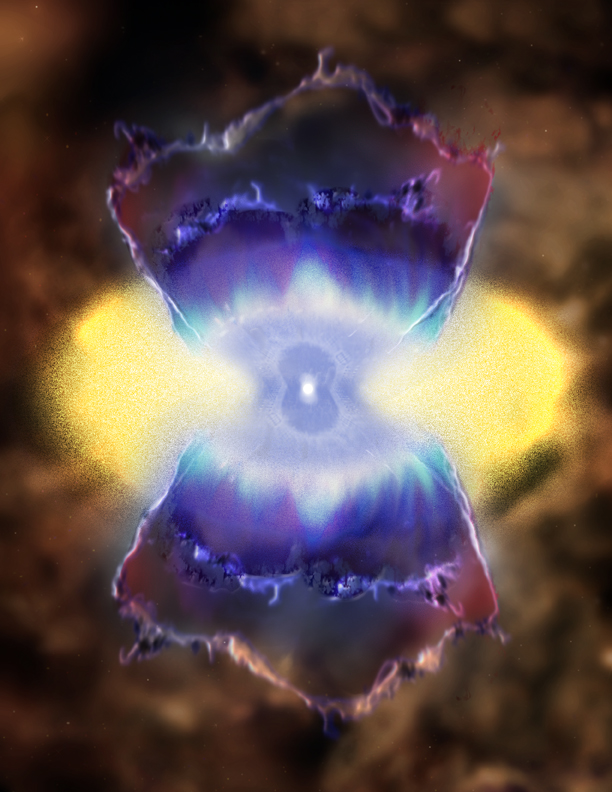
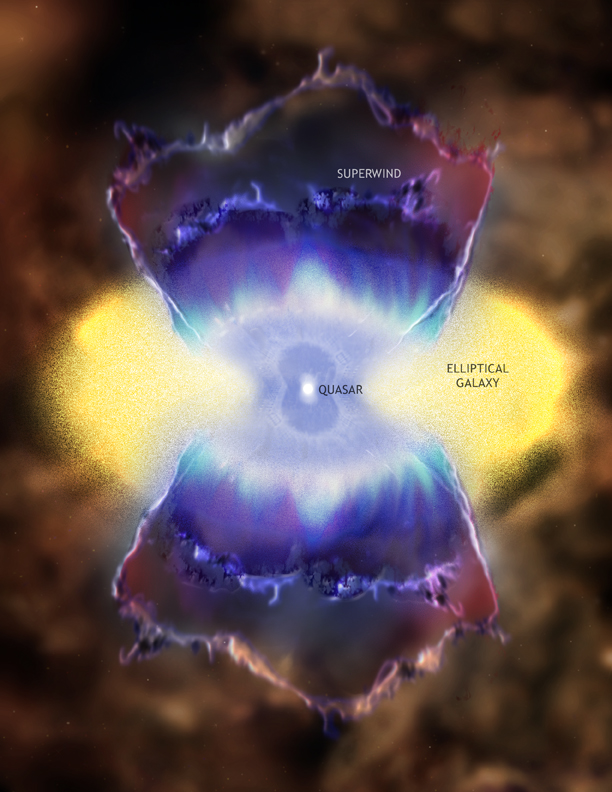
This artist's illustration depicts a quasar in the center of a galaxy that has turned on and is expelling gas at high speeds in a galactic superwind. Clouds of hot, X-ray producing gas detected by Chandra around the quasars 4C37.43 and 3C249.1, provide strong evidence for such superwinds.
(Credit: NASA/CXC/M.Weiss)
Related Photo Album: 4C37.43
This artist's illustration depicts a quasar in the center of a galaxy that has turned on and is expelling gas at high speeds in a galactic superwind. Clouds of hot, X-ray producing gas detected by Chandra around the quasars 4C37.43 and 3C249.1, provide strong evidence for such superwinds.
(Credit: NASA/CXC/M.Weiss)
Related Photo Album: 4C37.43

8. Illustration of Quasar SDSSp J1306
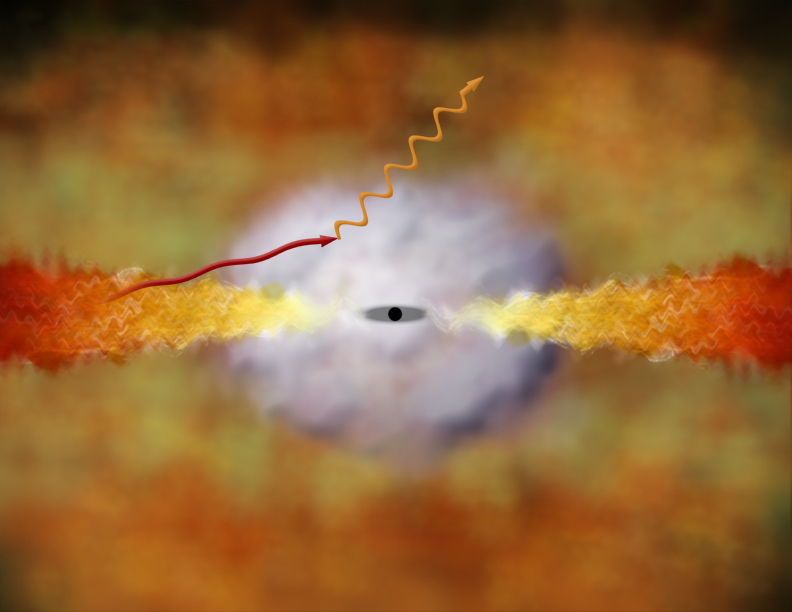
This illustration shows how X-rays are thought to be produced in SDSSp J1306. Material from a large torus of gas and dust in the center of a galaxy is pulled toward a black hole. Most of the infalling gas is concentrated in a rapidly rotating disk, and a hot atmosphere or corona where temperatures can climb to billions of degrees. Collisions of low-energy optical, ultraviolet and X-ray photons from the disk with the hot electrons in the corona boost the energy of the photons up to the high-energy X-ray range.
(Illustration: NASA/CXC/M.Weiss)
Related Photo Album: SDSSp J1306
This illustration shows how X-rays are thought to be produced in SDSSp J1306. Material from a large torus of gas and dust in the center of a galaxy is pulled toward a black hole. Most of the infalling gas is concentrated in a rapidly rotating disk, and a hot atmosphere or corona where temperatures can climb to billions of degrees. Collisions of low-energy optical, ultraviolet and X-ray photons from the disk with the hot electrons in the corona boost the energy of the photons up to the high-energy X-ray range.
(Illustration: NASA/CXC/M.Weiss)
Related Photo Album: SDSSp J1306
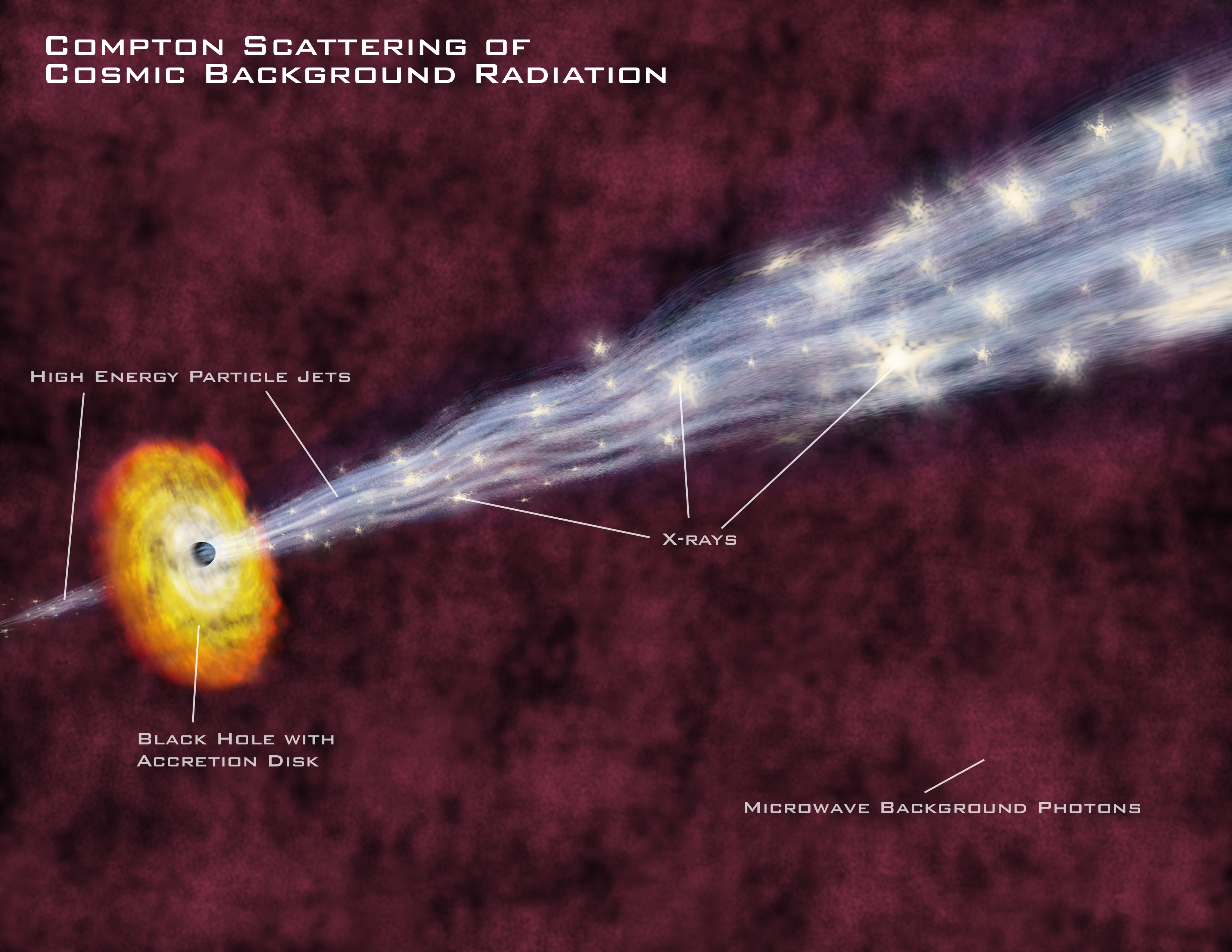
9. X-ray Production by Compton Scattering of Microwave Background
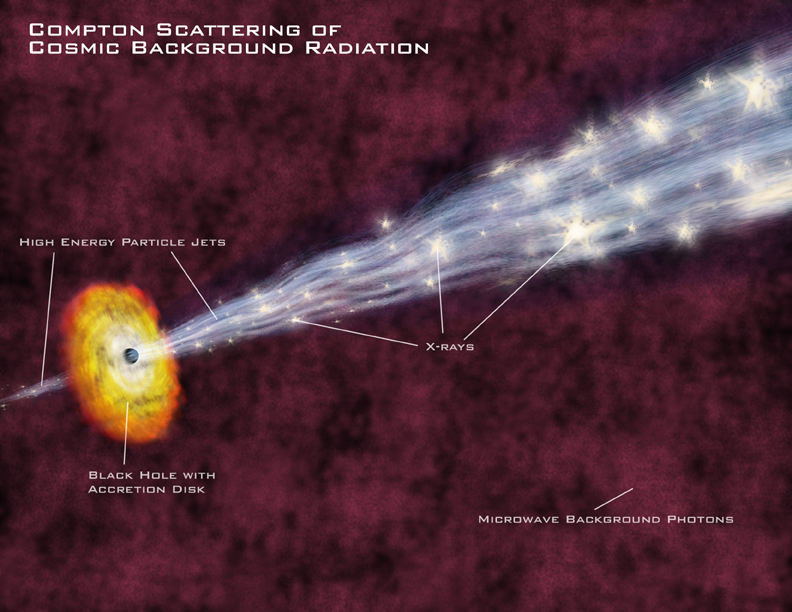
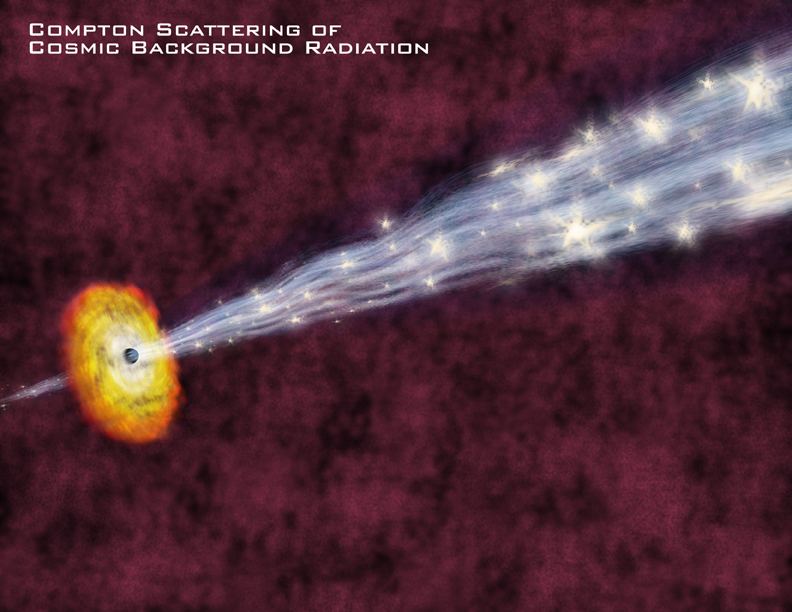
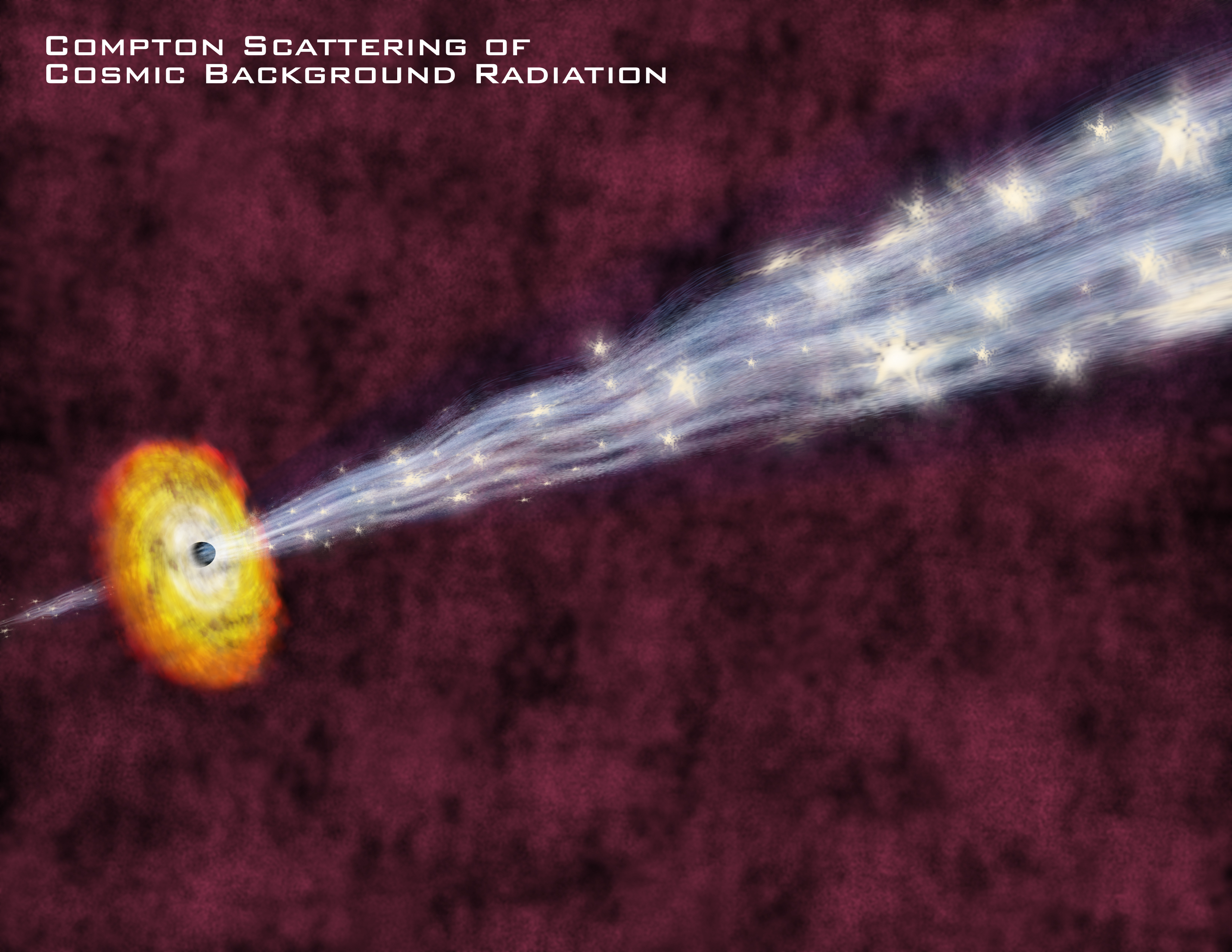
X-rays are produced when low energy photons of the cosmic microwave background radiation (red) are boosted to X-ray energies (white) by colliding with high energy electrons in a jet of particles speeding away from the vicinity of a black hole. This process is called Compton scattering.
(Illustration: NASA/CXC/M.Weiss)
Related Field Guide: X-Rays - Another Form of Light
X-rays are produced when low energy photons of the cosmic microwave background radiation (red) are boosted to X-ray energies (white) by colliding with high energy electrons in a jet of particles speeding away from the vicinity of a black hole. This process is called Compton scattering.
(Illustration: NASA/CXC/M.Weiss)
Related Field Guide: X-Rays - Another Form of Light
Download:
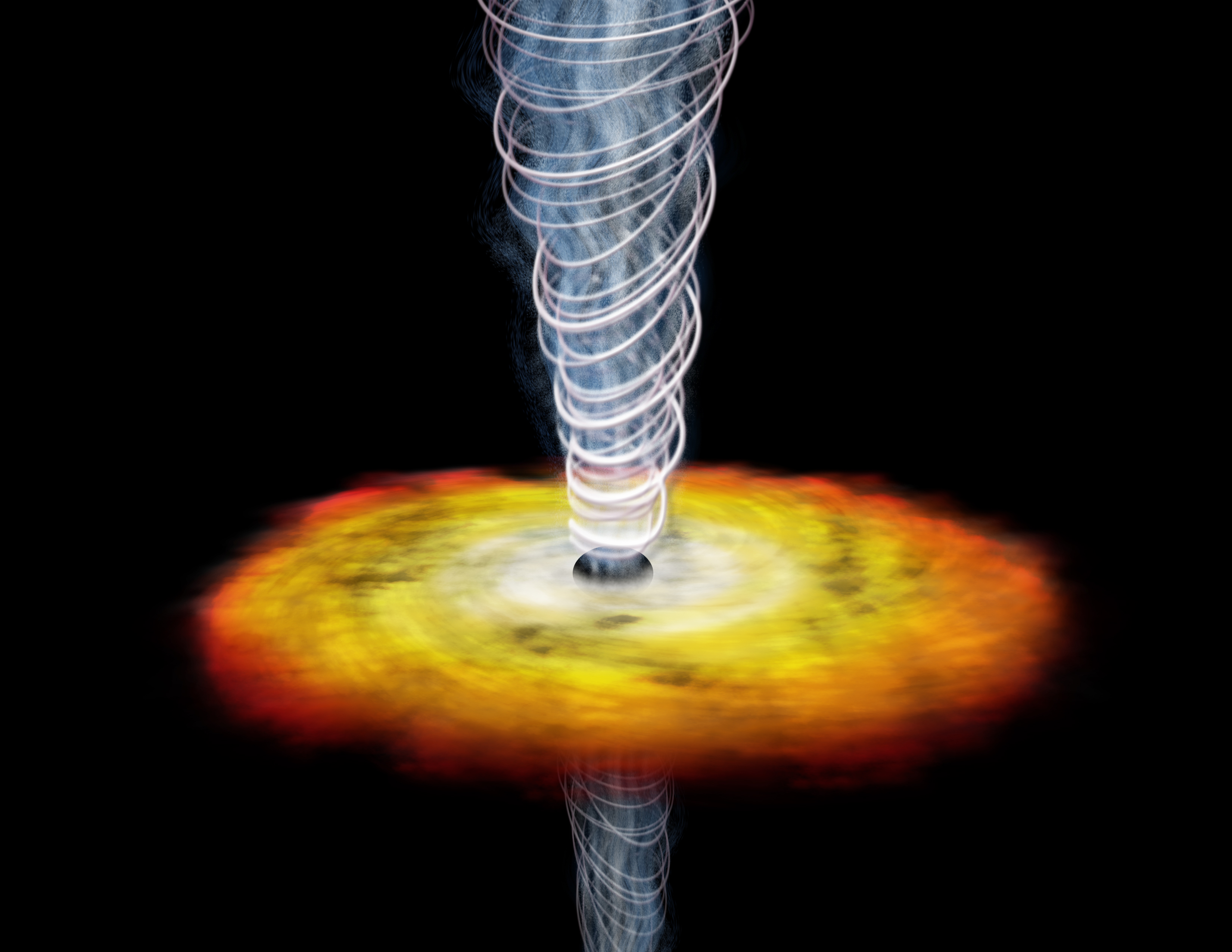
10. Illustration of Quasar Jet
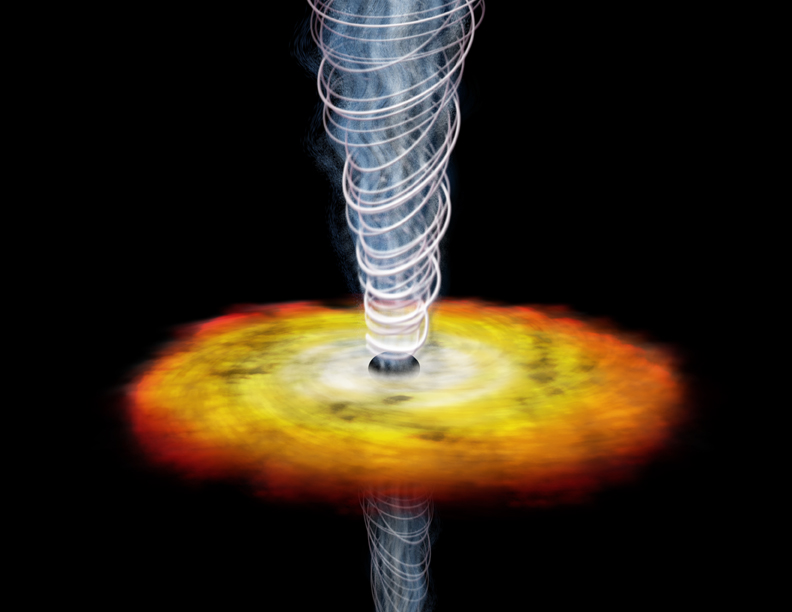
This artist's rendering depicts the activity around the supermassive black hole at the center of a quasar that is being fueled by infalling gas and stars. This accretion process is often observed to be accompanied by powerful high-energy jets, as shown in this illustration. (Illustration: NASA/CXC/M.Weiss)
Related Photo Album: GB1508+5714
This artist's rendering depicts the activity around the supermassive black hole at the center of a quasar that is being fueled by infalling gas and stars. This accretion process is often observed to be accompanied by powerful high-energy jets, as shown in this illustration. (Illustration: NASA/CXC/M.Weiss)
Related Photo Album: GB1508+5714
Download:


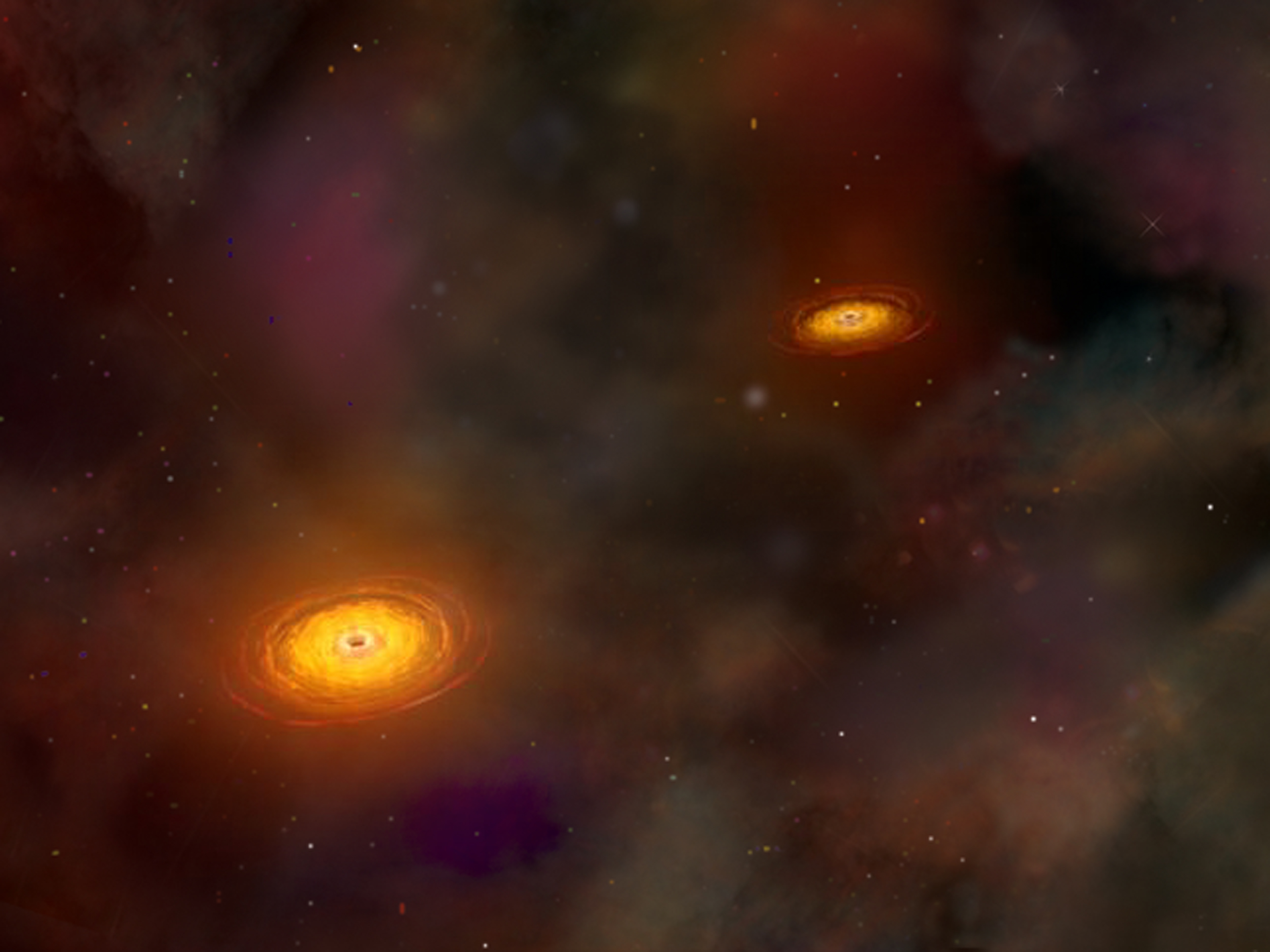
11. Black Hole Merger
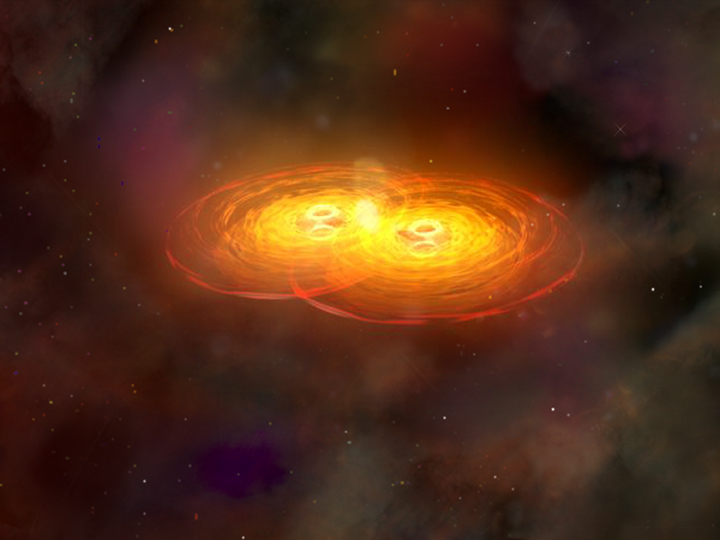
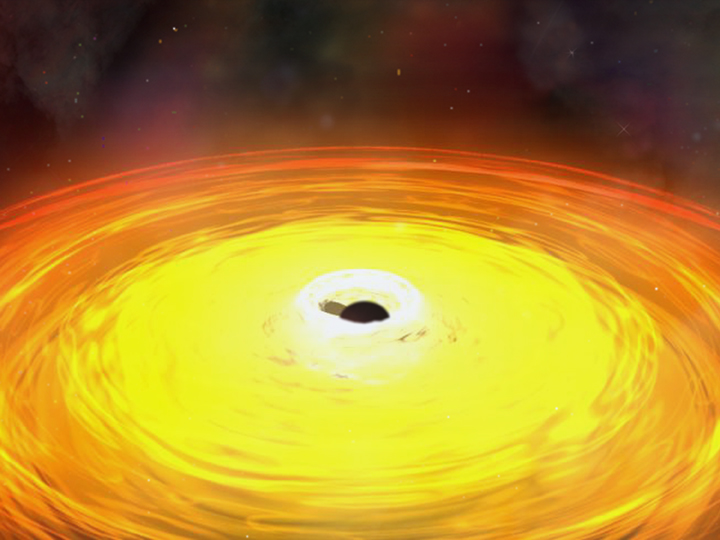
This series of stills depicts 4 stages in a merger of two galaxies (artistic representation) that forms a single galaxy with two centrally located supermassive black holes surrounded by disks of hot gas. The black holes orbit each other for hundreds of millions of years before they merge to form a single supermassive black hole that sends out intense gravitational waves.
(Credit: NASA/CXC/A.Hobart)
Related Photo Album: NGC 6240
This series of stills depicts 4 stages in a merger of two galaxies (artistic representation) that forms a single galaxy with two centrally located supermassive black holes surrounded by disks of hot gas. The black holes orbit each other for hundreds of millions of years before they merge to form a single supermassive black hole that sends out intense gravitational waves.
(Credit: NASA/CXC/A.Hobart)
Related Photo Album: NGC 6240
12. Illustration of Black Hole with Accretion Disk and Torus
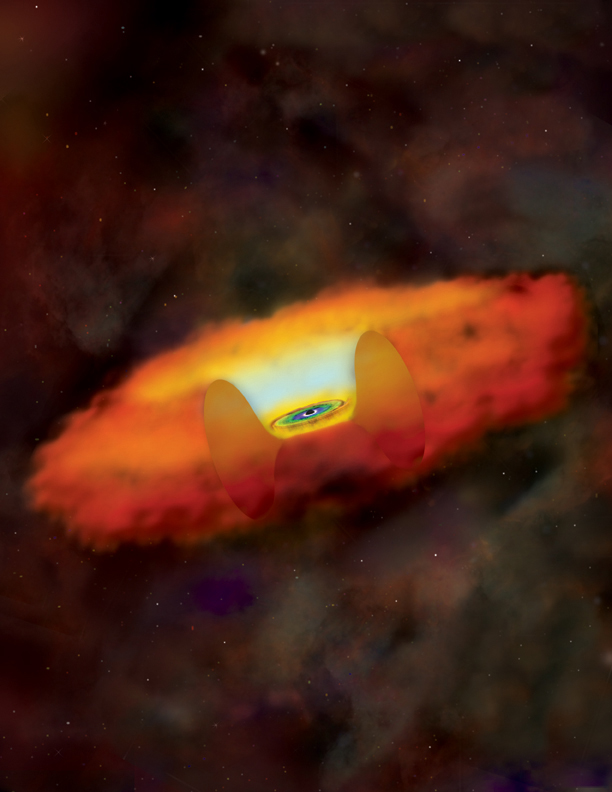
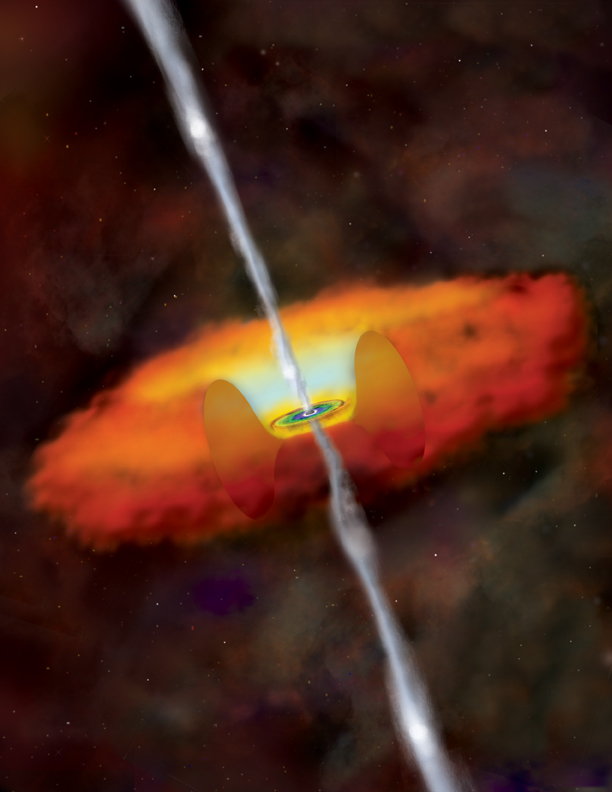
An artist's conception shows a black hole surrounded by a disk of hot gas, and a large doughnut or torus of cooler gas and dust. The light blue ring on the back of the torus is due to the fluorescence of iron atoms excited by X-rays from the hot gas disk. The second version of the illustration on the right also shows jets of high energy particles (white) that are propelled away from the vicinity of the black hole by intense electric and magnetic fields.
(Illustration: NASA/CXC/M.Weiss)
Related Field Guide: NGC 6240
An artist's conception shows a black hole surrounded by a disk of hot gas, and a large doughnut or torus of cooler gas and dust. The light blue ring on the back of the torus is due to the fluorescence of iron atoms excited by X-rays from the hot gas disk. The second version of the illustration on the right also shows jets of high energy particles (white) that are propelled away from the vicinity of the black hole by intense electric and magnetic fields.
(Illustration: NASA/CXC/M.Weiss)
Related Field Guide: NGC 6240
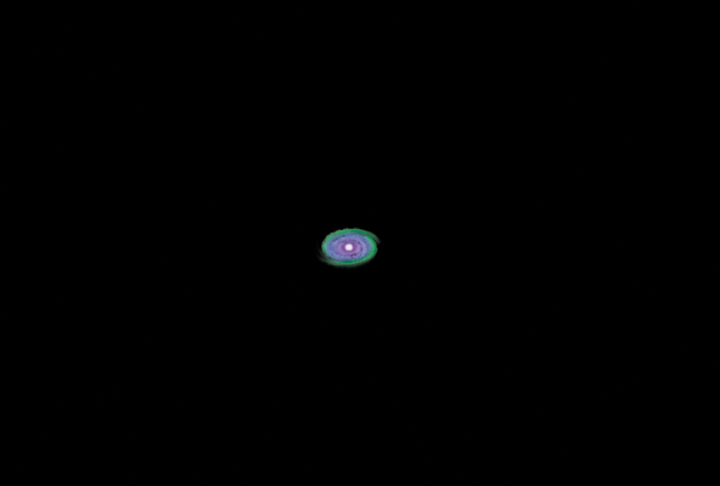
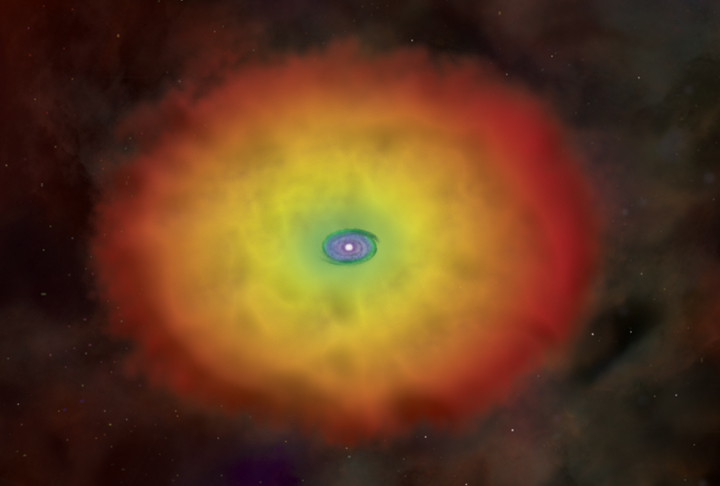
13. Illustration of Black Hole with Accretion Disk and Torus (Face-on View)
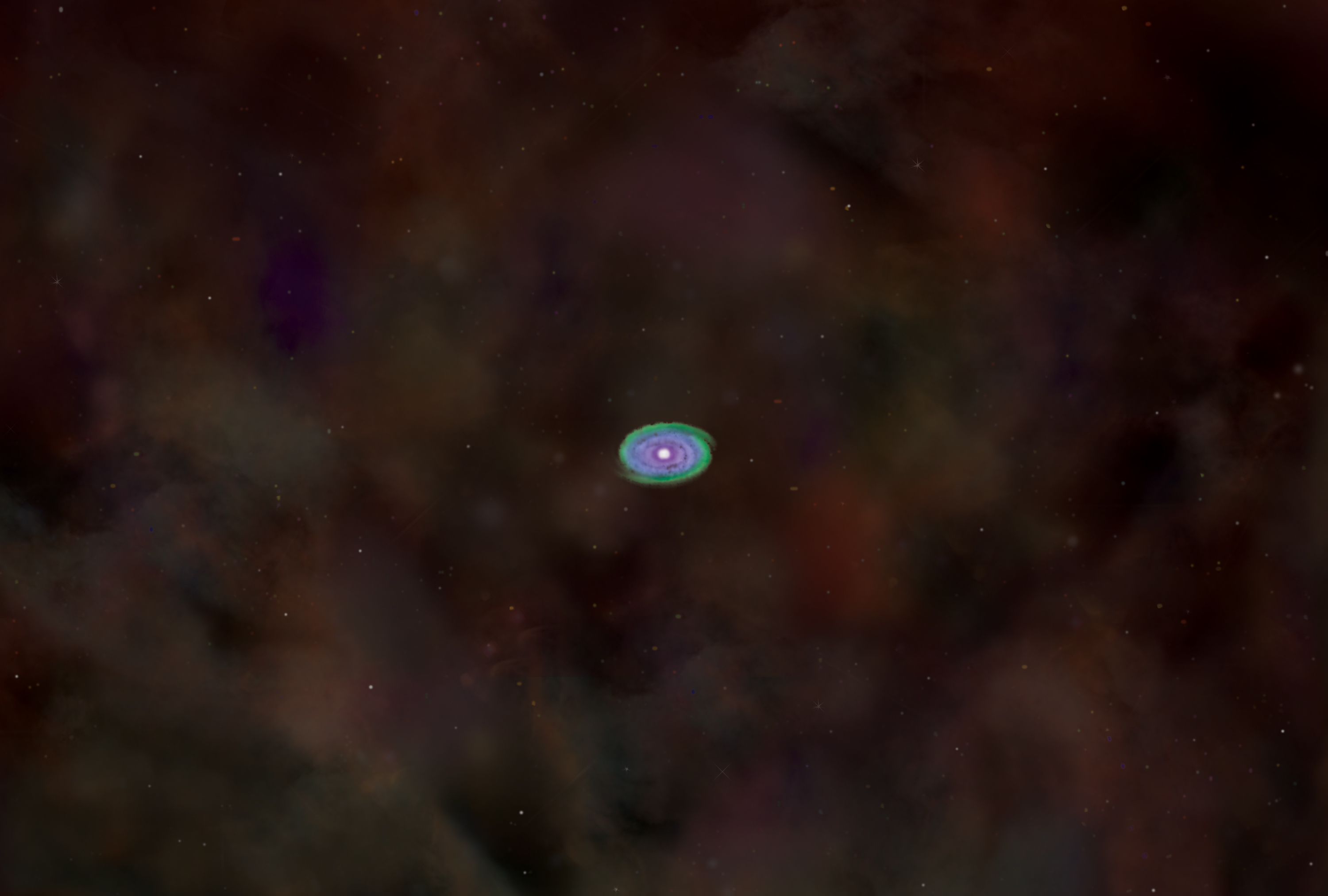
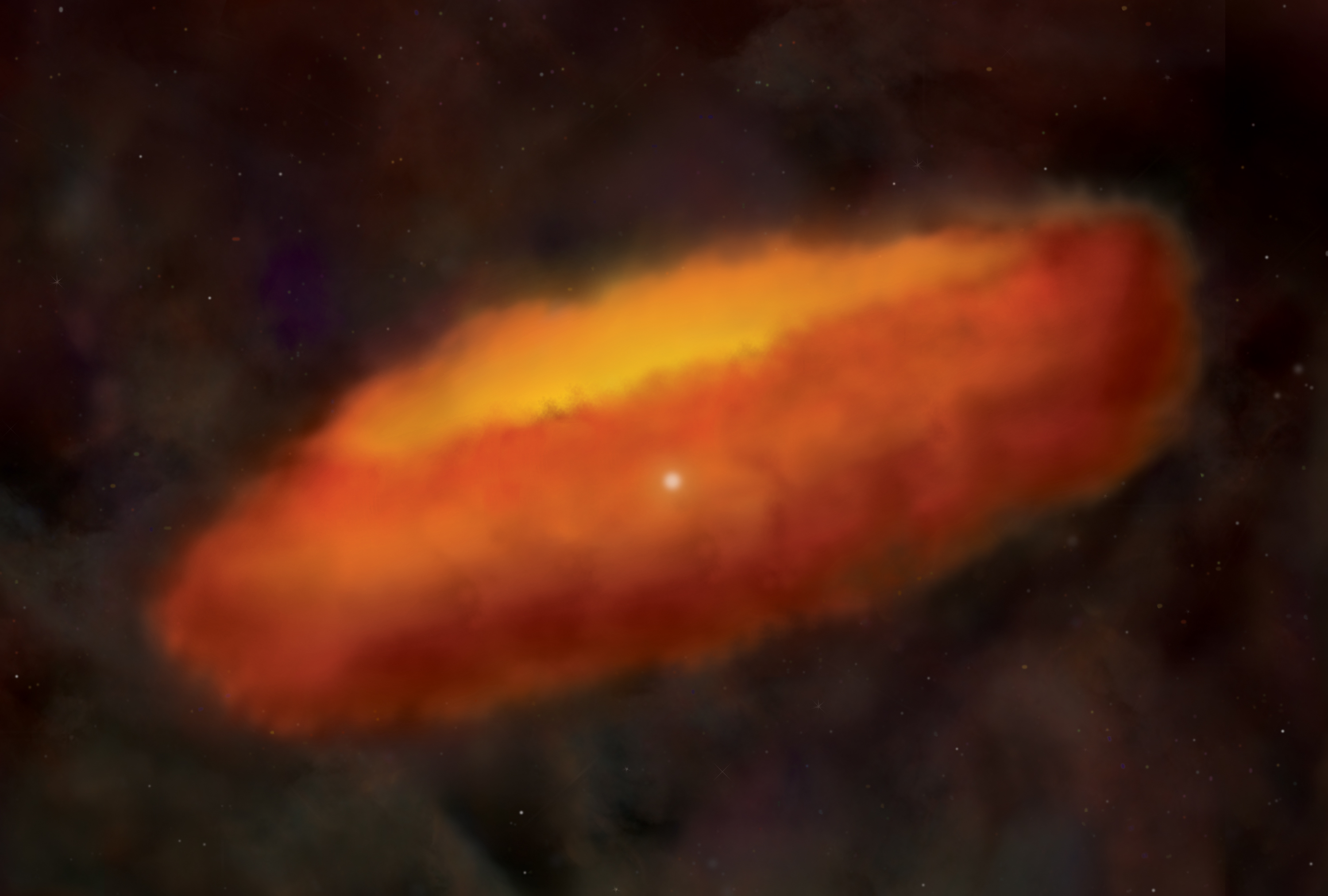
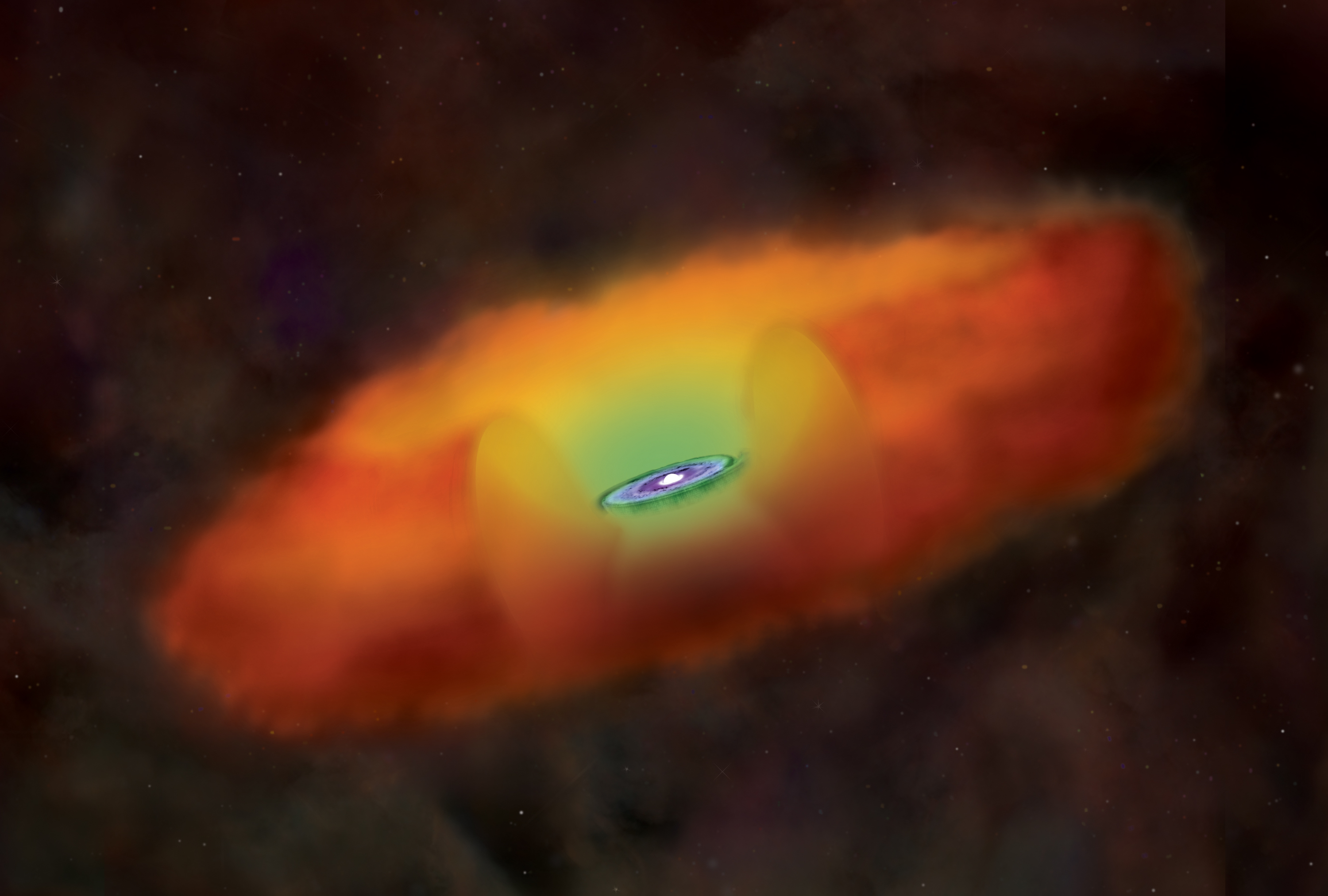
This artist's conception shows a black hole system in each of its constituent parts as viewed from the top. From left to right, the image shows the black hole itself, a disk of hot gas surrounding the black hole, and, finally a large doughnut (or torus) of cooler gas and dust enshrouding the system.
(Illustration: NASA/CXC/M.Weiss)
This artist's conception shows a black hole system in each of its constituent parts as viewed from the top. From left to right, the image shows the black hole itself, a disk of hot gas surrounding the black hole, and, finally a large doughnut (or torus) of cooler gas and dust enshrouding the system.
(Illustration: NASA/CXC/M.Weiss)
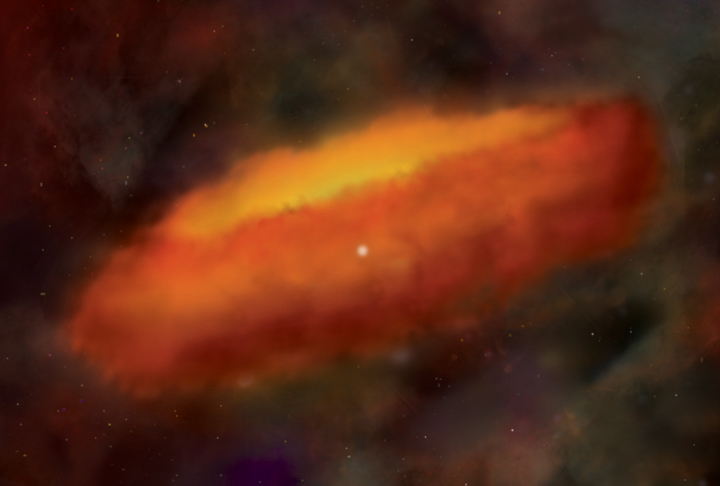
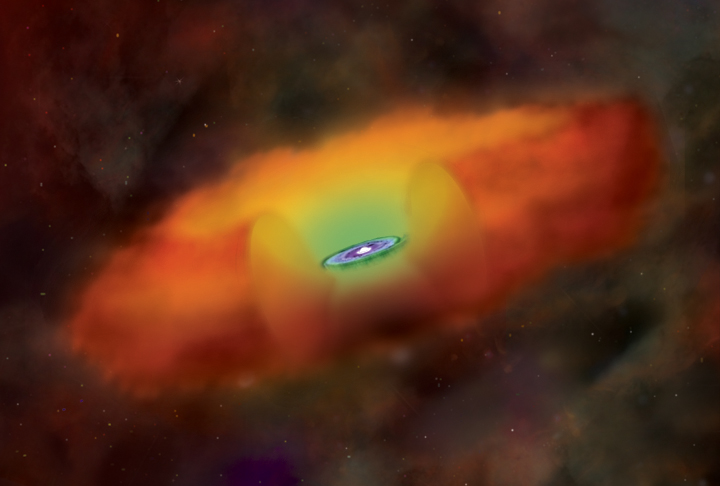
14. Illustration of Black Hole with Accretion Disk and Torus (Side View)
This artist's conception shows a black hole as viewed edge-on, surrounded by a disk of hot gas, and a large doughnut (torus) of cooler gas and dust. This illustration shows why X-rays are crucial in understanding the nature of these black hole systems. Unlike optical emission, X-rays can penetrate the torus of gas and dust that enshrouds the black hole, and therefore reveals information about the central object which is otherwise hidden.
(Illustration: NASA/CXC/M.Weiss)
Related Field Guide: NGC 6240
This artist's conception shows a black hole as viewed edge-on, surrounded by a disk of hot gas, and a large doughnut (torus) of cooler gas and dust. This illustration shows why X-rays are crucial in understanding the nature of these black hole systems. Unlike optical emission, X-rays can penetrate the torus of gas and dust that enshrouds the black hole, and therefore reveals information about the central object which is otherwise hidden.
(Illustration: NASA/CXC/M.Weiss)
Related Field Guide: NGC 6240





Revised: October 01, 2026