

CXC Home | Search | Help | Image Use Policy | Latest Images | Privacy | Accessibility | Glossary | Q&A

1. Illustrations Explaining Tidal Disruption
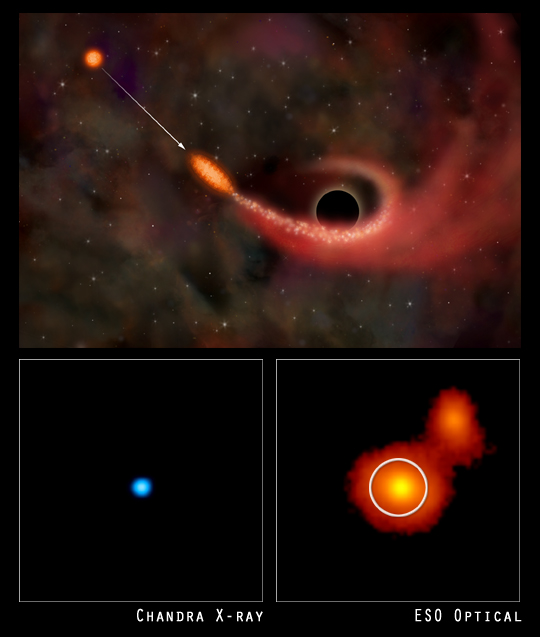
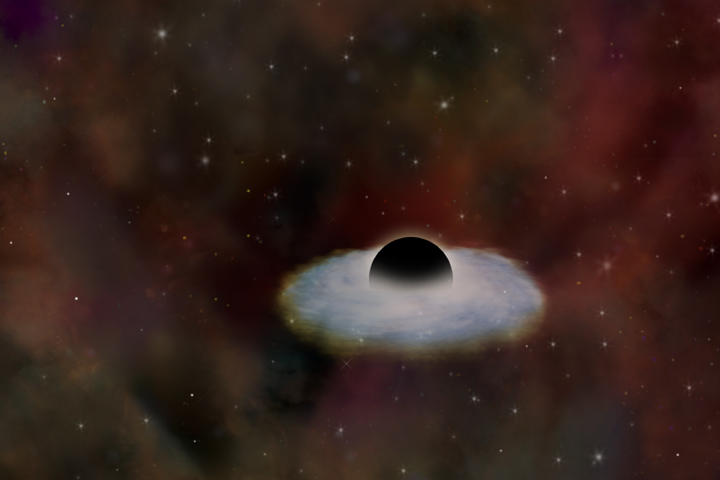
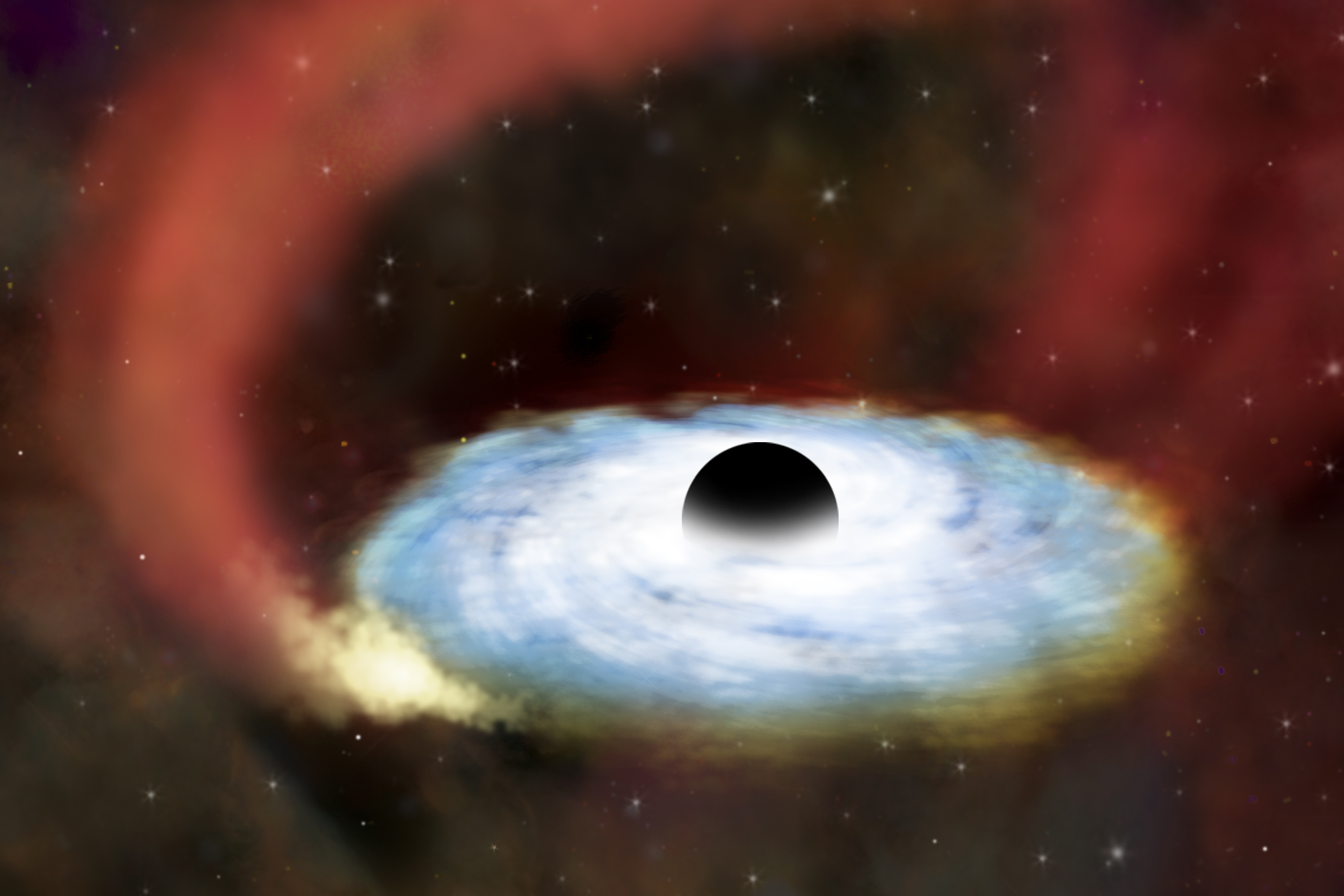
The first illustration in this sequence shows a doomed star (orange circle) that wanders so close to a giant black hole that the black hole's enormous gravity stretches the star until it is torn apart. Some of the disrupted star's mass (indicated by the white stream) is swallowed by the black hole, while the rest is flung away into the surrounding galaxy. The second illustration shows how the gas that was pulled towards the black hole forms a disk and is heated before being swallowed by the black hole. The third illustration shows a much fainter disk, after about ten years have elapsed, when most of the gas has been swallowed by the black hole. (Illustration: NASA/CXC/M.Weiss)
Related Photo Album | View Animation
The first illustration in this sequence shows a doomed star (orange circle) that wanders so close to a giant black hole that the black hole's enormous gravity stretches the star until it is torn apart. Some of the disrupted star's mass (indicated by the white stream) is swallowed by the black hole, while the rest is flung away into the surrounding galaxy. The second illustration shows how the gas that was pulled towards the black hole forms a disk and is heated before being swallowed by the black hole. The third illustration shows a much fainter disk, after about ten years have elapsed, when most of the gas has been swallowed by the black hole. (Illustration: NASA/CXC/M.Weiss)
Related Photo Album | View Animation


2. Illustrations of Star Ripped Apart by Giant Black Hole
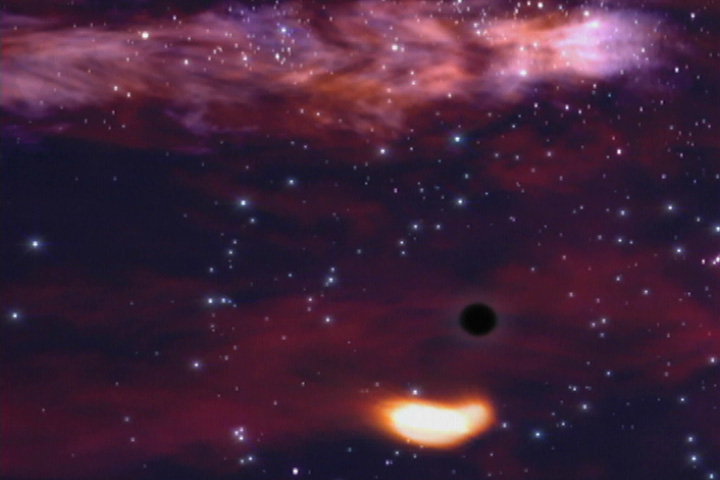
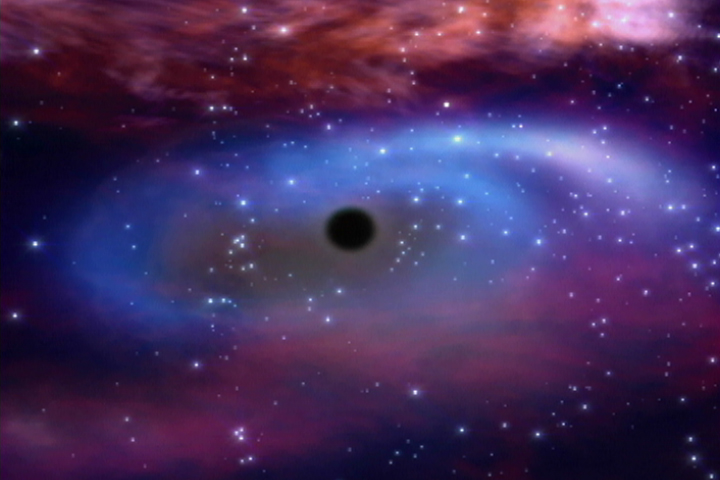
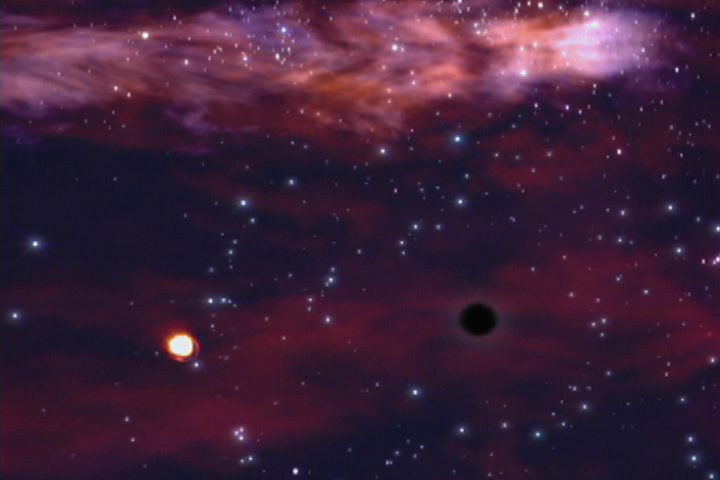
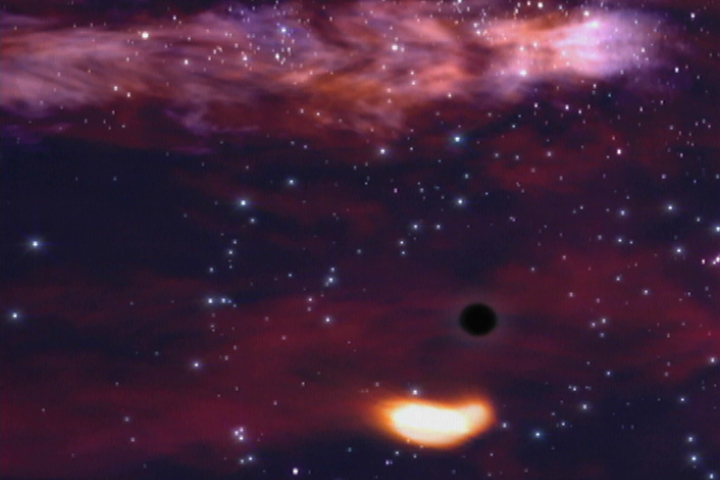
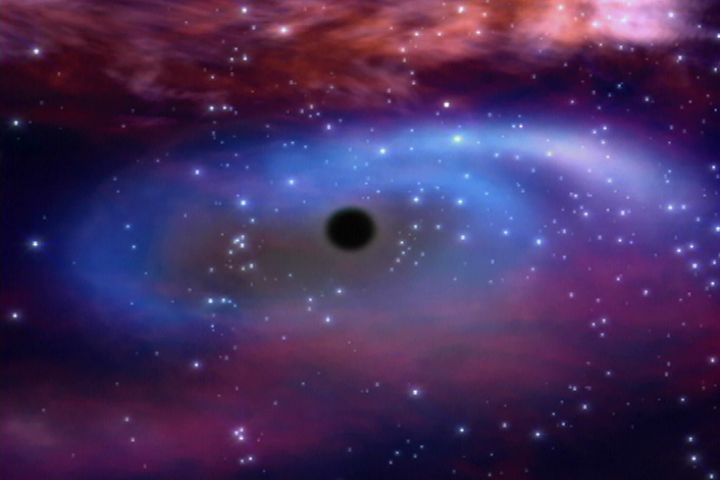
This series of illustrations shows a yellow star that travels too close to a giant black hole in the center of the galaxy RX J1242-11. As it nears, the star is stretched by tidal forces from the black hole and is quickly torn apart. Most of the yellow gaseous debris from the star escapes the black hole in parabolic orbits. However, a small amount of material is captured by the black hole and then forms a rotating disk of gas. X-rays are emitted as the gas in the disk is heated (as shown by the blue color) and is gradually swallowed by the black hole, eventually emptying the disk. (Illustration: ESA)
Related Photo Album | View Animation
This series of illustrations shows a yellow star that travels too close to a giant black hole in the center of the galaxy RX J1242-11. As it nears, the star is stretched by tidal forces from the black hole and is quickly torn apart. Most of the yellow gaseous debris from the star escapes the black hole in parabolic orbits. However, a small amount of material is captured by the black hole and then forms a rotating disk of gas. X-rays are emitted as the gas in the disk is heated (as shown by the blue color) and is gradually swallowed by the black hole, eventually emptying the disk. (Illustration: ESA)
Related Photo Album | View Animation
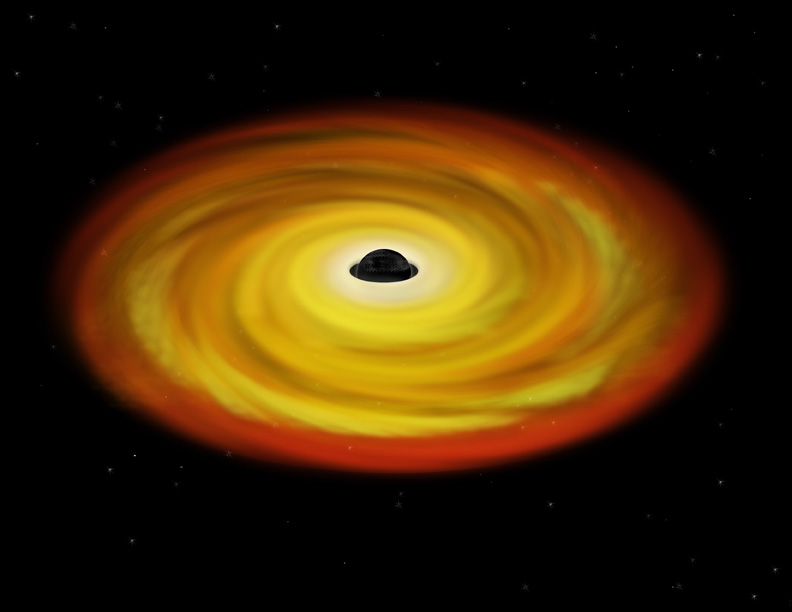
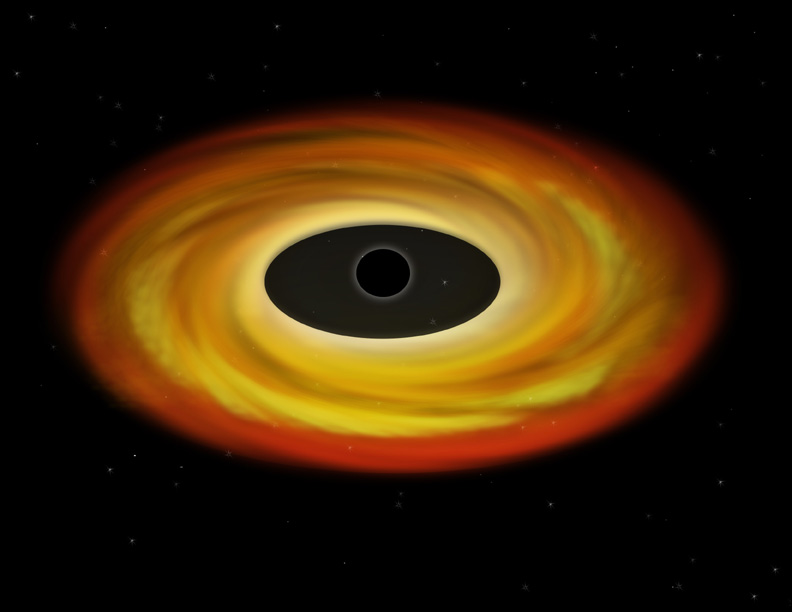
3. Illustration of Spinning & Non-Spinning Black Holes
As shown in the illustration, the gravity of a black hole shifts X-rays from iron atoms to lower energies, producing a strongly skewed X-ray signal. One black hole is depicted as not spinning (left), and a second black hole is depicted as spinning rapidly (right). One consequence of Einstein's theory of relativity is that spinning black holes drag space with them as they spin, making it possible for particles to orbit nearer to the black hole. A possible explanation for the differences in spin among stellar black holes is that they are born spinning at different rates. Another is that the gas flowing into the black hole spins it up. (Illustration: NASA/CXC/M.Weiss)
Related Photo Album
As shown in the illustration, the gravity of a black hole shifts X-rays from iron atoms to lower energies, producing a strongly skewed X-ray signal. One black hole is depicted as not spinning (left), and a second black hole is depicted as spinning rapidly (right). One consequence of Einstein's theory of relativity is that spinning black holes drag space with them as they spin, making it possible for particles to orbit nearer to the black hole. A possible explanation for the differences in spin among stellar black holes is that they are born spinning at different rates. Another is that the gas flowing into the black hole spins it up. (Illustration: NASA/CXC/M.Weiss)
Related Photo Album


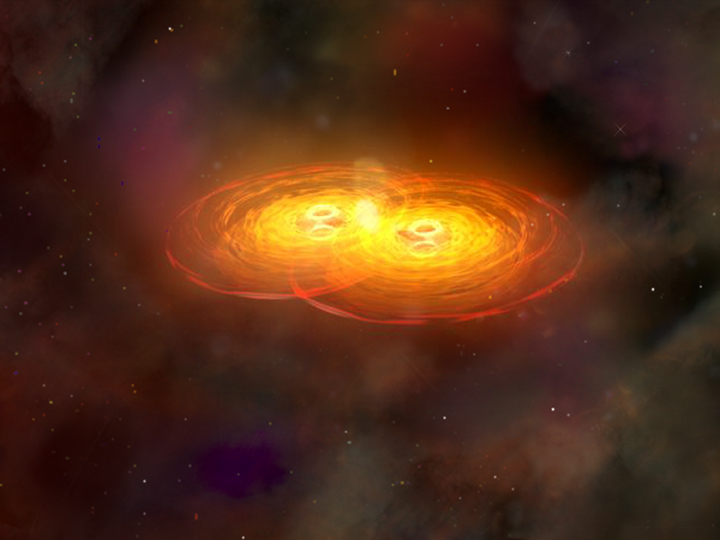
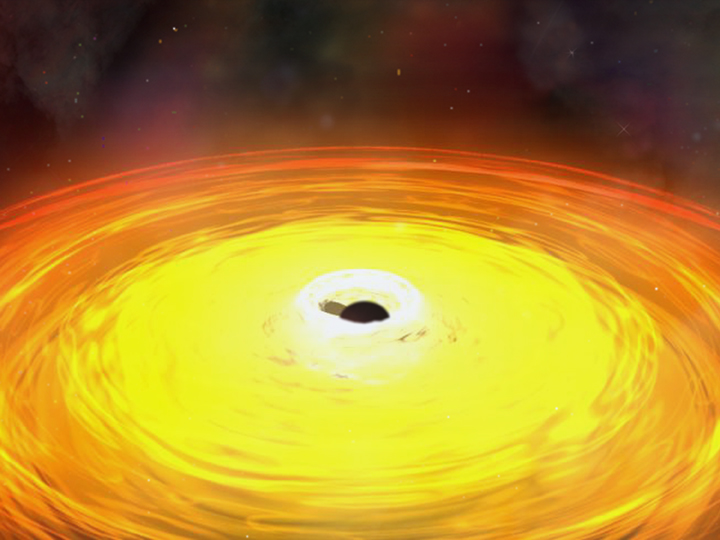
4. Black Hole Merger
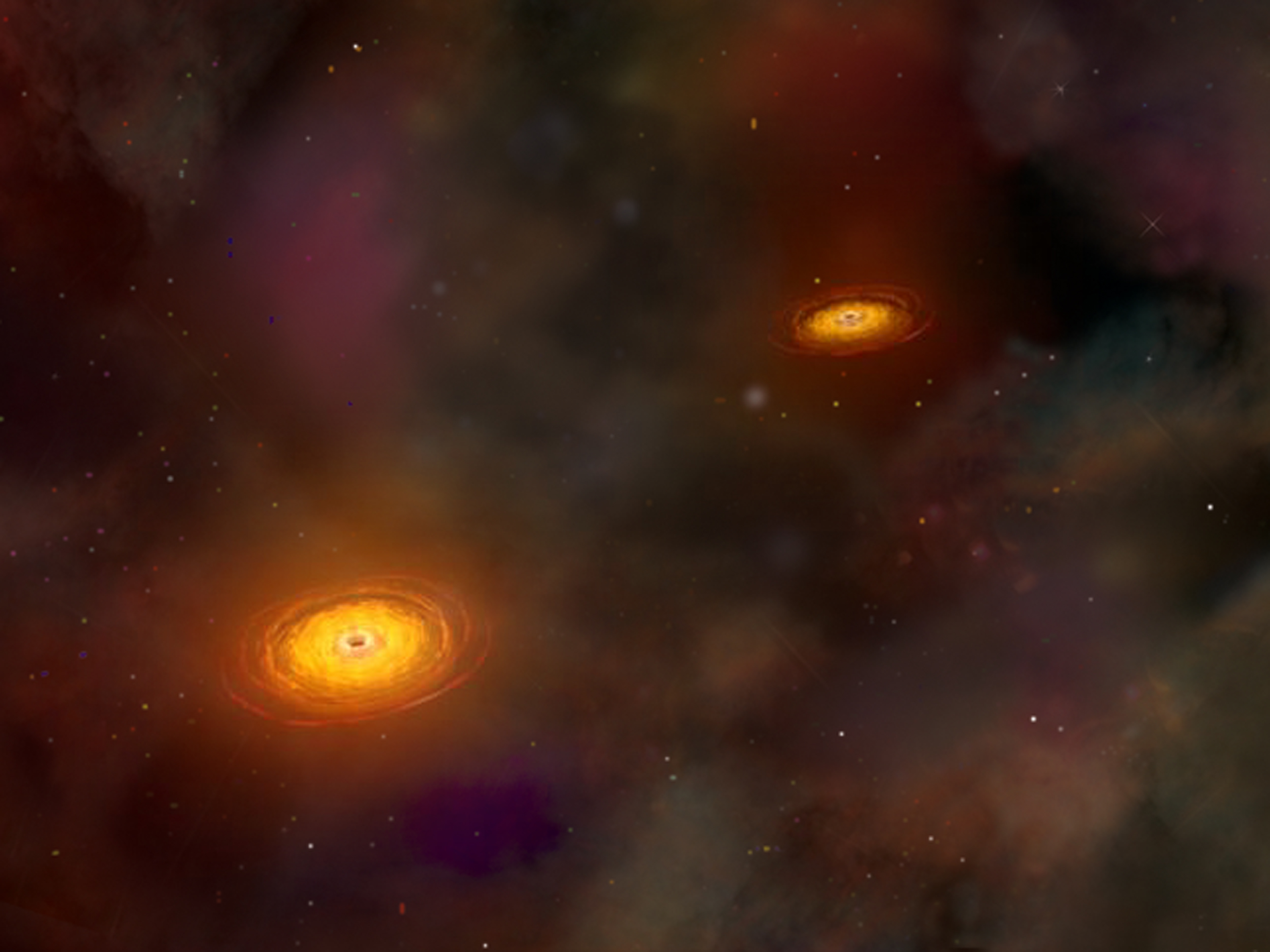
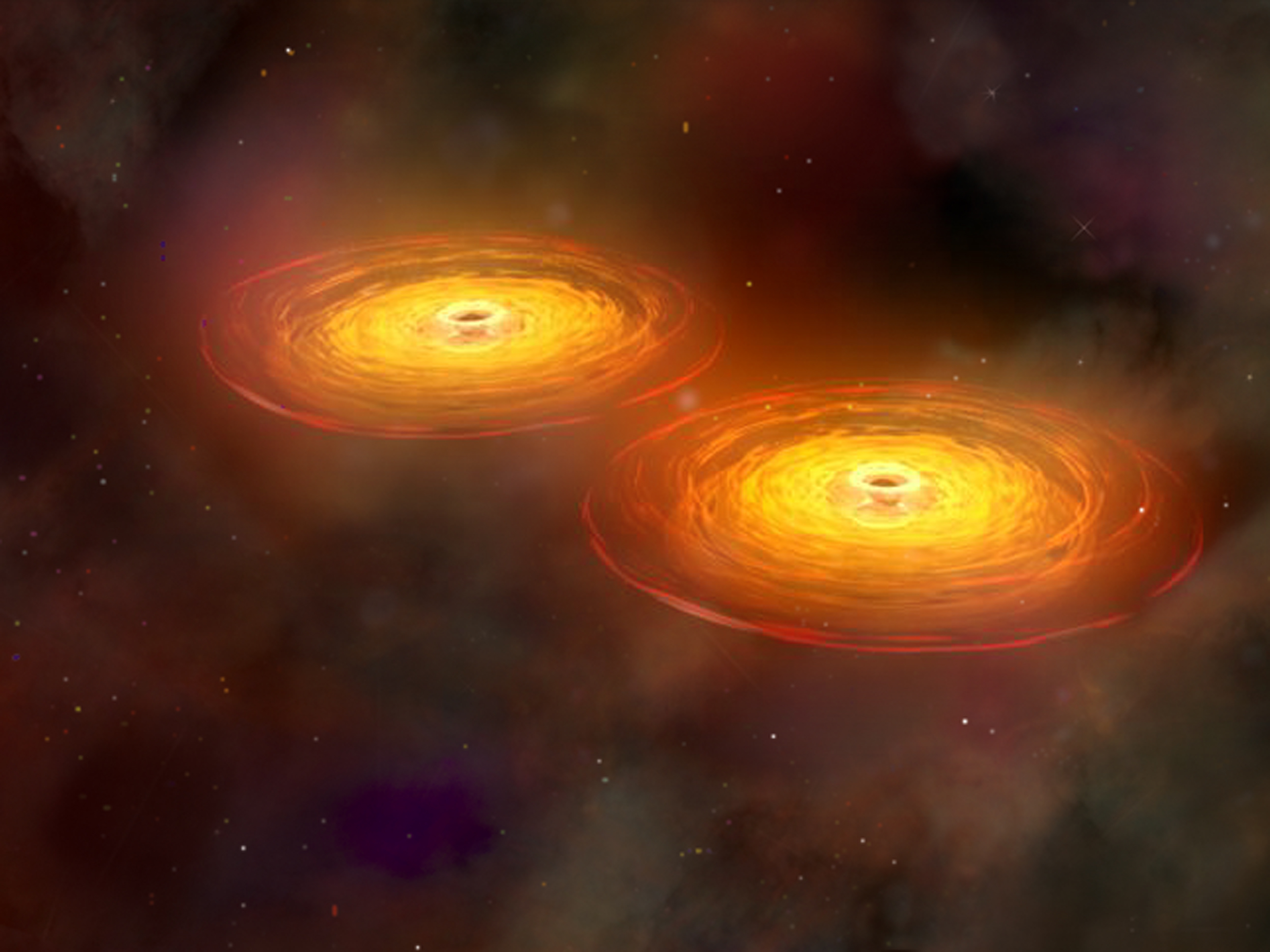
This series of stills depicts 4 stages in a merger of two galaxies (artistic representation) that forms a single galaxy with two centrally located supermassive black holes surrounded by disks of hot gas. The black holes orbit each other for hundreds of millions of years before they merge to form a single supermassive black hole that sends out intense gravitational waves. (Illustration: NASA/CXC/A.Hobart)
Related Photo Album
This series of stills depicts 4 stages in a merger of two galaxies (artistic representation) that forms a single galaxy with two centrally located supermassive black holes surrounded by disks of hot gas. The black holes orbit each other for hundreds of millions of years before they merge to form a single supermassive black hole that sends out intense gravitational waves. (Illustration: NASA/CXC/A.Hobart)
Related Photo Album
5. Illustration of Black Hole with Accretion Disk and Torus
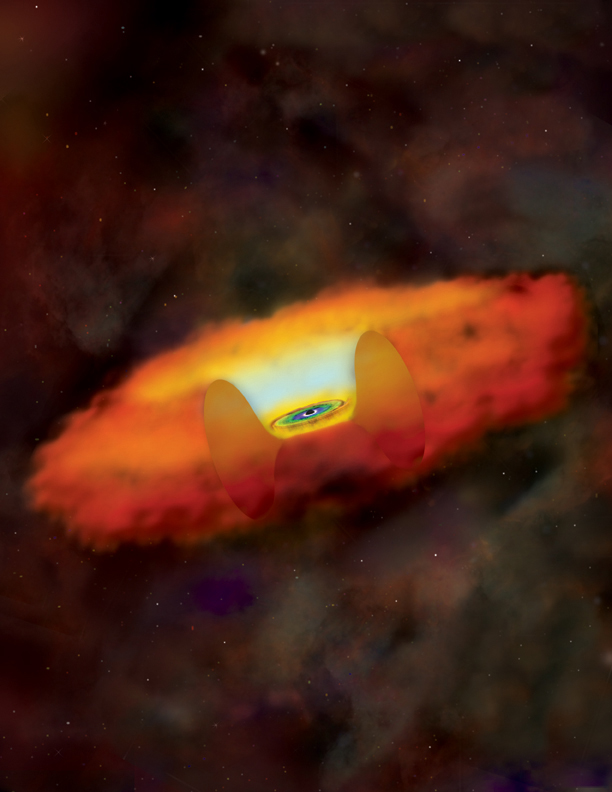
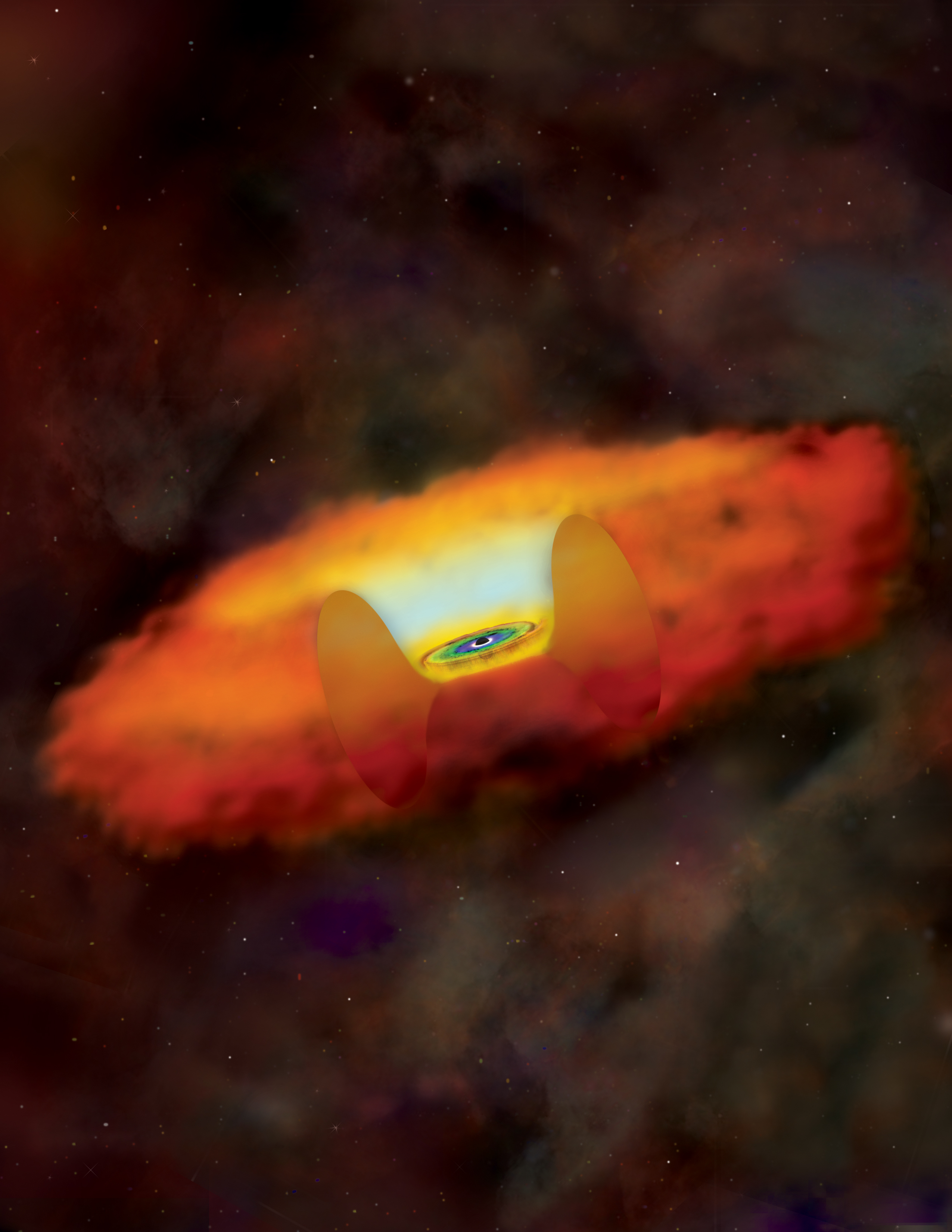
An artist's conception shows a black hole surrounded by a disk of hot gas, and a large doughnut or torus of cooler gas and dust. The light blue ring on the back of the torus is due to the fluorescence of iron atoms excited by X-rays from the hot gas disk. (Illustration: NASA/CXC/M.Weiss)
Related Photo Album
An artist's conception shows a black hole surrounded by a disk of hot gas, and a large doughnut or torus of cooler gas and dust. The light blue ring on the back of the torus is due to the fluorescence of iron atoms excited by X-rays from the hot gas disk. (Illustration: NASA/CXC/M.Weiss)
Related Photo Album
Download:
6. Illustration of Black Hole with Accretion Disk and Torus
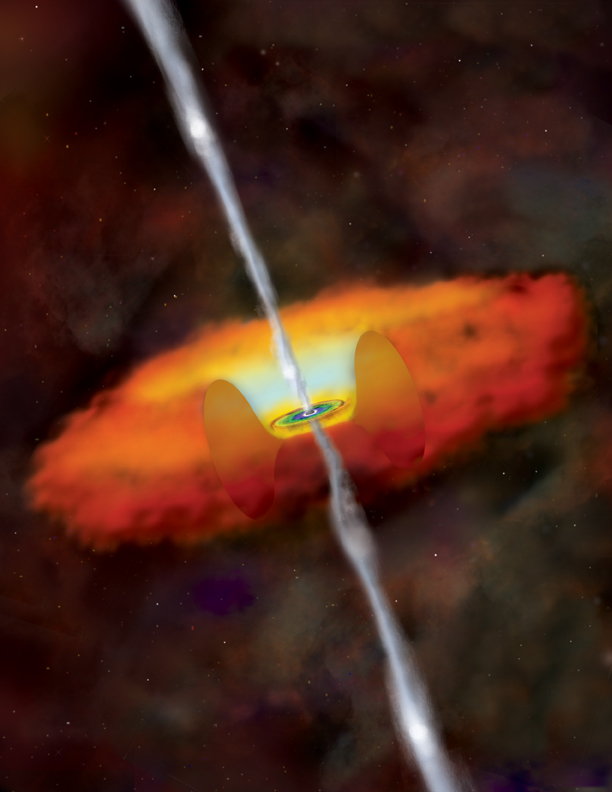
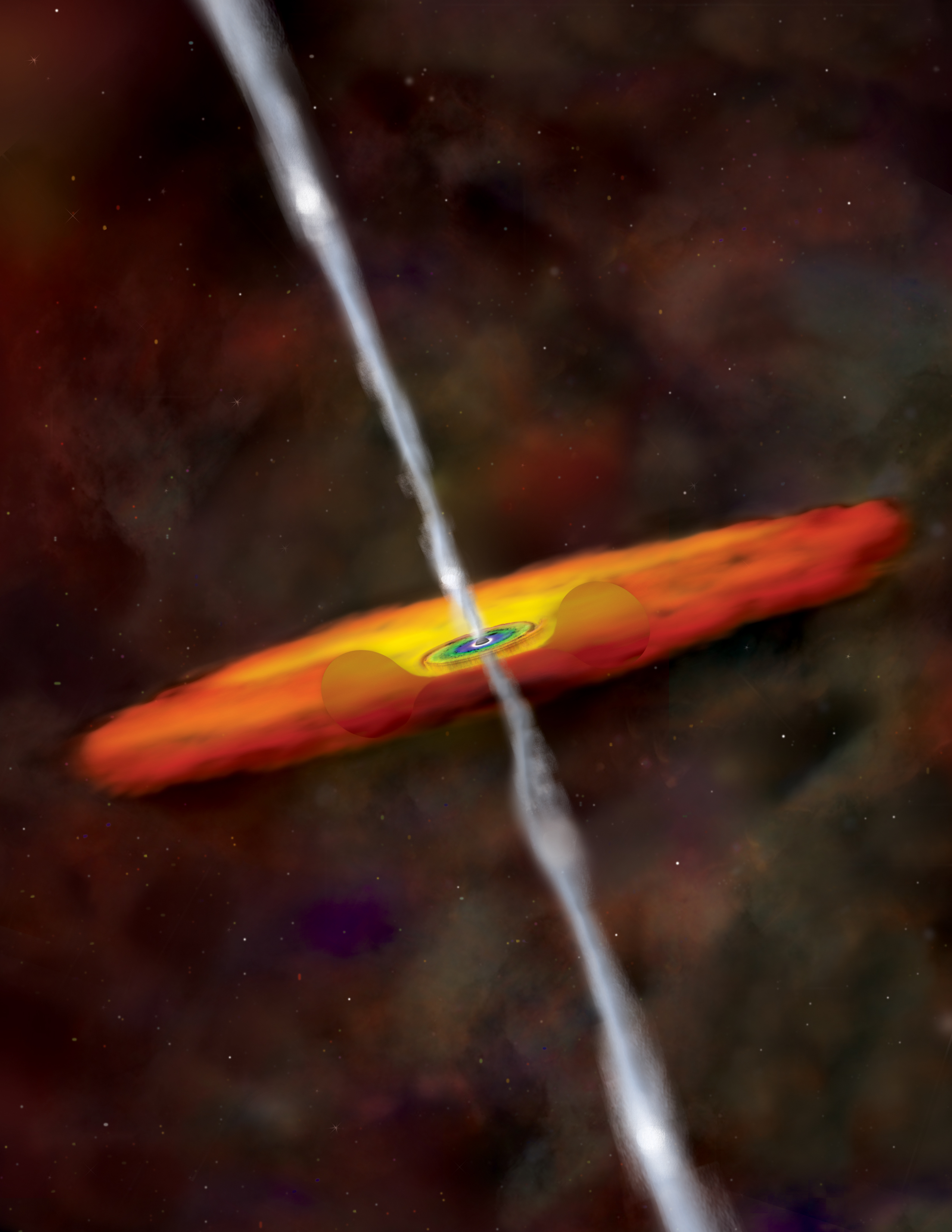
An artist's conception shows a black hole surrounded by a disk of hot gas, and a large doughnut or torus of cooler gas and dust. The light blue ring on the back of the torus is due to the fluorescence of iron atoms excited by X-rays from the hot gas disk. Jets of high energy particles (white) are propelled away from the vicinity of the black hole by intense electric and magnetic fields. (Illustration: NASA/CXC/M.Weiss)
Related Photo Album
An artist's conception shows a black hole surrounded by a disk of hot gas, and a large doughnut or torus of cooler gas and dust. The light blue ring on the back of the torus is due to the fluorescence of iron atoms excited by X-rays from the hot gas disk. Jets of high energy particles (white) are propelled away from the vicinity of the black hole by intense electric and magnetic fields. (Illustration: NASA/CXC/M.Weiss)
Related Photo Album
Download:

7. Illustrations of Disks around Black Holes
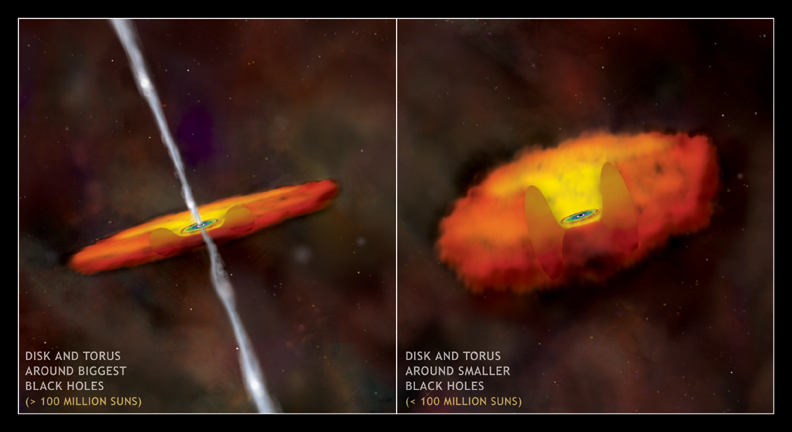
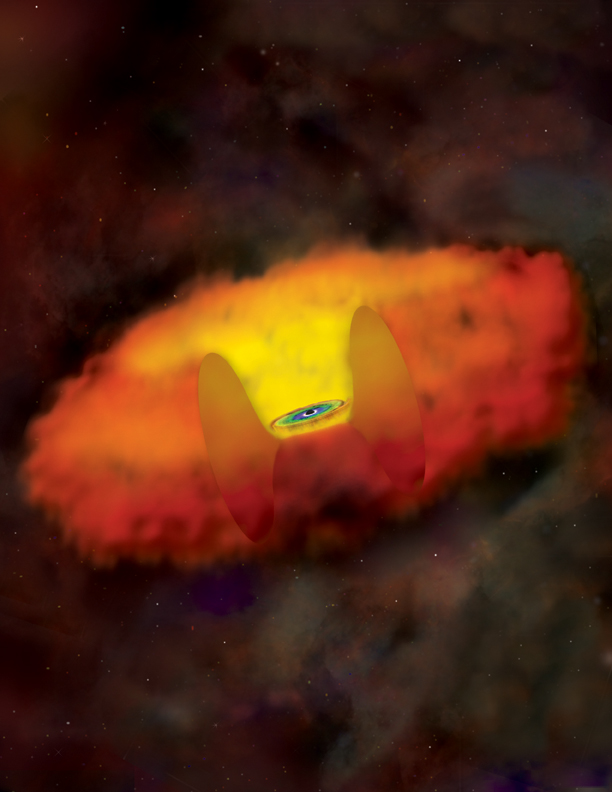
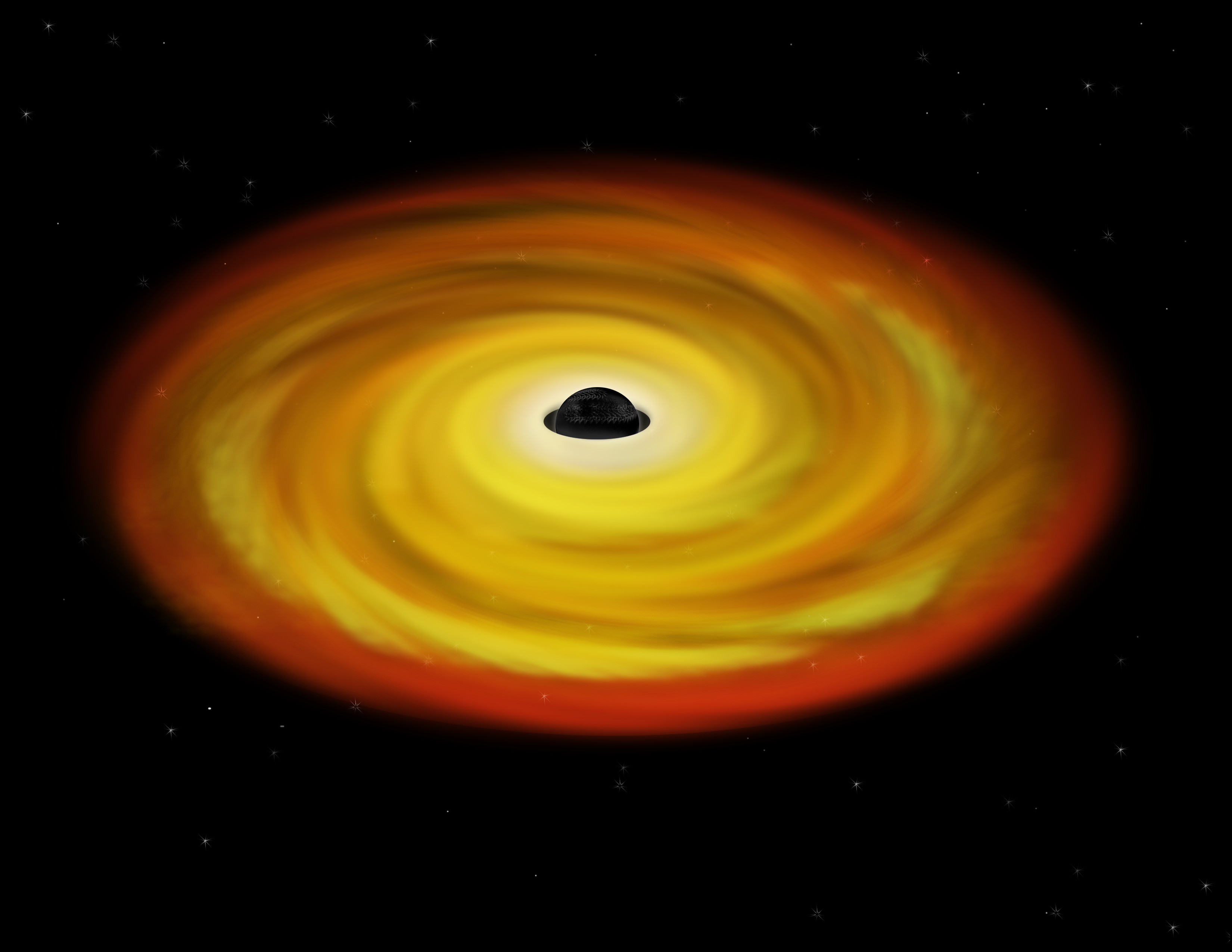
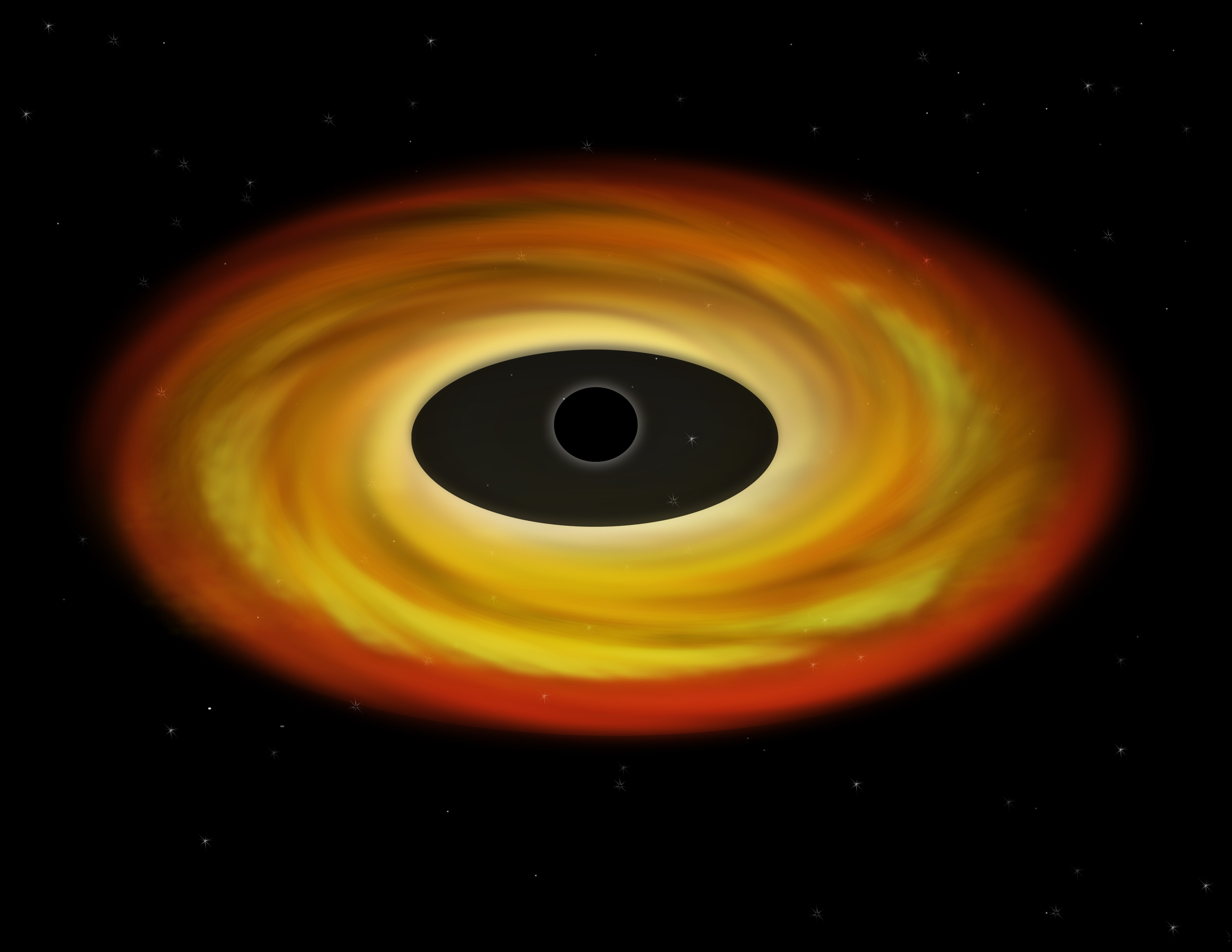
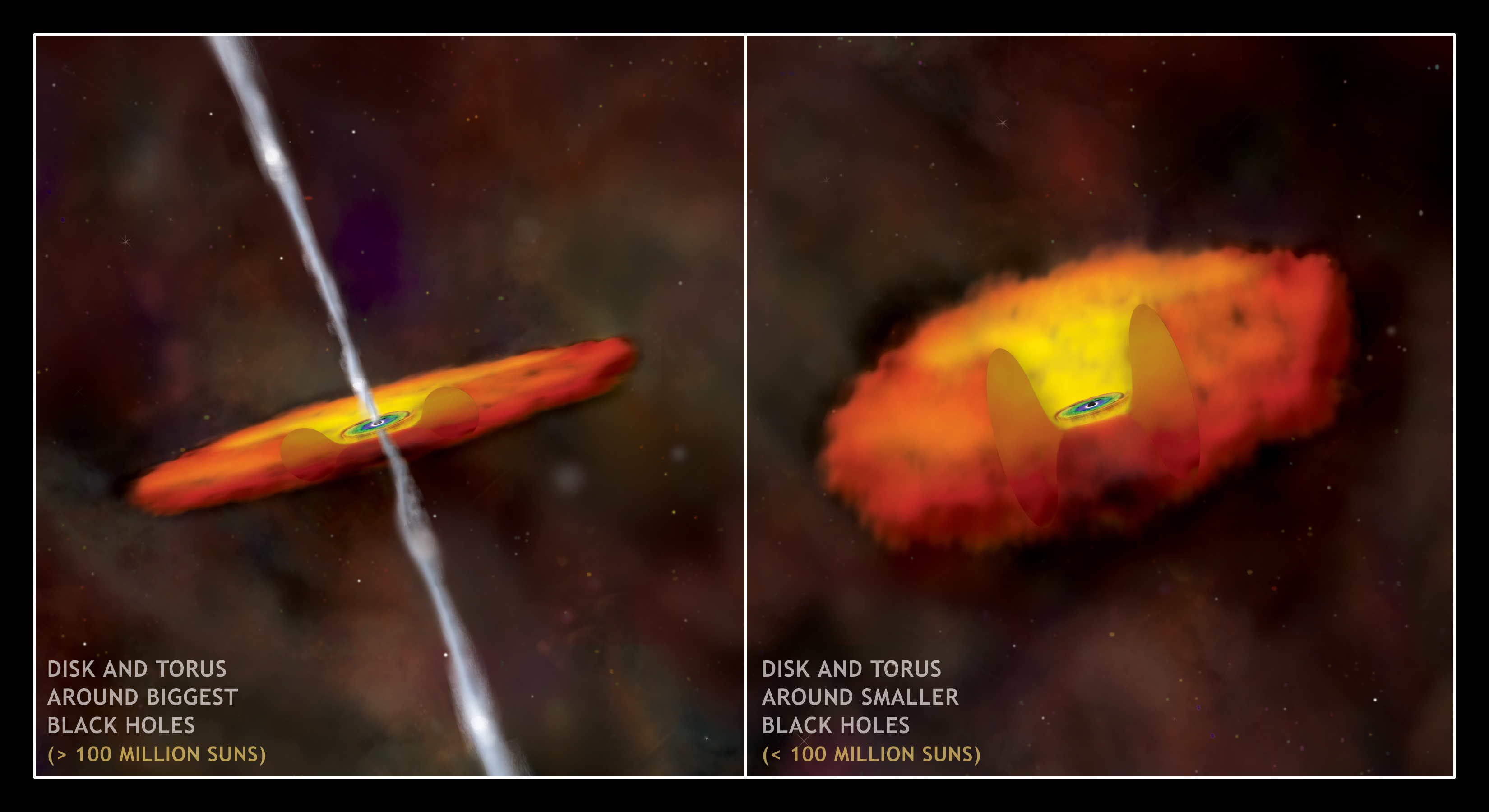
These two illustrations show the difference between the very biggest supermassive black holes in the Universe and relatively smaller ones. In each case, the black hole is swallowing large amounts of gas from a surrounding disk. The first illustration is of a black hole with a mass between about 10 million and 100 million Suns. Here, the central black hole is obscured by a thick donut-shaped cloud of dust and gas. The second shows the growth of a larger black hole, with a mass greater than 100 million Suns. This black hole is surrounded by much a thinner torus of dust and gas. (Credit: NASA/CXC/M.Weiss)
Related Photo Album
These two illustrations show the difference between the very biggest supermassive black holes in the Universe and relatively smaller ones. In each case, the black hole is swallowing large amounts of gas from a surrounding disk. The first illustration is of a black hole with a mass between about 10 million and 100 million Suns. Here, the central black hole is obscured by a thick donut-shaped cloud of dust and gas. The second shows the growth of a larger black hole, with a mass greater than 100 million Suns. This black hole is surrounded by much a thinner torus of dust and gas. (Credit: NASA/CXC/M.Weiss)
Related Photo Album
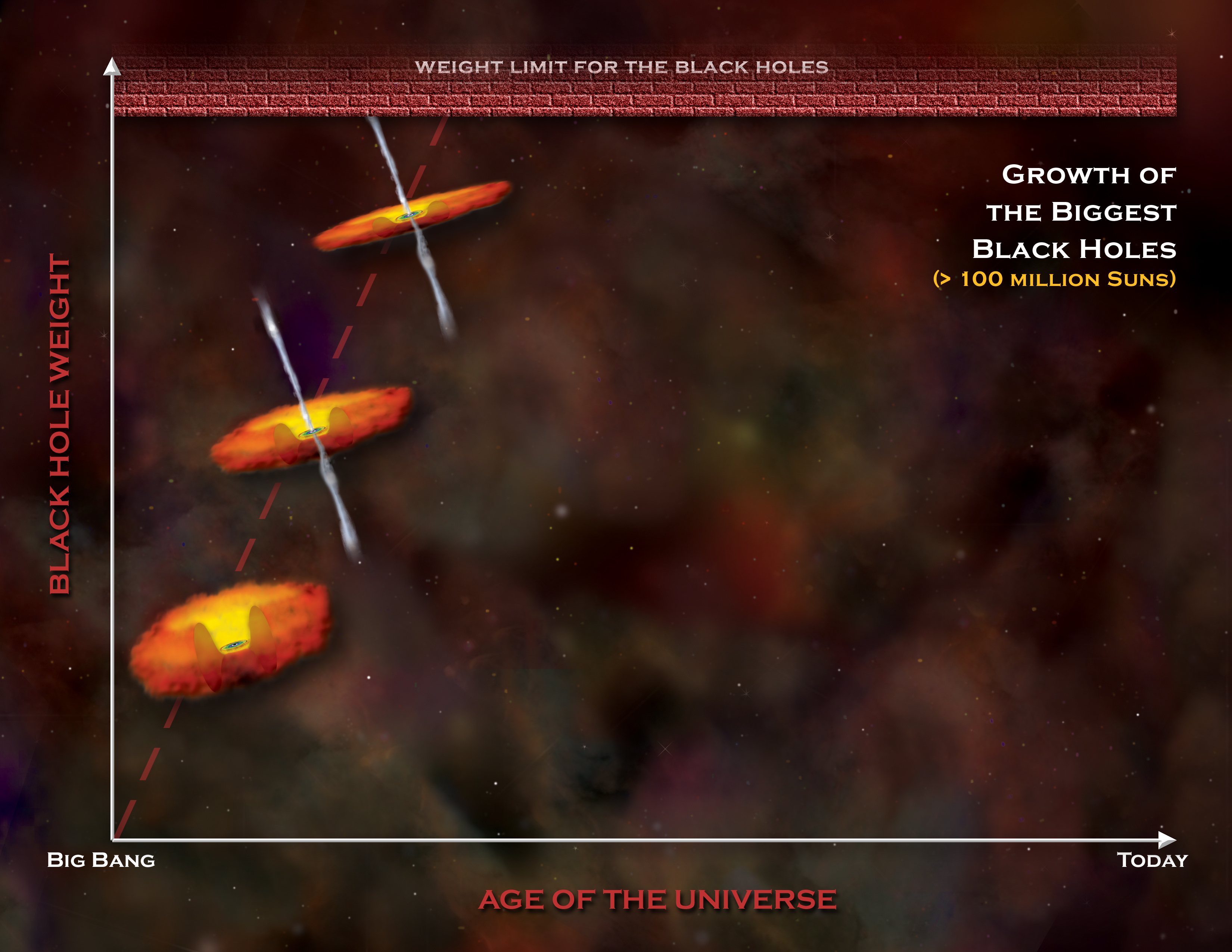
8. Growth of the Biggest Black Holes
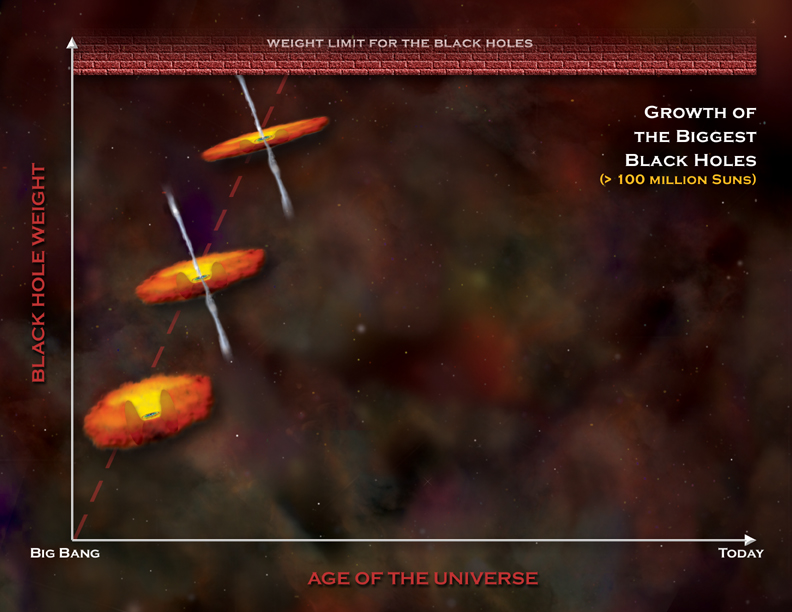
This figure shows the typical growth, over cosmic time, of supermassive black holes with masses greater than 100 million Suns (these objects include the largest black holes in the Universe). These large black holes grow quickly in the early Universe but their growth then stops ("hits the wall"), perhaps because powerful winds or jets generated by the feeding frenzy of the black holes clears out any remaining fuel. The rapid, early growth of these large black holes, as observed with Chandra, is similar to the growth of their large host galaxies, as observed with optical telescopes. (Illustration: NASA/CXC/M.Weiss)
Related Photo Album
This figure shows the typical growth, over cosmic time, of supermassive black holes with masses greater than 100 million Suns (these objects include the largest black holes in the Universe). These large black holes grow quickly in the early Universe but their growth then stops ("hits the wall"), perhaps because powerful winds or jets generated by the feeding frenzy of the black holes clears out any remaining fuel. The rapid, early growth of these large black holes, as observed with Chandra, is similar to the growth of their large host galaxies, as observed with optical telescopes. (Illustration: NASA/CXC/M.Weiss)
Related Photo Album
Download:
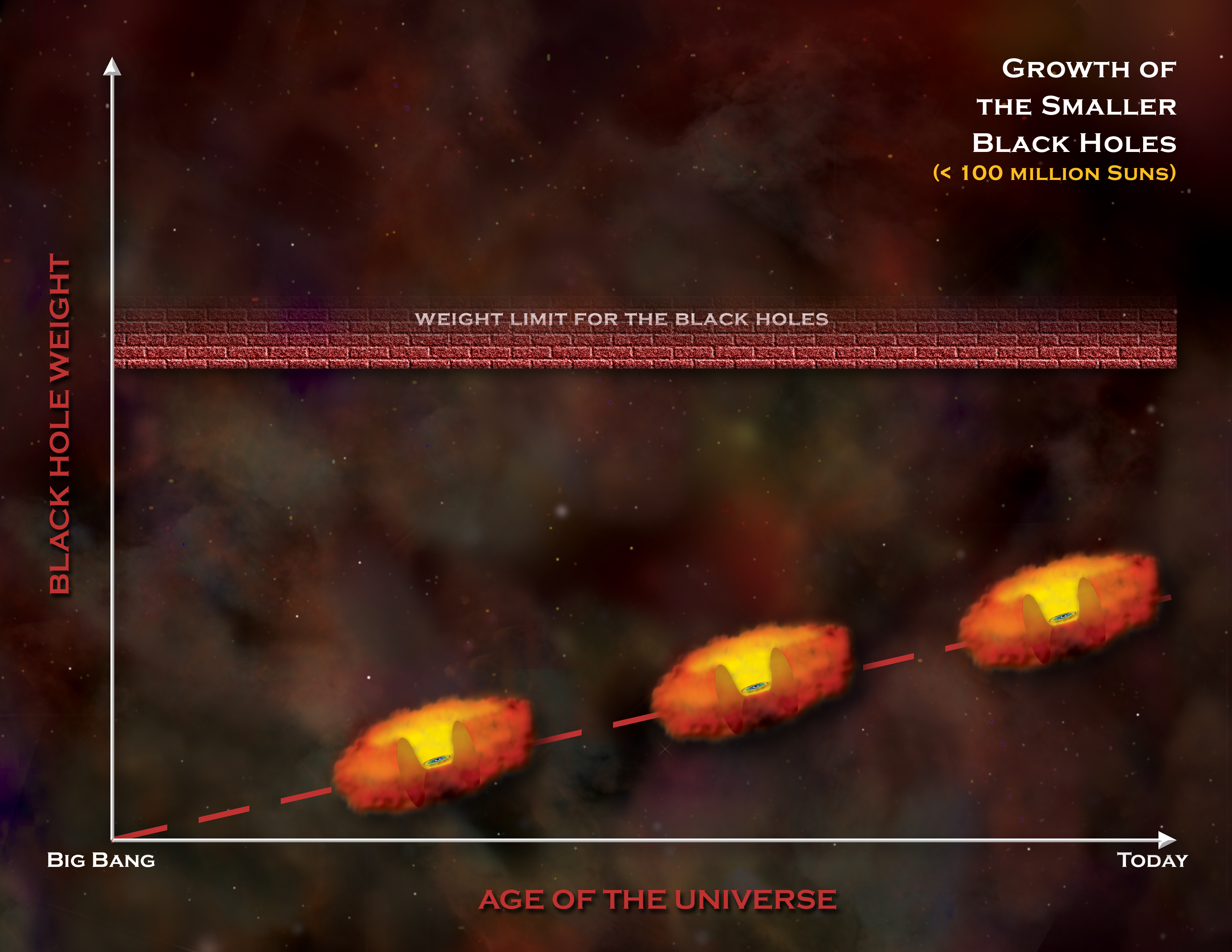
9. Growth of Smaller Black Holes
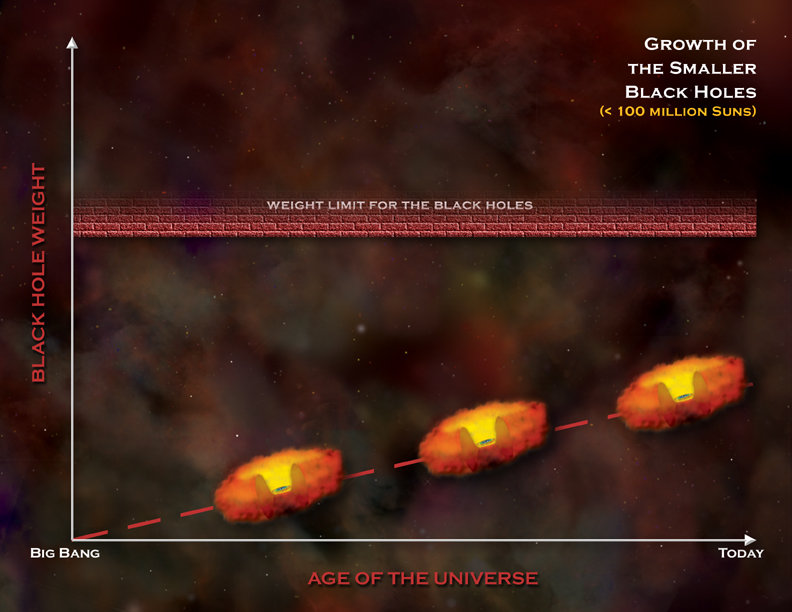
This figure shows the typical growth of supermassive black holes with masses less than about 100 million Suns. These black holes grow much more slowly than the biggest black holes. Typically they will not reach their weight limit for another several billion years. This slow growth is similar to the growth of the black holes' host galaxies. (Illustration: NASA/CXC/M.Weiss)
Related Photo Album
This figure shows the typical growth of supermassive black holes with masses less than about 100 million Suns. These black holes grow much more slowly than the biggest black holes. Typically they will not reach their weight limit for another several billion years. This slow growth is similar to the growth of the black holes' host galaxies. (Illustration: NASA/CXC/M.Weiss)
Related Photo Album
Download:
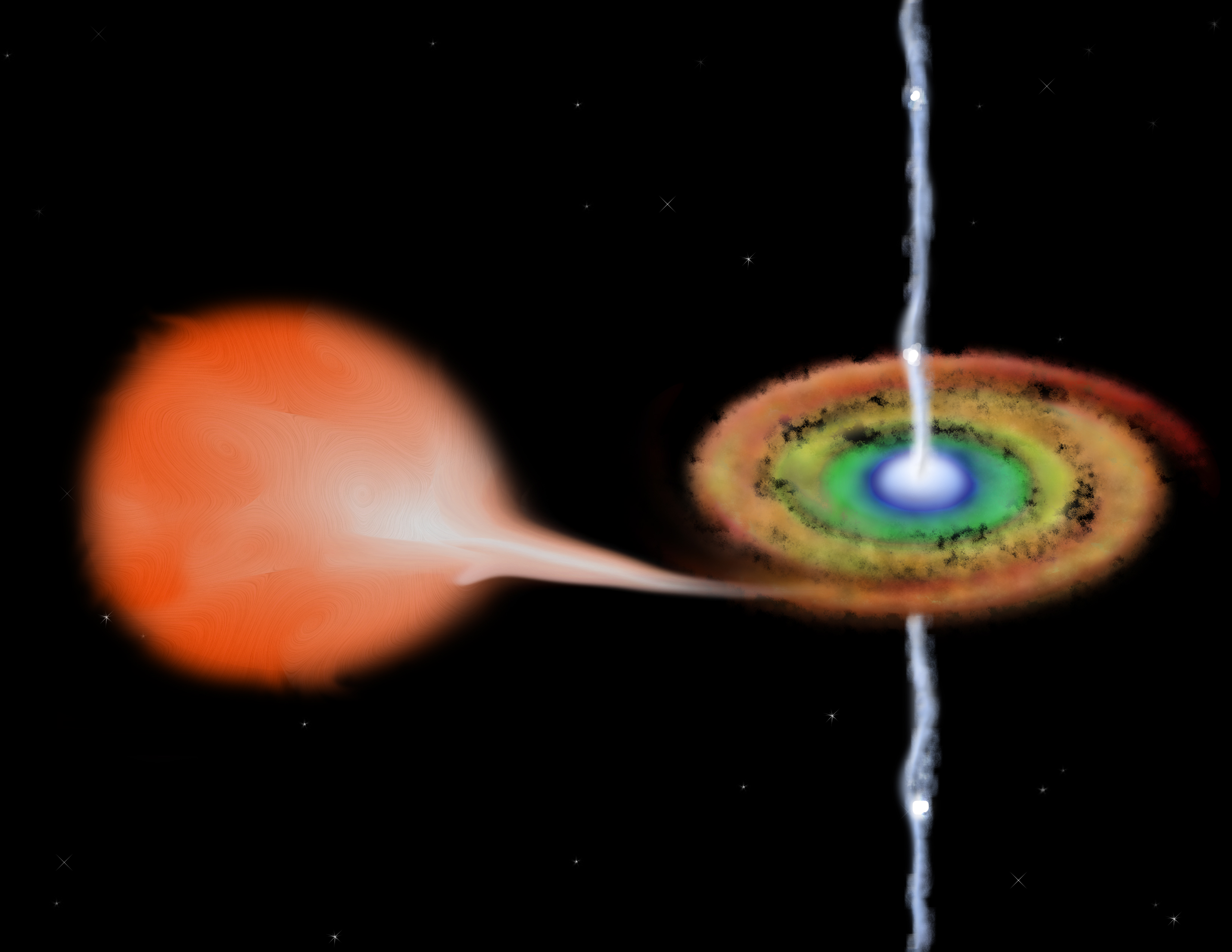
10. Low Mass X-ray Binary
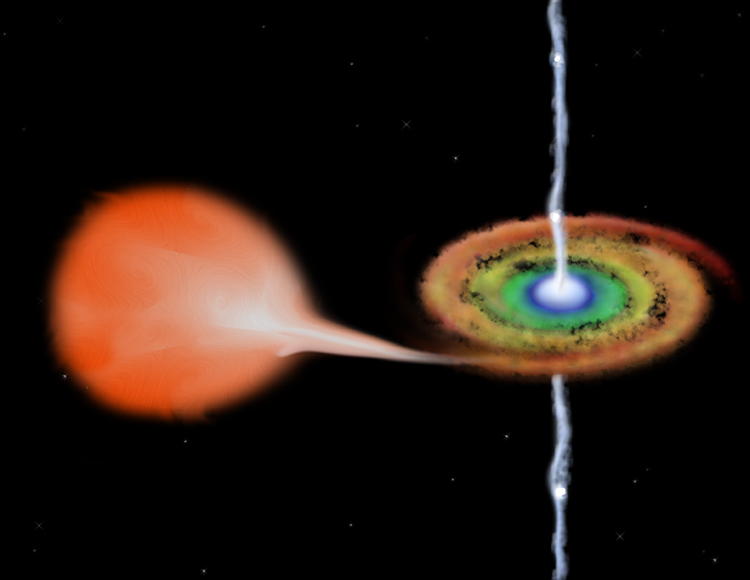
A double star system where a normal Sun-like star is in orbit around a black hole. As gaseous matter is pulled from the normal star it spirals toward the black hole, forming a disk, and is heated to temperatures of millions of degrees. Intense electromagnetic forces in the disk can expel jets of high-energy matter. (Illustration: NASA/CXC/M.Weiss)
Related Photo Album
A double star system where a normal Sun-like star is in orbit around a black hole. As gaseous matter is pulled from the normal star it spirals toward the black hole, forming a disk, and is heated to temperatures of millions of degrees. Intense electromagnetic forces in the disk can expel jets of high-energy matter. (Illustration: NASA/CXC/M.Weiss)
Related Photo Album
Download:







Revised: October 01, 2026