





CXC Home | Search | Help | Image Use Policy | Latest Images | Privacy | Accessibility | Glossary | Q&A
Download Image
More Information
More Images
More Releases

Related Images
Rosette Nebula:
Scientists Find X Rays from Stellar Winds That May Play Significant Role in Galactic Evolution

Scientists Find X Rays from Stellar Winds That May Play Significant Role in Galactic Evolution
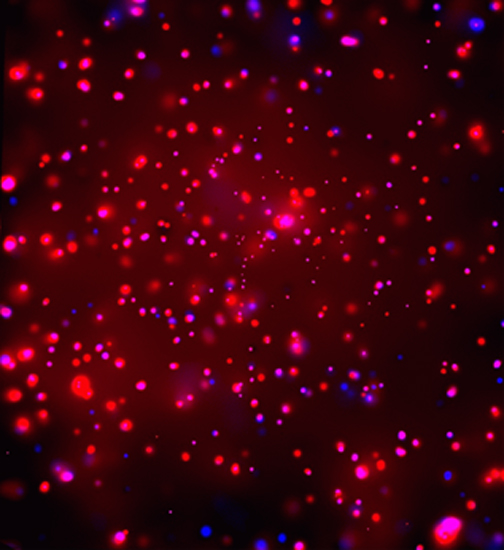
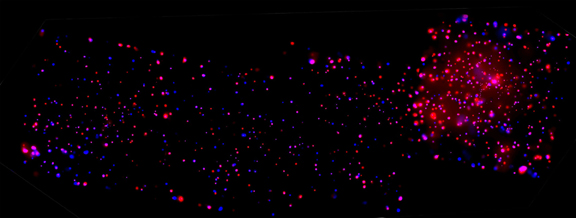
This series of Chandra images shows a mosaic of the Rosette Nebula region. The colors represent various levels of X-ray energy: red shows low-energy (0.5-2 keV) and blue shows high-energy (2-8 keV) X-rays. The mosaic is formed from four Chandra images, starting with the OB association - a group of hot young stars - at the center of the Rosette Nebula on the right and stepping southeast (left) into the Rosette Molecular Cloud. The red sources in the Chandra images are dominated by low-energy X-rays and suffer little absorption by the molecular cloud, whereas the blue sources are very young stars still embedded in the gas and dust from which they formed. The diffuse emission visible in the panel on the upper right is due to hot gas produced by the collision of stellar winds from the most massive stars in the nebula.
|
||||||||||||||||||||||||||
Visual Description:
This series of Chandra X-ray Observatory images of the Rosette Nebula is a visual representation of an interstellar nebula, showcasing various textures, colors, and forms. The images show a mosaic of the Rosette Nebula region, stretching across four irregularly connected squares from left to right. The colors represent various levels of X-ray energy: red shows low-energy and blue shows high-energy X-rays. There is a group of hot young stars (called an OB association) at the center of the Rosette Nebula and extending southeast (left) into the Rosette Molecular Cloud. The red sources in the Chandra images are dominated by low-energy X-rays and suffer little absorption by the molecular cloud, whereas the blue sources are very young stars still embedded in the gas and dust from which they formed. The diffuse emission visible in the panel on the upper right is due to hot gas produced by the collision of stellar winds from the most massive stars in the nebula.


Revised: September 09, 2025