

CXC Home | Search | Help | Image Use Policy | Latest Images | Privacy | Accessibility | Glossary | Q&A
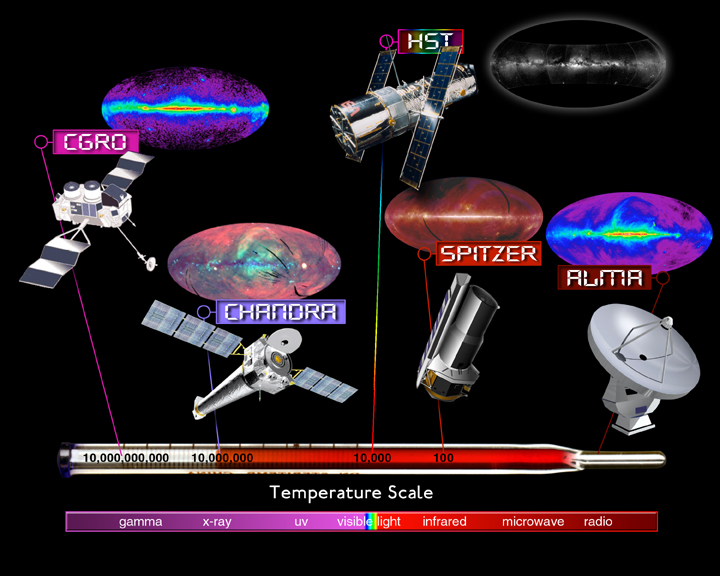
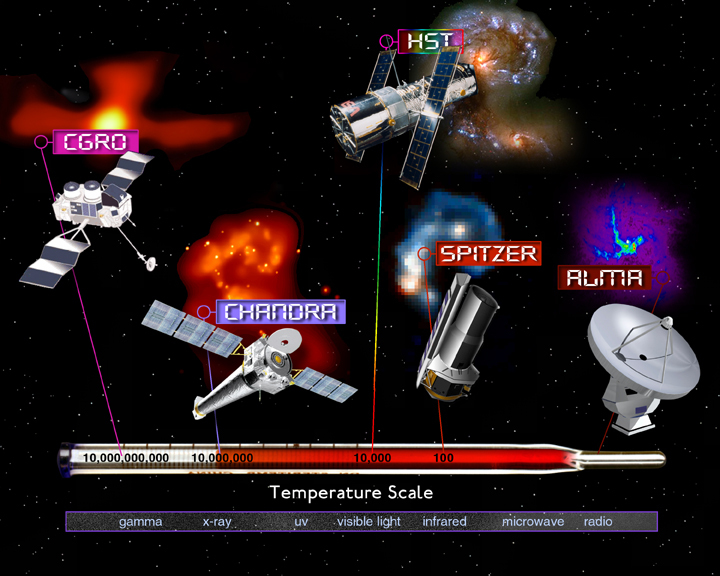
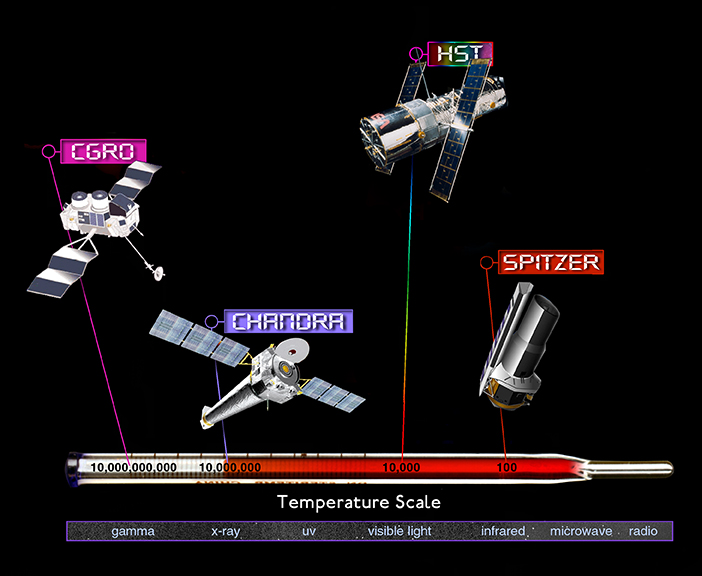
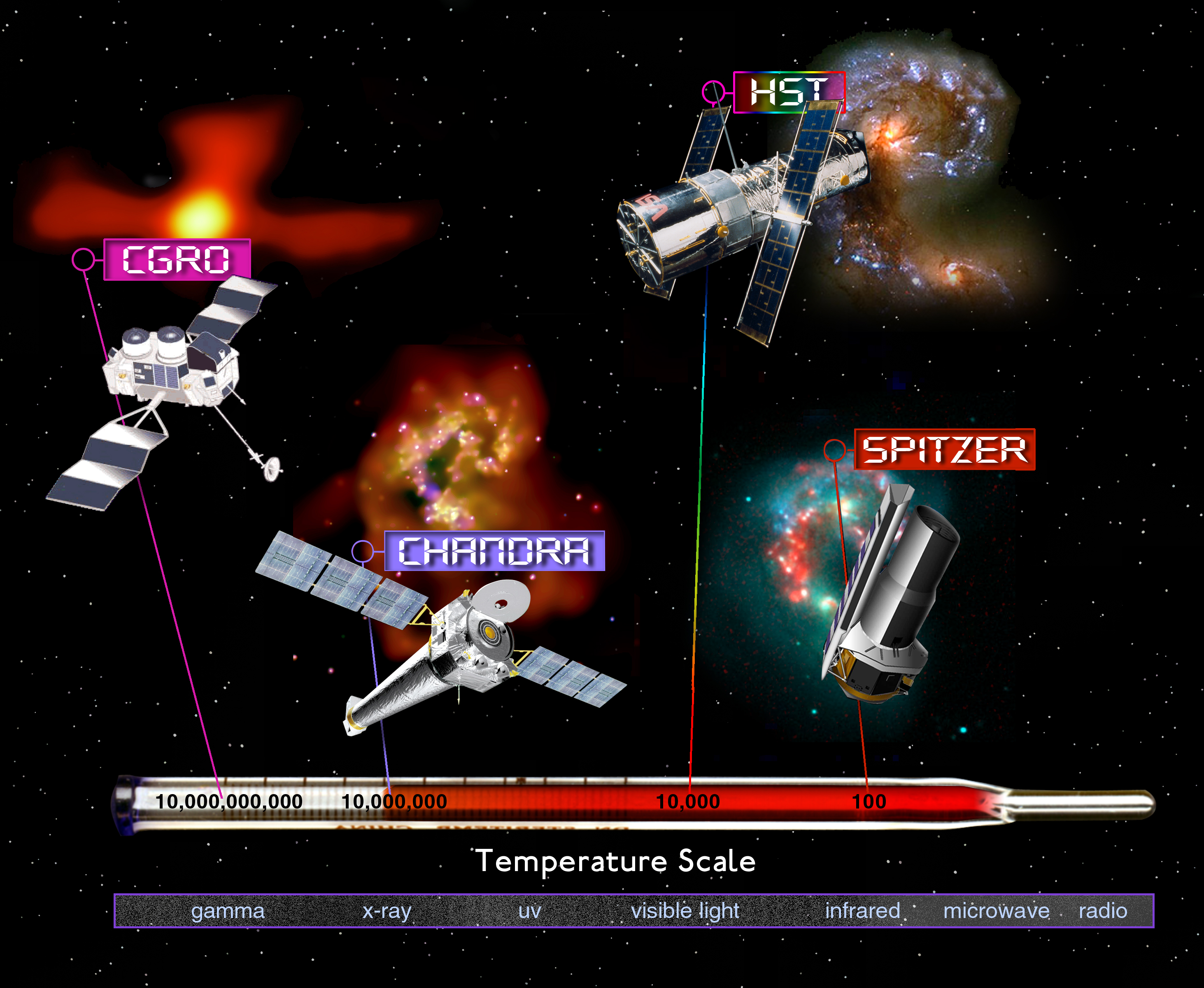
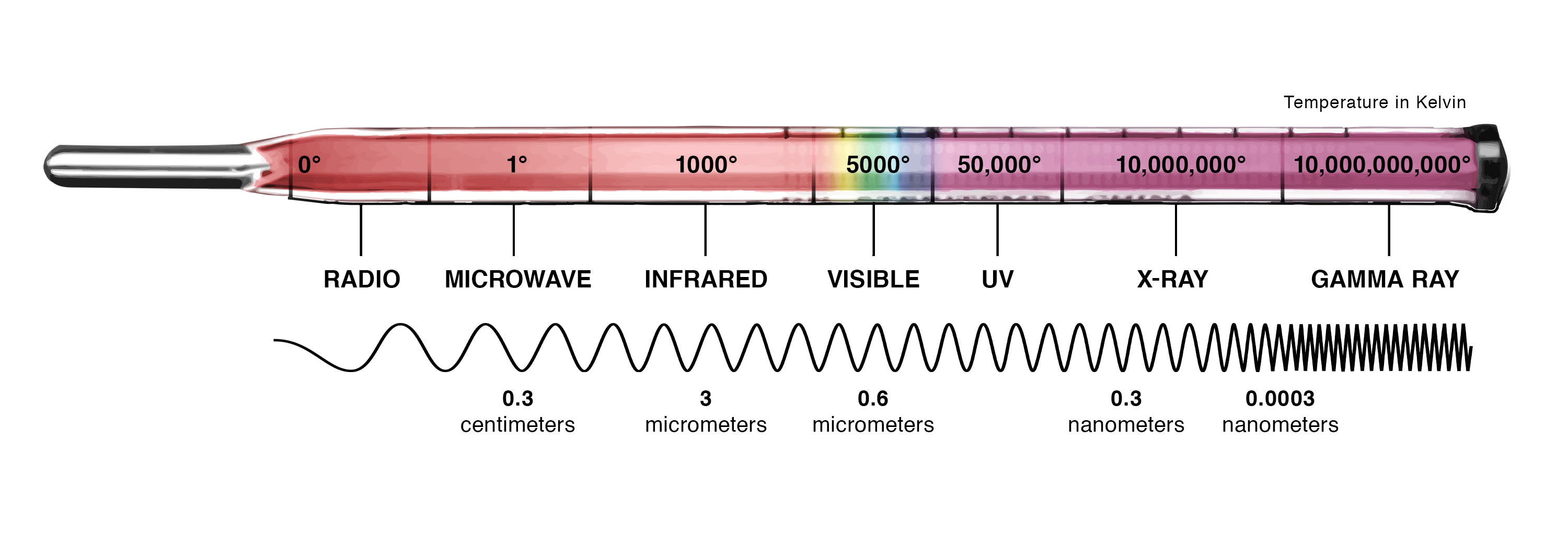
1. The electromagnetic thermometer scale featuring Compton, Chandra, Hubble, Spitzer & ALMA.
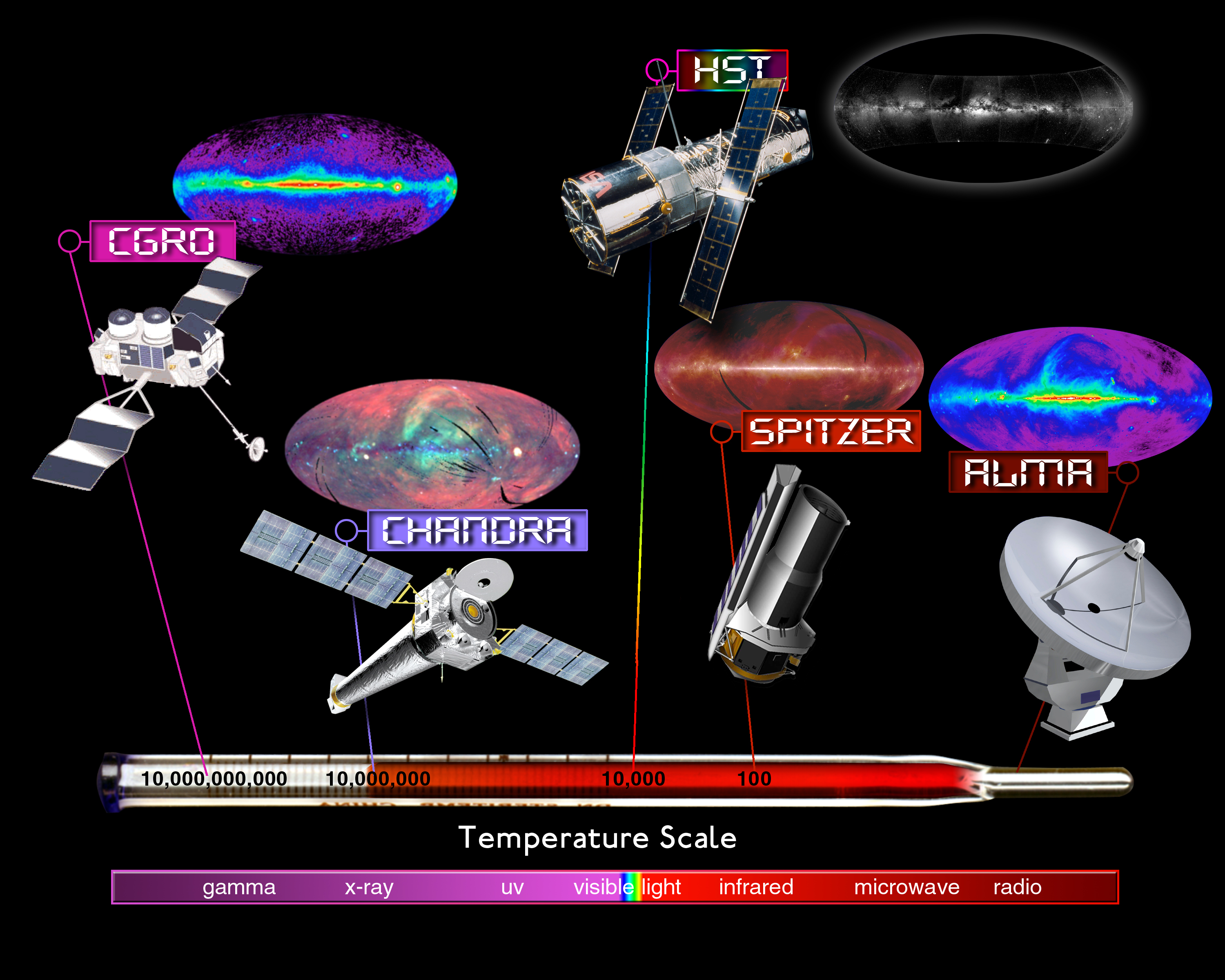
X-rays are associated with high temperatures of about 10 million to 100 million K. Image (A) features multiwavelength images of the Milky Way. Gamma Ray: CGRO/EGRET; X- Ray: ROSAT/PSPC; Optical: Laustsen et al. Photomosaic; Infrared: IRAS; Radio: Bonn, J.Bank, & Parkes. More information on the Multiwavelength Milky Way. (Credit: NASA/CXC/M. Weiss)
X-rays are associated with high temperatures of about 10 million to 100 million K. Image (A) features multiwavelength images of the Milky Way. Gamma Ray: CGRO/EGRET; X- Ray: ROSAT/PSPC; Optical: Laustsen et al. Photomosaic; Infrared: IRAS; Radio: Bonn, J.Bank, & Parkes. More information on the Multiwavelength Milky Way. (Credit: NASA/CXC/M. Weiss)
2. The Electromagnetic Spectrum.
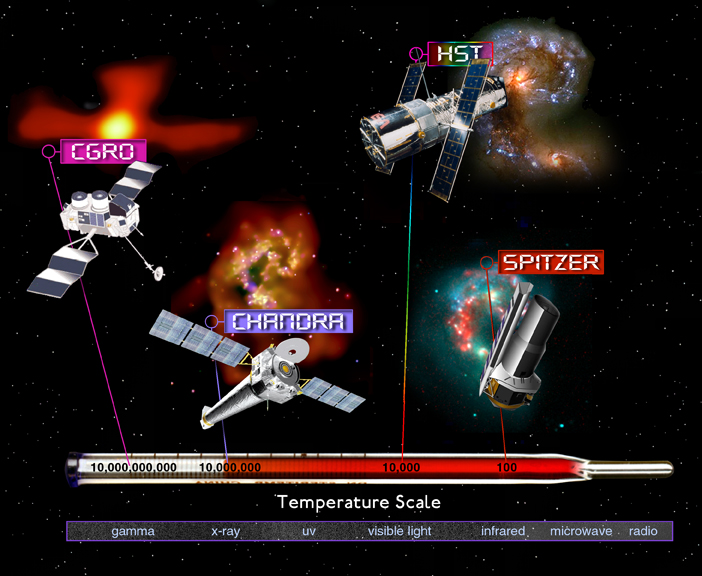
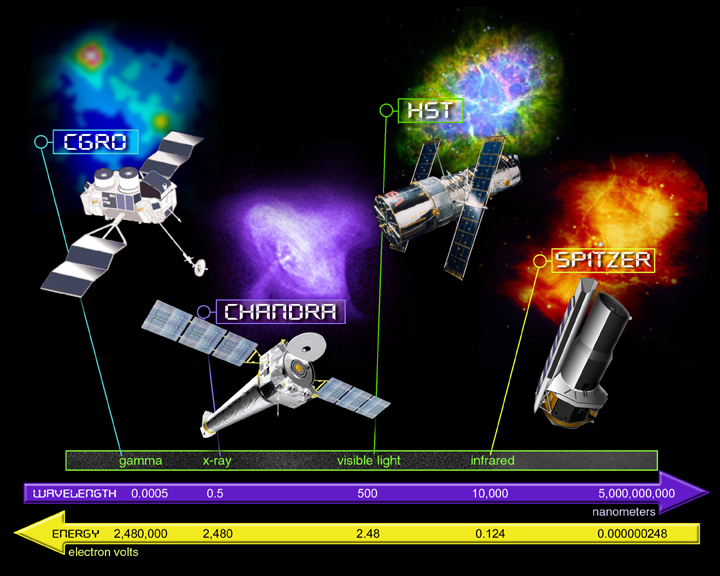
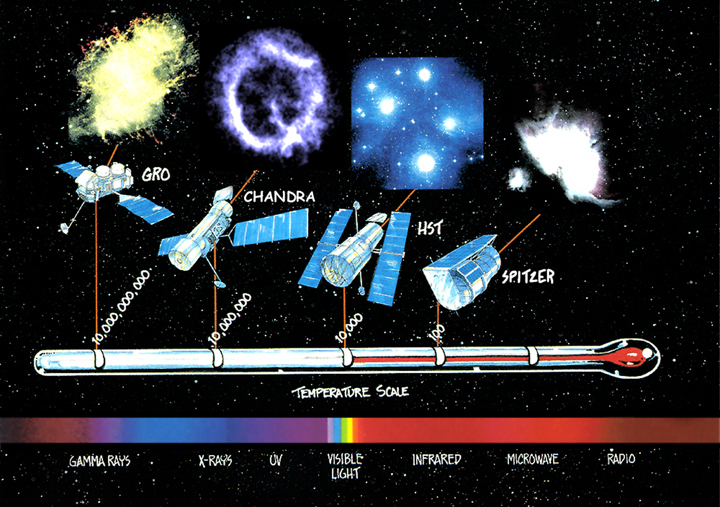
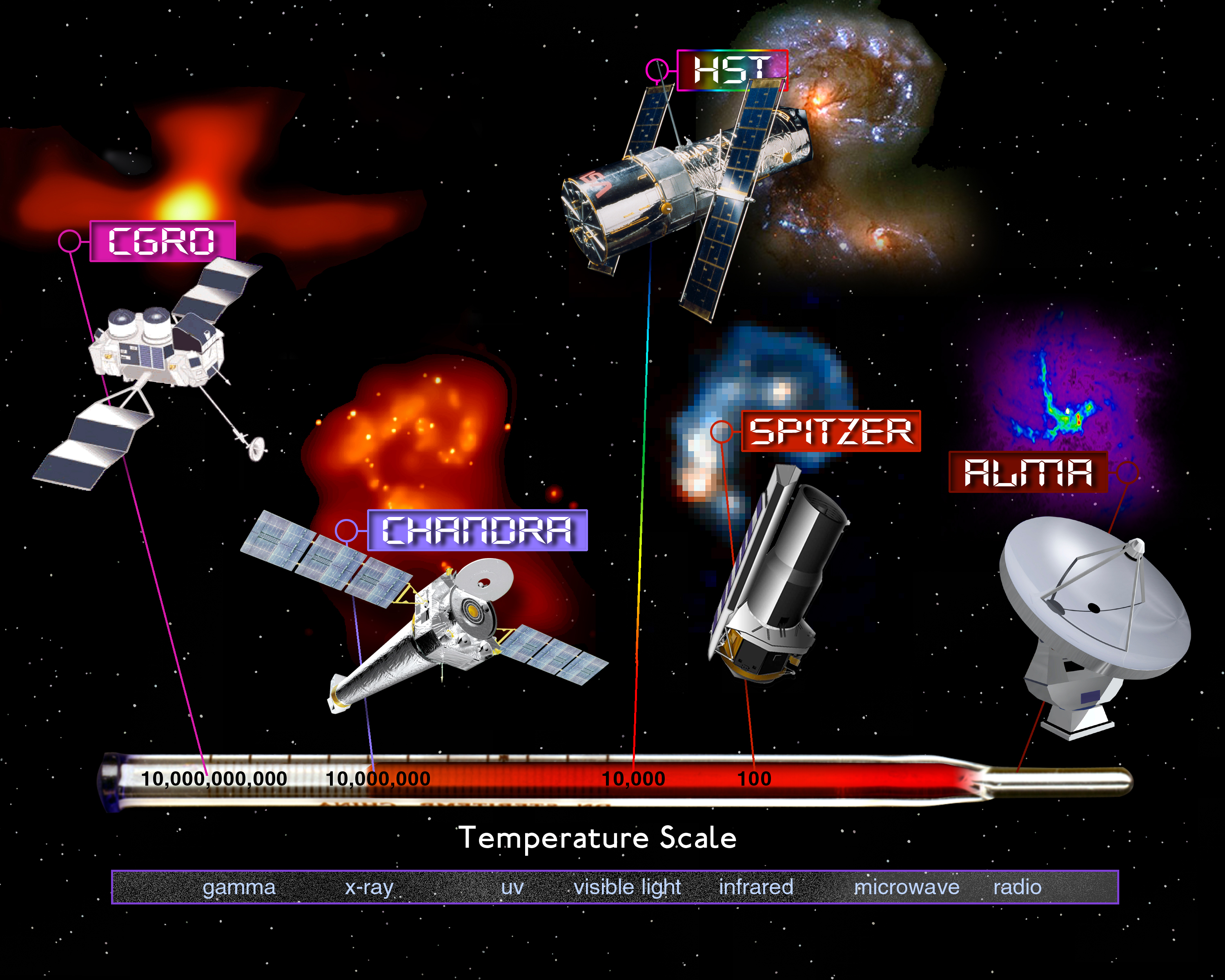
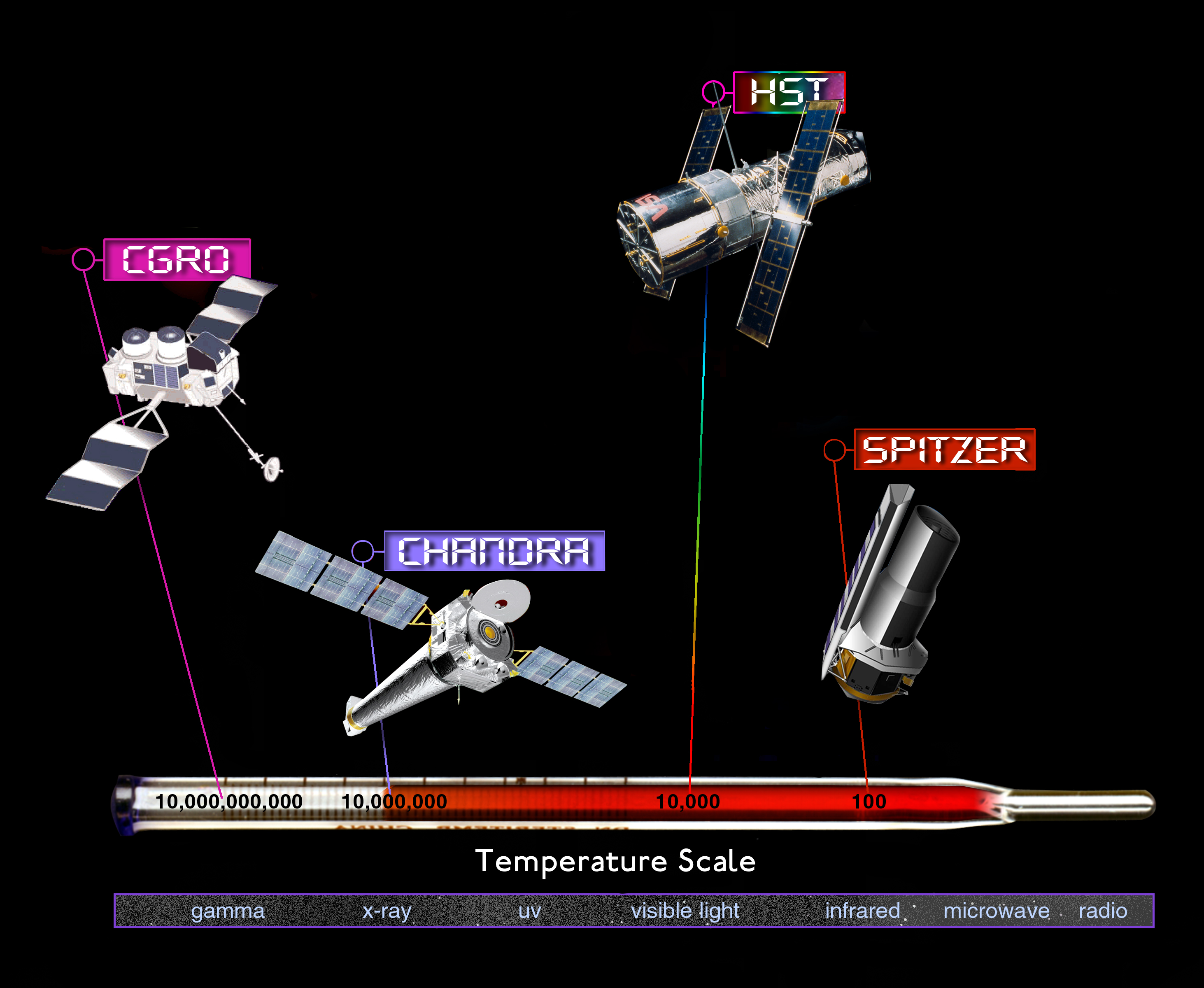
NASA's Great Observatories (CGRO, Chandra, HST and Spitzer) & the electromagnetic thermometer scale. X-rays are associated with high temperatures of about 10 million - 100 million K (Credit: NASA/CXC/M.Weiss)
NASA's Great Observatories (CGRO, Chandra, HST and Spitzer) & the electromagnetic thermometer scale. X-rays are associated with high temperatures of about 10 million - 100 million K (Credit: NASA/CXC/M.Weiss)

3. The Electromagnetic Spectrum
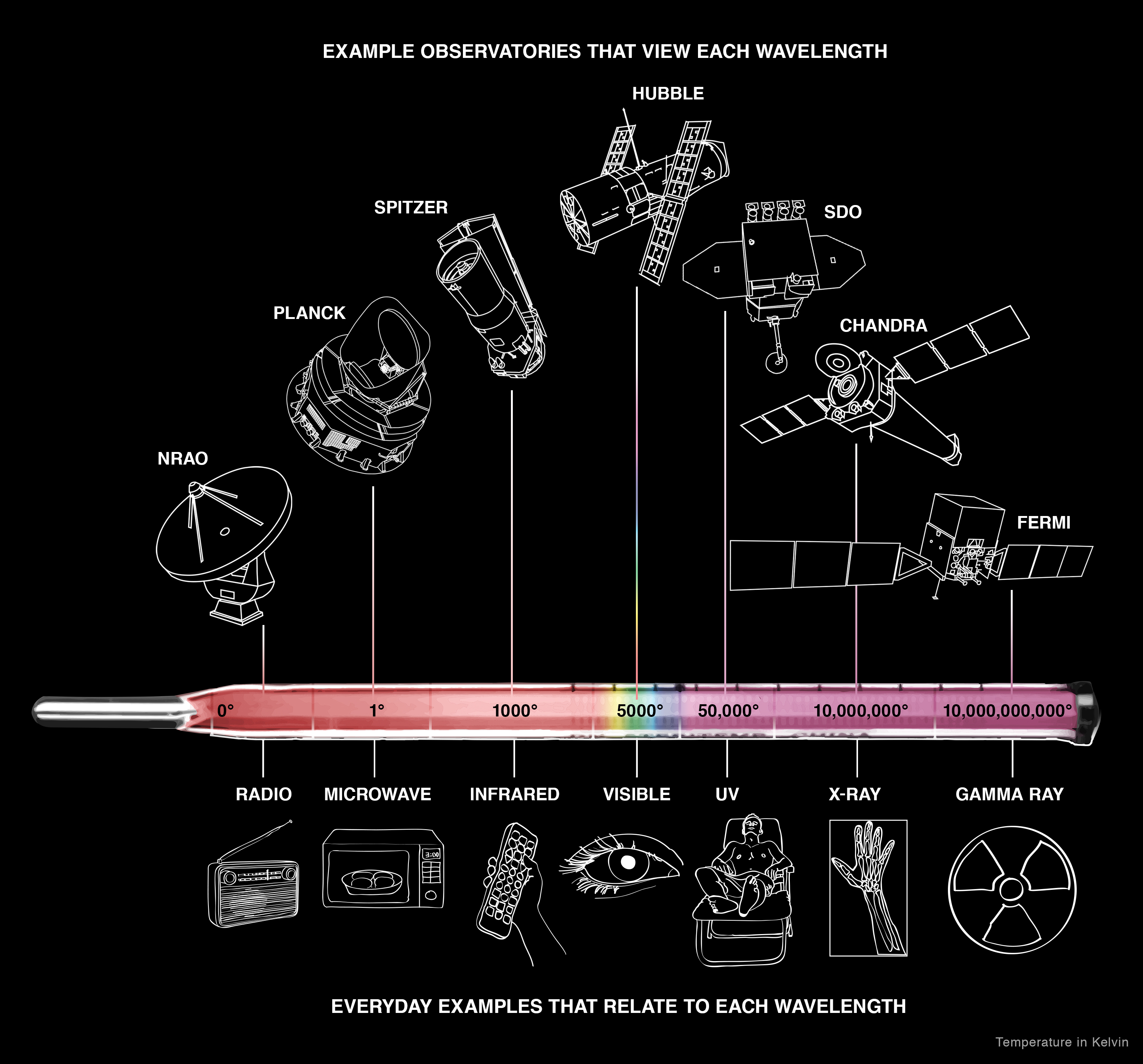
Electromagnetic thermometer scale. X-rays are typically associated with high temperatures about 10 million - 100 million degrees K. (Credit: NASA/CXC/M.Weiss)
Related Field Guide: X-Rays - Another Form of Light
Electromagnetic thermometer scale. X-rays are typically associated with high temperatures about 10 million - 100 million degrees K. (Credit: NASA/CXC/M.Weiss)
Related Field Guide: X-Rays - Another Form of Light
Download:
4. The Electromagnetic Spectrum
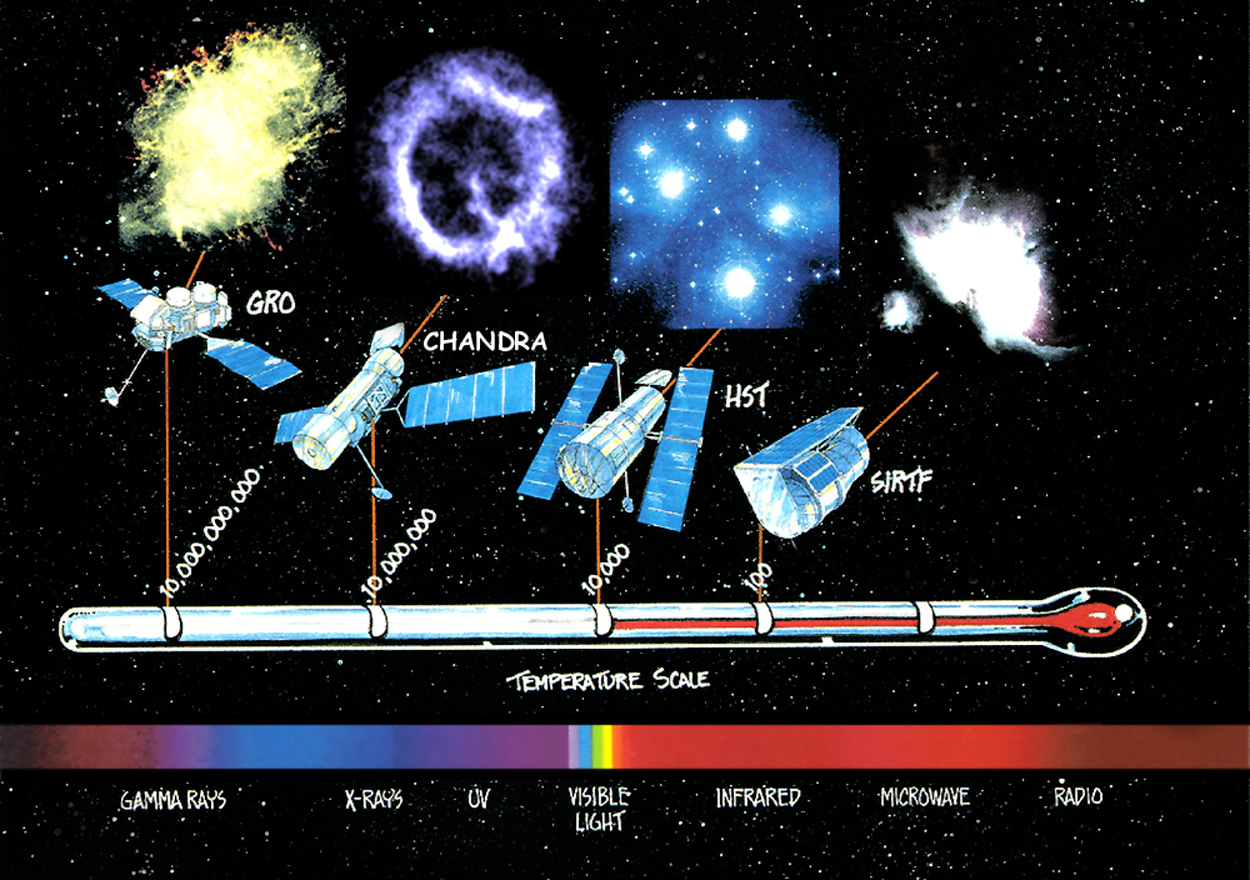
Electromagnetic thermometer scale. X-rays associated with high temperatures about 10 million - 100 million degrees K. (Credit: NASA/CXC)
Related Field Guide: X-Rays - Another Form of Light
Electromagnetic thermometer scale. X-rays associated with high temperatures about 10 million - 100 million degrees K. (Credit: NASA/CXC)
Related Field Guide: X-Rays - Another Form of Light
5. The Electromagnetic Spectrum
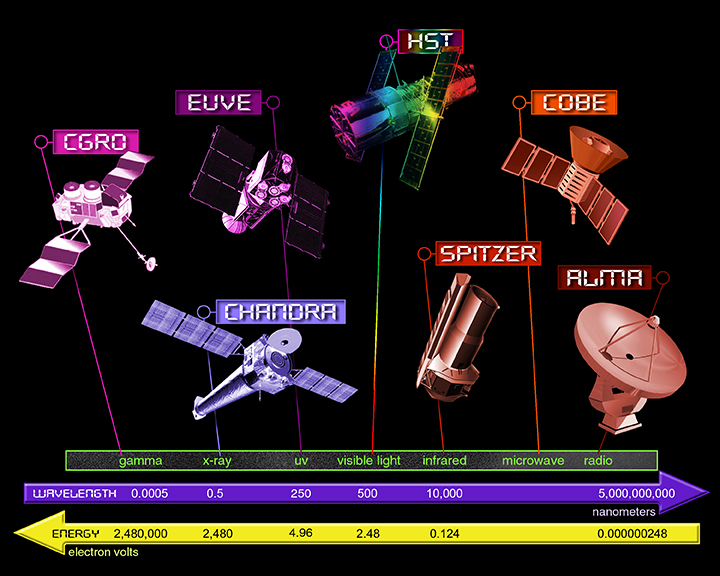
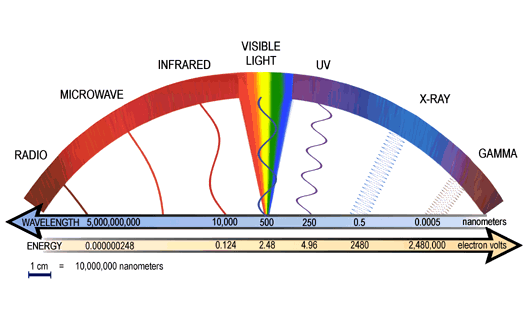
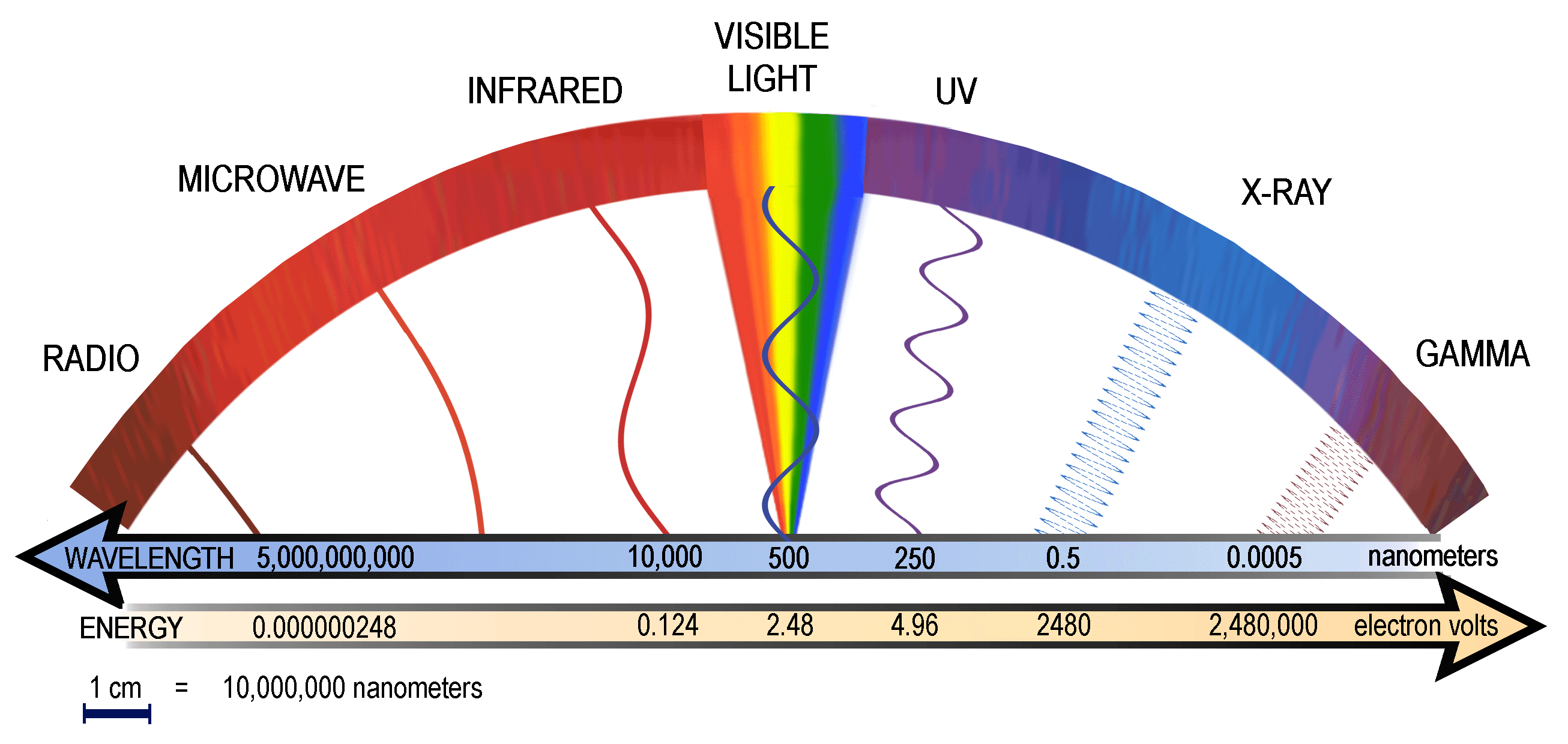
Wavelengths and energies from gamma rays to radio. Telescopes include CGRO, Chandra, COBE, HST, Spitzer, EUVE & ALMA. (Credit: NASA/CXC/M.Weiss)
Wavelengths and energies from gamma rays to radio. Telescopes include CGRO, Chandra, COBE, HST, Spitzer, EUVE & ALMA. (Credit: NASA/CXC/M.Weiss)
Download:
6. The Electromagnetic Spectrum
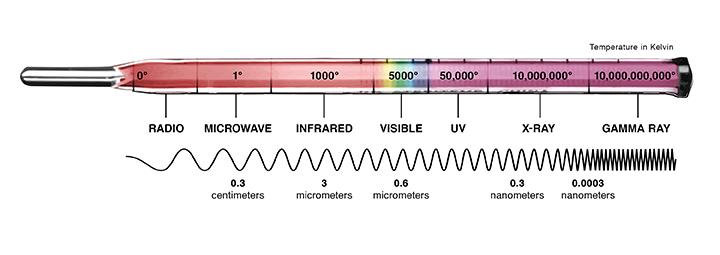
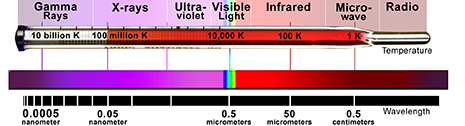
The wavelength of radiation produced by an object is usually related to its temperature. More Information (Illustration: NASA/CXC/M.Weiss)
The wavelength of radiation produced by an object is usually related to its temperature. More Information (Illustration: NASA/CXC/M.Weiss)
Download:
7. The Electromagnetic Spectrum
The wavelength of radiation produced by an object is usually related to its temperature. More Information (Credit: NASA/CXC)
The wavelength of radiation produced by an object is usually related to its temperature. More Information (Credit: NASA/CXC)
Download:

8. The Electromagnetic Spectrum.
Includes wavelengths and energies from radio to gamma rays. (Credit: NASA/CXC/S. Lee)
Includes wavelengths and energies from radio to gamma rays. (Credit: NASA/CXC/S. Lee)



9. Baseball Field
Imagine if you could see only a tiny sliver of a baseball field. You would never be able to figure out the rules of the game. In the same way, we need x-ray, gamma-ray, ultraviolet, infrared and radio telescopes to cover the full range of wavelengths to get an accurate picture of what is happening in the universe.
(Credit: NASA/CXC/S.Wolk)
Imagine if you could see only a tiny sliver of a baseball field. You would never be able to figure out the rules of the game. In the same way, we need x-ray, gamma-ray, ultraviolet, infrared and radio telescopes to cover the full range of wavelengths to get an accurate picture of what is happening in the universe.
(Credit: NASA/CXC/S.Wolk)








Revised: September 19, 2014