

CXC Home | Search | Help | Image Use Policy | Latest Images | Privacy | Accessibility | Glossary | Q&A
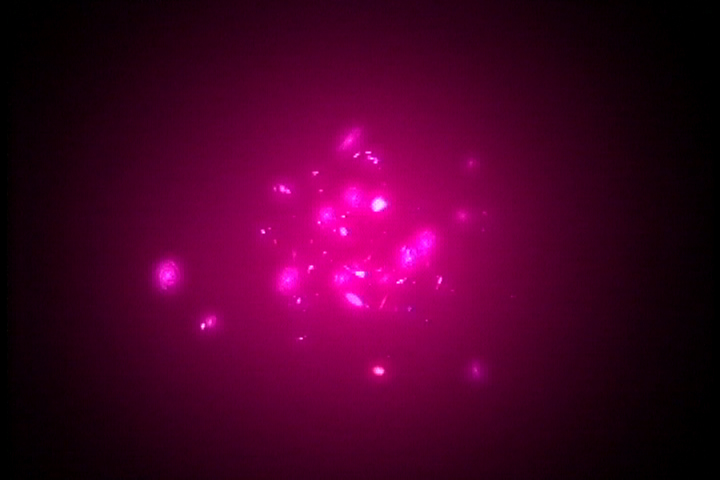
Dark matter is a term used to describe the mass in galaxies and clusters of galaxies. The existence of dark matter is inferred from its gravitational effects, but it has not been detected by electromagnetic radiation.
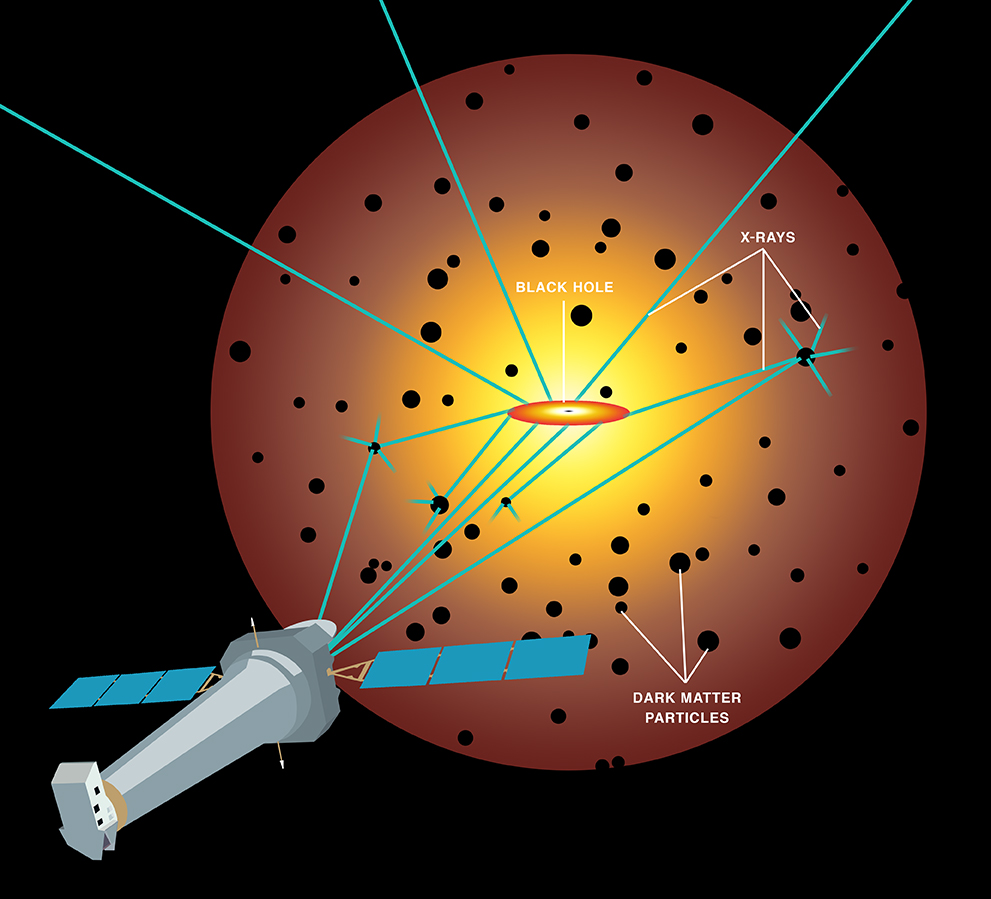 Labeled
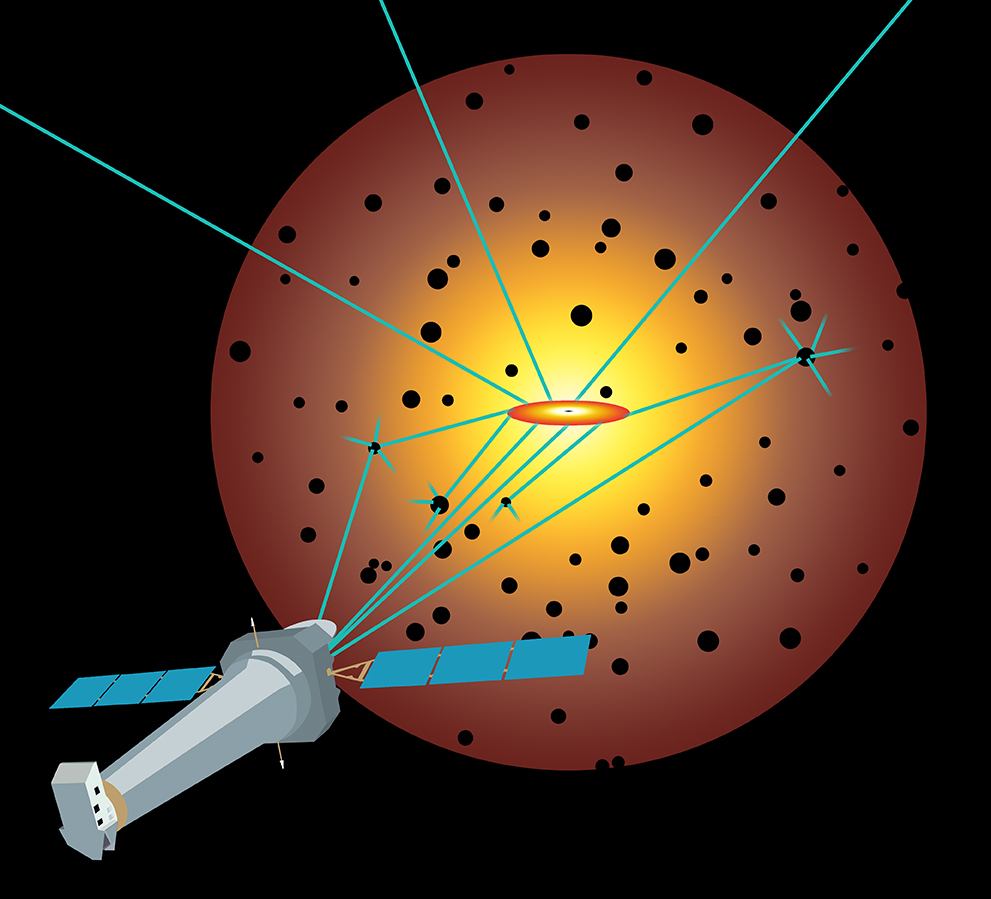 Not Labeled
1. Perseus Cluster Schematic
The latest work shows that absorption of X-rays at an energy of 3.5 keV is detected when observing the region surrounding the supermassive black hole at the center of Perseus. This suggests that dark matter particles in the cluster are both absorbing and emitting X-rays. If the new model turns out to be correct, it could provide a path for scientists to one day identify the true nature of dark matter. For next steps, astronomers will need further observations of the Perseus cluster and others like it with current X-ray telescopes and those being planned for the next decade and beyond. (Credit: NASA/CXC/M. Weiss)
Related Photo Album
The latest work shows that absorption of X-rays at an energy of 3.5 keV is detected when observing the region surrounding the supermassive black hole at the center of Perseus. This suggests that dark matter particles in the cluster are both absorbing and emitting X-rays. If the new model turns out to be correct, it could provide a path for scientists to one day identify the true nature of dark matter. For next steps, astronomers will need further observations of the Perseus cluster and others like it with current X-ray telescopes and those being planned for the next decade and beyond. (Credit: NASA/CXC/M. Weiss)
Related Photo Album
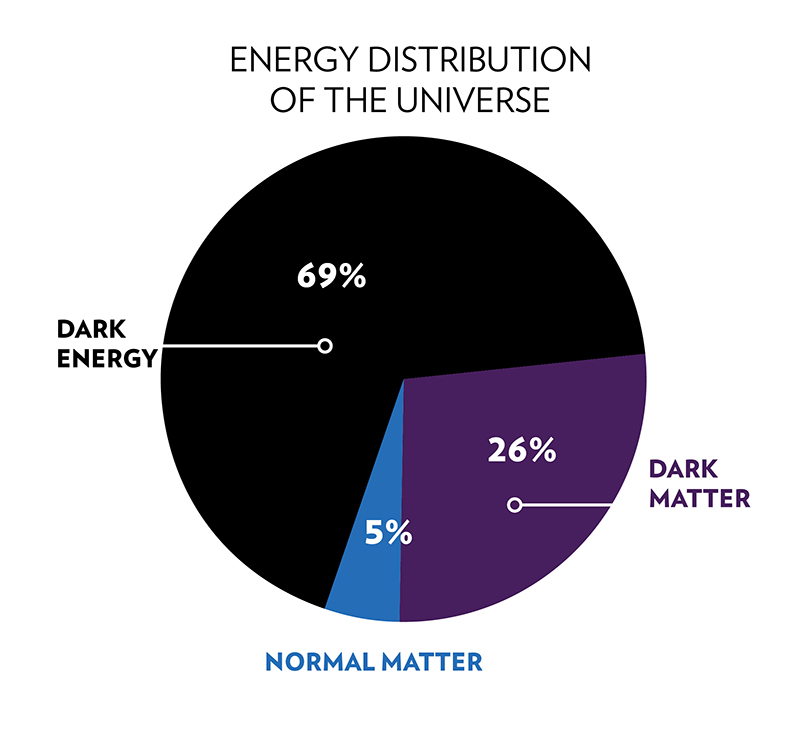
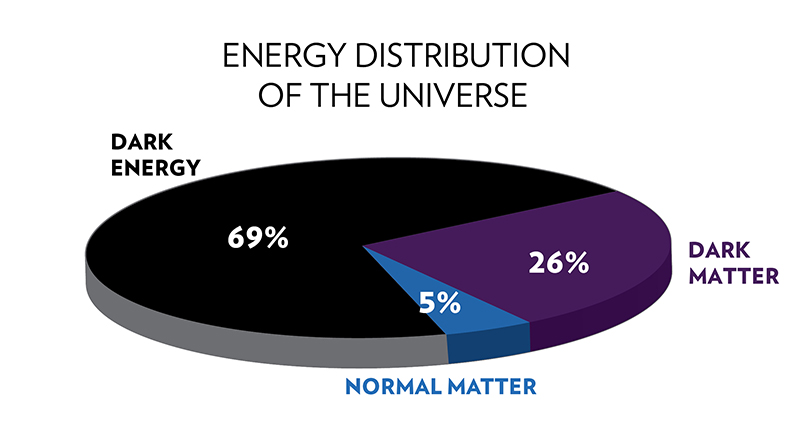
2. What the Universe is Made of
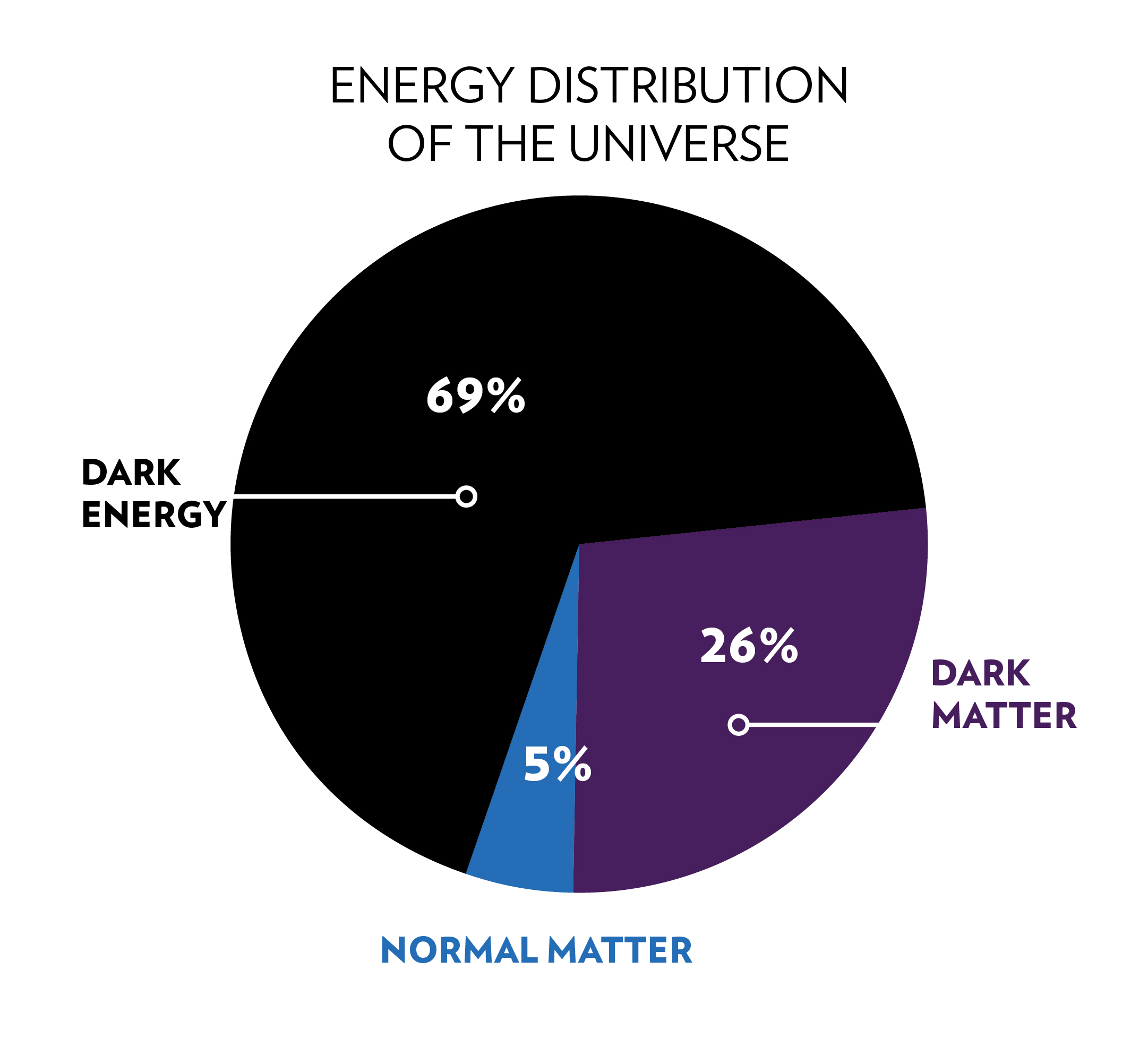
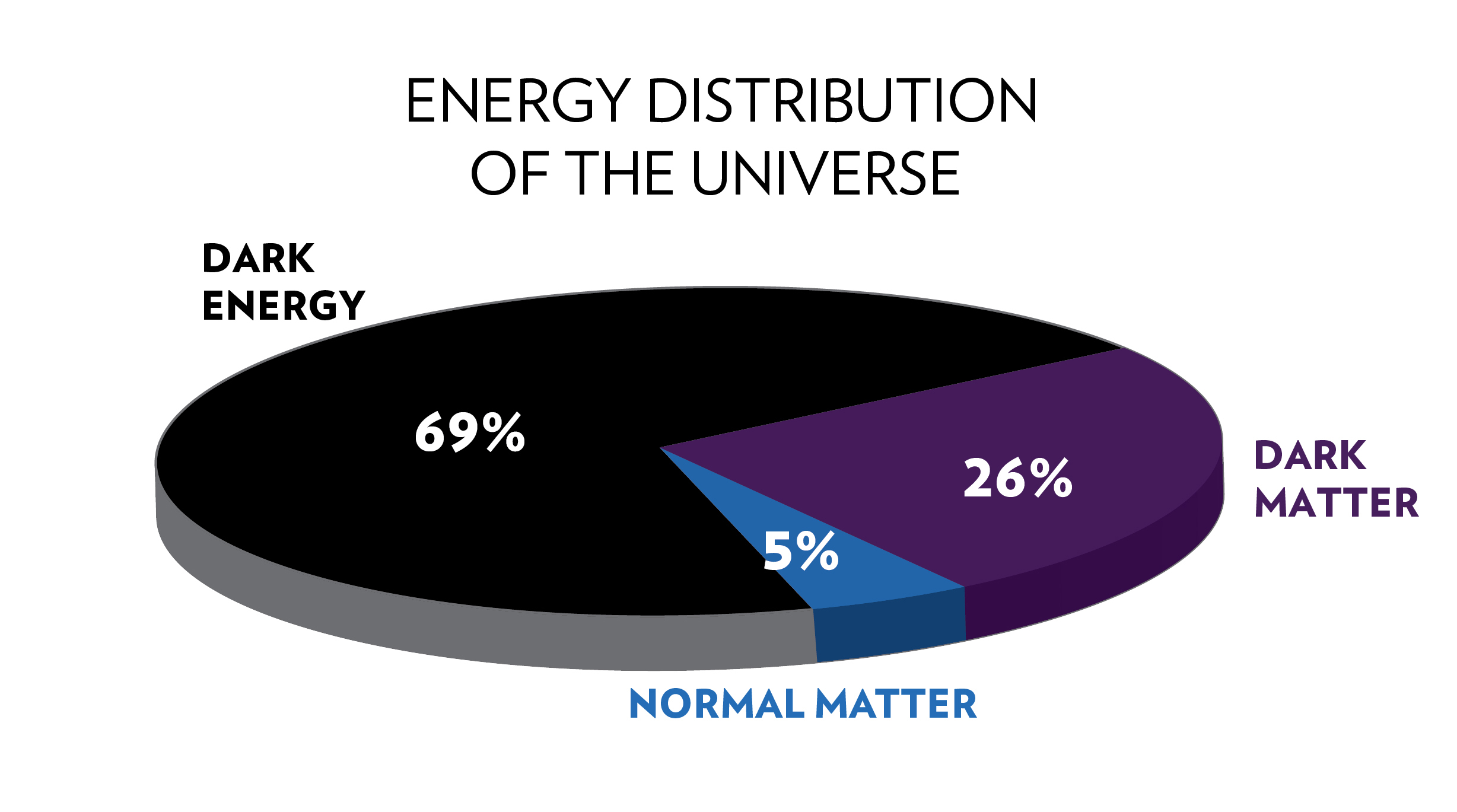
Most of the Universe is dark. Normal matter, the protons, neutrons and electrons that make up the stars, interstellar and intergalactic gas, planets, and us, represent only a small fraction of the mass and energy of the Universe, about 5% by weight. According to recent (2017) estimates, dark matter, which is detected indirectly by its gravitational influence on nearby matter, occupies 26%, while dark energy, a mysterious force thought to be responsible for accelerating the expansion of the Universe, accounts for 69%. Only the normal matter can be directly detected with telescopes, and about 85% of this is hot, intergalactic gas, as detected in Chandra observations of galaxy clusters. (Credit: NASA/CXC/K.Divona)
Related Field Guide
Most of the Universe is dark. Normal matter, the protons, neutrons and electrons that make up the stars, interstellar and intergalactic gas, planets, and us, represent only a small fraction of the mass and energy of the Universe, about 5% by weight. According to recent (2017) estimates, dark matter, which is detected indirectly by its gravitational influence on nearby matter, occupies 26%, while dark energy, a mysterious force thought to be responsible for accelerating the expansion of the Universe, accounts for 69%. Only the normal matter can be directly detected with telescopes, and about 85% of this is hot, intergalactic gas, as detected in Chandra observations of galaxy clusters. (Credit: NASA/CXC/K.Divona)
Related Field Guide
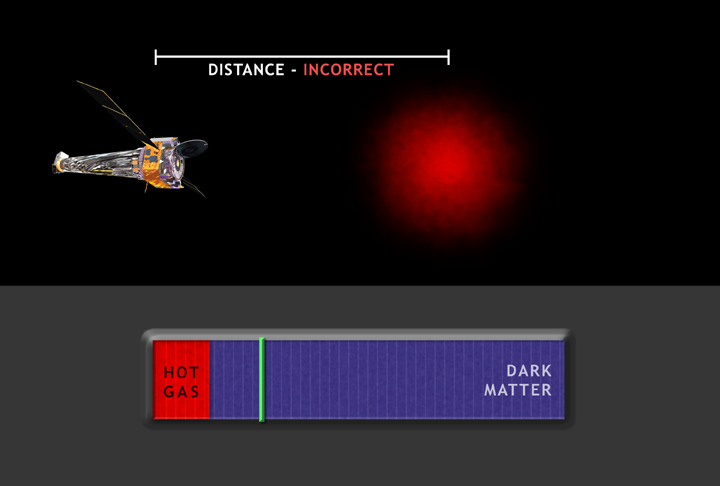
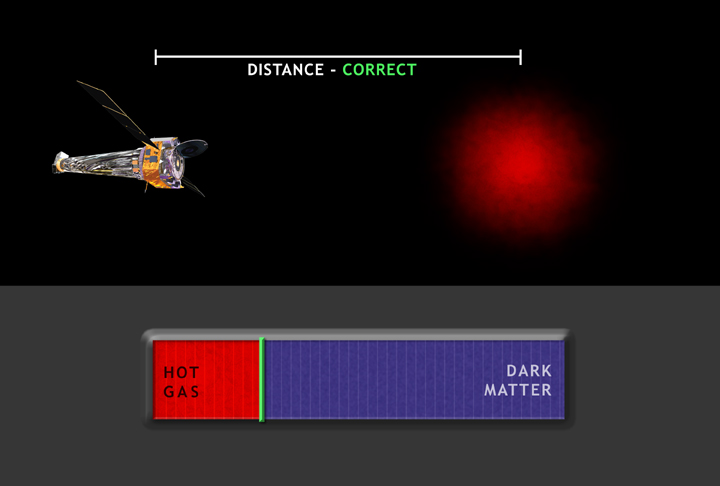
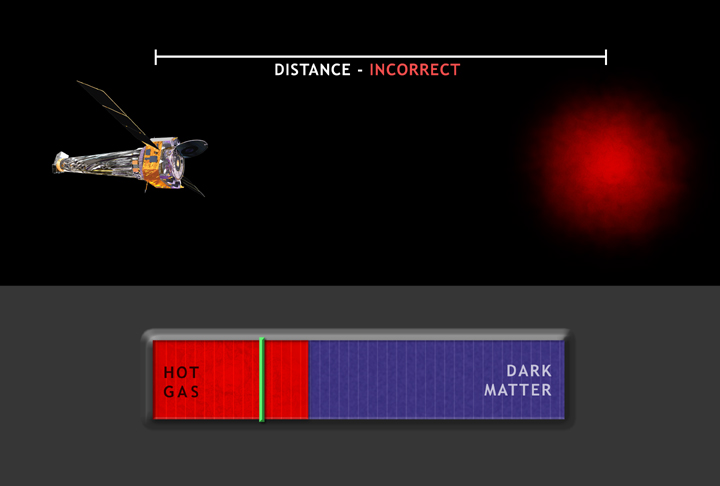
3. X-ray Distance Measurement Technique
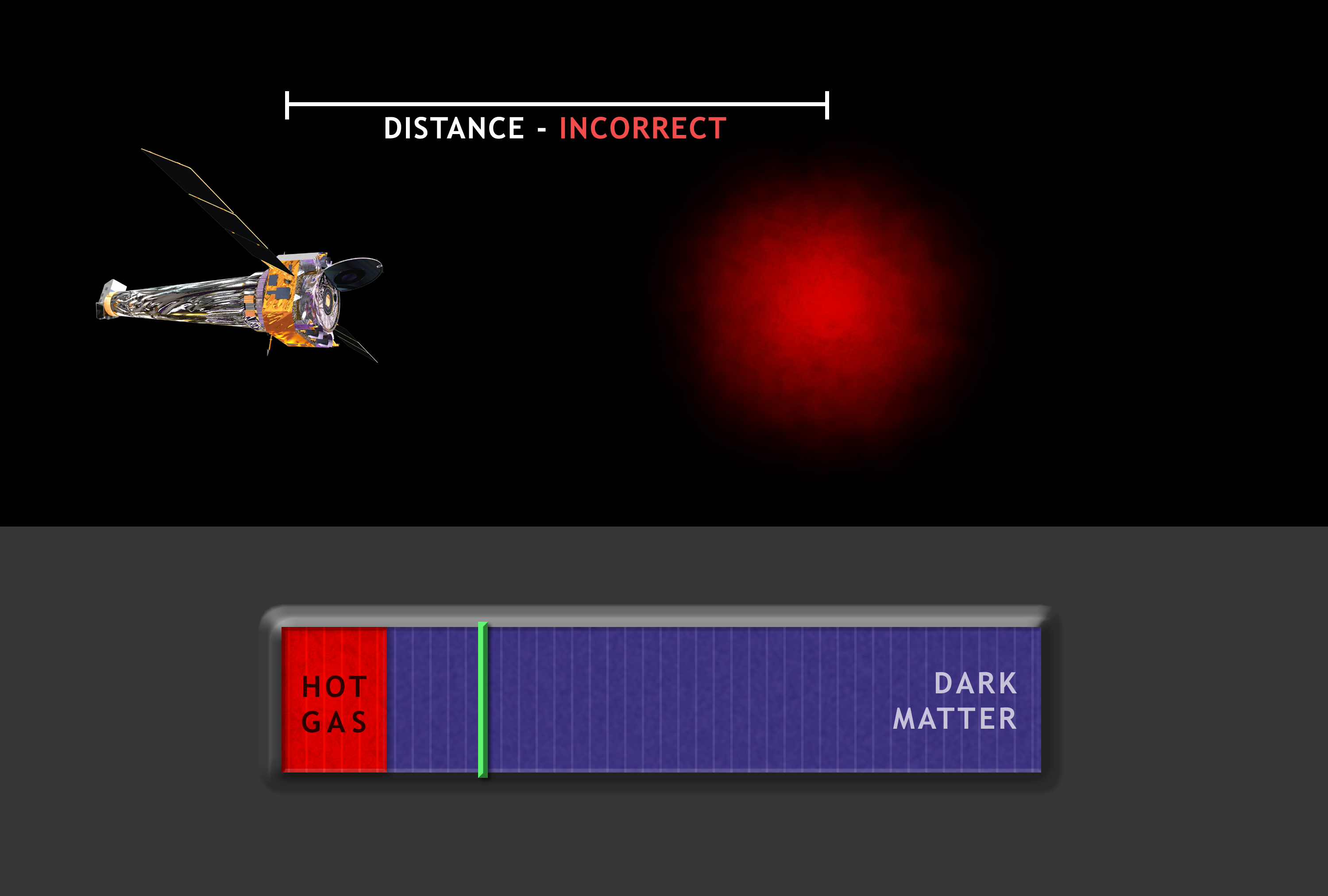
This set of illustrations shows the technique used to make distance measurements to galaxy clusters. Chandra's observations are used to determine the ratio of the mass of the hot gas and the mass of the dark matter in different galaxy clusters. This "gas fraction" depends on the assumed distances to the clusters, which in turn depends on the amount of matter and dark energy in the Universe. Because galaxy clusters are extremely large, the gas fraction should be the same for every cluster, and so the distances to the clusters are adjusted to satisfy this requirement. Each of these 3 illustration shows Chandra in the top left, observing a galaxy cluster, shown in the top right (in red). The relative amounts of hot gas (in red) and dark matter (in blue) are shown at the bottom, with the green marker giving the expected, correct amount. The first illustration shows a gas fraction that is too small, implying that the distance to the cluster is too small, the second shows the correct gas fraction and distance, and the third illustration shows a gas fraction and distance that are too large. (Credit: NASA/CXC/M.Weiss)
View X-ray Distance Measurement Technique animation
This set of illustrations shows the technique used to make distance measurements to galaxy clusters. Chandra's observations are used to determine the ratio of the mass of the hot gas and the mass of the dark matter in different galaxy clusters. This "gas fraction" depends on the assumed distances to the clusters, which in turn depends on the amount of matter and dark energy in the Universe. Because galaxy clusters are extremely large, the gas fraction should be the same for every cluster, and so the distances to the clusters are adjusted to satisfy this requirement. Each of these 3 illustration shows Chandra in the top left, observing a galaxy cluster, shown in the top right (in red). The relative amounts of hot gas (in red) and dark matter (in blue) are shown at the bottom, with the green marker giving the expected, correct amount. The first illustration shows a gas fraction that is too small, implying that the distance to the cluster is too small, the second shows the correct gas fraction and distance, and the third illustration shows a gas fraction and distance that are too large. (Credit: NASA/CXC/M.Weiss)
View X-ray Distance Measurement Technique animation

4. Three Possible Futures for the Universe
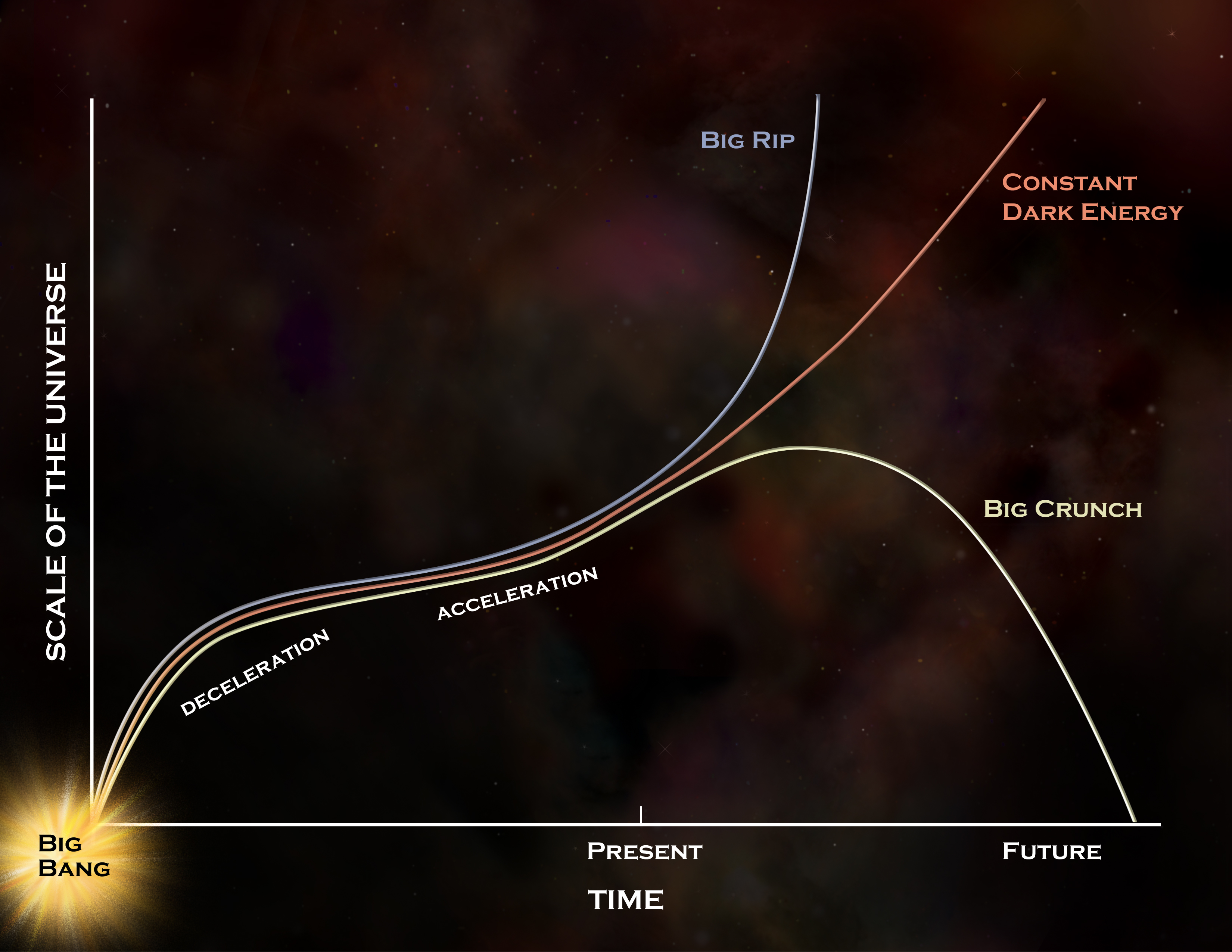
This illustration shows three possible futures for the Universe, depending on the behavior of dark energy, by showing how the scale of the Universe may change with time. If dark energy is constant, as the new Chandra results suggest, the expansion should continue accelerating forever. If dark energy increases, the acceleration may happen so quickly that galaxies, stars, and eventually atoms will be torn apart, in the so-called Big Rip. Dark energy may also lead to a recollapse of the Universe, in the Big Crunch. The illustration also shows the early decelerating expansion of the Universe, followed by the accelerating phase that started about 6 billion years ago. (Credit: NASA/CXC/M.Weiss)
Photo Album: Galaxy Clusters and Dark Energy
This illustration shows three possible futures for the Universe, depending on the behavior of dark energy, by showing how the scale of the Universe may change with time. If dark energy is constant, as the new Chandra results suggest, the expansion should continue accelerating forever. If dark energy increases, the acceleration may happen so quickly that galaxies, stars, and eventually atoms will be torn apart, in the so-called Big Rip. Dark energy may also lead to a recollapse of the Universe, in the Big Crunch. The illustration also shows the early decelerating expansion of the Universe, followed by the accelerating phase that started about 6 billion years ago. (Credit: NASA/CXC/M.Weiss)
Photo Album: Galaxy Clusters and Dark Energy

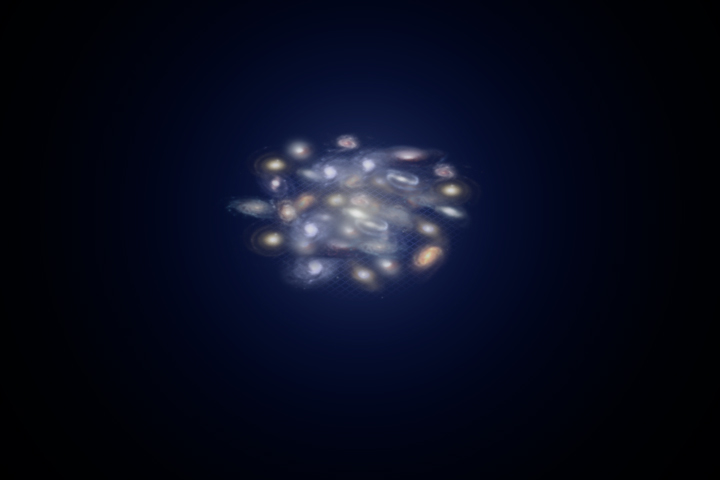


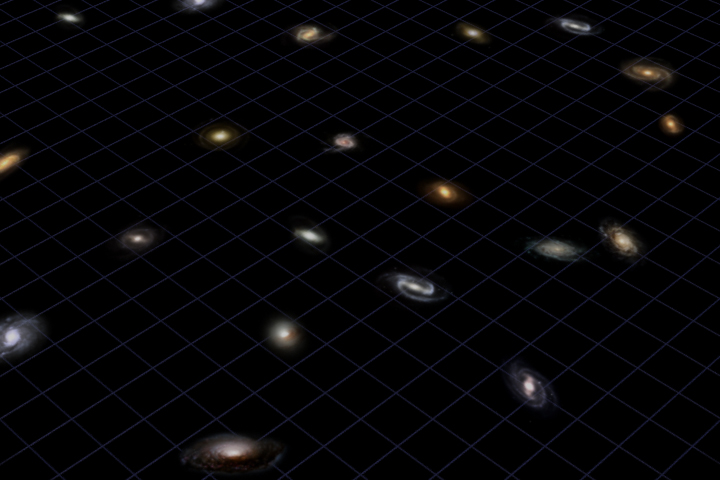
5. Animation Stills: Effects of Dark Energy
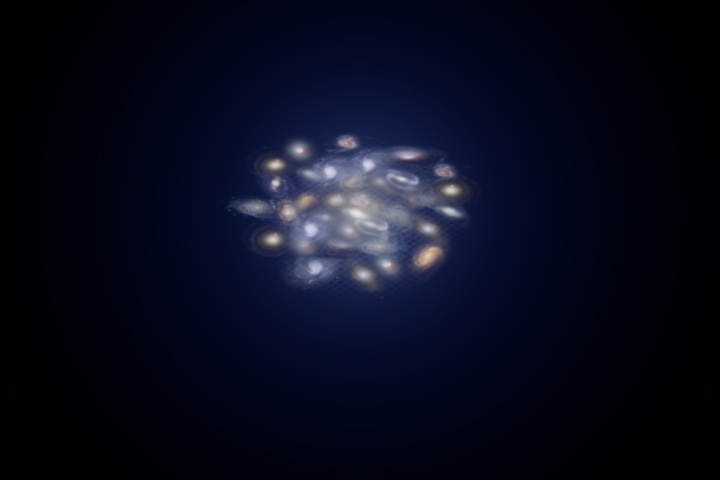
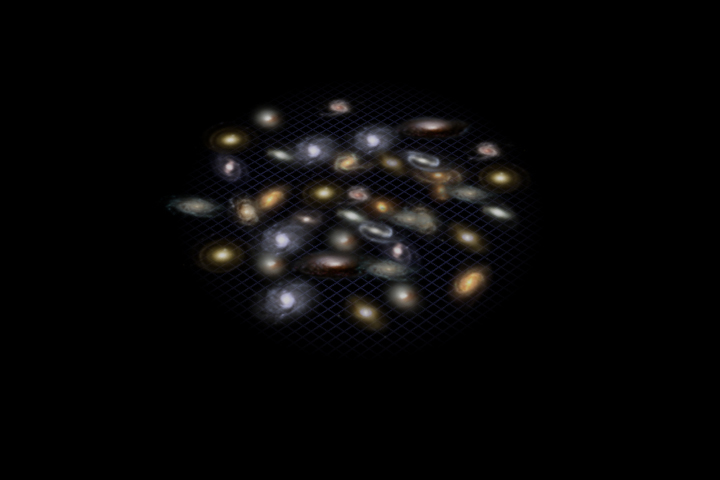
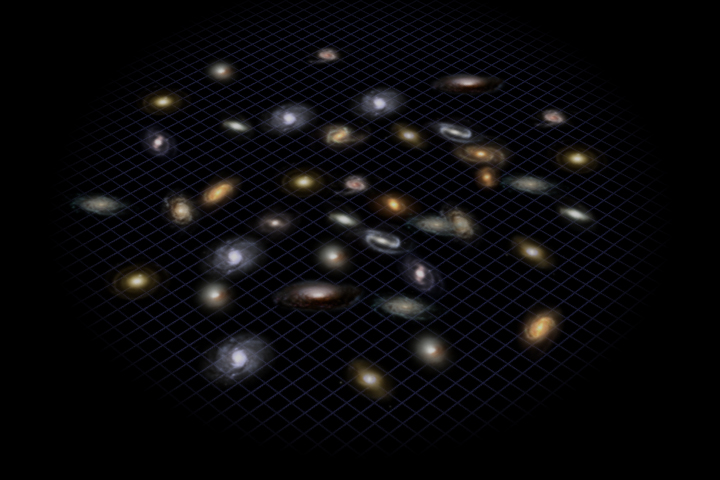
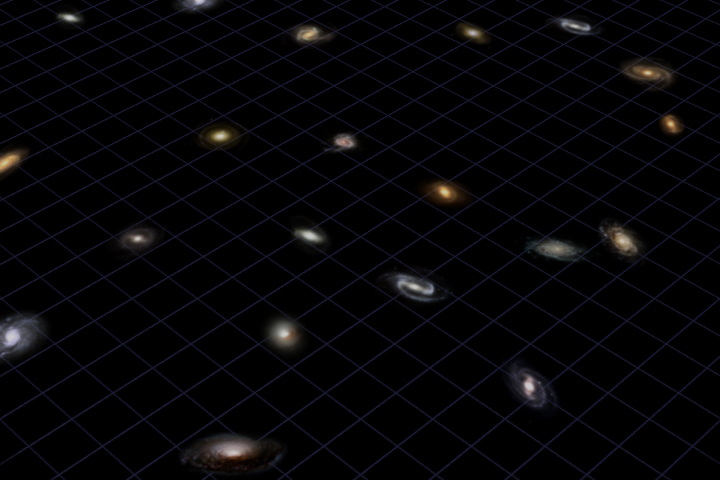
These still images show the expansion history of the Universe by modeling the Universe as a two-dimensional grid of galaxies. The Big Bang, shown as a flash of light, is immediately followed by rapid expansion of the Universe. This expansion then slows down because of the gravitational attraction of the matter in the Universe. As the Universe expands, the repulsive effects of dark energy become important, causing the expansion to accelerate. (Credit: NASA/STScI/G. Bacon)
View Animation of the Effects of Dark Energy
These still images show the expansion history of the Universe by modeling the Universe as a two-dimensional grid of galaxies. The Big Bang, shown as a flash of light, is immediately followed by rapid expansion of the Universe. This expansion then slows down because of the gravitational attraction of the matter in the Universe. As the Universe expands, the repulsive effects of dark energy become important, causing the expansion to accelerate. (Credit: NASA/STScI/G. Bacon)
View Animation of the Effects of Dark Energy
Download:

6. Dark Matter
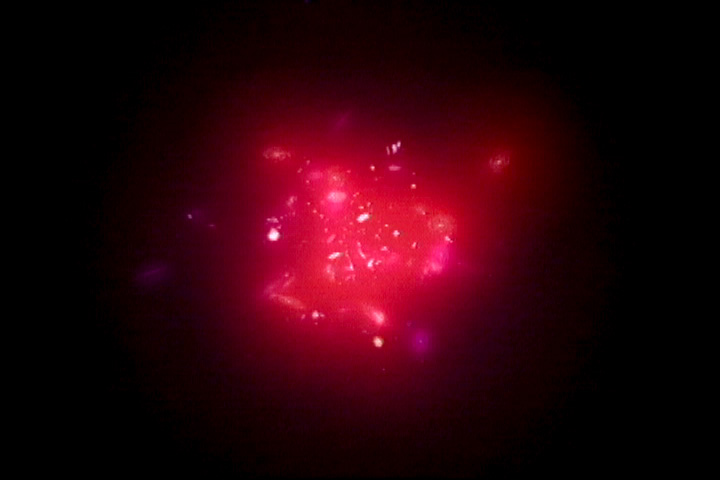
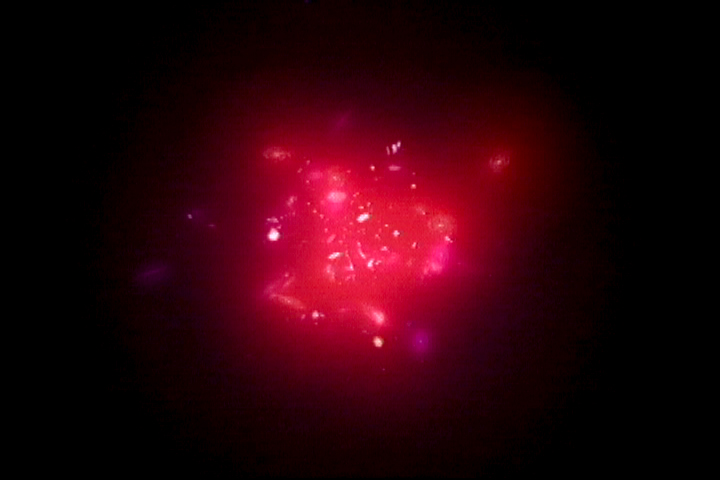
X-ray telescopes have discovered vast clouds of multimillion degree gas in clusters of galaxies. An X-ray image has been superimposed on an optical picture of a cluster of galaxies. This image was taken by ROSAT and shows hot gas highlighted in false red color. (Illustration: Richard Mushotzky(GSFC/NASA),ROSAT,ESA,NASA)
Related Field Guide
X-ray telescopes have discovered vast clouds of multimillion degree gas in clusters of galaxies. An X-ray image has been superimposed on an optical picture of a cluster of galaxies. This image was taken by ROSAT and shows hot gas highlighted in false red color. (Illustration: Richard Mushotzky(GSFC/NASA),ROSAT,ESA,NASA)
Related Field Guide
Download:
7. Still Image from Dark Matter Animation
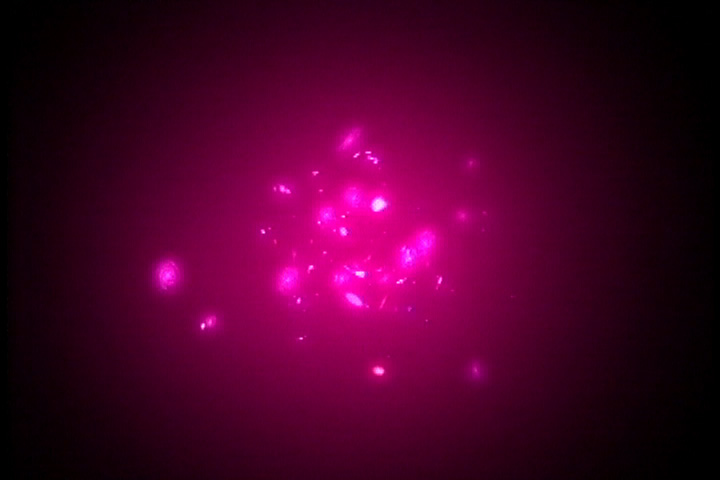
Clues from Chandra have enabled scientists to constrain the size of dark matter particles in galaxy clusters. Dark matter is the invisible and unknown material that constitutes about 80% of the matter in the Universe. (Credit: NASA/SAO/CXC)
Related Field Guide
Animations & Video: Dark Matter
Clues from Chandra have enabled scientists to constrain the size of dark matter particles in galaxy clusters. Dark matter is the invisible and unknown material that constitutes about 80% of the matter in the Universe. (Credit: NASA/SAO/CXC)
Related Field Guide
Animations & Video: Dark Matter
Download:





Revised: January 16, 2018