

CXC Home | Search | Help | Image Use Policy | Latest Images | Privacy | Accessibility | Glossary | Q&A
1. X-ray Distance Measurement Technique
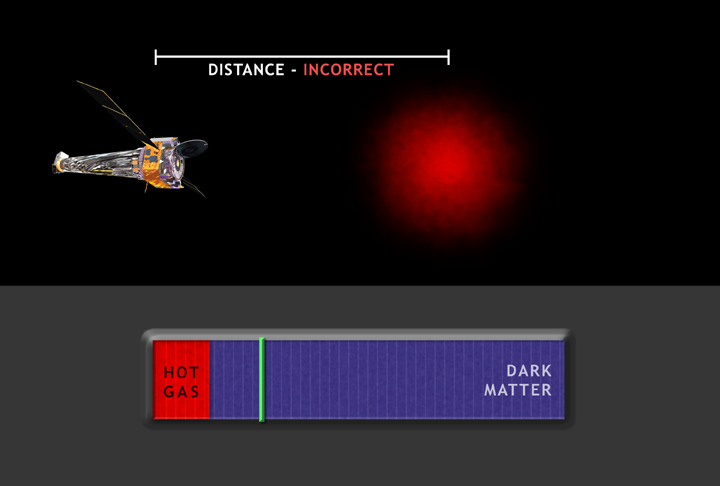
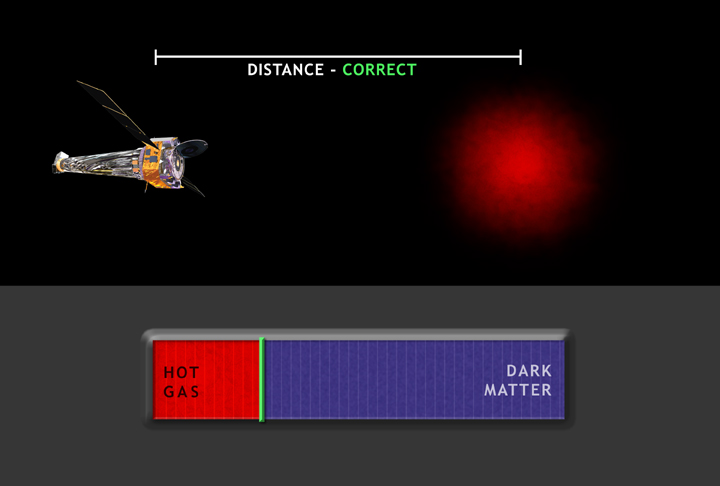
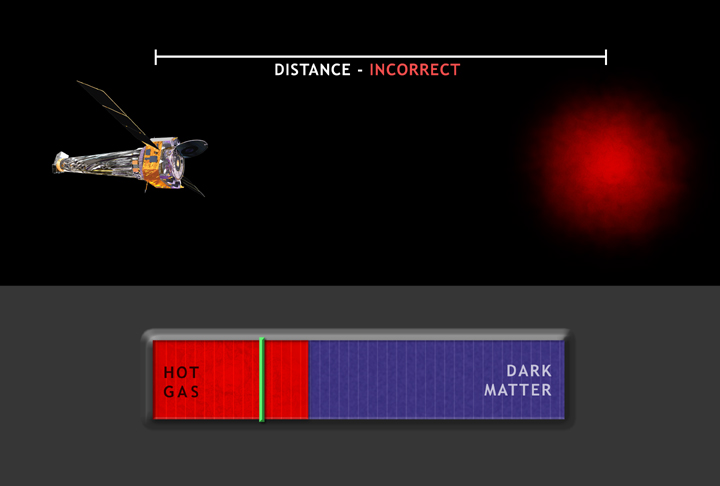
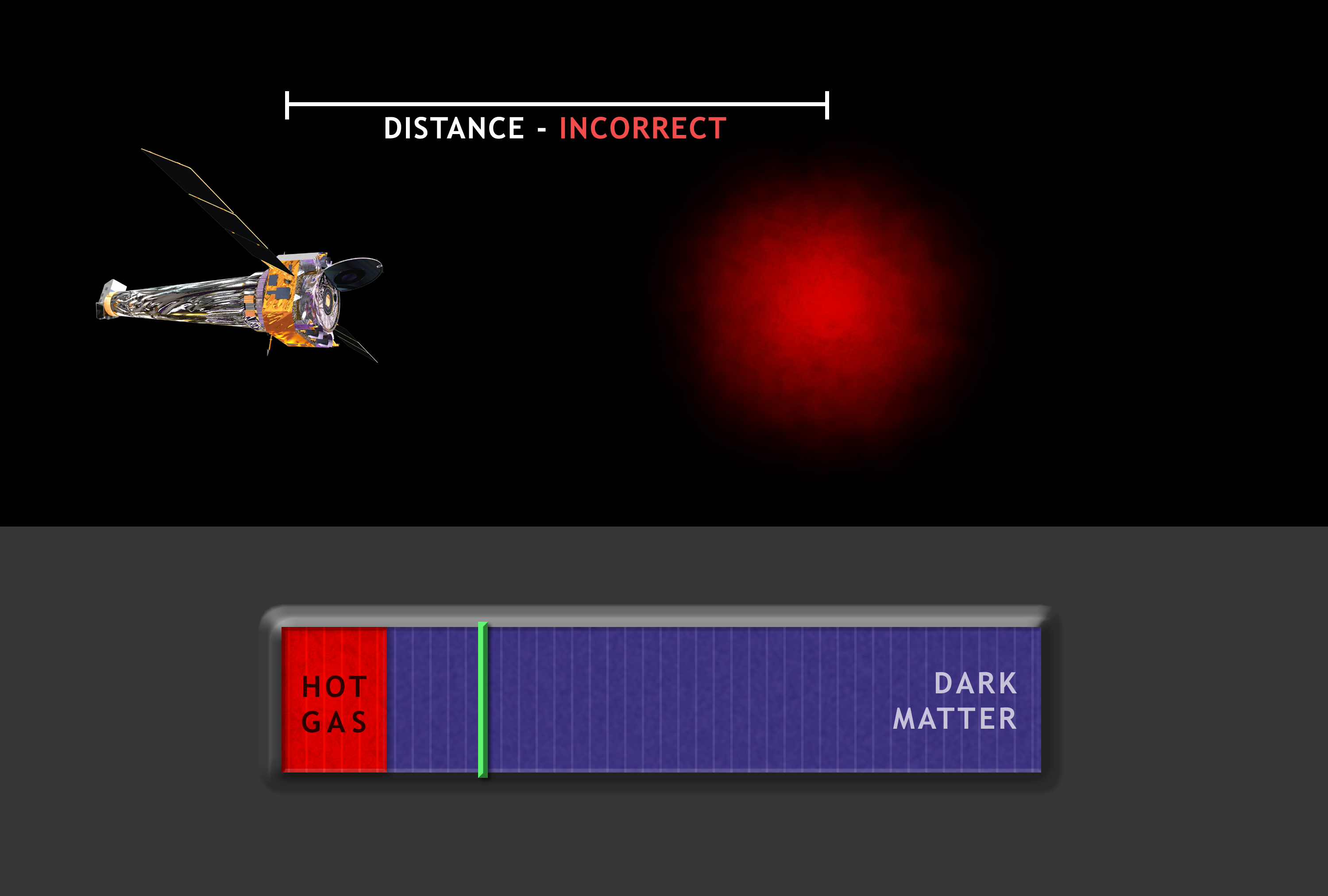
This set of illustrations shows the technique used to make distance measurements to galaxy clusters. Chandra's observations are used to determine the ratio of the mass of the hot gas and the mass of the dark matter in different galaxy clusters. This "gas fraction" depends on the assumed distances to the clusters, which in turn depends on the amount of matter and dark energy in the Universe. Because galaxy clusters are extremely large, the gas fraction should be the same for every cluster, and so the distances to the clusters are adjusted to satisfy this requirement. Each of these 3 illustration shows Chandra in the top left, observing a galaxy cluster, shown in the top right (in red). The relative amounts of hot gas (in red) and dark matter (in blue) are shown at the bottom, with the green marker giving the expected, correct amount. The first illustration shows a gas fraction that is too small, implying that the distance to the cluster is too small, the second shows the correct gas fraction and distance, and the third illustration shows a gas fraction and distance that are too large. (Illustration: NASA/CXC/M.Weiss)
Related Photo Album
This set of illustrations shows the technique used to make distance measurements to galaxy clusters. Chandra's observations are used to determine the ratio of the mass of the hot gas and the mass of the dark matter in different galaxy clusters. This "gas fraction" depends on the assumed distances to the clusters, which in turn depends on the amount of matter and dark energy in the Universe. Because galaxy clusters are extremely large, the gas fraction should be the same for every cluster, and so the distances to the clusters are adjusted to satisfy this requirement. Each of these 3 illustration shows Chandra in the top left, observing a galaxy cluster, shown in the top right (in red). The relative amounts of hot gas (in red) and dark matter (in blue) are shown at the bottom, with the green marker giving the expected, correct amount. The first illustration shows a gas fraction that is too small, implying that the distance to the cluster is too small, the second shows the correct gas fraction and distance, and the third illustration shows a gas fraction and distance that are too large. (Illustration: NASA/CXC/M.Weiss)
Related Photo Album
2. Animation Stills: Galaxy Cluster
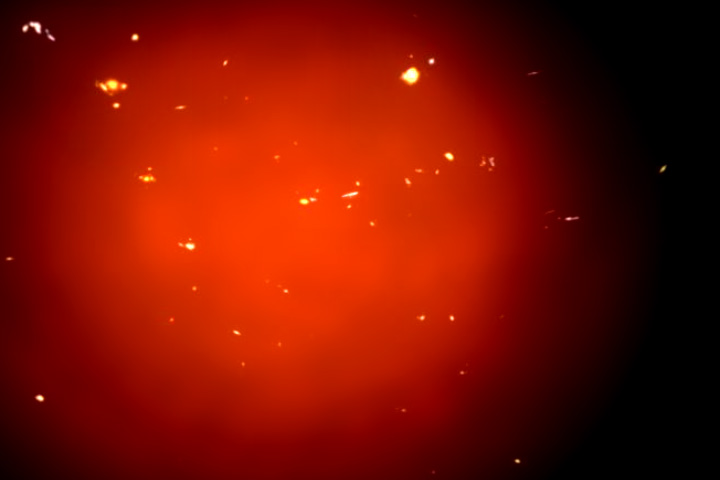
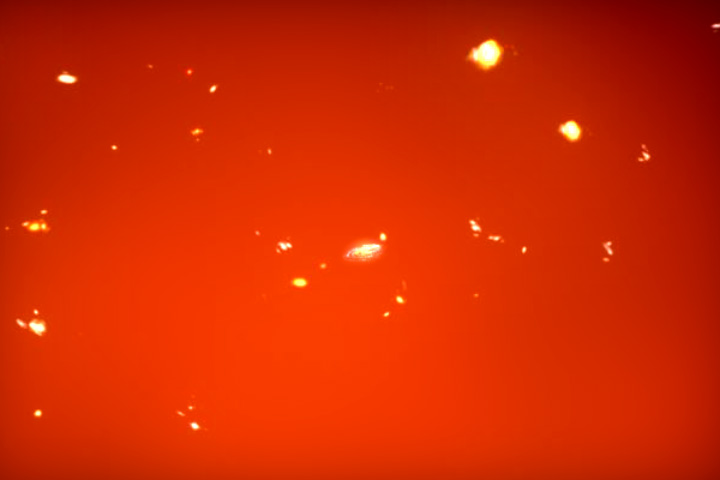
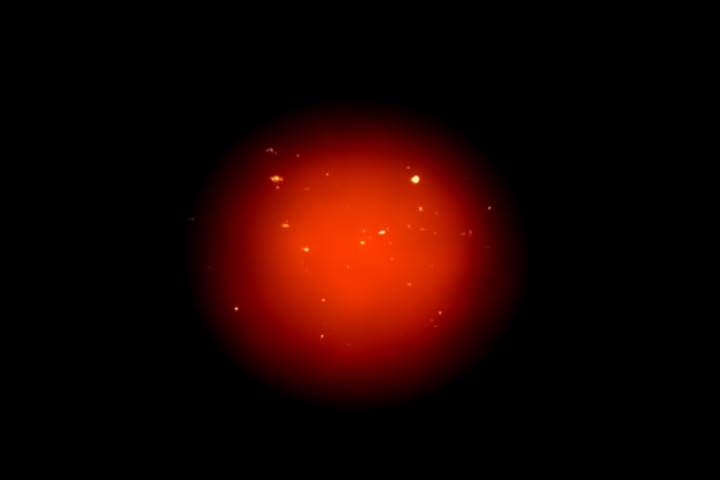
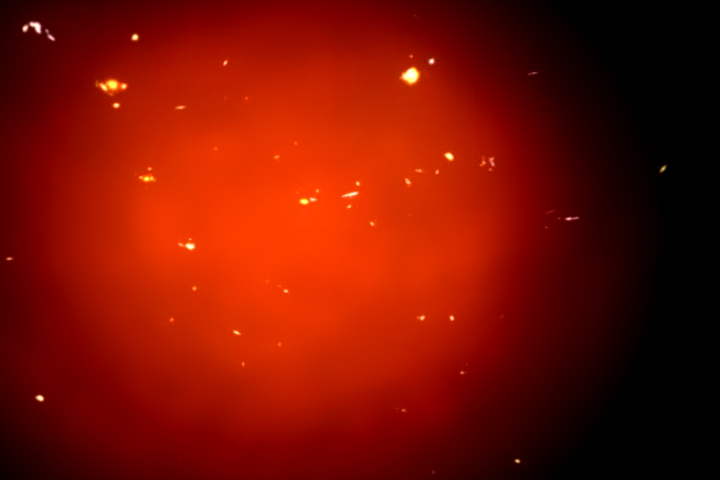
These still images show a galaxy cluster, the largest gravitationally-bound objects in the Universe. Individual galaxies are shown in white and yellow, and the intergalactic gas is shown in red. Galaxy clusters contain as much mass as a million billion suns. The strong gravitational pull of this matter squeezes the gas and heats it to about 100 million degrees, making it only detectable in X-rays. Chandra found direct evidence for cosmic acceleration and dark energy, based on distance measurements to a sample of galaxy clusters. View Galaxy Cluster Animation
(Illustration: NASA/CXC/A.Hobart)
Related Photo Album
These still images show a galaxy cluster, the largest gravitationally-bound objects in the Universe. Individual galaxies are shown in white and yellow, and the intergalactic gas is shown in red. Galaxy clusters contain as much mass as a million billion suns. The strong gravitational pull of this matter squeezes the gas and heats it to about 100 million degrees, making it only detectable in X-rays. Chandra found direct evidence for cosmic acceleration and dark energy, based on distance measurements to a sample of galaxy clusters. View Galaxy Cluster Animation
(Illustration: NASA/CXC/A.Hobart)
Related Photo Album





Revised: September 03, 2008