1. The Solar System in a Whole New Light
QuicktimeMPEG One Star, eight planets, and a myriad of moons, comets, and asteroids. This is the Earth's local neighborhood known as the Solar System. Despite studying this system for centuries, astronomers still yearn to know much more. NASA's Chandra X-ray Observatory is providing new insight and uncovering new mysteries about objects of all sizes and across distances throughout our Solary System.
[Runtime: 1.31]
(Animations: NASA, ESA/Hubble/M. Kornmesser & L.L. Christensen, NASA/GFSC/G. Shirah, J. Tucciarone. Production: NASA/CXC/K.K. Arcand & A. Hobart with thanks to SPL. Music: Move Two)
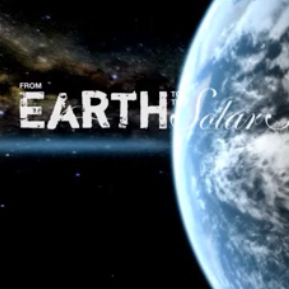
QuicktimeMPEG One Star, eight planets, and a myriad of moons, comets, and asteroids. This is the Earth's local neighborhood known as the Solar System. Despite studying this system for centuries, astronomers still yearn to know much more. NASA's Chandra X-ray Observatory is providing new insight and uncovering new mysteries about objects of all sizes and across distances throughout our Solary System.
[Runtime: 1.31]
(Animations: NASA, ESA/Hubble/M. Kornmesser & L.L. Christensen, NASA/GFSC/G. Shirah, J. Tucciarone. Production: NASA/CXC/K.K. Arcand & A. Hobart with thanks to SPL. Music: Move Two)
2. From Earth to the Solar System Image Collection
QuicktimeMPEG The Solar System is much more than a collection of planets, moons, comets, and asteroids. It is our home in the cosmos. The Solar System's only star, which we call the Sun, plays a role in nearly every aspect of our cosmic neighborhood. The 8 planets, including Earth, all revolve around the Sun. No two planets are alike. There are hundreds of moons in our Solar System, many are intriguing worlds waiting to be explored. Comets are Solar System interlopers, bringing information from the very edge of the Solar System. Our Solar System resides in a spiral arm of the Milky Way Galaxy, where our Sun is one among billions of other stars. The search for evidence of life, past and maybe even present, is the study of astrobiology. From Earth to the Solar System (FETTSS) provides a few snapshots of the wonders contained within this unique system, the likes of which we have yet to discover anywhere else in the Universe. http://www.facebook.com /fettss
[Runtime: 06:32]
(Production: NASA/CXC/SAO/A.Hobart & K.Arcand)
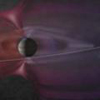
QuicktimeMPEG The Solar System is much more than a collection of planets, moons, comets, and asteroids. It is our home in the cosmos. The Solar System's only star, which we call the Sun, plays a role in nearly every aspect of our cosmic neighborhood. The 8 planets, including Earth, all revolve around the Sun. No two planets are alike. There are hundreds of moons in our Solar System, many are intriguing worlds waiting to be explored. Comets are Solar System interlopers, bringing information from the very edge of the Solar System. Our Solar System resides in a spiral arm of the Milky Way Galaxy, where our Sun is one among billions of other stars. The search for evidence of life, past and maybe even present, is the study of astrobiology. From Earth to the Solar System (FETTSS) provides a few snapshots of the wonders contained within this unique system, the likes of which we have yet to discover anywhere else in the Universe. http://www.facebook.com /fettss
[Runtime: 06:32]
(Production: NASA/CXC/SAO/A.Hobart & K.Arcand)
3. New Horizons Path Past Jupiter
QuicktimeMPEG On February 28, 2007, the New Horizons spacecraft made its closest approach to Jupiter on its ultimate journey toward Pluto. Its unusual trajectory took New Horizons down Jupiter's so-called magnetotail, or magnetic tail, a region where no spacecraft has gone before.
[Runtime: 0.13]
(NASA/JHUAPL/SwRI)
Related Chandra Images:
QuicktimeMPEG On February 28, 2007, the New Horizons spacecraft made its closest approach to Jupiter on its ultimate journey toward Pluto. Its unusual trajectory took New Horizons down Jupiter's so-called magnetotail, or magnetic tail, a region where no spacecraft has gone before.
[Runtime: 0.13]
(NASA/JHUAPL/SwRI)
Related Chandra Images:
- Photo Album: Jupiter
4. Jupiter's Aurora Animation
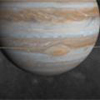
QuicktimeMPEG Powerful auroras have been observed near the poles of Jupiter. These auroras are thought to be caused by the interaction of sulfur and oxygen ions in the outer regions of the Jovian magnetic field, some of which originates in Io's volcanoes, with particles flowing away from the Sun in the so-called solar wind.
[Runtime: 0.14]
(NASA/JHUAPL/SwRI)
Related Chandra Images:
QuicktimeMPEG Powerful auroras have been observed near the poles of Jupiter. These auroras are thought to be caused by the interaction of sulfur and oxygen ions in the outer regions of the Jovian magnetic field, some of which originates in Io's volcanoes, with particles flowing away from the Sun in the so-called solar wind.
[Runtime: 0.14]
(NASA/JHUAPL/SwRI)
Related Chandra Images:
- Photo Album: Jupiter
5. Scale Chandra Images to Full Moon
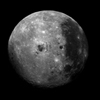
QuicktimeMPEG This survey, taken in a region of the Bootes constellation, involved 126 separate Chandra exposures of 5,000-seconds each, making it the largest contiguous field ever obtained by the observatory. At 9.3 square degrees, it is over 40 times larger than the full moon seen on the night sky, which is shown in this graphic for scale.
[Runtime: 0:12]
(X-ray: NASA/CXC/CfA/R.Hickox et al.; Moon: NASA/JPL)
Related Chandra Images:
QuicktimeMPEG This survey, taken in a region of the Bootes constellation, involved 126 separate Chandra exposures of 5,000-seconds each, making it the largest contiguous field ever obtained by the observatory. At 9.3 square degrees, it is over 40 times larger than the full moon seen on the night sky, which is shown in this graphic for scale.
[Runtime: 0:12]
(X-ray: NASA/CXC/CfA/R.Hickox et al.; Moon: NASA/JPL)
Related Chandra Images:
- Photo Album: Bootes Field
6. Alternative Without Optical Titan, Only the Shadow (unlabeled)
QuicktimeMPEG On January 5, 2003, Titan crossed in front of the Crab Nebula, blocking some of X-rays emitted by the Crab. This animation illustrates how Titan, one of Saturn's moons, casts an X-ray "shadow" on Chandra's detector as it passes between the Crab Nebula and Chandra. Although Titan passes within a few degrees of the Crab Nebula every 30 years, it rarely passes directly in front of it. This may have been the first transit of the Crab Nebula by Titan since the nebula was formed by a supernova that was observed to occur in the year 1054. The next similar conjunction will take place in the year 2267, so this was truly a once in a millennium event. The Crab Nebula image in the animation shows X-ray data in blue, optical in green, and radio in red.
[Runtime: 0:33]
(NASA/CXC/A.Hobart; Crab Nebula: X-ray: NASA/CXC/ASU/J.Hester et al.; Optical: NASA/HST/ASU/J.Hester et al.; Radio: NRAO/AUI/NSF; Titan's Shadow: NASA/CXC/Penn State/K.Mori et al.)
Related Chandra Images:
QuicktimeMPEG On January 5, 2003, Titan crossed in front of the Crab Nebula, blocking some of X-rays emitted by the Crab. This animation illustrates how Titan, one of Saturn's moons, casts an X-ray "shadow" on Chandra's detector as it passes between the Crab Nebula and Chandra. Although Titan passes within a few degrees of the Crab Nebula every 30 years, it rarely passes directly in front of it. This may have been the first transit of the Crab Nebula by Titan since the nebula was formed by a supernova that was observed to occur in the year 1054. The next similar conjunction will take place in the year 2267, so this was truly a once in a millennium event. The Crab Nebula image in the animation shows X-ray data in blue, optical in green, and radio in red.
[Runtime: 0:33]
(NASA/CXC/A.Hobart; Crab Nebula: X-ray: NASA/CXC/ASU/J.Hester et al.; Optical: NASA/HST/ASU/J.Hester et al.; Radio: NRAO/AUI/NSF; Titan's Shadow: NASA/CXC/Penn State/K.Mori et al.)
Related Chandra Images:
- Photo Album: Titan
7. Alternative Without Optical Titan, Only the Shadow (labeled)
QuicktimeMPEG On January 5, 2003, Titan crossed in front of the Crab Nebula, blocking some of X-rays emitted by the Crab. This animation illustrates how Titan, one of Saturn's moons, casts an X-ray "shadow" on Chandra's detector as it passes between the Crab Nebula and Chandra. Although Titan passes within a few degrees of the Crab Nebula every 30 years, it rarely passes directly in front of it. This may have been the first transit of the Crab Nebula by Titan since the nebula was formed by a supernova that was observed to occur in the year 1054. The next similar conjunction will take place in the year 2267, so this was truly a once in a millennium event. The Crab Nebula image in the animation shows X-ray data in blue, optical in green, and radio in red.
[Runtime: 0:33]
(NASA/CXC/A.Hobart; Crab Nebula: X-ray: NASA/CXC/ASU/J.Hester et al.; Optical: NASA/HST/ASU/J.Hester et al.; Radio: NRAO/AUI/NSF; Titan's Shadow: NASA/CXC/Penn State/K.Mori et al.)
Related Chandra Images:
QuicktimeMPEG On January 5, 2003, Titan crossed in front of the Crab Nebula, blocking some of X-rays emitted by the Crab. This animation illustrates how Titan, one of Saturn's moons, casts an X-ray "shadow" on Chandra's detector as it passes between the Crab Nebula and Chandra. Although Titan passes within a few degrees of the Crab Nebula every 30 years, it rarely passes directly in front of it. This may have been the first transit of the Crab Nebula by Titan since the nebula was formed by a supernova that was observed to occur in the year 1054. The next similar conjunction will take place in the year 2267, so this was truly a once in a millennium event. The Crab Nebula image in the animation shows X-ray data in blue, optical in green, and radio in red.
[Runtime: 0:33]
(NASA/CXC/A.Hobart; Crab Nebula: X-ray: NASA/CXC/ASU/J.Hester et al.; Optical: NASA/HST/ASU/J.Hester et al.; Radio: NRAO/AUI/NSF; Titan's Shadow: NASA/CXC/Penn State/K.Mori et al.)
Related Chandra Images:
- Photo Album: Titan
8. Animation of Titan's Transit of the Crab Nebula (unlabeled)
QuicktimeMPEG On January 5, 2003, Titan crossed in front of the Crab Nebula, blocking some of X-rays emitted by the Crab. This animation illustrates how Titan, one of Saturn's moons, cast an X-ray "shadow" on Chandra's detector as Titan passed between the Crab Nebula and Chandra. This part of the animation shows how the event might look from the point of view of an observer watching the Chandra ACIS detector during the transit. This observer would not, of course, see the optical image of Titan, which is shown for reference. Although Titan passes within a few degrees of the Crab Nebula every 30 years, it rarely passes directly in front of it. This may have been the first transit of the Crab Nebula by Titan since the nebula was formed by a supernova that was observed to occur in the year 1054. The next similar conjunction will take place in the year 2267, so this was truly a once in a millennium event. The image of the Crab Nebula in the animation shows X-ray data in blue, optical in green, and radio in red.
[Runtime: 0:33]
(NASA/CXC/A.Hobart; Crab Nebula: X-ray: NASA/CXC/ASU/J.Hester et al.; Optical: NASA/HST/ASU/J.Hester et al.; Radio: NRAO/AUI/NSF; Titan's Shadow: NASA/CXC/Penn State/K.Mori et al.)
Related Chandra Images:
QuicktimeMPEG On January 5, 2003, Titan crossed in front of the Crab Nebula, blocking some of X-rays emitted by the Crab. This animation illustrates how Titan, one of Saturn's moons, cast an X-ray "shadow" on Chandra's detector as Titan passed between the Crab Nebula and Chandra. This part of the animation shows how the event might look from the point of view of an observer watching the Chandra ACIS detector during the transit. This observer would not, of course, see the optical image of Titan, which is shown for reference. Although Titan passes within a few degrees of the Crab Nebula every 30 years, it rarely passes directly in front of it. This may have been the first transit of the Crab Nebula by Titan since the nebula was formed by a supernova that was observed to occur in the year 1054. The next similar conjunction will take place in the year 2267, so this was truly a once in a millennium event. The image of the Crab Nebula in the animation shows X-ray data in blue, optical in green, and radio in red.
[Runtime: 0:33]
(NASA/CXC/A.Hobart; Crab Nebula: X-ray: NASA/CXC/ASU/J.Hester et al.; Optical: NASA/HST/ASU/J.Hester et al.; Radio: NRAO/AUI/NSF; Titan's Shadow: NASA/CXC/Penn State/K.Mori et al.)
Related Chandra Images:
- Photo Album: Titan
9. Animation of Titan's Transit of the Crab Nebula (labeled)
QuicktimeMPEG On January 5, 2003, Titan crossed in front of the Crab Nebula, blocking some of X-rays emitted by the Crab. This animation illustrates how Titan, one of Saturn's moons, cast an X-ray "shadow" on Chandra's detector as Titan passed between the Crab Nebula and Chandra. This part of the animation shows how the event might look from the point of view of an observer watching the Chandra ACIS detector during the transit. This observer would not, of course, see the optical image of Titan, which is shown for reference. Although Titan passes within a few degrees of the Crab Nebula every 30 years, it rarely passes directly in front of it. This may have been the first transit of the Crab Nebula by Titan since the nebula was formed by a supernova that was observed to occur in the year 1054. The next similar conjunction will take place in the year 2267, so this was truly a once in a millennium event. The image of the Crab Nebula in the animation shows X-ray data in blue, optical in green, and radio in red.
[Runtime: 0:33]
(NASA/CXC/A.Hobart; Crab Nebula: X-ray: NASA/CXC/ASU/J.Hester et al.; Optical: NASA/HST/ASU/J.Hester et al.; Radio: NRAO/AUI/NSF; Titan's Shadow: NASA/CXC/Penn State/K.Mori et al.)
Related Chandra Images:
QuicktimeMPEG On January 5, 2003, Titan crossed in front of the Crab Nebula, blocking some of X-rays emitted by the Crab. This animation illustrates how Titan, one of Saturn's moons, cast an X-ray "shadow" on Chandra's detector as Titan passed between the Crab Nebula and Chandra. This part of the animation shows how the event might look from the point of view of an observer watching the Chandra ACIS detector during the transit. This observer would not, of course, see the optical image of Titan, which is shown for reference. Although Titan passes within a few degrees of the Crab Nebula every 30 years, it rarely passes directly in front of it. This may have been the first transit of the Crab Nebula by Titan since the nebula was formed by a supernova that was observed to occur in the year 1054. The next similar conjunction will take place in the year 2267, so this was truly a once in a millennium event. The image of the Crab Nebula in the animation shows X-ray data in blue, optical in green, and radio in red.
[Runtime: 0:33]
(NASA/CXC/A.Hobart; Crab Nebula: X-ray: NASA/CXC/ASU/J.Hester et al.; Optical: NASA/HST/ASU/J.Hester et al.; Radio: NRAO/AUI/NSF; Titan's Shadow: NASA/CXC/Penn State/K.Mori et al.)
Related Chandra Images:
- Photo Album: Titan
10. Sequence of Chandra Earth Aurora Images
QuicktimeMPEG The bright arcs in this sample of Chandra images show low-energy X-rays (0.1 - 10 kilo electron volts) generated during auroral activity. The images are approximately 20-minute scans during which Chandra was pointed at a fixed point in the sky and the Earth's motion carried the auroral regions through the field of view. The estimated altitude of the X-ray emission is 100 km. Auroras are produced by solar storms that disturb Earth's magnetic field and accelerate electrons which speed along the magnetic field into the polar regions. There the electrons collide with atoms high in Earth's atmosphere and emit X-rays.
[Runtime: 0:10]
(X-ray: NASA/MSFC/CXC/A.Bhardwaj & R.Elsner, et al.; Earth model: NASA/GSFC/L.Perkins & G.Shirah)
Related Chandra Images:
QuicktimeMPEG The bright arcs in this sample of Chandra images show low-energy X-rays (0.1 - 10 kilo electron volts) generated during auroral activity. The images are approximately 20-minute scans during which Chandra was pointed at a fixed point in the sky and the Earth's motion carried the auroral regions through the field of view. The estimated altitude of the X-ray emission is 100 km. Auroras are produced by solar storms that disturb Earth's magnetic field and accelerate electrons which speed along the magnetic field into the polar regions. There the electrons collide with atoms high in Earth's atmosphere and emit X-rays.
[Runtime: 0:10]
(X-ray: NASA/MSFC/CXC/A.Bhardwaj & R.Elsner, et al.; Earth model: NASA/GSFC/L.Perkins & G.Shirah)
Related Chandra Images:
- Photo Album: Earth Aurora