



CXC Home | Search | Help | Image Use Policy | Latest Images | Privacy | Accessibility | Glossary | Q&A

Animation of the Phoenix Cluster
Quicktime MPEG
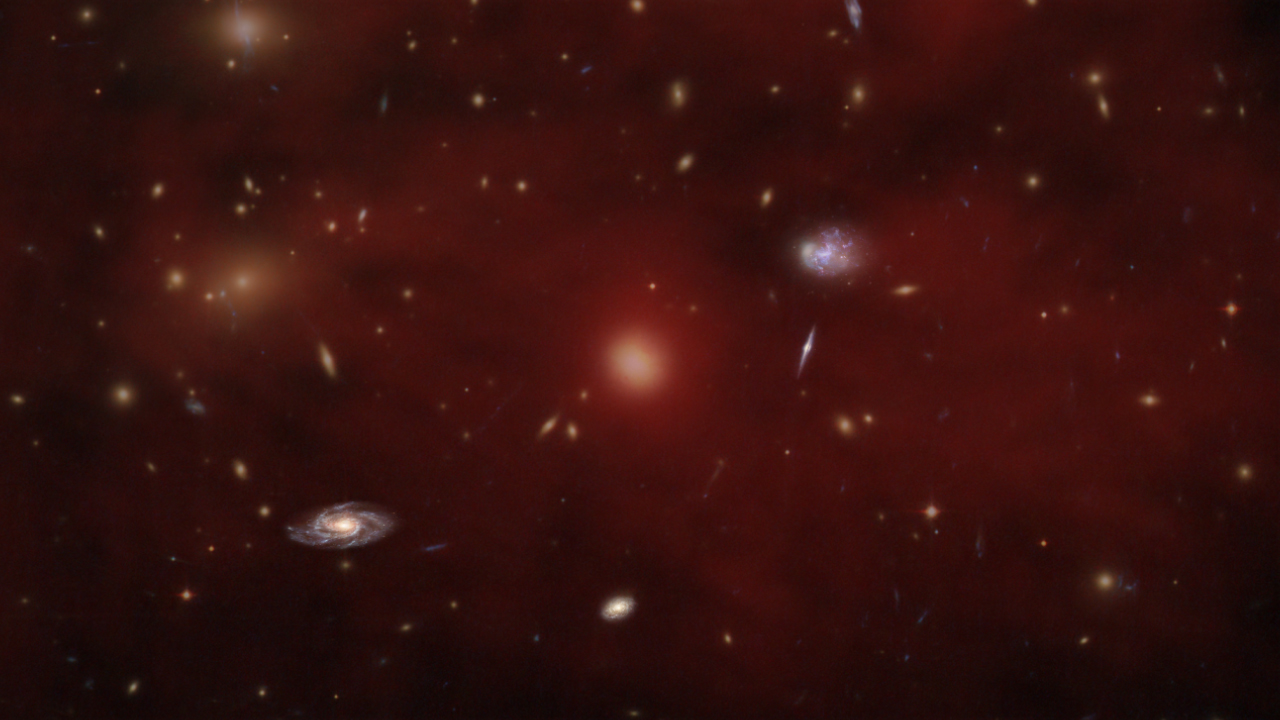
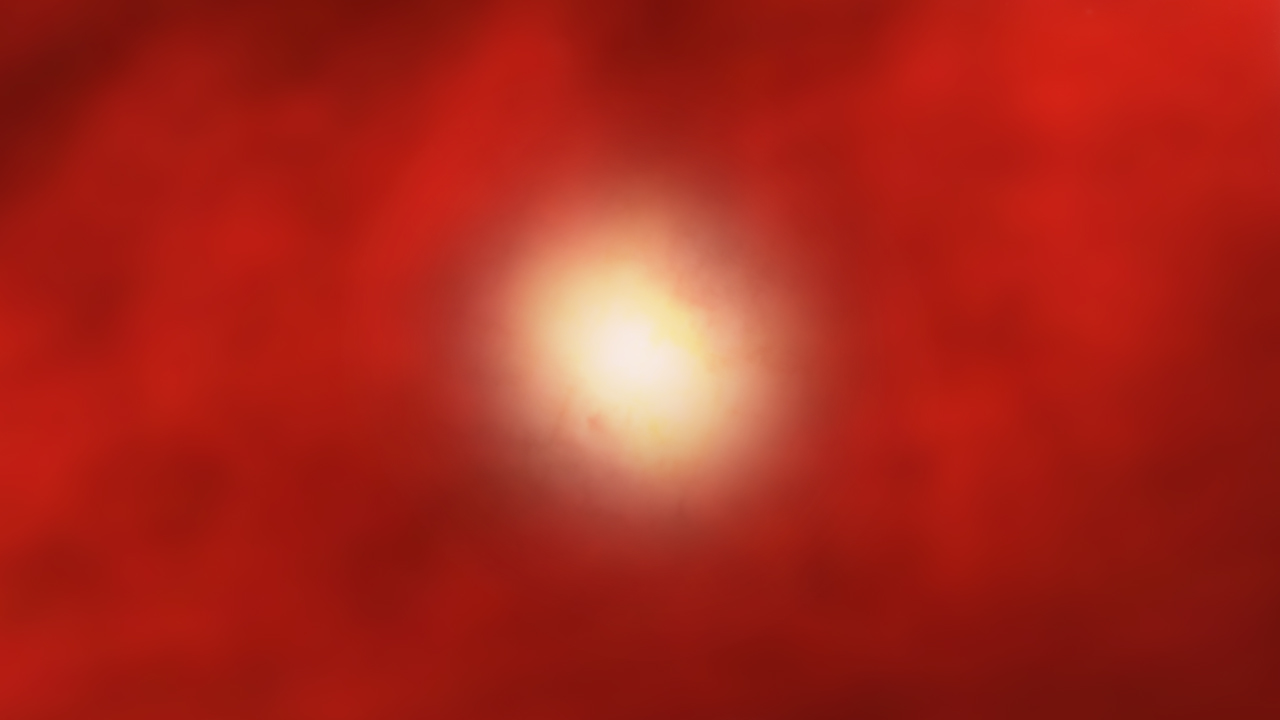
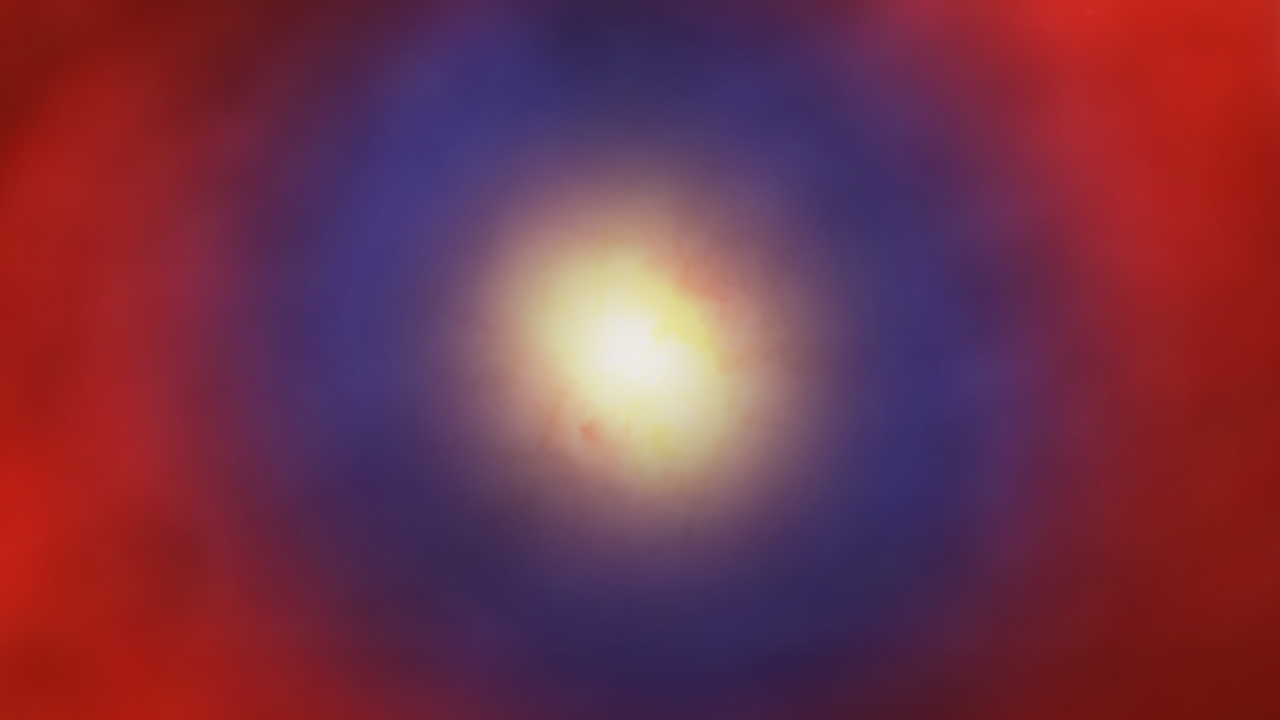
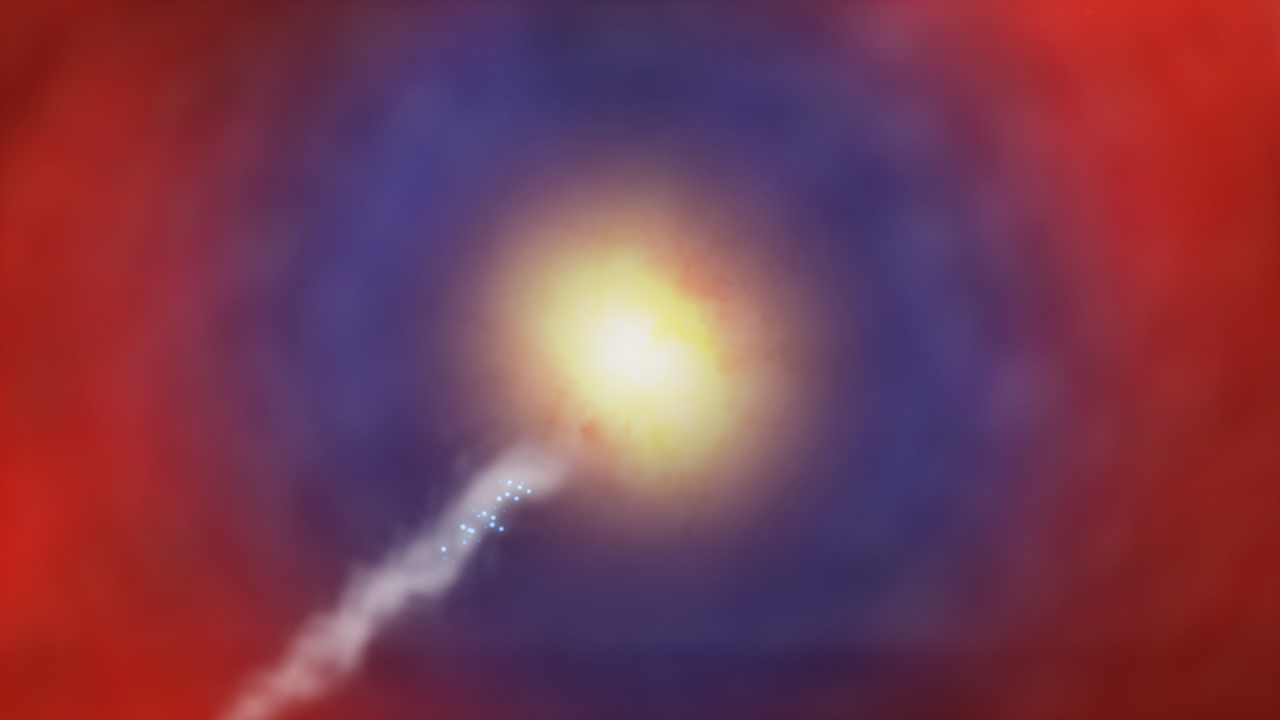
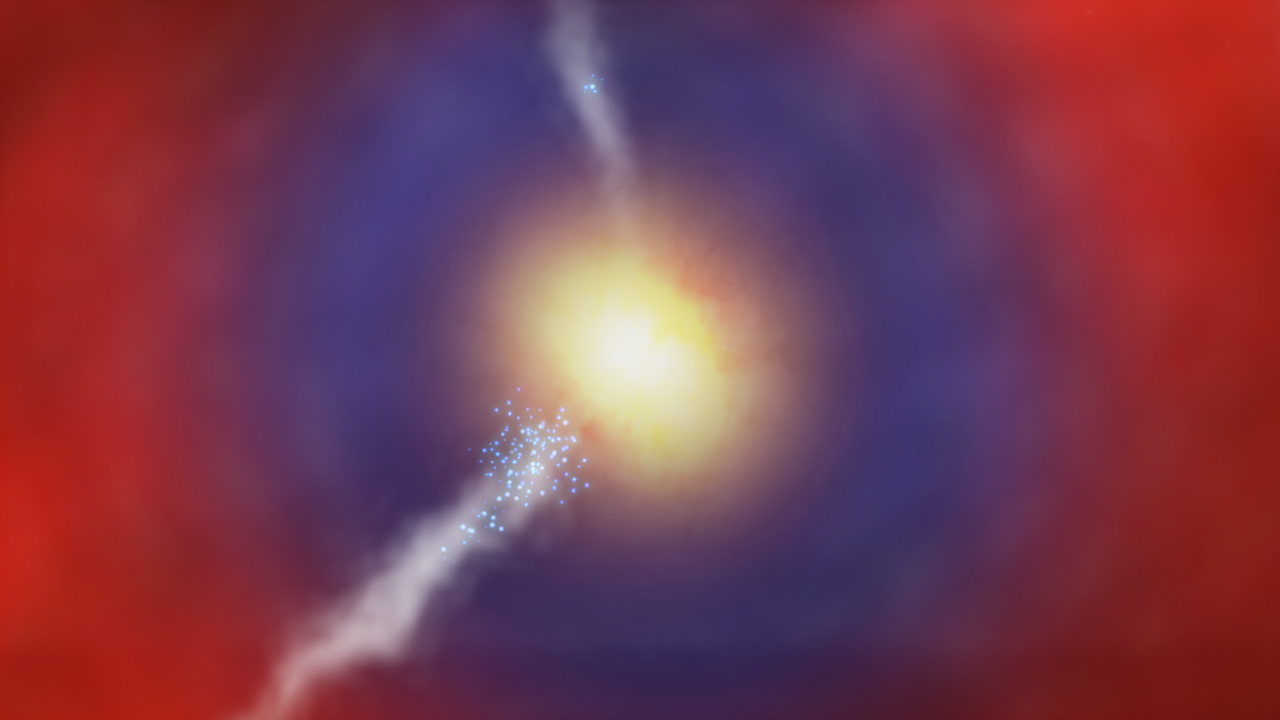
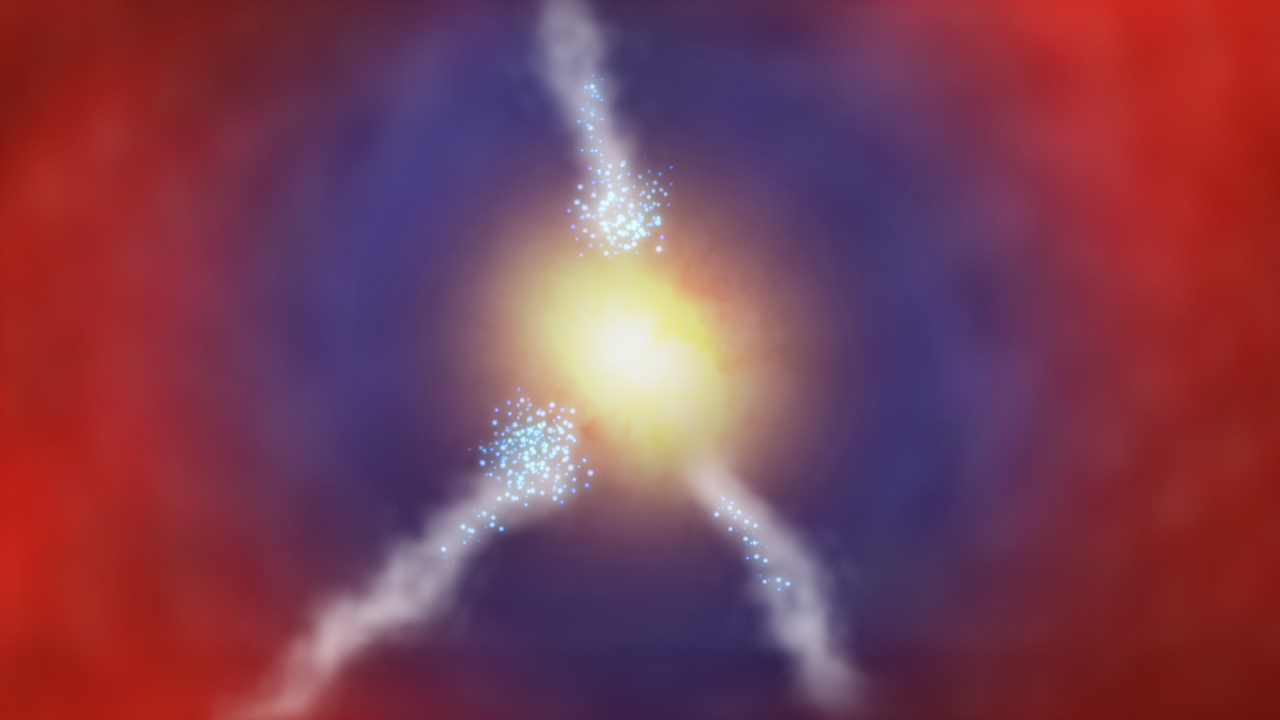
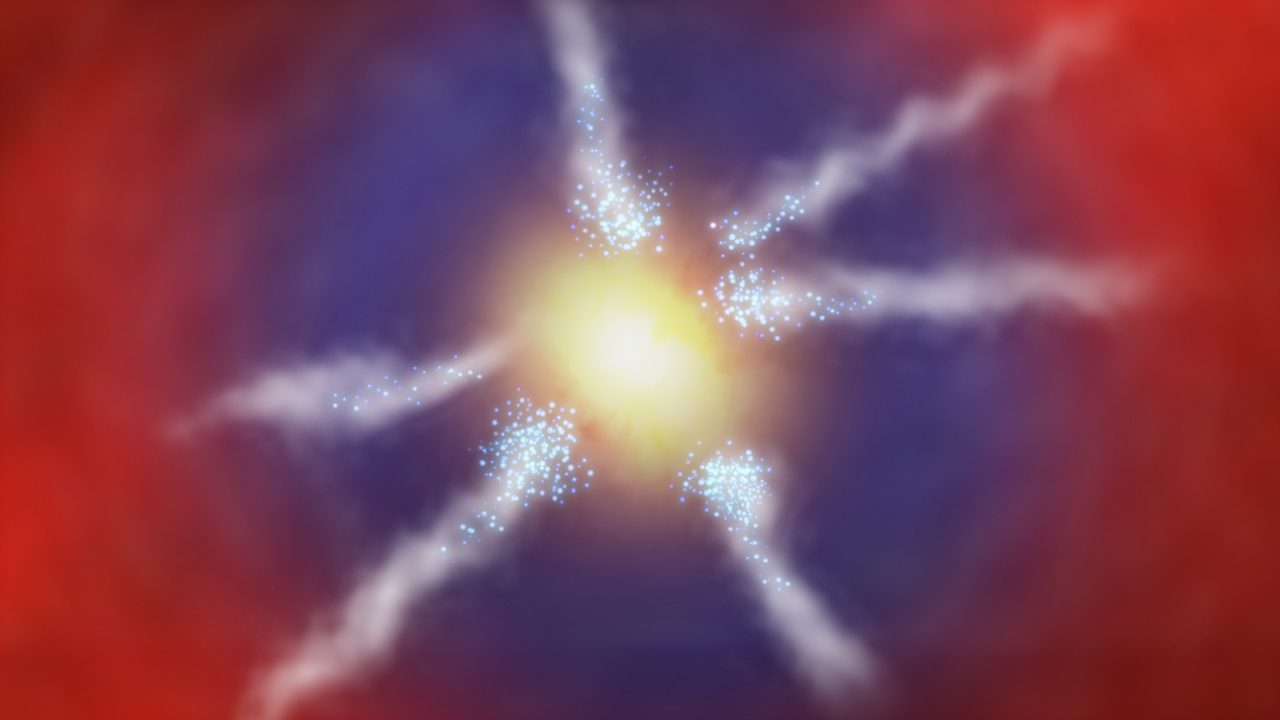
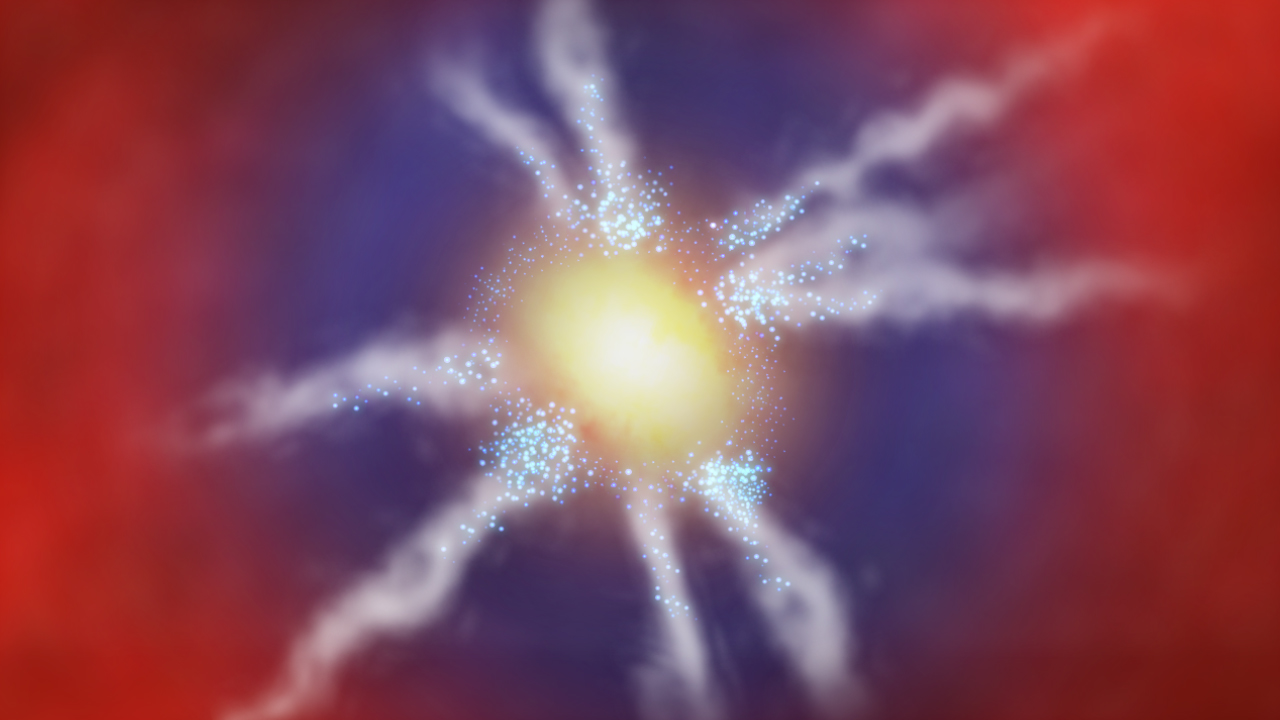
This animation shows how large numbers of stars form in the Phoenix Cluster. It begins by showing several galaxies in the cluster and hot gas (in red). This hot gas contains more normal matter than all of the galaxies in the cluster combined, and can only be detected with X-ray telescopes like Chandra. The camera then flies in towards the large elliptical galaxy at the center of the cluster. The hot gas near this galaxy is giving off copious amounts of X-rays and cooling quickly over time, as shown by the change to a blue color. This cooling causes gas to flow inwards along filaments and form huge numbers of stars when it continues to cool.
[Runtime: 01:13]
Quicktime MPEG
This animation shows how large numbers of stars form in the Phoenix Cluster. It begins by showing several galaxies in the cluster and hot gas (in red). This hot gas contains more normal matter than all of the galaxies in the cluster combined, and can only be detected with X-ray telescopes like Chandra. The camera then flies in towards the large elliptical galaxy at the center of the cluster. The hot gas near this galaxy is giving off copious amounts of X-rays and cooling quickly over time, as shown by the change to a blue color. This cooling causes gas to flow inwards along filaments and form huge numbers of stars when it continues to cool.
[Runtime: 01:13]
(Credit: NASA/CXC/A. Hobart)

Tour of Phoenix Cluster
Quicktime MPEG
Astronomers have found an extraordinary galaxy cluster -- one of the largest objects in the Universe -- that is breaking several important cosmic records. This galaxy cluster has been dubbed the "Phoenix Cluster" because not only is it located in the constellation of the Phoenix, it also possesses some remarkable properties of the mythological creature. While galaxies at the center of most clusters may have been dormant for billions of years, the central galaxy in this cluster seems to have come back to life with a new burst of star formation. The stars are forming at the highest rate ever observed for the middle of a galaxy cluster. Observations with NASA's Chandra X-ray Observatory, the NSF's South Pole Telescope and eight other world-class observatories were used to study this object. Taken together, the data from these telescopes also show the Phoenix Cluster is the most powerful producer of X-rays and among the most massive of galaxy clusters. It also has the highest rate of hot gas cooling in the central regions of a cluster ever observed. The new results from the Phoenix Cluster, which is located about 5.7 billion light years from Earth, may force astronomers to rethink how galaxy clusters, and the galaxies that inhabit them, evolve.
[Runtime: 01:21]
Quicktime MPEG
Astronomers have found an extraordinary galaxy cluster -- one of the largest objects in the Universe -- that is breaking several important cosmic records. This galaxy cluster has been dubbed the "Phoenix Cluster" because not only is it located in the constellation of the Phoenix, it also possesses some remarkable properties of the mythological creature. While galaxies at the center of most clusters may have been dormant for billions of years, the central galaxy in this cluster seems to have come back to life with a new burst of star formation. The stars are forming at the highest rate ever observed for the middle of a galaxy cluster. Observations with NASA's Chandra X-ray Observatory, the NSF's South Pole Telescope and eight other world-class observatories were used to study this object. Taken together, the data from these telescopes also show the Phoenix Cluster is the most powerful producer of X-rays and among the most massive of galaxy clusters. It also has the highest rate of hot gas cooling in the central regions of a cluster ever observed. The new results from the Phoenix Cluster, which is located about 5.7 billion light years from Earth, may force astronomers to rethink how galaxy clusters, and the galaxies that inhabit them, evolve.
[Runtime: 01:21]
(Credit: NASA/CXC/A. Hobart)

Please Don't Stop the Music!
Quicktime MPEG
Did you know that the sounds we hear on Earth are just vibrations of air? But that doesn't mean that space is an eerily silent place, just because there isn't any air out there. This is because air is a collection of gases, and there are clouds of gas in space that can vibrate and allow sound to travel too.
Okay, so we know how sound can travel in space, but what's making all of the noise? The answer is powerful objects that give off huge amounts of energy - enough to make the gases vibrate.
For example, in addition to gobbling up material, black holes also release powerful jets of energy. Astronomers already know that the black hole at the centre of a collection of galaxies called the Perseus Cluster is powerful enough to make a very deep sound.
"We thought that these very deep sounds might be found in galaxy clusters everywhere," says astronomer Ryan Foley. However, Ryan is a member of a team of astronomers who have recently observed a galaxy cluster called the Phoenix Cluster (shown in the photo above) that is practically totally silent. This means that either not all galaxy clusters produce sound, or that sometimes the music almost completely stops!
[Runtime: 01:47]
Quicktime MPEG
Did you know that the sounds we hear on Earth are just vibrations of air? But that doesn't mean that space is an eerily silent place, just because there isn't any air out there. This is because air is a collection of gases, and there are clouds of gas in space that can vibrate and allow sound to travel too.
Okay, so we know how sound can travel in space, but what's making all of the noise? The answer is powerful objects that give off huge amounts of energy - enough to make the gases vibrate.
For example, in addition to gobbling up material, black holes also release powerful jets of energy. Astronomers already know that the black hole at the centre of a collection of galaxies called the Perseus Cluster is powerful enough to make a very deep sound.
"We thought that these very deep sounds might be found in galaxy clusters everywhere," says astronomer Ryan Foley. However, Ryan is a member of a team of astronomers who have recently observed a galaxy cluster called the Phoenix Cluster (shown in the photo above) that is practically totally silent. This means that either not all galaxy clusters produce sound, or that sometimes the music almost completely stops!
[Runtime: 01:47]
(Credit: NASA/CXC/April Jubett)
Return to Phoenix Cluster (August 15, 2012)


Revised: July 10, 2023