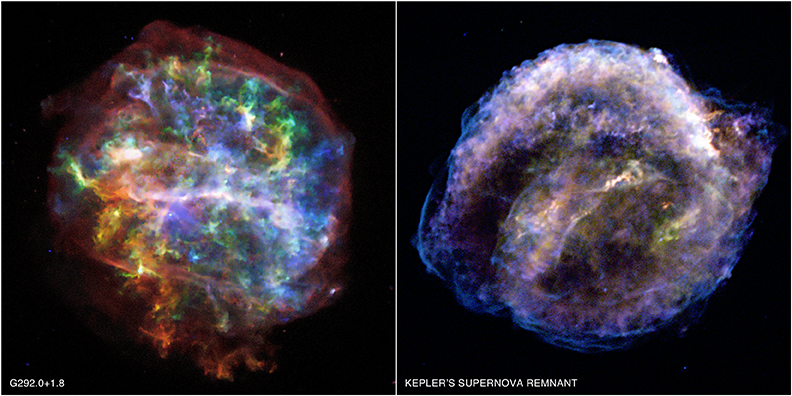
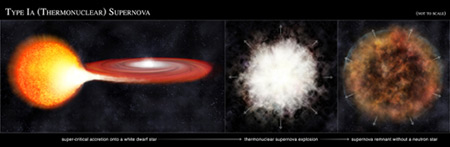
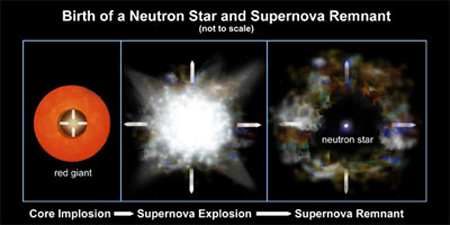
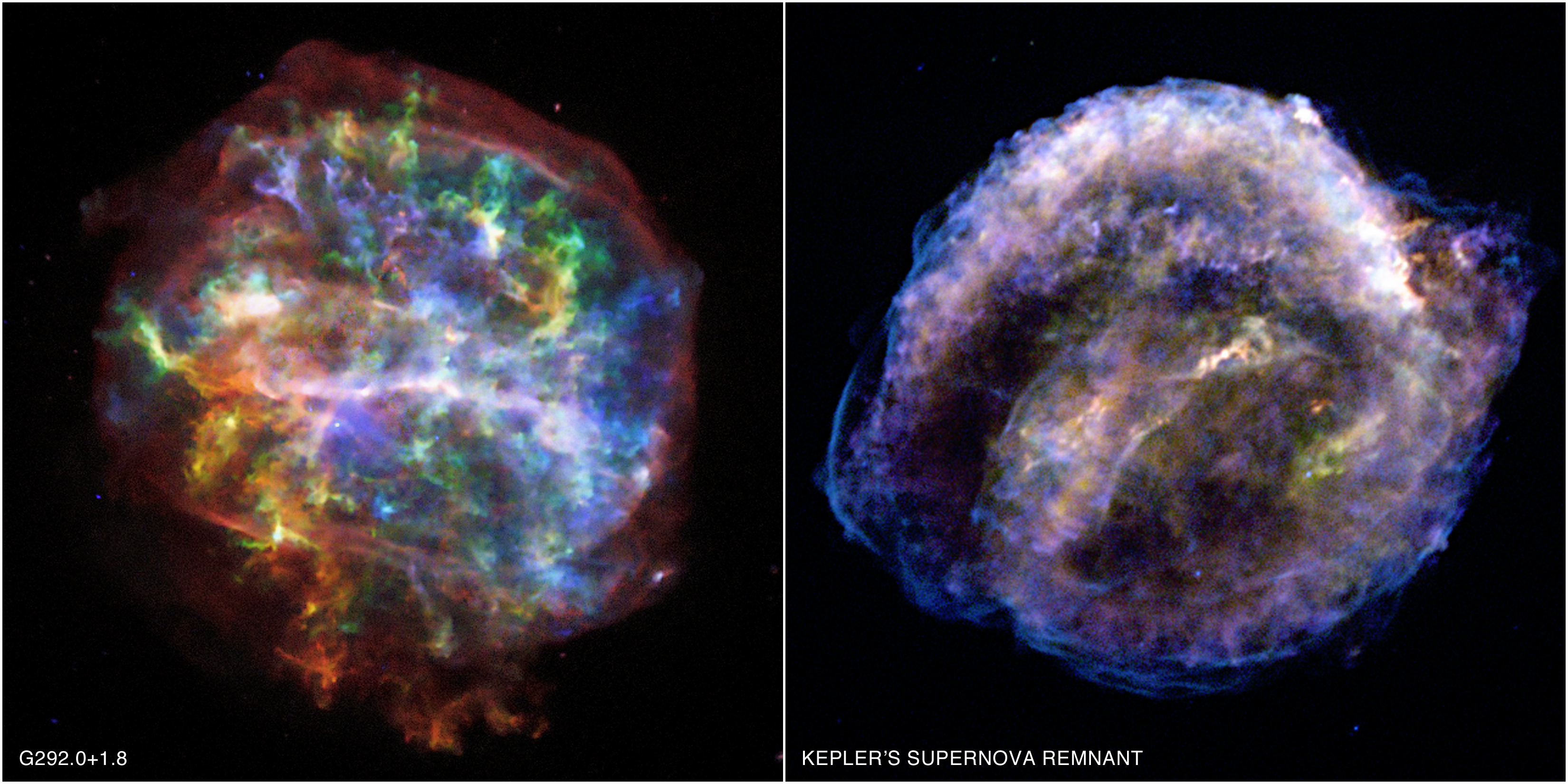
These two supernova remnants are part of a new study from NASA's Chandra X-ray Observatory that shows how the shape of the remnant is connected to the way the progenitor star exploded. In this study, a team of researchers examined the shapes of 17 supernova remnants in both the Milky Way galaxy and a neighbor galaxy, the Large Magellanic Cloud.
The results revealed that one category of supernova explosion, known as "Type Ia," generated a very symmetric, circular remnant. This type of supernova is thought to be caused by a thermonuclear explosion of a white dwarf, and is often used by astronomers as a "standard candle" for measuring cosmic distances. The image in the right panel, the so-called Kepler supernova remnant, represents this type of supernova.
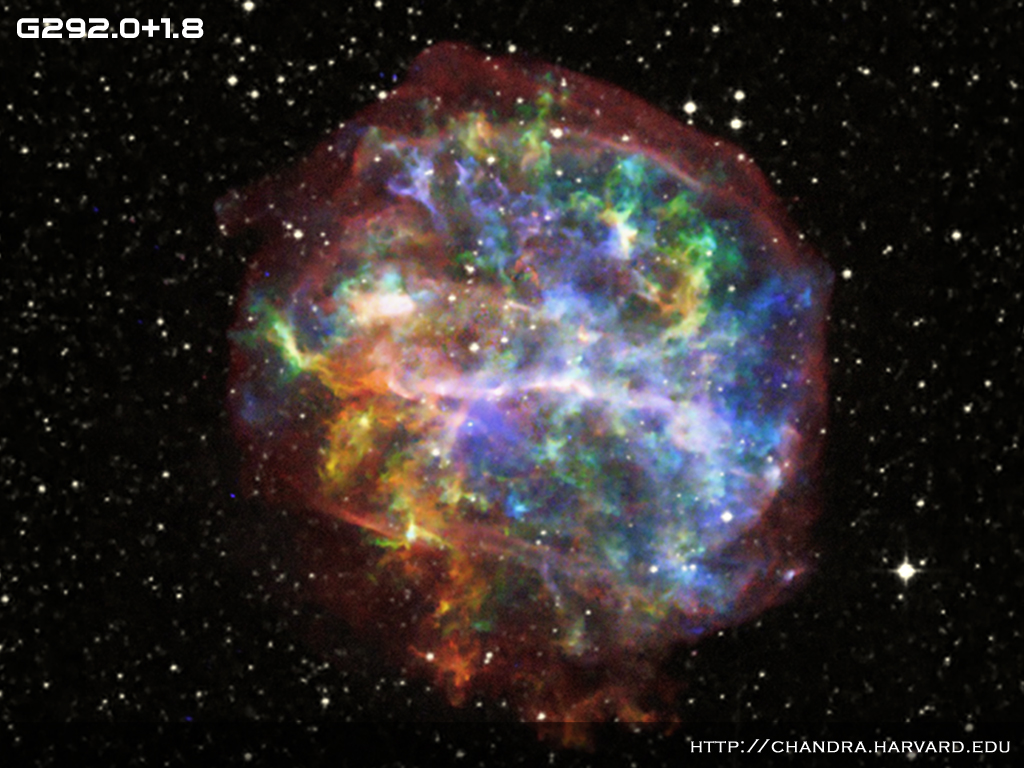
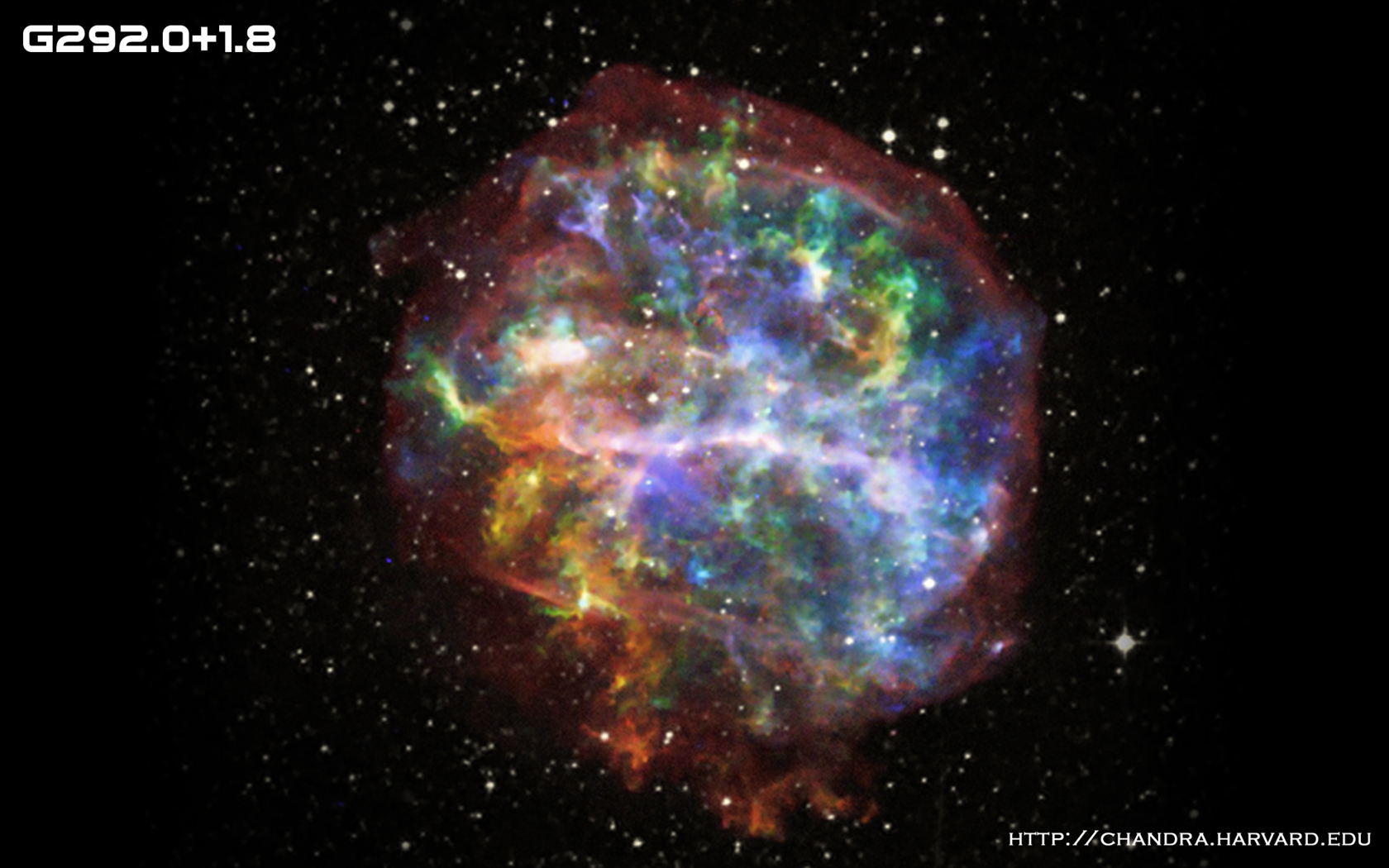
On the other hand, remnants tied to the "core collapse" family of supernova explosions were distinctly more asymmetric, which is seen in the morphology of the G292.0+1.8 remnant (left). The research team measured asymmetry in two ways: how spherical or elliptical the supernova remnant was and how much one side of the remnant mirrors its opposite side. In G292, the asymmetry is subtle but can be seen in elongated features defined by the brightest emission (colored white).
Out of the 17 supernova remnants sampled, ten were independently classified as the core-collapse variety, while the remaining seven of them were classified as Type Ia. One of these, a remnant known as SNR 0548-70.4, was a bit of an "oddball". This one was considered a Type Ia based on its chemical abundances, but has the asymmetry of a core-collapse remnant.
Visual Description:
Two images of the supernova remnants G292 0 + 1 8 and Kepler are shown side by side here. The Chandra X-ray Observatory image of G292.0+1.8 depicts the nebula as a bright, glowing object that resembles a jellyfish swimming on its side. The colors of the image are predominantly white, yellow, red and blue, with some green and purple hues present, a rainbow of hues. This image shows a rapidly expanding shell of gas that is 36 light years across and contains large amounts of elements such as oxygen, neon, magnesium, silicon and sulfur. On the right, the X-ray image of Kepler's Supernova Remnant is dominated by shades of pale purple-pink, and electric blue, with a hint of pale gold and green. The structure of Kepler's Supernova Remnant consists of an irregularly shaped nebula, almost like a knot. In the Chandra Kepler image, pink tones represent low-energy X-rays and show material around the star -- dominated by oxygen -- that has been heated up by a blast wave from the star's explosion. The pale gold color shows slightly higher energy X-rays, mostly iron formed in the supernova, while green (medium-energy X-rays) shows other elements from the exploded star. The blue color represents the highest energy X-rays and shows a shock front generated by the explosion.
| Fast Facts for G292.0+1.8: |
| Credit |
NASA/CXC/UCSC/L. Lopez et al. |
| Release Date |
December 17, 2009 |
| Scale |
11.5 itsacross. |
| Category |
Supernovas & Supernova Remnants |
| Coordinates (J2000) |
RA 11h 24m 36.00s | Dec -59° 16' 00.00" |
| Constellation |
Centaurus |
| Observation Date |
6 observations between September - October 2006 |
| Observation Time |
144 hours |
| Obs. ID |
6677-6680, 8221, and 8447 |
| Instrument |
ACIS
|
| References | Lopez, L. et al, 2009 706 L106-L109; Park, S. et al, 2007, ApJ, 670 L121-L124 |
| Color Code |
Energy: Red (low energy); Orange (medium-low energy); Green (medium energy); Blue (high energy) |
| Distance Estimate |
About 20,000 light years |
|
| Fast Facts for Kepler's Supernova Remnant: |
| Credit |
NASA/CXC/UCSC/L. Lopez et al. |
| Release Date |
December 17, 2009 |
| Scale |
5 itsacross. |
| Category |
Supernovas & Supernova Remnants |
| Coordinates (J2000) |
RA 17h 30m 40.80s | Dec -21° 29' 11.00" |
| Constellation |
Ophiuchus |
| Observation Date |
6 observations between April - August 2006 |
| Observation Time |
208 hours |
| Obs. ID |
6714-18, 7366 |
| Instrument |
ACIS
|
| Also Known As | SN 1604, G004.5+06.8, V 843 Ophiuchi | | References | Lopez, L. et al, 2009 706 L106-L109; Park, S. et al, 2007, ApJ, 670 L121-L124 |
| Color Code |
Energy: Red (low energy);Yellow/Green (medium energy); Blue (high energy) |
| Distance Estimate |
About 13,000 light years |
|