
Just over a thousand years ago, the stellar explosion known as supernova SN 1006 was observed. It was brighter than Venus, and visible during the day for weeks. The brightest supernova ever recorded on Earth, this spectacular light show was documented in China, Japan, Europe, and the Arab world.
Ancient observers were treated to this celestial fireworks display without understanding its cause or implications. Astronomers now understand that SN 1006 was caused by a white dwarf star that captured mass from a companion star until the white dwarf became unstable and exploded. Recent observations of the remnant of SN 1006 reveal the liberation of elements such as iron that were previously locked up inside the star. Because no material falls back into a neutron star or black hole after this type of supernova explosion, the liberation of this star's contents is complete. It represents, therefore, a cosmic version of Independence Day for this star.
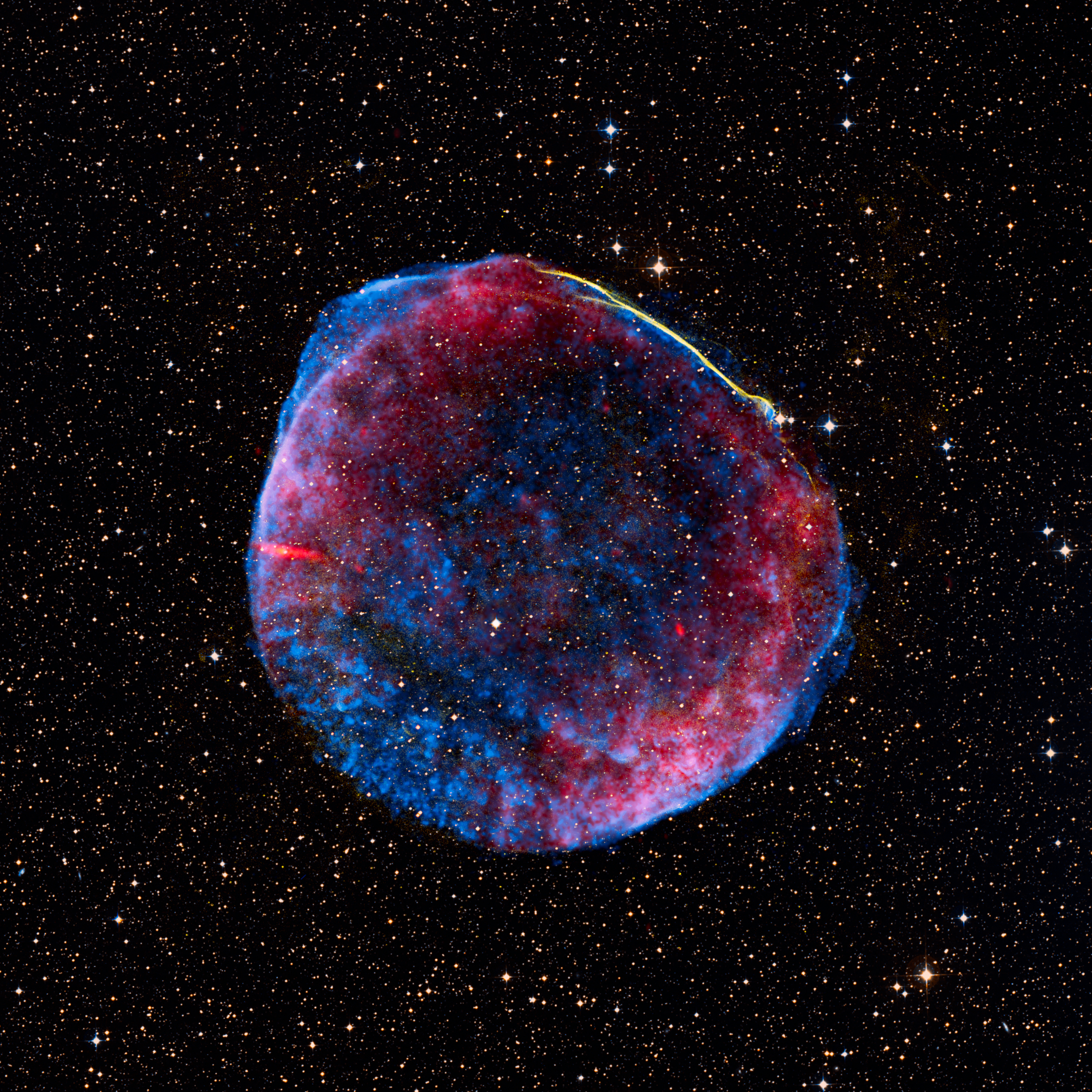
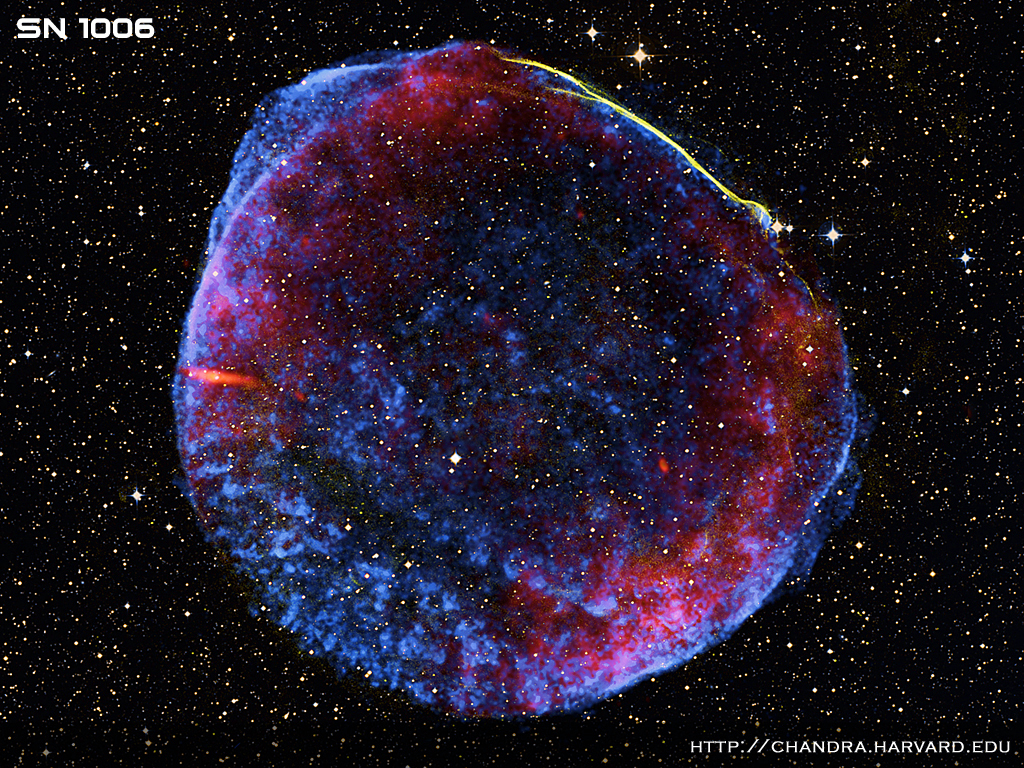
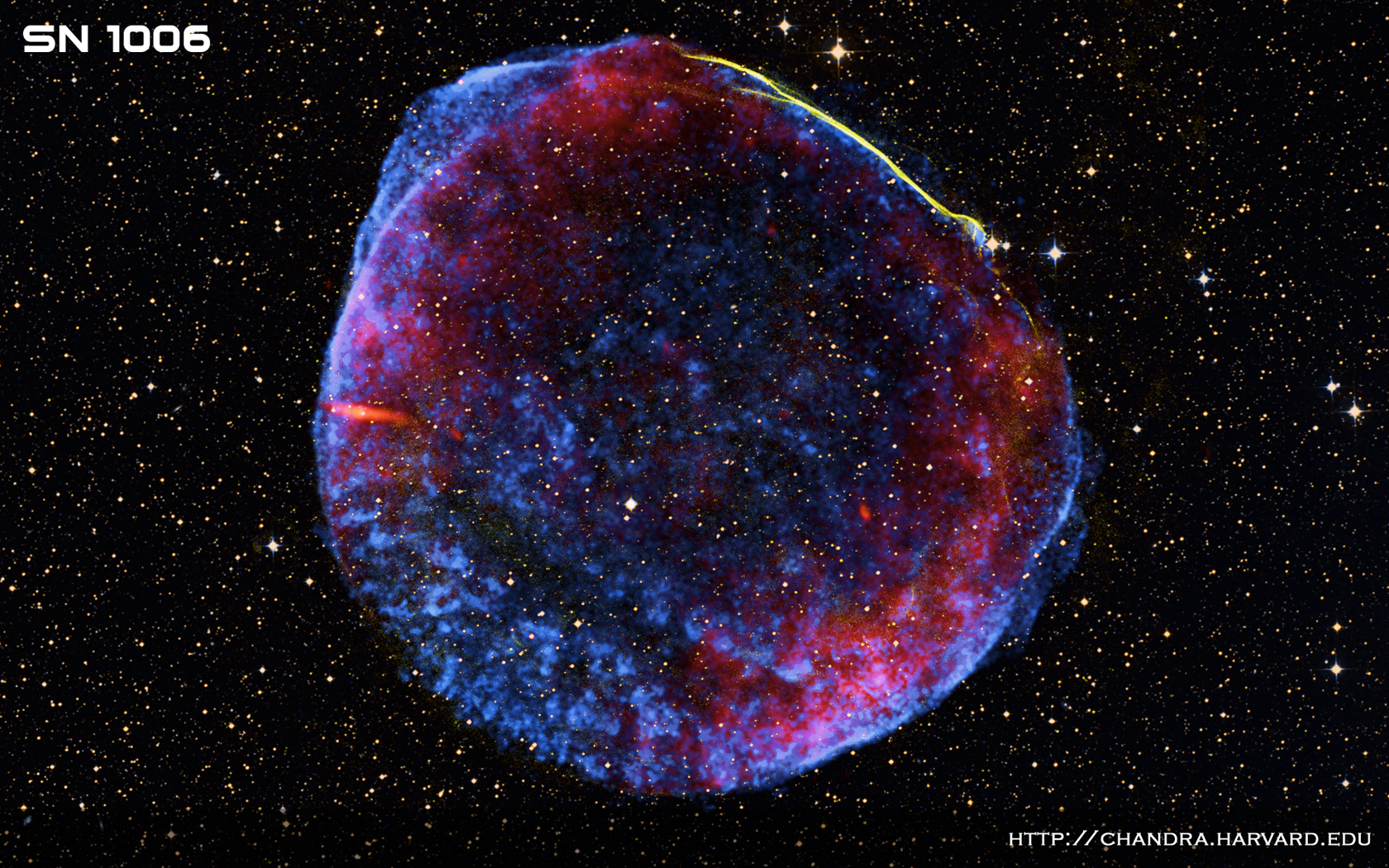
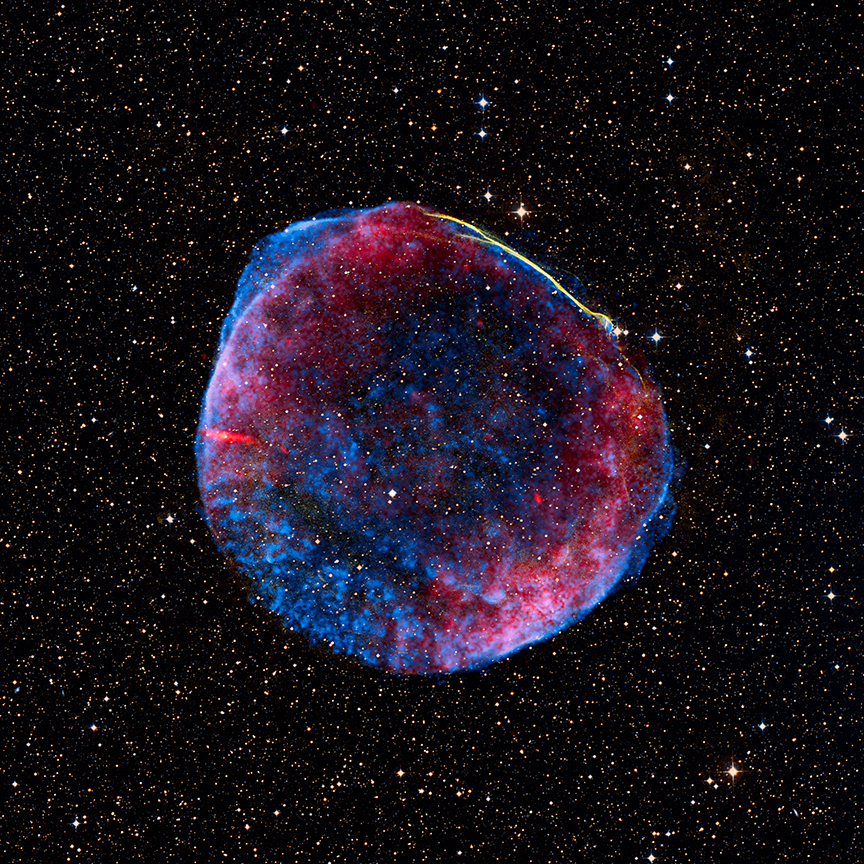
This is a composite image of the SN 1006 supernova remnant, which is located about 7000 light years from Earth. Shown here are X-ray data from NASA's Chandra X-ray Observatory (blue), optical data from the University of Michigan's 0.9 meter Curtis Schmidt telescope at the NSF's Cerro Tololo Inter-American Observatory (CTIO; yellow) and the Digitized Sky Survey (orange and light blue), plus radio data from the NRAO's Very Large Array and Green Bank Telescope (VLA/GBT; red).
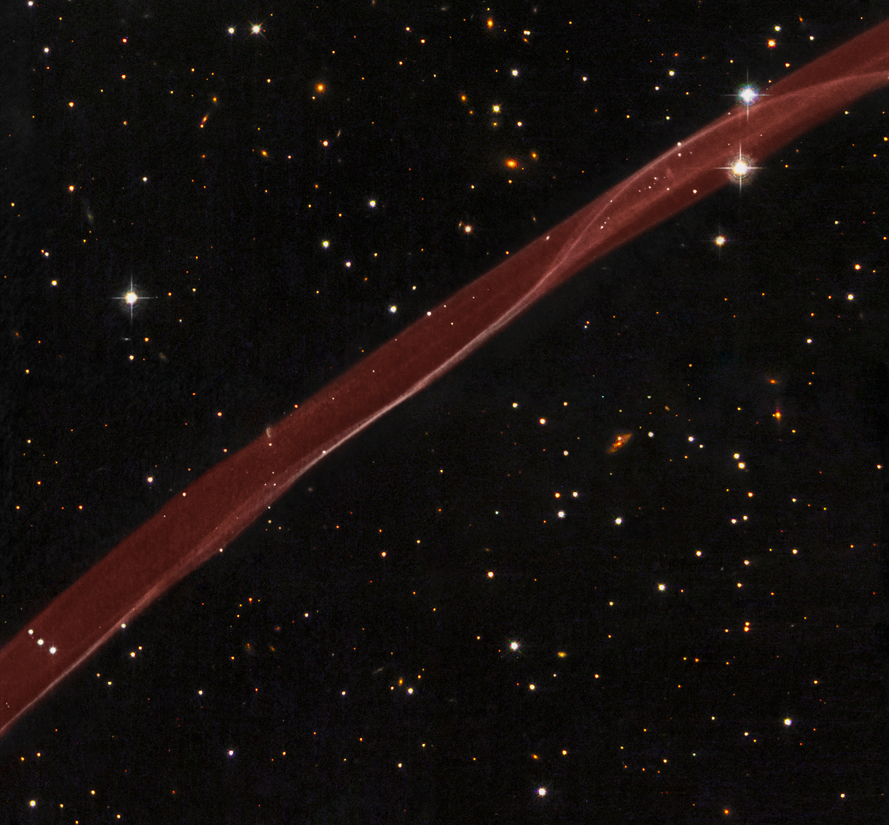
This combined study of the Chandra, CTIO and VLA/GBT observations shows new evidence for the acceleration of charged particles to high energies in supernova shockwaves. An accompanying Hubble Space Telescope image of SN 1006 shows a close-up of the region on the upper right of the supernova remnant. The twisting ribbon of light seen by Hubble reveals where the expanding blast wave is sweeping into very tenuous surrounding gas.
The composite image of the supernova remnant SN 1006 shows a stunning celestial phenomenon, resembling a massive round red-white-and-blue firework in the sky. The background of the image looks like a densely starry sky. In the center is a large, colorful nebula that pulls the viewer’s attention. The nebula has an electric blue hue with strong pops of blue around the edges, as well as red pops of color on the top left and bottom right and a bright yellow rim-like streak across the top right curve. SN 1006 was caused by a white dwarf star that captured mass from a companion star until the white dwarf became unstable and exploded. Recent observations of the remnant of SN 1006 reveal the liberation of elements such as iron that were previously locked up inside the star. Shown in the image are X-ray data from NASA's Chandra X-ray Observatory (in blue), optical data from the Cerro Tololo Inter-American Observatory (yellow) and the Digitized Sky Survey (orange and light blue), plus radio data from the Very Large Array and Green Bank Telescope (red).
|
||||||||||||||||||||||||||||||||