



CXC Home | Search | Help | Image Use Policy | Latest Images | Privacy | Accessibility | Glossary | Q&A
1
Chandra X-ray Images
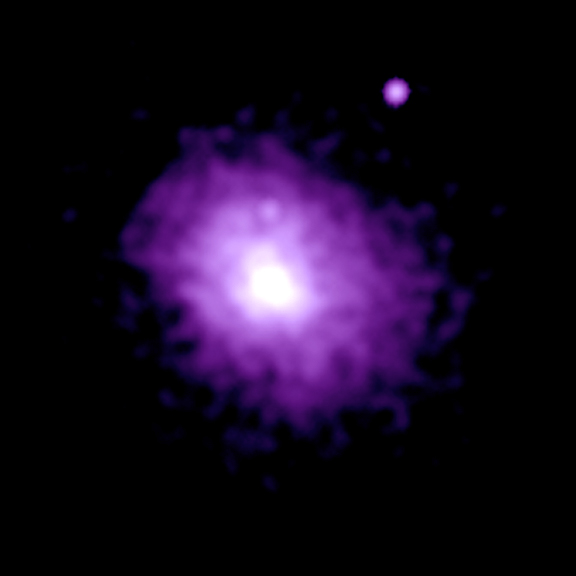
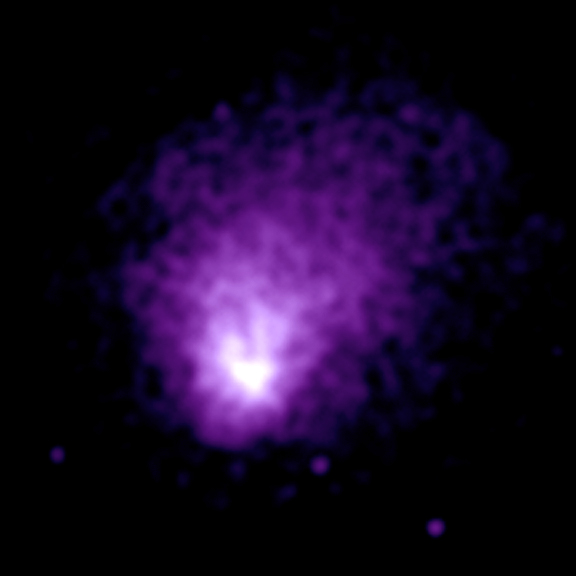
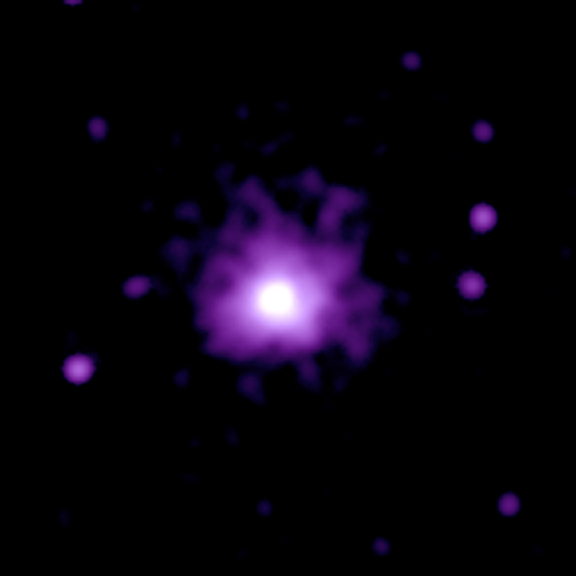
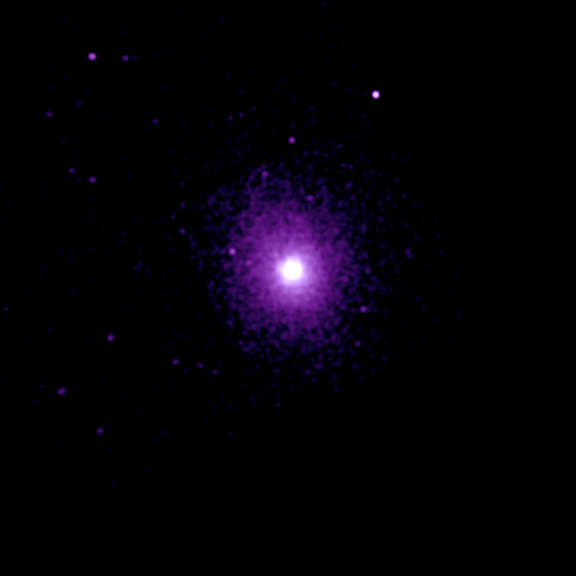
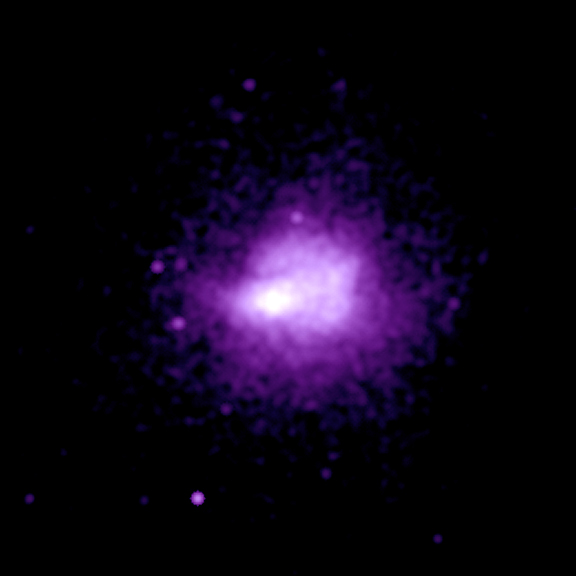
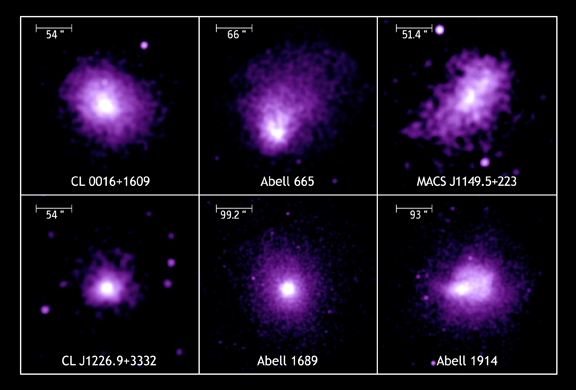
A critically important number that sets the expansion rate of the Universe, the so-called Hubble constant, has been independently determined using NASA's Chandra X-ray Observatory. This new value matches recent measurements using other methods and extends their validity to greater distances and thus allows astronomers to probe earlier epochs in the evolution of the Universe. These images show six of the 38 galaxy clusters that scientists observed with Chandra.
NASA/CXC/MSFC/M.Bonamente et al.
A critically important number that sets the expansion rate of the Universe, the so-called Hubble constant, has been independently determined using NASA's Chandra X-ray Observatory. This new value matches recent measurements using other methods and extends their validity to greater distances and thus allows astronomers to probe earlier epochs in the evolution of the Universe. These images show six of the 38 galaxy clusters that scientists observed with Chandra.
NASA/CXC/MSFC/M.Bonamente et al.
2
Illustration of Sunyaev-Zeldovich Effect
The astronomers in this study used a phenomenon known as the Sunyaev-Zeldovich effect, where photons in the cosmic microwave background interact with electrons in the hot gas that pervades the enormous galaxy clusters. The photons acquire energy from this interaction, which distorts the signal from the microwave background in the direction of the clusters. This illustration depicts this concept graphically by the broad bright beams emanating from the cluster.
(Illustration: NASA/CXC/M.Weiss)
The astronomers in this study used a phenomenon known as the Sunyaev-Zeldovich effect, where photons in the cosmic microwave background interact with electrons in the hot gas that pervades the enormous galaxy clusters. The photons acquire energy from this interaction, which distorts the signal from the microwave background in the direction of the clusters. This illustration depicts this concept graphically by the broad bright beams emanating from the cluster.
(Illustration: NASA/CXC/M.Weiss)
Return to Galaxy Clusters & the Hubble Constant (08 Aug 06)


Revised: December 01, 2022