

1

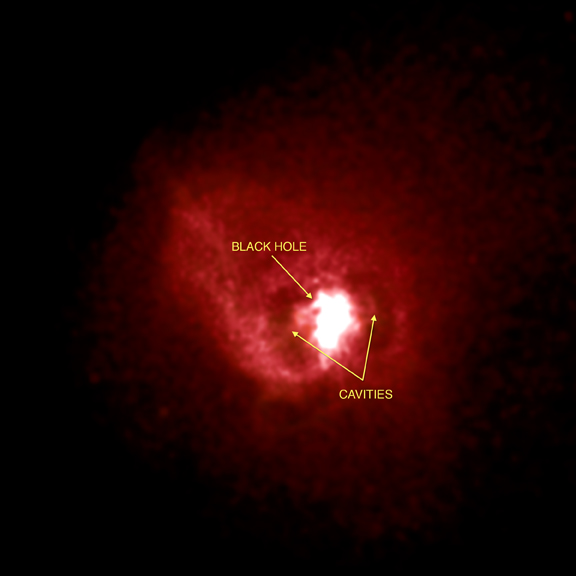
Chandra X-ray Image of NGC 4696 in the Centaurus Galaxy Cluster
Black holes are the most fuel efficient engines in the Universe, according to a study using NASA's Chandra X-ray Observatory. By making the first direct estimate of how efficient or "green" black holes are, this work gives insight into how black holes generate energy and affect their environment. Chandra's X-ray image of NGC 4696 traces hot gas located around the center of the galaxy. Enormous cavities in this gas were created by jets from the black hole.
Scale: Image is 3 arcmin per side
(Credit: NASA/CXC/Stanford U./S.Allen et al.)
Black holes are the most fuel efficient engines in the Universe, according to a study using NASA's Chandra X-ray Observatory. By making the first direct estimate of how efficient or "green" black holes are, this work gives insight into how black holes generate energy and affect their environment. Chandra's X-ray image of NGC 4696 traces hot gas located around the center of the galaxy. Enormous cavities in this gas were created by jets from the black hole.
Scale: Image is 3 arcmin per side
(Credit: NASA/CXC/Stanford U./S.Allen et al.)
2
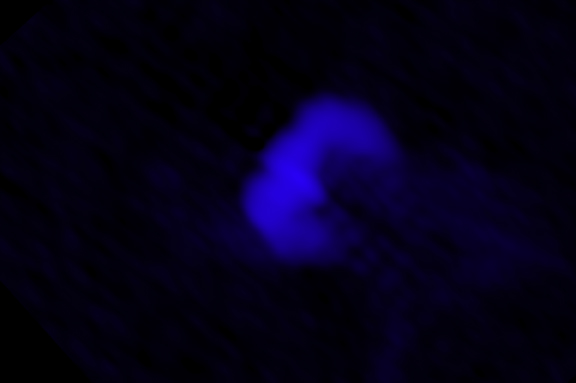

VLA Radio Image of NGC 4696 in the Centaurus Galaxy Cluster
This radio image shows NGC 4696, the elliptical galaxy at the center of the Centaurus galaxy cluster. At the galaxy's center is a supermassive black hole, one of nine black holes studied recently using NASA's Chandra X-ray Observatory. Taken by NRAO's Very Large Array (VLA), the radio data of NGC 4696 (left) show high-energy jets generated by the black hole. The image on the right is a composite of the radio and X-ray data, rotated and with a larger field of view.
Scale: Left image is 2.3 by 1.6 arcmin; Right image is 3 arcmin per side
(Credit: NRAO/AUI/NSF/G.Taylor)
This radio image shows NGC 4696, the elliptical galaxy at the center of the Centaurus galaxy cluster. At the galaxy's center is a supermassive black hole, one of nine black holes studied recently using NASA's Chandra X-ray Observatory. Taken by NRAO's Very Large Array (VLA), the radio data of NGC 4696 (left) show high-energy jets generated by the black hole. The image on the right is a composite of the radio and X-ray data, rotated and with a larger field of view.
Scale: Left image is 2.3 by 1.6 arcmin; Right image is 3 arcmin per side
(Credit: NRAO/AUI/NSF/G.Taylor)
3
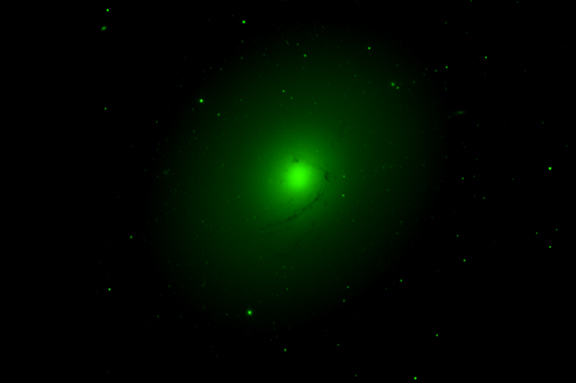
Hubble Near-Infrared Image of NGC 4696 in the Centaurus Galaxy Cluster
This near-infrared image, taken by the Hubble Space Telescope, reveals stars in NGC 4696. NGC 4696 is a large elliptical galaxy in the Centaurus Galaxy Cluster, about 150 million light years from Earth.
Scale: Image is 2.3 by 1.6 arcmin
(Credit: NASA/ESA/McMaster Univ./W.Harris)
This near-infrared image, taken by the Hubble Space Telescope, reveals stars in NGC 4696. NGC 4696 is a large elliptical galaxy in the Centaurus Galaxy Cluster, about 150 million light years from Earth.
Scale: Image is 2.3 by 1.6 arcmin
(Credit: NASA/ESA/McMaster Univ./W.Harris)
4
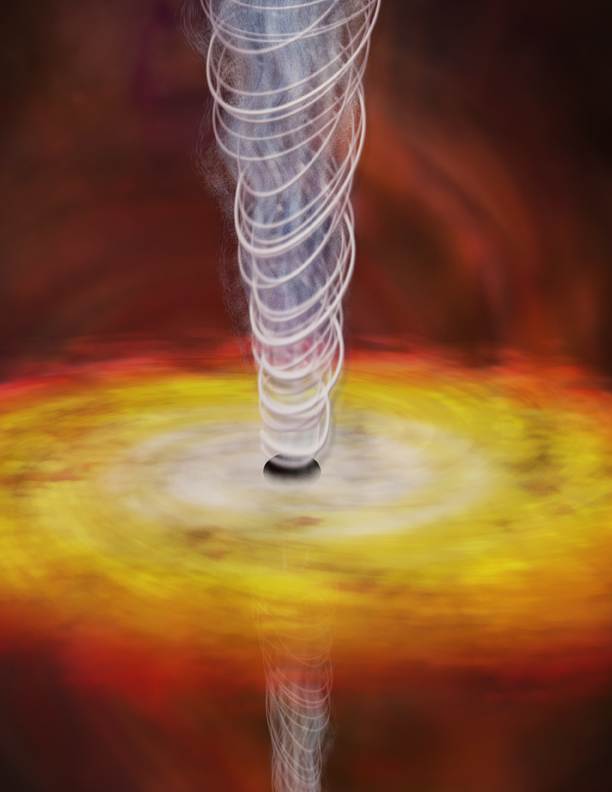
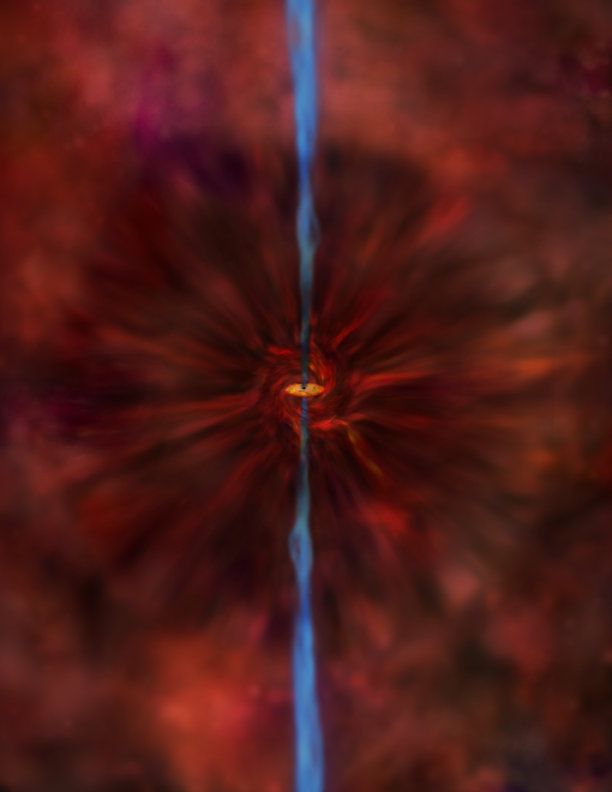
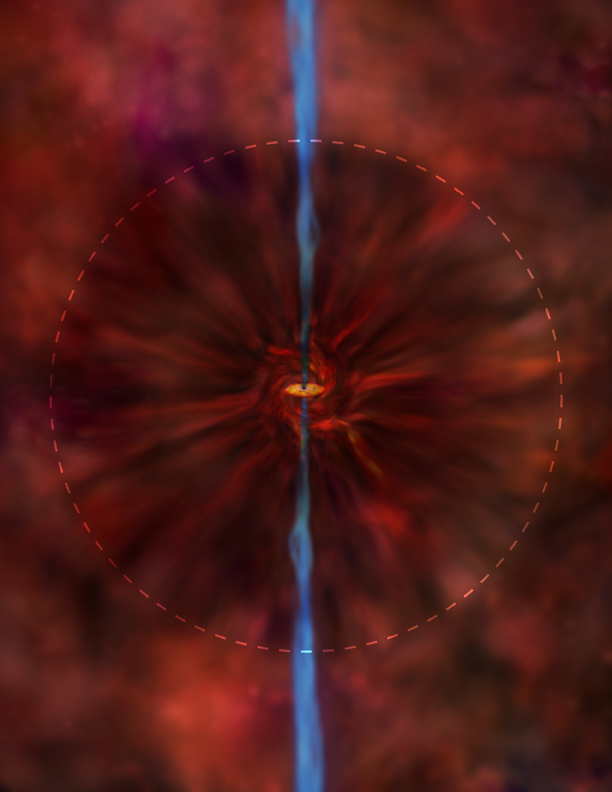
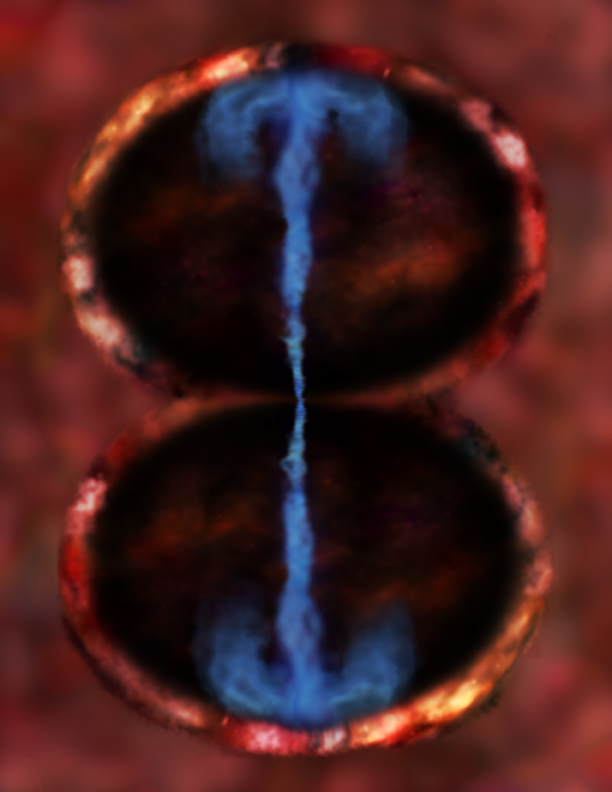
Illustration of Black Hole Engine
The first artist's illustration shows a close-up view of a supermassive black hole in a galaxy's center. Gas becomes hotter as it approaches the black hole, turning from red to yellow to white. Most of the gas is swallowed by the black hole, but some is launched in jets away from the black hole at almost the speed of light. The next illustration shows a larger area where gas is first attracted to the black hole, a region about a million times larger than the black hole's event horizon. The final illustration shows enormous cavities -- a hundred times larger -- that have been created in the galaxy's hot gas by jets from the black hole.
(Credit: NASA/CXC/M.Weiss)
The first artist's illustration shows a close-up view of a supermassive black hole in a galaxy's center. Gas becomes hotter as it approaches the black hole, turning from red to yellow to white. Most of the gas is swallowed by the black hole, but some is launched in jets away from the black hole at almost the speed of light. The next illustration shows a larger area where gas is first attracted to the black hole, a region about a million times larger than the black hole's event horizon. The final illustration shows enormous cavities -- a hundred times larger -- that have been created in the galaxy's hot gas by jets from the black hole.
(Credit: NASA/CXC/M.Weiss)
5



Still Images from Animation of Black Hole in Elliptical Galaxy
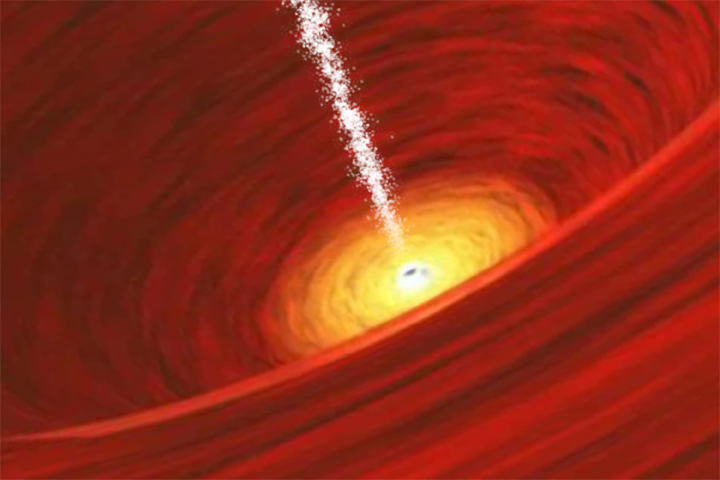
This artist's illustrations depicts a journey into the center of an elliptical galaxy. After traveling past stars in the outer part of the galaxy, the supermassive black hole located at the bright center of the galaxy becomes visible. This black hole is surrounded by hot gas shown in red and yellow, which acts as fuel for the black hole engine. Power generated by the engine flows away from the black hole via jets of high-energy particles.
(Credit: NASA/CXC/A.Hobart)
This artist's illustrations depicts a journey into the center of an elliptical galaxy. After traveling past stars in the outer part of the galaxy, the supermassive black hole located at the bright center of the galaxy becomes visible. This black hole is surrounded by hot gas shown in red and yellow, which acts as fuel for the black hole engine. Power generated by the engine flows away from the black hole via jets of high-energy particles.
(Credit: NASA/CXC/A.Hobart)
6
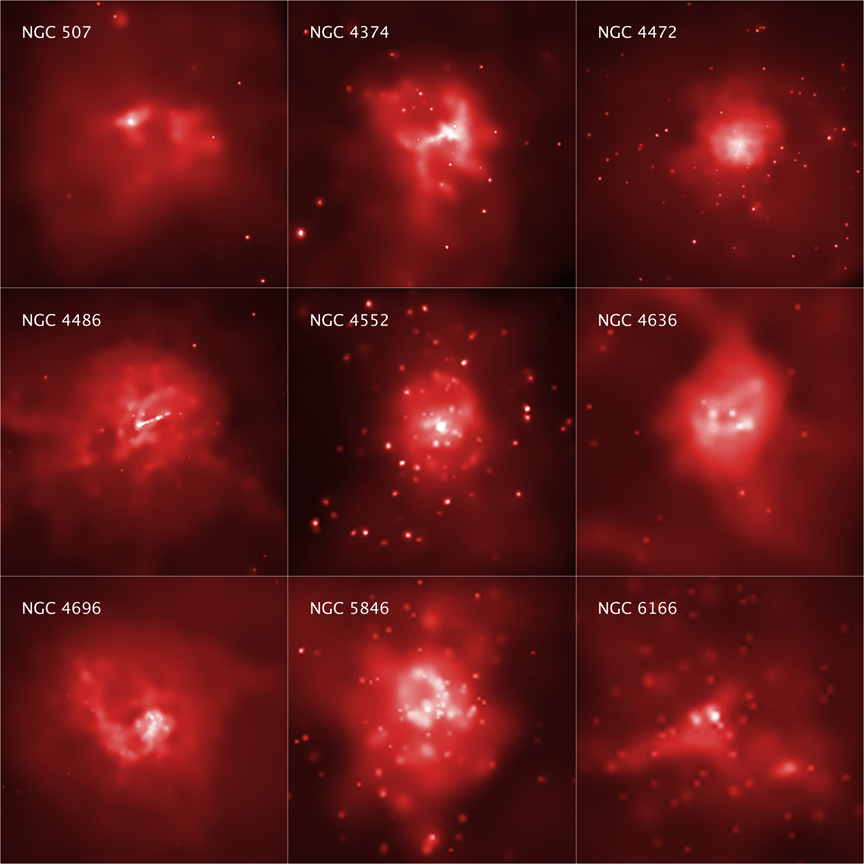
Chandra X-ray Images of Elliptical Galaxies
This set of Chandra images shows hot gas located in the nine different elliptical galaxies studied in this new work. Each of these galaxies shows evidence for cavities in the hot gas that were created by jets from the central black holes.
(Credit: NASA/CXC/Stanford U./S.Allen et al.)
This set of Chandra images shows hot gas located in the nine different elliptical galaxies studied in this new work. Each of these galaxies shows evidence for cavities in the hot gas that were created by jets from the central black holes.
(Credit: NASA/CXC/Stanford U./S.Allen et al.)
| Individual Images from 9-Panel of Elliptical Galaxies |