



CXC Home | Search | Help | Image Use Policy | Latest Images | Privacy | Accessibility | Glossary | Q&A
1
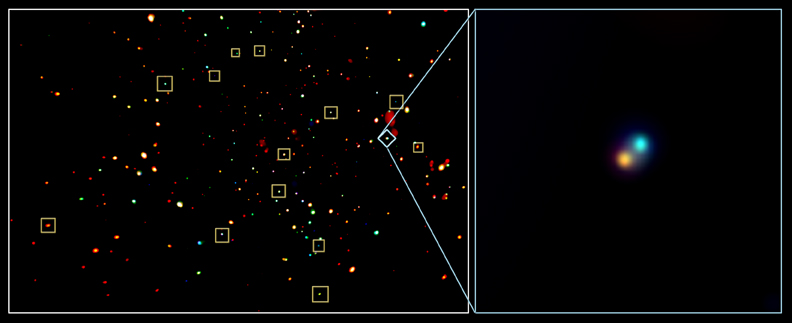
Chandra X-ray Image of SMG 123616.1+621513 in Context of CDFN
By combining data from the Chandra Deep Field-North with observations at submillimeter and optical wavelengths, an international team of scientists has found evidence that many extremely luminous adolescent galaxies and their central black holes underwent a phenomenal spurt of growth 10 billion to 12 billion years ago. This growth spurt may have set the stage for the appearance of quasars, distant galaxies that contain the largest and most active black holes in the Universe.
Scale: 18 x 12 arcmin; Inset is 1 arcmin per side
(Credit: X-ray: NASA/CXC/IoA/D.Alexander et al.)
By combining data from the Chandra Deep Field-North with observations at submillimeter and optical wavelengths, an international team of scientists has found evidence that many extremely luminous adolescent galaxies and their central black holes underwent a phenomenal spurt of growth 10 billion to 12 billion years ago. This growth spurt may have set the stage for the appearance of quasars, distant galaxies that contain the largest and most active black holes in the Universe.
Scale: 18 x 12 arcmin; Inset is 1 arcmin per side
(Credit: X-ray: NASA/CXC/IoA/D.Alexander et al.)
2
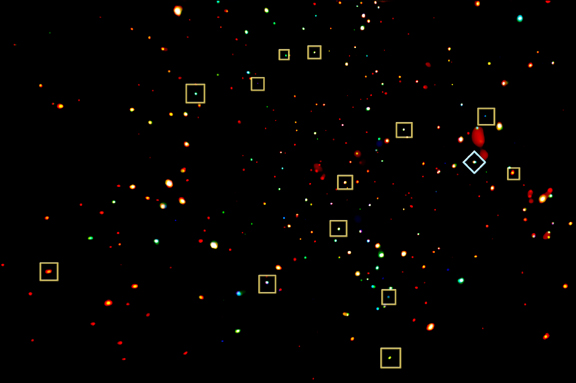
Chandra X-ray Image of Chandra Deep Field-North
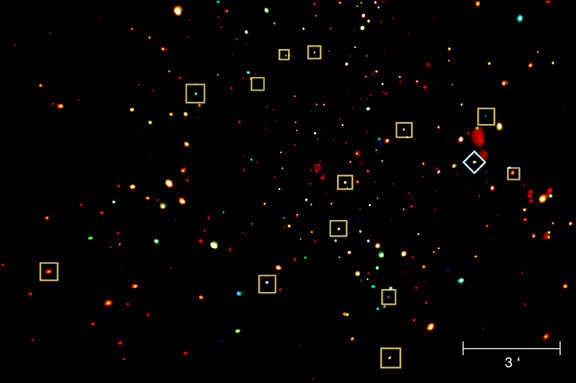
By combining data from the Chandra Deep Field-North with observations at submillimeter and optical wavelengths, an international team of scientists has found evidence that many extremely luminous adolescent galaxies and their central black holes underwent a phenomenal spurt of growth 10 billion to 12 billion years ago. This growth spurt may have set the stage for the appearance of quasars, distant galaxies that contain the largest and most active black holes in the Universe. The galaxies marked in the image are known as submillimeter galaxies, because they were originally identified by the James Clerk Maxwell submillimeter telescope (JCMT) on Mauna Kea in Hawaii. Hubble Space Telescope observations indicate that most of the submillimeter galaxies are actually two galaxies that are colliding and merging.
Scale: 18 x 12 arcmin
(Credit: X-ray: NASA/CXC/IoA/D.Alexander et al.)
By combining data from the Chandra Deep Field-North with observations at submillimeter and optical wavelengths, an international team of scientists has found evidence that many extremely luminous adolescent galaxies and their central black holes underwent a phenomenal spurt of growth 10 billion to 12 billion years ago. This growth spurt may have set the stage for the appearance of quasars, distant galaxies that contain the largest and most active black holes in the Universe. The galaxies marked in the image are known as submillimeter galaxies, because they were originally identified by the James Clerk Maxwell submillimeter telescope (JCMT) on Mauna Kea in Hawaii. Hubble Space Telescope observations indicate that most of the submillimeter galaxies are actually two galaxies that are colliding and merging.
Scale: 18 x 12 arcmin
(Credit: X-ray: NASA/CXC/IoA/D.Alexander et al.)
3
Chandra X-ray Image of SMG 123616.1+621513
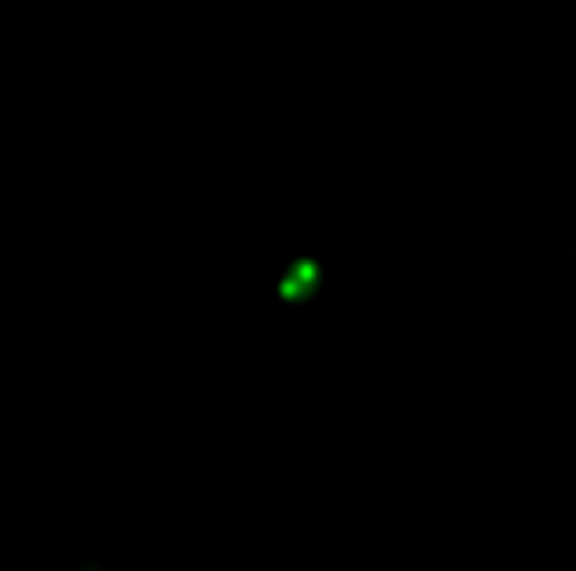
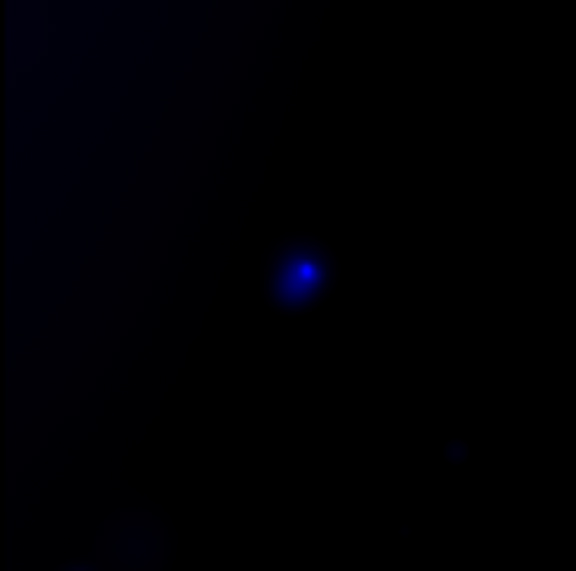
This Chandra image shows SMG 123616.1+621513, two central black holes in merging galaxies. Although the black holes appear to be very close in this image, they are actually about 70,000 light years apart. Observations indicate that many adolescent merging galaxies and their central black holes underwent a phenomenal spurt of growth 10 billion to 12 billion years ago. This growth spurt may have set the stage for the appearance of quasars, distant galaxies that contain the largest and most active black holes in the Universe. The different colors in the image are due to differences in X-ray absorption by gas and dust around the black holes with blue indicating more absorption than red. This image has been rotated 45 degrees clockwise from North.
Scale: 1 arcmin per side
(Credit: X-ray: NASA/CXC/IoA/D.Alexander et al.)
This Chandra image shows SMG 123616.1+621513, two central black holes in merging galaxies. Although the black holes appear to be very close in this image, they are actually about 70,000 light years apart. Observations indicate that many adolescent merging galaxies and their central black holes underwent a phenomenal spurt of growth 10 billion to 12 billion years ago. This growth spurt may have set the stage for the appearance of quasars, distant galaxies that contain the largest and most active black holes in the Universe. The different colors in the image are due to differences in X-ray absorption by gas and dust around the black holes with blue indicating more absorption than red. This image has been rotated 45 degrees clockwise from North.
Scale: 1 arcmin per side
(Credit: X-ray: NASA/CXC/IoA/D.Alexander et al.)
4
Illustration of Merging Spiral Galaxies
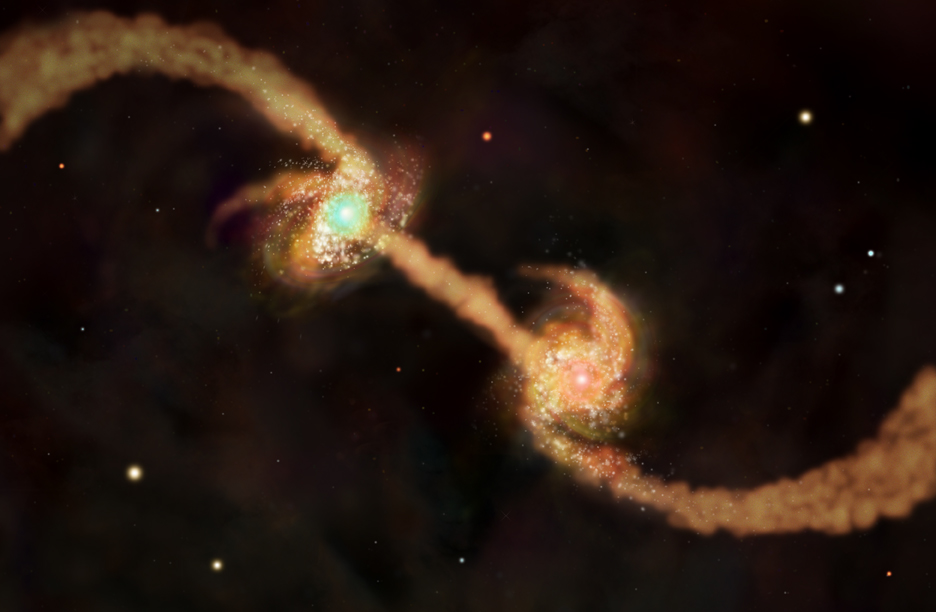
This illustration shows two spiral galaxies - each with supermassive black holes at their center - as they are about to collide. The latest Chandra results suggest that such collisions may cause extreme black hole and galaxy growth in the early Universe, setting the stage for the birth of quasars.
(Credit: NASA/CXC/M.Weiss)
This illustration shows two spiral galaxies - each with supermassive black holes at their center - as they are about to collide. The latest Chandra results suggest that such collisions may cause extreme black hole and galaxy growth in the early Universe, setting the stage for the birth of quasars.
(Credit: NASA/CXC/M.Weiss)
5
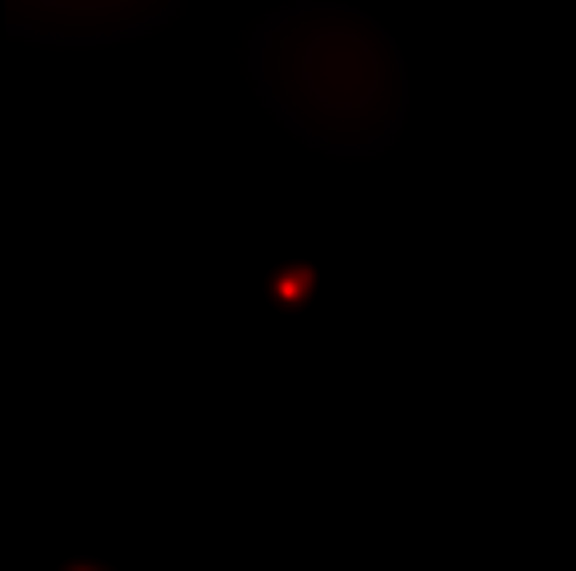
Chandra X-ray Image of SMG 123616.1+621513 with Scale Bar
Scalebar: 0.2 arcmin
(Credit: NASA/CXC/IoA/D.Alexander et al.)
Scalebar: 0.2 arcmin
(Credit: NASA/CXC/IoA/D.Alexander et al.)
6
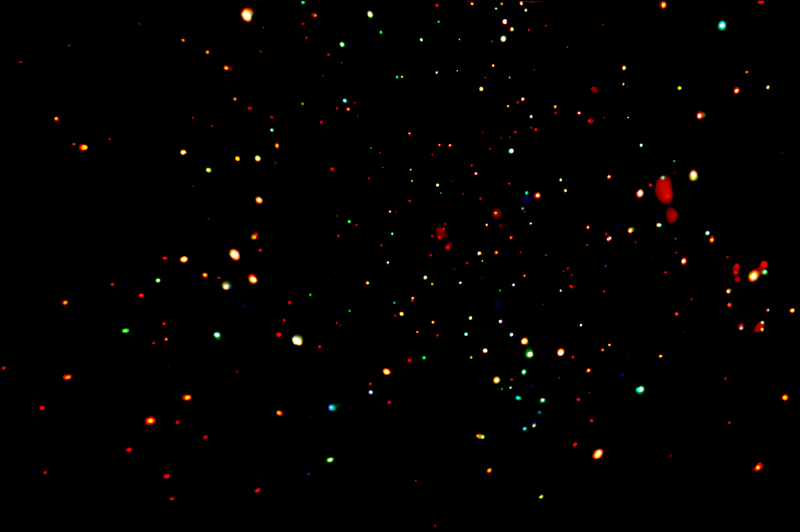
Chandra X-ray Image of Chandra Deep Field-North with Scale Bar
Scalebar: 3 arcmin
(Credit: NASA/CXC/IoA/D.Alexander et al.)
Scalebar: 3 arcmin
(Credit: NASA/CXC/IoA/D.Alexander et al.)
Return to Submillimeter Galaxies in the Chandra Deep Field-North (SMG 123616.1+621513) (06 Apr 05)


Revised: July 16, 2008