

CXC Home | Search | Help | Image Use Policy | Latest Images | Privacy | Accessibility | Glossary | Q&A
Tour of Kepler
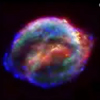
Quicktime MPEG The supernova explosion that created this object was witnessed on Earth about 400 ago years by many skywatchers, including the astronomer Johannes Kepler. This object, which now bears Kepler's name, is the remains of a massive star's demise. Visible-light from Hubble reveals where the supernova shock wave is slamming into the densest regions of surrounding gas. Spitzer shows microscopic dust particles that have been heated by the supernova shock wave. The X-ray data from Chandra show regions of very hot gas as well as extremely high-energy particles. The remnant of Kepler's supernova is possibly the last supernova seen to explode in our Galaxy. It is located about 13,000 light years from Earth.
[Runtime: 0:46]
( Credit: NASA/ESA/JHU/R.Sankrit & W.Blair)
Quicktime MPEG The supernova explosion that created this object was witnessed on Earth about 400 ago years by many skywatchers, including the astronomer Johannes Kepler. This object, which now bears Kepler's name, is the remains of a massive star's demise. Visible-light from Hubble reveals where the supernova shock wave is slamming into the densest regions of surrounding gas. Spitzer shows microscopic dust particles that have been heated by the supernova shock wave. The X-ray data from Chandra show regions of very hot gas as well as extremely high-energy particles. The remnant of Kepler's supernova is possibly the last supernova seen to explode in our Galaxy. It is located about 13,000 light years from Earth.
[Runtime: 0:46]
( Credit: NASA/ESA/JHU/R.Sankrit & W.Blair)
Zoom into Kepler's Supernova Remnant
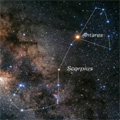
This zoom-in begins in the Scorpius constellation and pushes through deeper and narrower telescopic fields to reach a composite of images of Kepler's Supernova Remnant, from NASA's Chandra X-ray Observatory, Hubble Space Telescope, and Spitzer Space Telescope.
[Run Time: 0:21]
(Credit: NASA/ESA/STScI)
 |
||||||
QuickTime |
|
147.9 MB |
||||
|
||||||
MPEG |
|
|||||
This zoom-in begins in the Scorpius constellation and pushes through deeper and narrower telescopic fields to reach a composite of images of Kepler's Supernova Remnant, from NASA's Chandra X-ray Observatory, Hubble Space Telescope, and Spitzer Space Telescope.
[Run Time: 0:21]
(Credit: NASA/ESA/STScI)
Kepler's SNR: Views from Chandra, Hubble & Spitzer
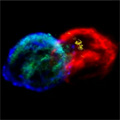
The composite image of Kepler's Supernova Remnant explodes into its three components: blue & green for the Chandra X-ray Observatory, yellow for the Hubble Space Telescope, and red for the Spitzer Space Telescope. Each observatory's full image is then shown side-by-side for comparison, beginning with Chandra, then Hubble, and finally Spitzer.
[Run Time: 0:27]
(Credit: NASA/JPL/Caltech/R.Hurt)
|
||||||
QuickTime |
|
45.7 MB |
||||
|
||||||
MPEG |
|
|||||
The composite image of Kepler's Supernova Remnant explodes into its three components: blue & green for the Chandra X-ray Observatory, yellow for the Hubble Space Telescope, and red for the Spitzer Space Telescope. Each observatory's full image is then shown side-by-side for comparison, beginning with Chandra, then Hubble, and finally Spitzer.
[Run Time: 0:27]
(Credit: NASA/JPL/Caltech/R.Hurt)
SUPERNOVA EXPLOSION
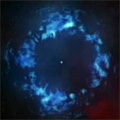
Quicktime MPEG Every 50 years or so, a massive star in our galaxy blows itself apart in a supernova explosion. Supernovas are one of the most violent events in the universe, and the force of the explosion generates a blinding flash of radiation, as well as shock waves analogous to sonic booms. In this animation, a massive star explodes creating a shell of hot gas that glows brightly in X-rays. These X-rays reveal the dynamics of the explosion.
[Runtime: 0:16]
(Animation: NASA/CXC/D.Berry & A.Hobart)
View Still Photos
Field Guide: Supernovas & Supernova Remnants
Quicktime MPEG Every 50 years or so, a massive star in our galaxy blows itself apart in a supernova explosion. Supernovas are one of the most violent events in the universe, and the force of the explosion generates a blinding flash of radiation, as well as shock waves analogous to sonic booms. In this animation, a massive star explodes creating a shell of hot gas that glows brightly in X-rays. These X-rays reveal the dynamics of the explosion.
[Runtime: 0:16]
(Animation: NASA/CXC/D.Berry & A.Hobart)
View Still Photos
Field Guide: Supernovas & Supernova Remnants
NASA's Three Great Observatories
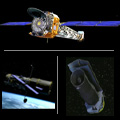
NASA's three Great Observatories -- the Hubble Space Telescope, the Spitzer Space Telescope, and the Chandra X-ray Observatory -- joined forces to probe the expanding remains of a supernova. Now known as Kepler's supernova remnant, this object was first seen 400 years ago by sky watchers, including famous astronomer Johannes Kepler. This animation shows a short segment of each of the three Great Observatories (Chandra, Hubble, and Spitzer) as depicted in their orbits.
[Run Time: 0:37]
(Credit: Chandra: NASA/CXC/A.Hobart; Hubble: NASA/ESA/STScI/G.Bacon; Spitzer: NASA/JPL)
|
Unlabeled |
Labeled |
|||
|
|||||
QuickTime |
|
||||
|
|||||
MPEG |
|
||||
NASA's three Great Observatories -- the Hubble Space Telescope, the Spitzer Space Telescope, and the Chandra X-ray Observatory -- joined forces to probe the expanding remains of a supernova. Now known as Kepler's supernova remnant, this object was first seen 400 years ago by sky watchers, including famous astronomer Johannes Kepler. This animation shows a short segment of each of the three Great Observatories (Chandra, Hubble, and Spitzer) as depicted in their orbits.
[Run Time: 0:37]
(Credit: Chandra: NASA/CXC/A.Hobart; Hubble: NASA/ESA/STScI/G.Bacon; Spitzer: NASA/JPL)
Interview with Dr. William Blair
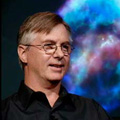
Dr. William Blair (John Hopkins University), principal investigator of the Spitzer observations, points out what the observations tell us about Kepler's Supernova Remnant and also why multi-wavelength capabilities are important.
[Run Time: 1:19]
(Credit: NASA/ESA/STScI)
|
||||||
QuickTime |
|
|||||
|
||||||
MPEG |
|
|||||
Dr. William Blair (John Hopkins University), principal investigator of the Spitzer observations, points out what the observations tell us about Kepler's Supernova Remnant and also why multi-wavelength capabilities are important.
[Run Time: 1:19]
(Credit: NASA/ESA/STScI)
Interview with Dr. Ravi Sankrit
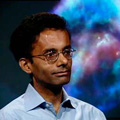
Dr. Ravi Sankrit (John Hopkins University), principal investigator of the Hubble observations, discusses the benefit of having three observatories and multi-wavelength capabilities and also what he feels is Johannes Kepler's legacy 400 years after his observation.
[Run Time: 1:08]
(Credit: NASA/ESA/STScI)
|
||||||
QuickTime |
|
|||||
|
||||||
MPEG |
|
|||||
Dr. Ravi Sankrit (John Hopkins University), principal investigator of the Hubble observations, discusses the benefit of having three observatories and multi-wavelength capabilities and also what he feels is Johannes Kepler's legacy 400 years after his observation.
[Run Time: 1:08]
(Credit: NASA/ESA/STScI)

Interview with Dr. Daniel Lewis
Dr. Daniel Lewis, curator for History of Science and Technology at Huntington Library, comments on what he feels is Johannes Kepler's legacy 400 years after his observation and what he feels is the significance of the 1604 event.
[Run Time: 0:38]
(Credit: NASA/ESA/JPL/G.Lee)
|
||||||
QuickTime |
|
|||||
|
||||||
MPEG |
|
|||||
Dr. Daniel Lewis, curator for History of Science and Technology at Huntington Library, comments on what he feels is Johannes Kepler's legacy 400 years after his observation and what he feels is the significance of the 1604 event.
[Run Time: 0:38]
(Credit: NASA/ESA/JPL/G.Lee)
Return to Kepler's Supernova Remnant (06 Oct 04)


Revised: May 17, 2022