


CXC Home | Search | Help | Image Use Policy | Latest Images | Privacy | Accessibility | Glossary | Q&A
1
Deep Field, X-ray/Optical
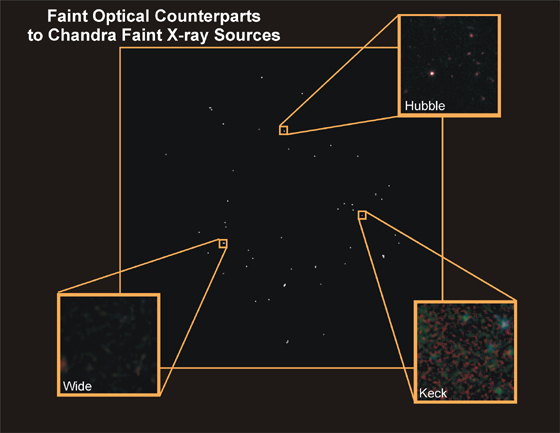
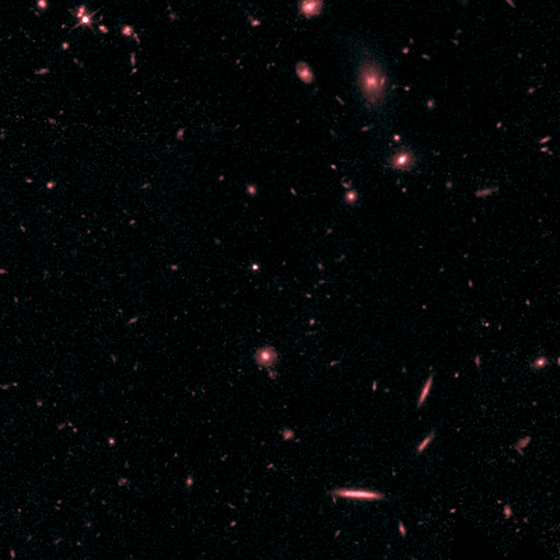
Now you don't see it; now you do. The invisible swath of X-ray radiation that baths the universe arises in large part from X-ray-bright, optically faint galaxies at extremely far distances. Above, the "big three" -- Hubble Space Telescope, Keck Observatory and The University of Hawaii 2.2 meter telescope -- detect no or little evidence of any light source. The Chandra X-ray Observatory, peering in the same deep field, spots the culprits. The observation suggests that the Hubble Deep Field may have missed a large population of Active Galaxies.
(Credit: NASA/GSFC/R.Mushotzky et al. )
Now you don't see it; now you do. The invisible swath of X-ray radiation that baths the universe arises in large part from X-ray-bright, optically faint galaxies at extremely far distances. Above, the "big three" -- Hubble Space Telescope, Keck Observatory and The University of Hawaii 2.2 meter telescope -- detect no or little evidence of any light source. The Chandra X-ray Observatory, peering in the same deep field, spots the culprits. The observation suggests that the Hubble Deep Field may have missed a large population of Active Galaxies.
(Credit: NASA/GSFC/R.Mushotzky et al. )
2
Deep Field, Optical Overlay
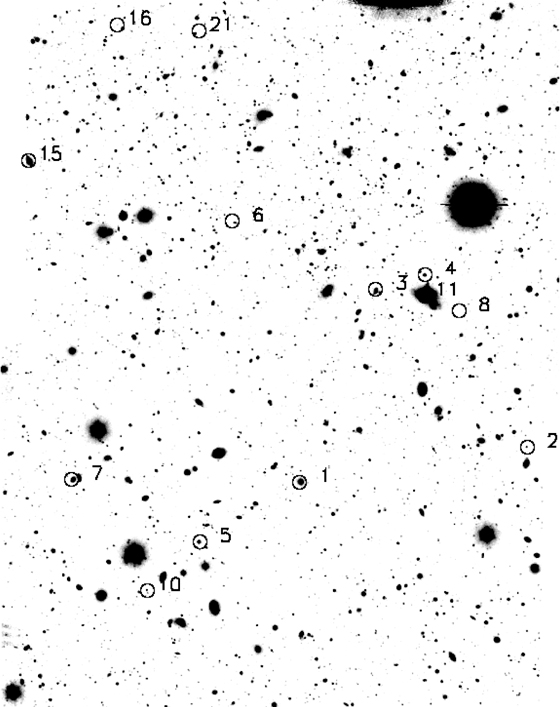
This is an optical image of the Chandra X-ray field. The circles indicate regions when Chandra has detected an X-ray source. Note that many circles (6,8,16,21) do not show an optical source at their center.
(Credit: NASA/GSFC/R.Mushotzky et al.)
This is an optical image of the Chandra X-ray field. The circles indicate regions when Chandra has detected an X-ray source. Note that many circles (6,8,16,21) do not show an optical source at their center.
(Credit: NASA/GSFC/R.Mushotzky et al.)
3
Deep Field, Optical/X-ray
Superimposed
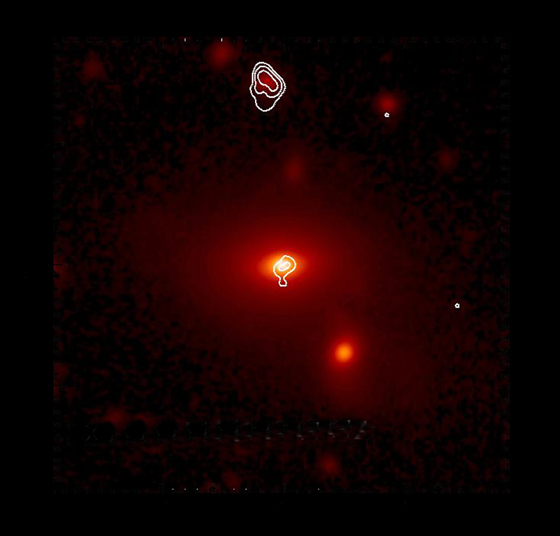
This is an optical image with X-ray data superimposed.
(Credit: NASA/GSFC/R.Mushotzky et al.)
This is an optical image with X-ray data superimposed.
(Credit: NASA/GSFC/R.Mushotzky et al.)
4
Chandra X-ray Image with Scale
Bar
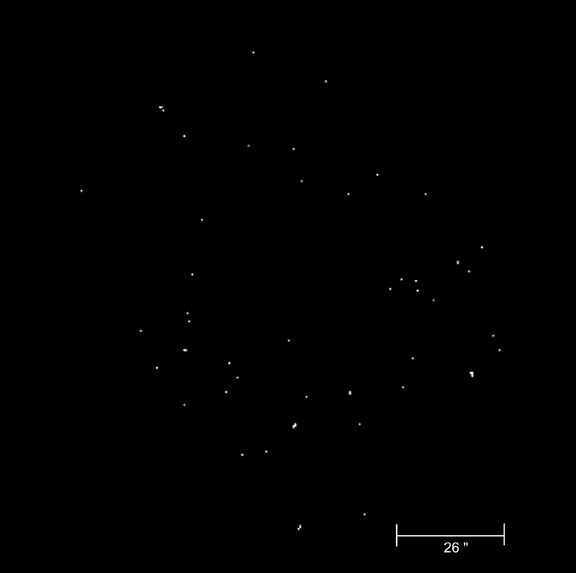
Scale bar = 26 arcsec
(Credit: NASA/GSFC (Mushotzky et al.))
Scale bar = 26 arcsec
(Credit: NASA/GSFC (Mushotzky et al.))
5
Build your own comparison.
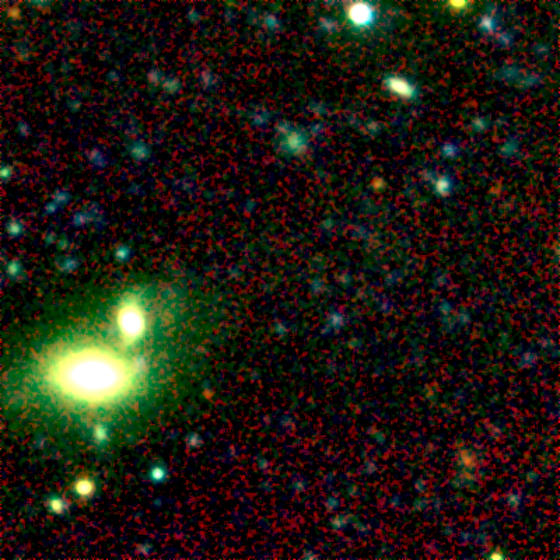
These are three optical counterparts within the X-ray field shown above. From the above images, we have a Hubble Space Telescope image (left), a Keck Observatory image (middle), and the University of Hawaii 2.2 meter (right). Please note that these images coorespond to a small region within the background, as shown above. Draw your focus to the very center of each optical image; the optical field is empty.
(Credit: University of Hawaii, L. Cowie)
These are three optical counterparts within the X-ray field shown above. From the above images, we have a Hubble Space Telescope image (left), a Keck Observatory image (middle), and the University of Hawaii 2.2 meter (right). Please note that these images coorespond to a small region within the background, as shown above. Draw your focus to the very center of each optical image; the optical field is empty.
(Credit: University of Hawaii, L. Cowie)
Return to Deep Field (13 Jan 00)


Revised: July 08, 2008