

CXC Home | Search | Help | Image Use Policy | Latest Images | Privacy | Accessibility | Glossary | Q&A
Q:
Someone once said : "Time and space are modes by which we think and not a condition in which we live." I did not get exactly what it meant. Can you help me?
A:
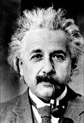
Albert Einstein
(Credit: Caltech)
It is impossible to say that two things happen at the same time. It depends on the motion of the observer. For example, suppose you were standing in your room and saw two distant flares go off at the same time, one in the southwest, and one in the northwest. A pilot flying from south to north in a supersonic aircraft would see the two flares, too, but because he is moving toward the flare in the northwest, then the light from it would reach him a fraction of a second before the light from the flare in the southwest. This effect has strange consequences for speeds close to the speed of light. Particles that are known to have a lifetime of two micro-seconds when they are at rest appear to have lifetimes of 100 micro-seconds when they are moving at speeds very close to the speed of light. The same thing would happen to us if we could move close to the speed of light. We would think we were living a normal life, but a person on Earth would think we were living much longer than normal. The same holds for the length of an object. Its length depends on the speed at which it is moving relative to the measuring device. Fortunately we can work it all out with the formulas given by Einstein's theory.
So, we don't live in just space or time, but in space-time. Here is a quote from Hermann Minkowski, one of Einstein's professors who once called Albert "a lazy dog", but later became famous for working on Einstein's theory of relativity:
"Henceforth space by itself, and time by itself, are doomed to fade away into mere shadows, and only a kind of union of the two will preserve an independent reality."
Strong gravitational fields, like those thought to exist around black holes, can also warp space and time and cause even weirder effects, but that is another story.


Revised: September 15, 2008