

CXC Home | Search | Help | Image Use Policy | Latest Images | Privacy | Accessibility | Glossary | Q&A
October 08, 2002
RELEASE: 02-197
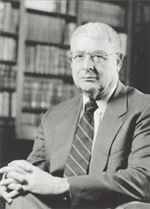
Riccardo Giacconi, the "father of X-ray astronomy," has received the Nobel Prize in physics for "pioneering contributions to astrophysics," which have led to the discovery of cosmic X-ray sources.
Giacconi, president of the Associated Universities Inc., in Washington, and Research Professor of Physics and Astronomy at Johns Hopkins University, Baltimore, discovered the first X-ray stars and the X-ray background in the 1960s and conceived of and led the implementation of the Uhuru and High Energy Astronomy Observatory-2 (HEAO-2) X-ray observatories in the 1970s. With funding from NASA, he also detected sources of X-rays that most astronomers now consider to contain black holes.
Giacconi said that receiving the award confirms the importance of X-ray astronomy. "I think I'm one of the first to get the Nobel prize for work with NASA, so that's good for NASA and I think it's also good for the field," he said. "It's also nice for all the other people who've worked in this field. I recognize that I was never alone. I'm happy for me personally, I'm happy for my family, and I'm happy for the field and for NASA," Giacconi added.
In 1976, Giacconi along with Harvey Tananbaum of the Harvard- Smithsonian Center for Astrophysics, Cambridge, Mass., submitted a proposal letter to NASA to initiate the study and design of a large X-ray telescope. In 1977 work began on the program, which was then known as the Advanced X-ray Astrophysics Facility and in 1998 renamed the Chandra X-ray Observatory.
"Partnerships with universities and scientists are essential in our quest to answer the fundamental questions of the universe," said Dr. Ed Weiler, NASA Associate Administrator for Space Science, Headquarters, Washington. "Dr. Giacconi's achievements are a brilliant example of this synergy among NASA, universities and their community of scientists and students," he said.
Giacconi is Principal Investigator for the ultradeep survey with Chandra -- the "Chandra Deep Field South" -- that has already obtained the deepest X-ray exposures to date with a million-second observation. He was also the first director of the Hubble Space Telescope Science Institute in Baltimore.
Giacconi, 71, received half the prize. Raymond Davis Jr., 87, of the University of Pennsylvania and Masatoshi Koshiba, 76, of the University of Tokyo will share the other half of the prize, worth about $1 million, for their research into cosmic neutrinos.
For more information visit: http://nobelprize.org/
Chandra Chronicles: A High-Energy Visonary Wins Nobel Prize
MEDIA CONTACTS
Dolores Beasley
Headquarters, Washington
Phone: 202-358-1753


Revised: October 03, 2012