An overview of the Chandra mission and goals, Chandra's namesake, top 10 facts.
Classroom activities, printable materials, interactive games & more.
Overview of X-ray Astronomy and X-ray sources: black holes to galaxy clusters.
All Chandra images released to the public listed by date & by category
Current Chandra press releases, status reports, interviews & biographies.
A collection of multimedia, illustrations & animations, a glossary, FAQ & more.
A collection of illustrations, animations and video.
Chandra discoveries in an audio/video format.
Rate This Image
Rating: 4.0/5
(50 votes cast)
Download Image

More Information

More Images
Chandra X-ray
Image of NGC 6240.3
(NASA/CXC/MIT/C.Canizares, M.Nowak)

Animation & Video

More Releases
NGC 6240
NGC 6240
(19 Nov 02)

Related Images
XTE J1550-564
XTE J1550-564
(03 Oct 02)
NGC 6240:
Black Holes Go "Mano A Mano"


NGC 6240
NGC 6240
NGC 6240

  • NGC 6240 is a galaxy that contains two supermassive black holes in the process of merging

  • Scientists think the merger began about 30 million years ago and will conclude some tens or hundreds of millions of years in the future

  • Understanding what happens when black holes merge is an open and active area of current astrophysics

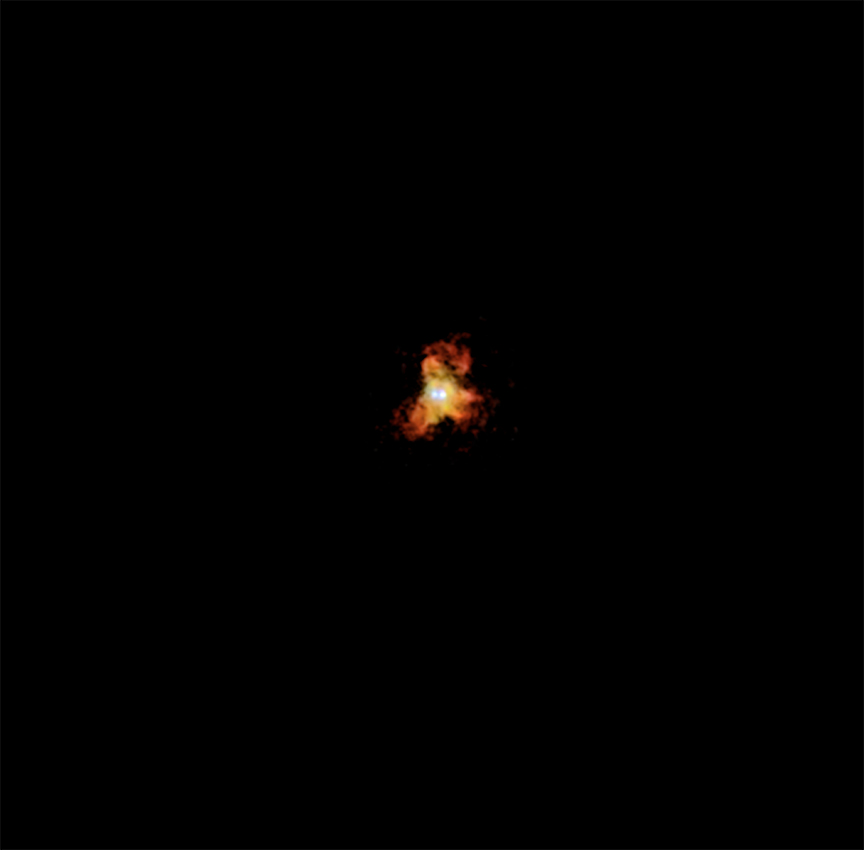
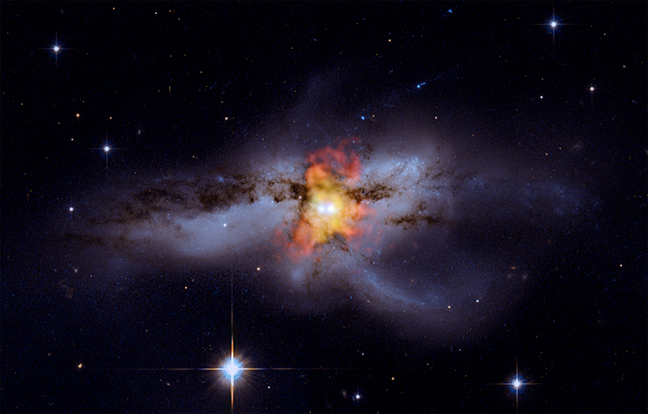
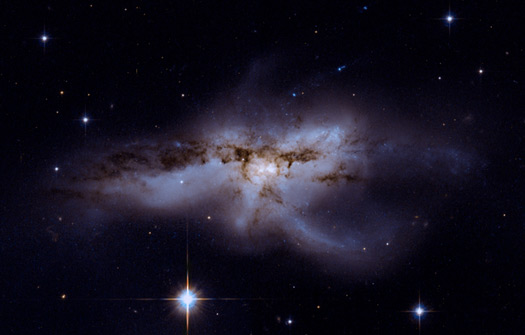
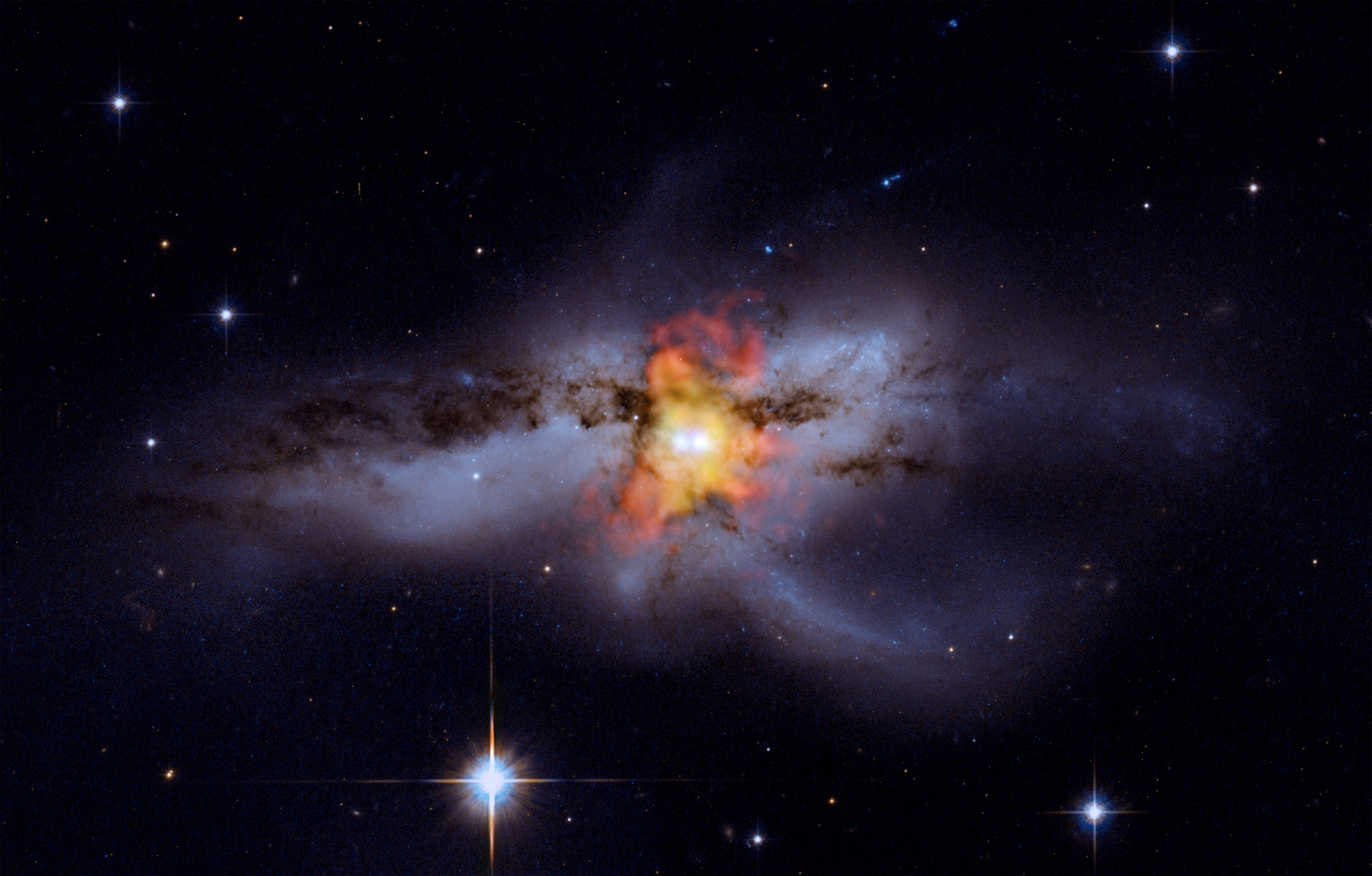
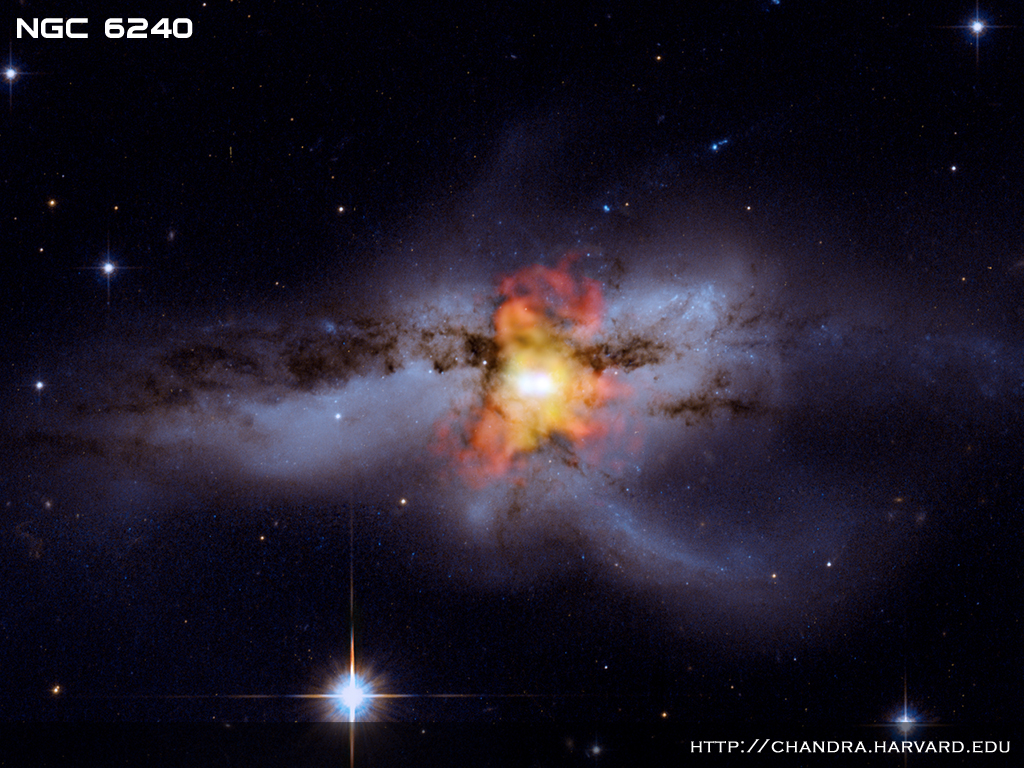
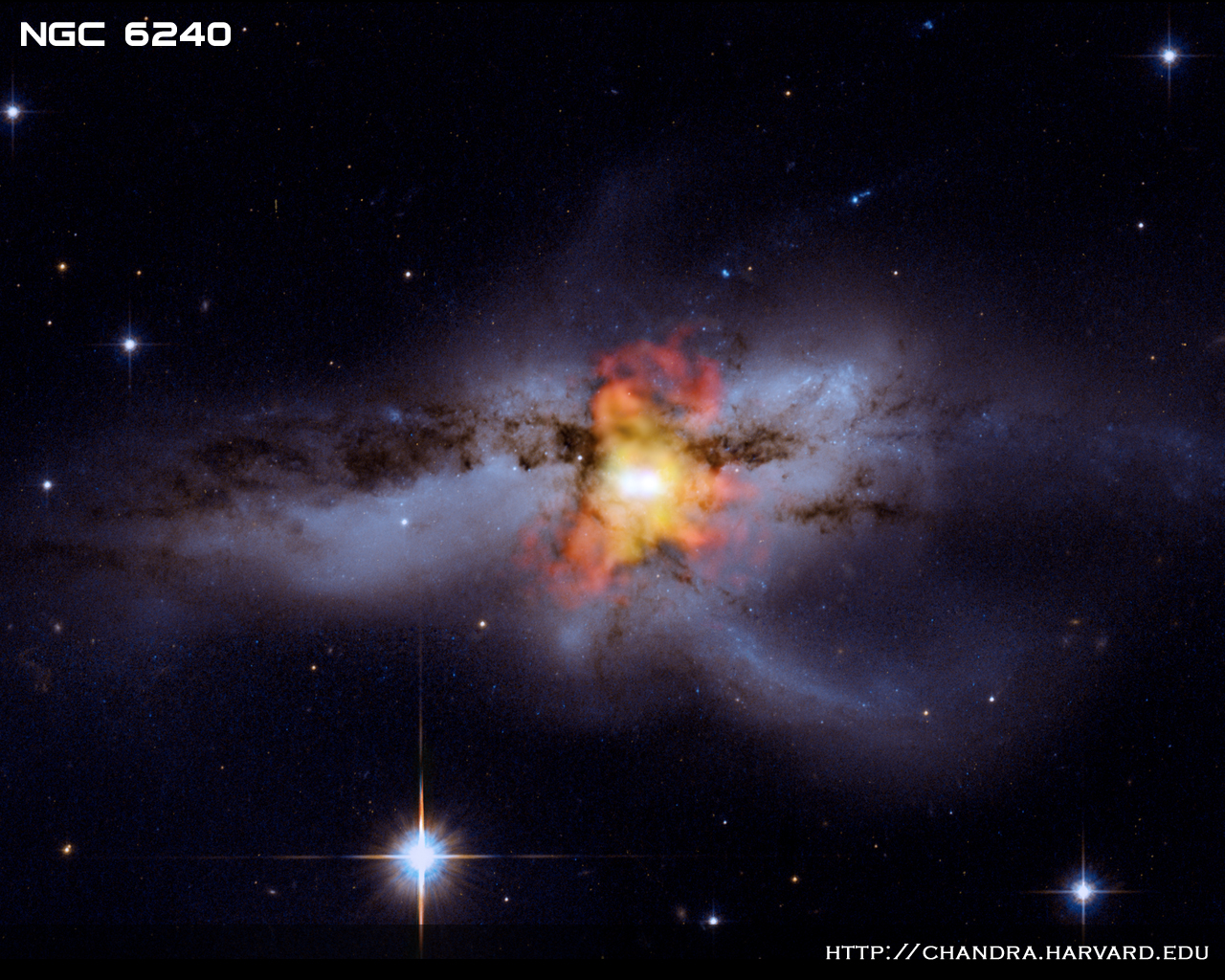
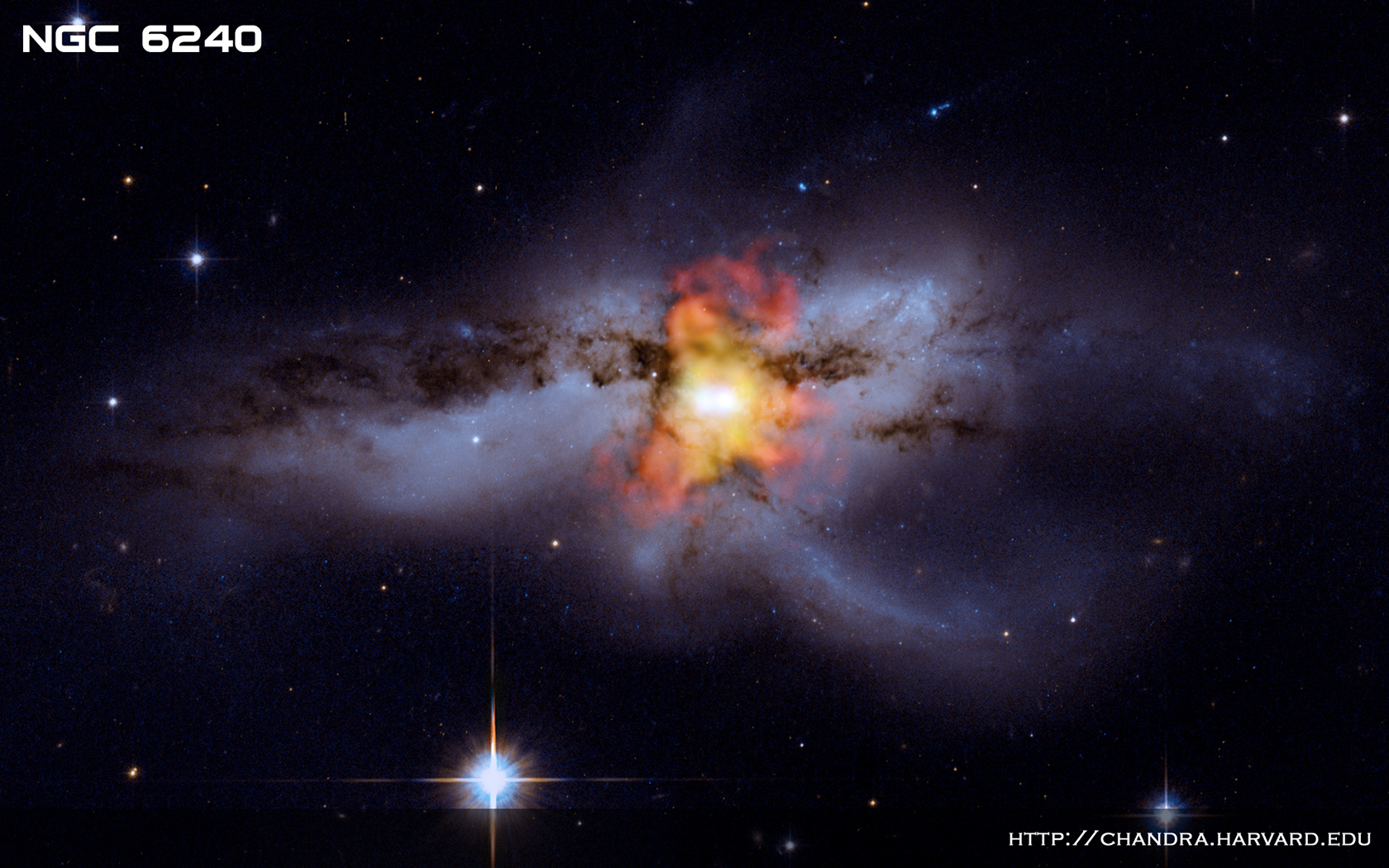
This image of NGC 6240 contains new X-ray data from Chandra (shown in red, orange, and yellow) that has been combined with an optical image from the Hubble Space Telescope originally released in 2008. In 2002, the discovery of two merging black holes was announced based on Chandra data in this galaxy. The two black holes are a mere 3,000 light years apart and are seen as the bright point-like sources in the middle of the image.

Scientists think these black holes are in such close proximity because they are in the midst of spiraling toward each other - a process that began about 30 million years ago. It is estimated that the two black holes will eventually drift together and merge into a larger black hole some tens or hundreds of millions of years from now.

Finding and studying merging black holes has become a very active field of research in astrophysics. Since 2002, there has been intense interest in follow-up observations of NGC 6240 by Chandra and other telescopes, as well as a search for similar systems. Understanding what happens when these exotic objects interact with one another remains an intriguing question for scientists.

The formation of multiple systems of supermassive black holes should be common in the Universe, since many galaxies undergo collisions and mergers with other galaxies, most of which contain supermassive black holes. It is thought that pairs of massive black holes can explain some of the unusual behavior seen by rapidly growing supermassive black holes, such as the distortion and bending seen in the powerful jets they produce. Also, pairs of massive black holes in the process of merging are expected to be the most powerful sources of gravitational waves in the Universe.


Fast Facts for NGC 6240:
Credit  X-ray (NASA/CXC/MIT/C.Canizares, M.Nowak); Optical (NASA/STScI)
Scale  Image is 124 arcmin across
Category  Black Holes, Normal Galaxies & Starburst Galaxies
Coordinates (J2000)  RA 16h 52m 59s | Dec +02° 24' 01.70"
Constellation  Ophiuchus
Observation Date  May 11, 2006
Observation Time  40 hours
Obs. ID  6909
Color Code  red (0.5-1.5 keV); green (1.5-5 keV); blue (5-8 keV)
Instrument  ACIS
Distance Estimate  About 330 million light years (redshift = 0.0245)
Release Date  October 06, 2009

Visitor Comments (10)

This is ecstatic and very educational, thank you for giving us this update.

Posted by sandra smith on Thursday, 11.12.09 @ 13:40pm


Ever since Hubble and Chandra images were avail for viewing, I am reminded of the awesome and Majestic hand of God and how thankful I am to be in this universe, and to Galileo, to have invented a seeing instrument, that is no more 3 to 4 ft long, to help humanity see so far. Every time I look at any of these cosmic views, I am in Love with.
The Wheel in the Sky and all the things in the Heavens it only gets sweeter and sweeter, the deeper I go.

Posted by venla on Friday, 11.6.09 @ 08:28am


Dear Polprav,
Yes, you can quote a post in your blog.

P. Edmonds, CXC

Posted by P Edmonds on Tuesday, 10.27.09 @ 13:33pm


The image is so attractive that I can,t stop looking at. The Universe is so marvelous that I don't know how to describe and mention. We are so lucky that we are born and live in this planet earth in the big big family of this full of astonishment Universe.

Posted by 27743 22283 28814 on Friday, 10.23.09 @ 20:02pm


Hello from Russia.
Can I quote a post in your blog with the link to you?

Posted by Polprav on Friday, 10.23.09 @ 00:59am


We give it 8 stars.

Posted by kuoeng on Tuesday, 10.20.09 @ 19:55pm


It is beyond imagination every picture an astonishing sample of the immensity of God's creation and man's accomplishment. Thanks for this investigations and research.

Posted by Alvaro Perilla on Saturday, 10.10.09 @ 11:56am


Beautiful.
The dance of these two supermassive black holes is so beautiful. I can not stop looking at this Image.
And I can see in my one mind the power of gravity and the gravitational waves coming from these two black holes.

Posted by John P Langridge on Wednesday, 10.7.09 @ 09:31am


Thanks for the image.
These new images are proving invaluable in testing theories.

Posted by Mark Ballington on Wednesday, 10.7.09 @ 03:59am


WOW, give it 5 stars.

Posted by Sherm Goodell on Tuesday, 10.6.09 @ 20:21pm


Leave Your Comment

Name:

Email:

Comments:


Rules