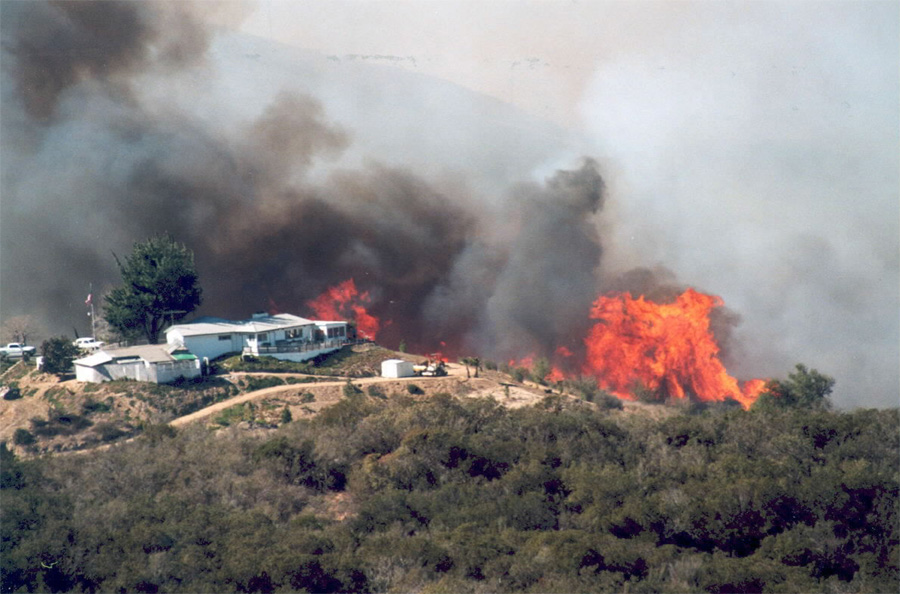
A year ago last February in a rural area of southern California,
extremely dry Santa Ana winds whipped the smoldering ashes of a
controlled burn back to life. In a matter of hours a full-fledged
wildfire was racing through a river valley and up steep canyon slopes at
speeds reaching 25 miles per hour. Within 24 hours, 45 homes were burned
to the ground and 5,000 acres of chaparral, sage brush, and avocado
groves were blackened. Miraculously no one was killed, although some
managed to survive only by immersing themselves in a cold swimming pool.

(Credit: J.Comella)
|
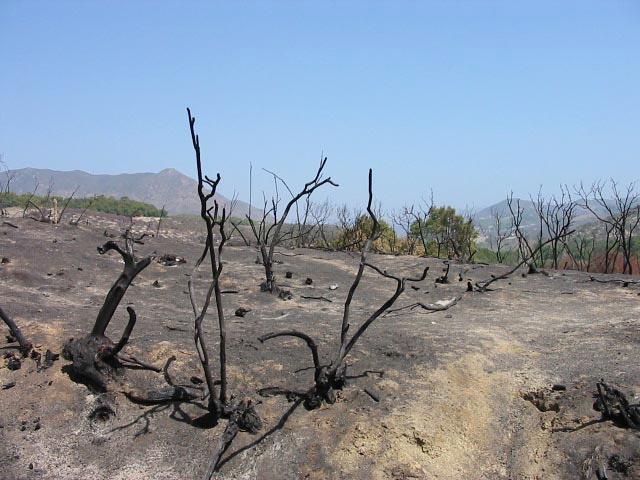
Looking at the thick layer of ashes and the charred stumps of manzanita
and live oaks, it was difficult to imagine how the area would ever
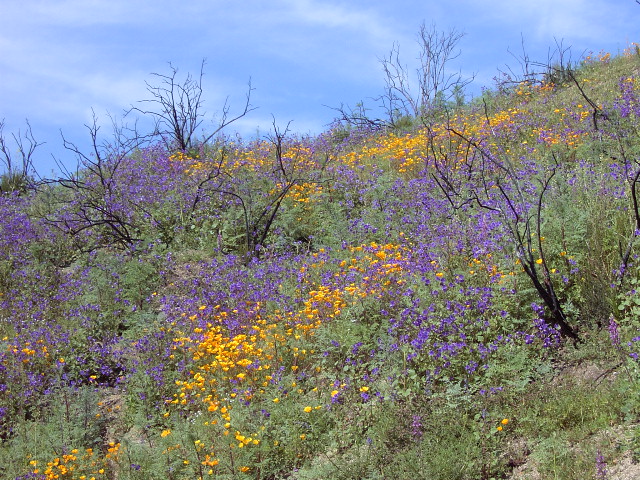
recover. Yet, the following winter a series of light rains fell and by
springtime the hills were alive with all the colors of the rainbow in
one of the most dazzling wildflower displays in memory. The rug of gray
ash had been transformed into a magic carpet of blue Canterbury-bells
and golden poppies, and black limbs were sprouting green. The process of
renewal had begun, in extravagant fashion.

(Credit: NASA/CXC/SAO)
|
Renewal is a constant theme of nature, often triggered by violent events
that unlock potential that has remained dormant for years - like the
wildflower seeds. Fortunately for us, many of the most dramatic examples
of renewal occur, not in our back yard, but thousands of light years away.
The cataclysm of a supernova which signals the death of a massive star would in all probability extinguish life on Earth if it occurred within a dozen or so light years. Whether supernovas have exterminated other civilizations in our galaxy is unknown, but it is certainly a possibility.

(Credit: NASA/CXC/PSU/S.Park et al.)
|
What is known is that supernovas renew the galaxy. They disperse
planet-building and live-giving elements manufactured in their interiors
- elements such as carbon, nitrogen, oxygen, silicon, calcium and iron -
over regions thousands of light years in diameter.

(Credit: HST)
|

(Credit: NASA/PSU)
|
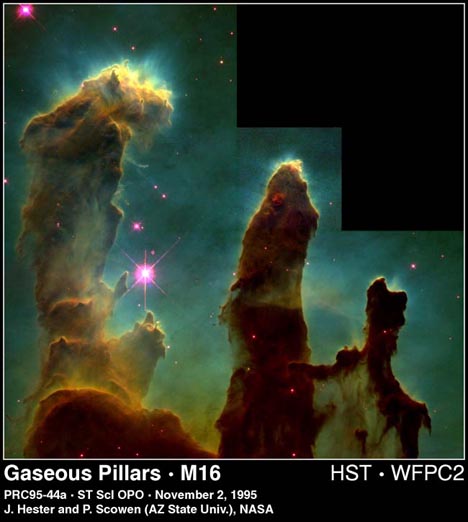
It doesn't end there. If the expanding supernova shock wave slams into a
dormant cloud of dust and gas, the impact can trigger the collapse of
clumps of gas. A million years later the sky is ablaze with colorful
lights from a new generation of stars, and possibly new planets and new
civilizations.

(Credit: S.Lenfers)
|
Violence is always destructive and disturbing, but in the natural world
it can also lead to renewal.
Return to Chandra Chronicles
Highlights and Feature Stories from the Chandra Project
Archived reports of past Chandra Chronicles
Receive the Chandra Digest
Updated: March 27, 2008